
Does a Criminal Record Predict Future Crime Forever? A New Study of 16 Million People Says No
A team of University of Nebraska at Omaha (UNO) researchers analyzed 40 years of criminal records and found that the likelihood of a new criminal charge steadily declines over time, with a past charge telling us very little about future risk after about a decade.
- published: 2026/09/22
- contact: Sam Peshek - Office of Strategic Marketing and Communications
- email: unonews@unomaha.edu
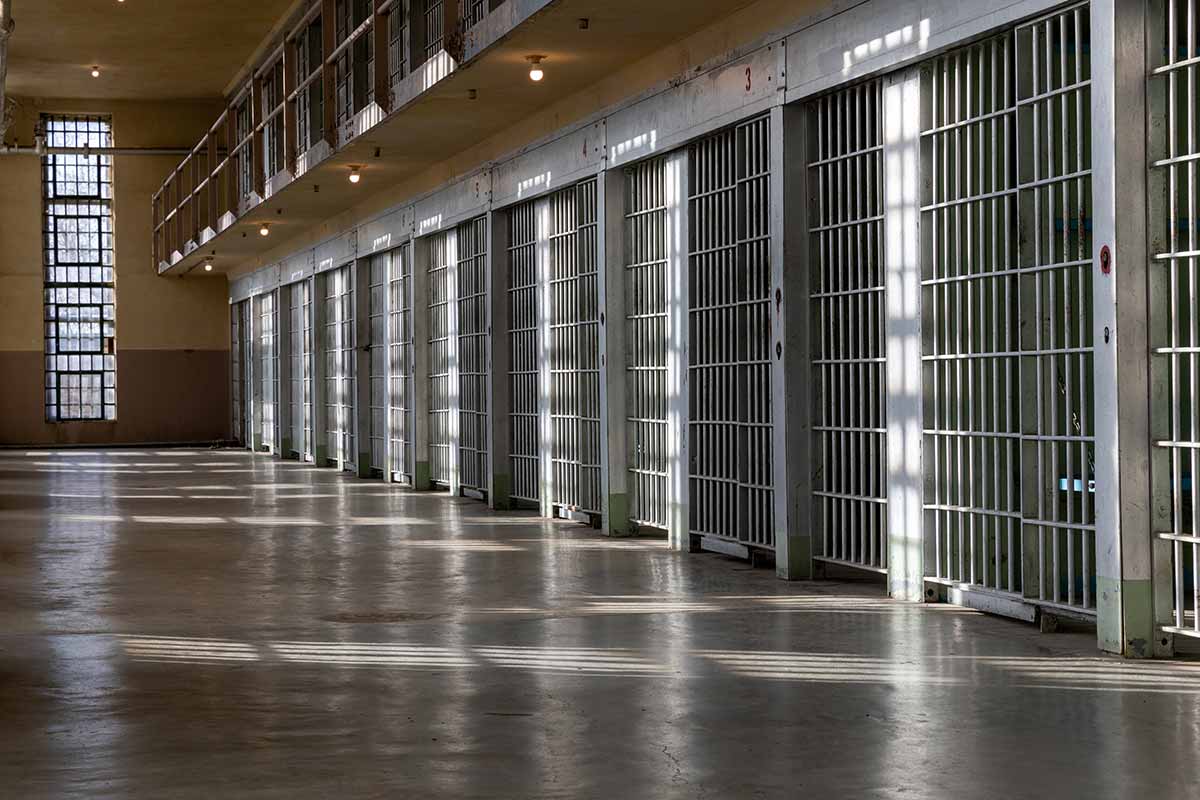
A new study of more than 16.5 million people spanning 40 years of criminal-charge records finds that the predictive value of a past criminal charge does not last forever.
Instead, it fades in a highly consistent, measurable pattern, and largely converges with the general population's ordinary risk level within about nine to ten years.
What’s new: “Criminal history's expiration date: Evidence of prediction decay” by Zachary Hamilton, Ph.D., Alex Kigerl, Ph.D., Jennifer J. Tostlebe, Ph.D., and John Ursino,Ph.D., of the School of Criminology and Criminal Justice at the University of Nebraska Omaha (UNO), has been published in Criminology, the flagship, peer-reviewed journal of the American Society of Criminology.
- The report draws on 746 million person-year observations of criminal charges across five states (Alaska, Arizona, Florida, Texas, and Washington) from 1980 to 2020, one of the largest datasets ever assembled for this purpose.
- The research team developed a new statistical framework to directly measure, year by year, how much predictive value a single criminal charge retains as time passes.
View the interactive data explorer
Key findings:
- Risk fades fast, then levels off. The probability of a new charge following a prior one drops from 28% one year out to roughly 2% by year 30, a steep early decline (a 51% relative drop by year 7) that gradually tapers, similar to the pattern of radioactive decay.
- The pattern holds almost everywhere. The same rate of decay appears across states, sex, race/ethnicity, violent versus non-violent charges, and incarceration history. Groups differ in their starting risk level, not in how quickly that risk fades. (One exception: adults 35 and older show a modestly faster decline than younger adults.)
- Criminal records have an “expiration date.” On average, the elevated risk associated with a past charge converges with a state's general population base rate within roughly nine to ten years (a range of about seven to twelve years across the five states studied).
- Most people do not reoffend. About 63% of individuals charged with a crime were never charged again, running counter to the often-cited claim that most people released from the justice system recidivate.
Why it matters: Risk-need assessment tools used daily in pretrial, sentencing, probation, and parole decisions typically assign a person's prior charges a fixed, permanent weight, no matter how long ago they occurred.
- The study's authors argue that the next generation of these tools should instead let a criminal record's weight decay over time, mirroring the way real-world risk actually behaves.
- The findings also inform ongoing policy debates over record sealing, expungement, and the use of criminal background checks in employment and housing.
What they’re saying:
- Zachary Hamilton, Ph.D., Lead Author, Professor, Nebraska Center for Justice Research Associate Director, and Advancing Research in Corrections Lab Co-Director: “This study bridges a gap between prior knowledge of the age-crime curve and practical utility or criminal history in probation, parole, pretrial supervision, as well as employment background checks.”
- Jennifer Tostlebe, Ph.D., Co-Author, Assistant Professor, and Advancing Research in Corrections Lab Co-Director: “Essentially, we found a way to make criminal history dynamic, identifying when a prior criminal charge depreciates, until a point that it loses utility and can be eliminated.”
Methodology: Researchers used administrative court records from the National Institute of Justice's Base Rate Project, tracking criminal charges as the consistent measure of justice-system contact available across all five states over the 40-year period.
- Because charges reflect justice-system contact rather than adjudicated guilt, the authors note the findings should be interpreted accordingly.
- The findings also reveal that, in contrast to a popular myth that most people recidivate following a criminal event, the vast majority of individuals charged with a crime do not commit another.
Open access: The study is freely available to read at no cost via Criminology's open-access page. Replication code and data-processing scripts are publicly available on GitHub.
About Criminology: Criminology is the official, peer-reviewed journal of the American Society of Criminology, publishing original research on crime, criminal behavior, and the criminal justice system since 1963.
About the University of Nebraska at Omaha
The University of Nebraska at Omaha (UNO) is Nebraska’s premier metropolitan university, committed to innovating for the public good, advancing social mobility, powering workforce development, and serving as a hub for community engagement. Nearly 15,000 Mavericks choose UNO for its hands-on education experiences, nationally ranked online and graduate programs, military-connected student support, and innovative approaches to supporting lifelong learning. UNO holds the Carnegie Research Activity “R2” designation, securing more than $40 million annually in external research funding and counts its faculty among the world’s most cited scholars. Sixteen Omaha Athletics programs compete in NCAA Division I as members of the Summit League and National Collegiate Hockey Conference (NCHC).
Follow UNO on Facebook, Twitter (X), Instagram, LinkedIn, and YouTube.