
Building Stronger Bodies and Minds Through Inclusive Play
The program hosted by UNO is laying the groundwork for the athletes and health professionals of tomorrow.
- published: 2026/07/01
- contact: Marlo Larsen - Strategic Marketing and Communications
- email: unonews@unomaha.edu
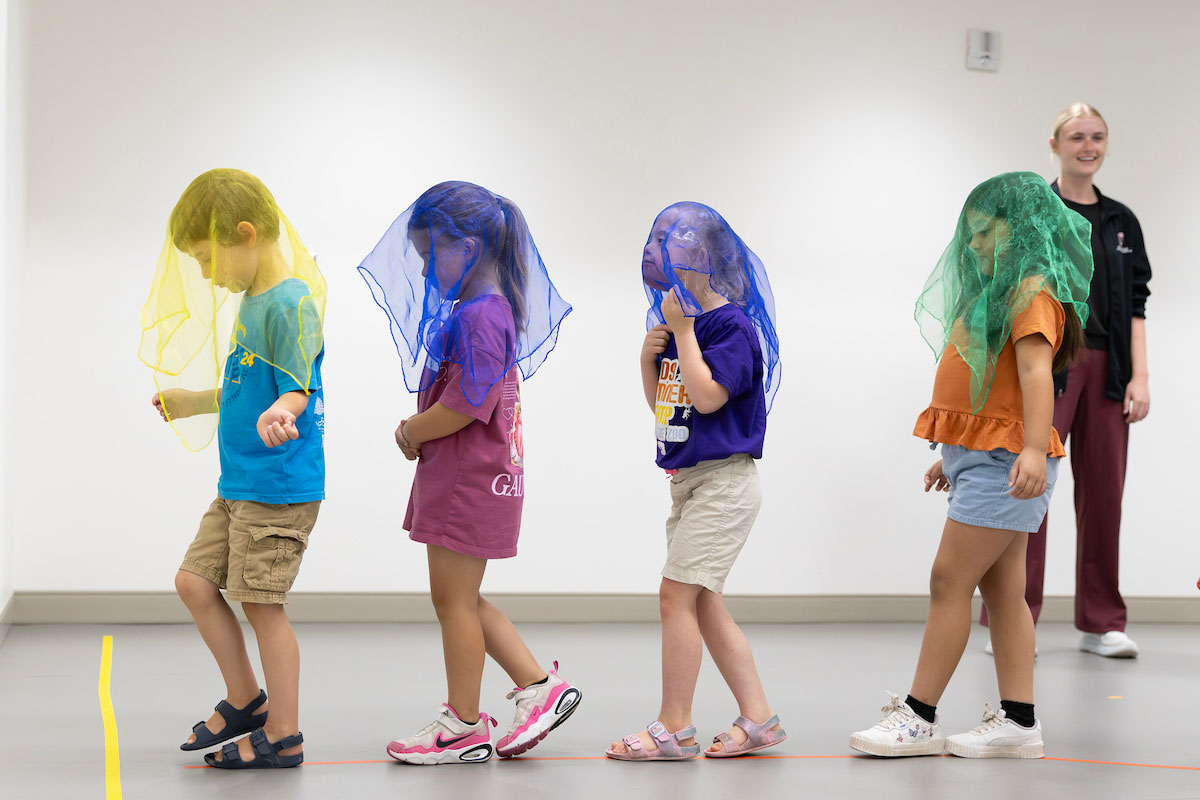
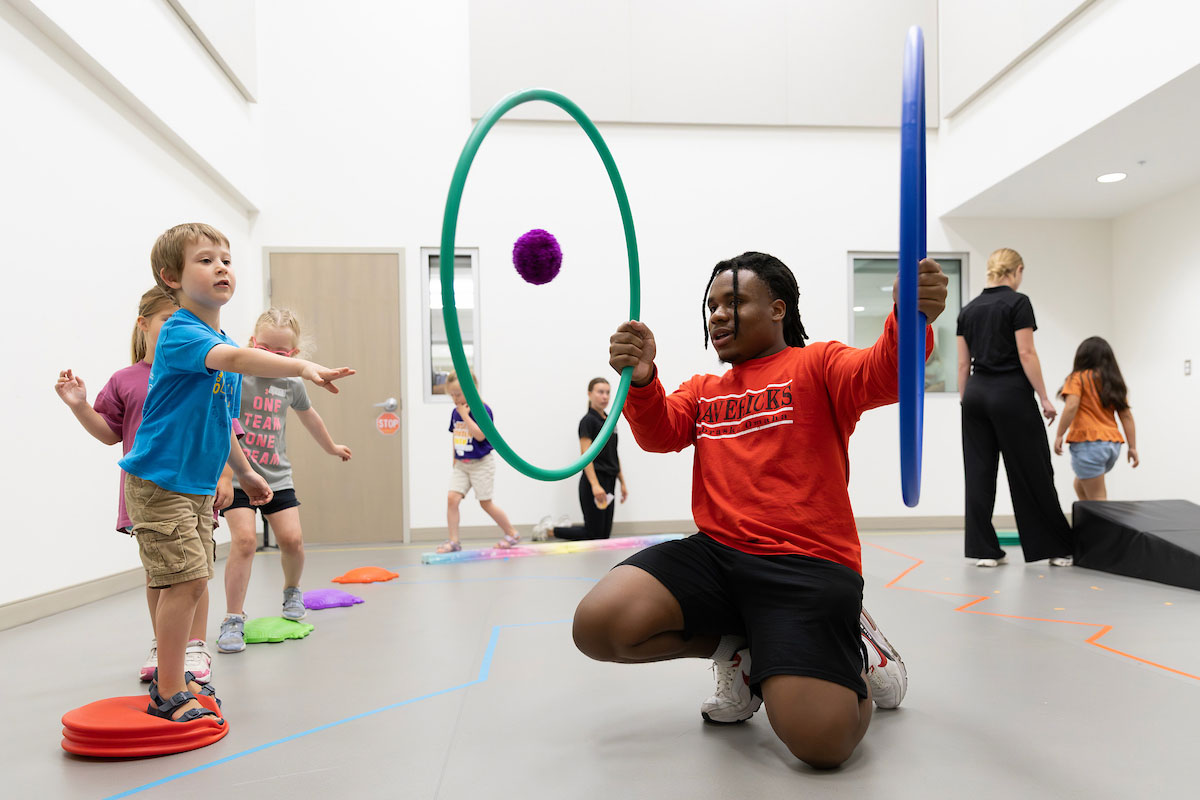
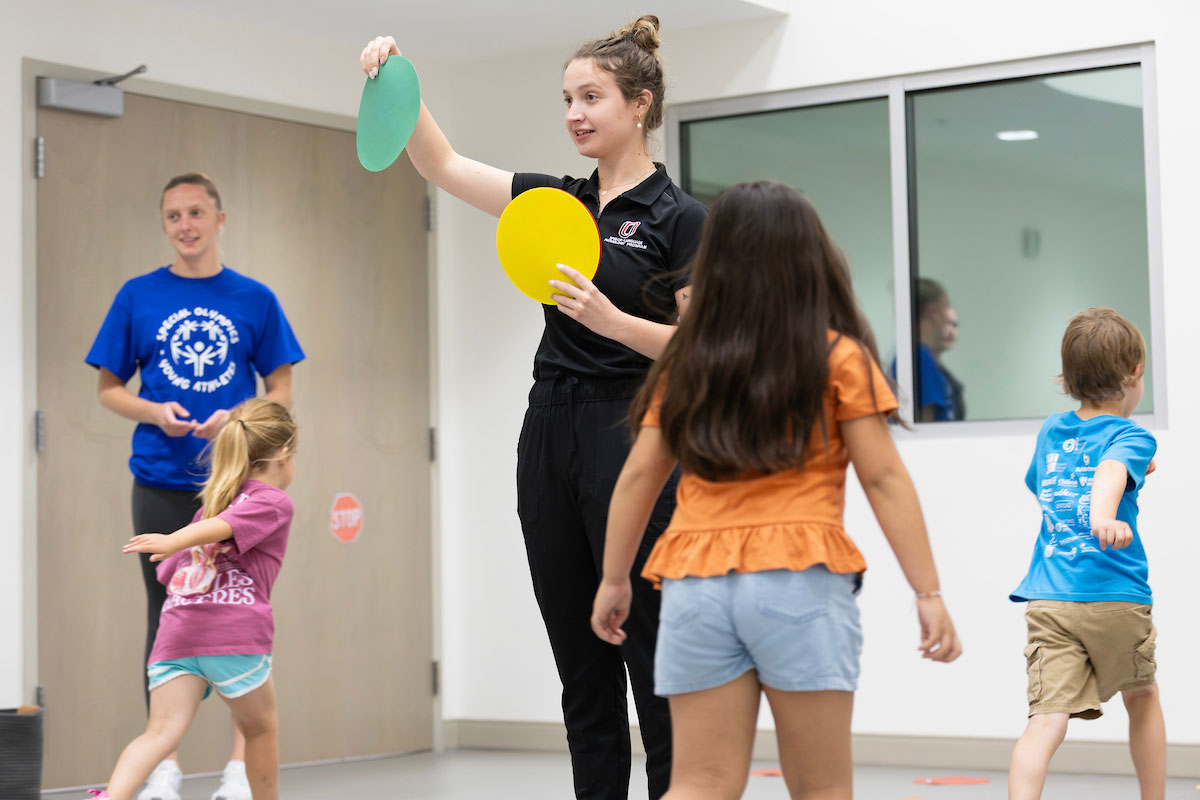
Speech-Language Pathology Program graduate students and Kinesiology undergraduate students with the Special Olympics Young Athletes program work with five to seven-year-olds at the Health Science Collaborative (HSC) in the University of Nebraska at Omaha’s School of Health & Kinesiology in Omaha, Nebraska, on Thursday, June 11, 2026. As a team, the students were working to improve the children’s reading, language, and gross motor skills. (Ryan Soderlin/UNO Marketing and Communications)
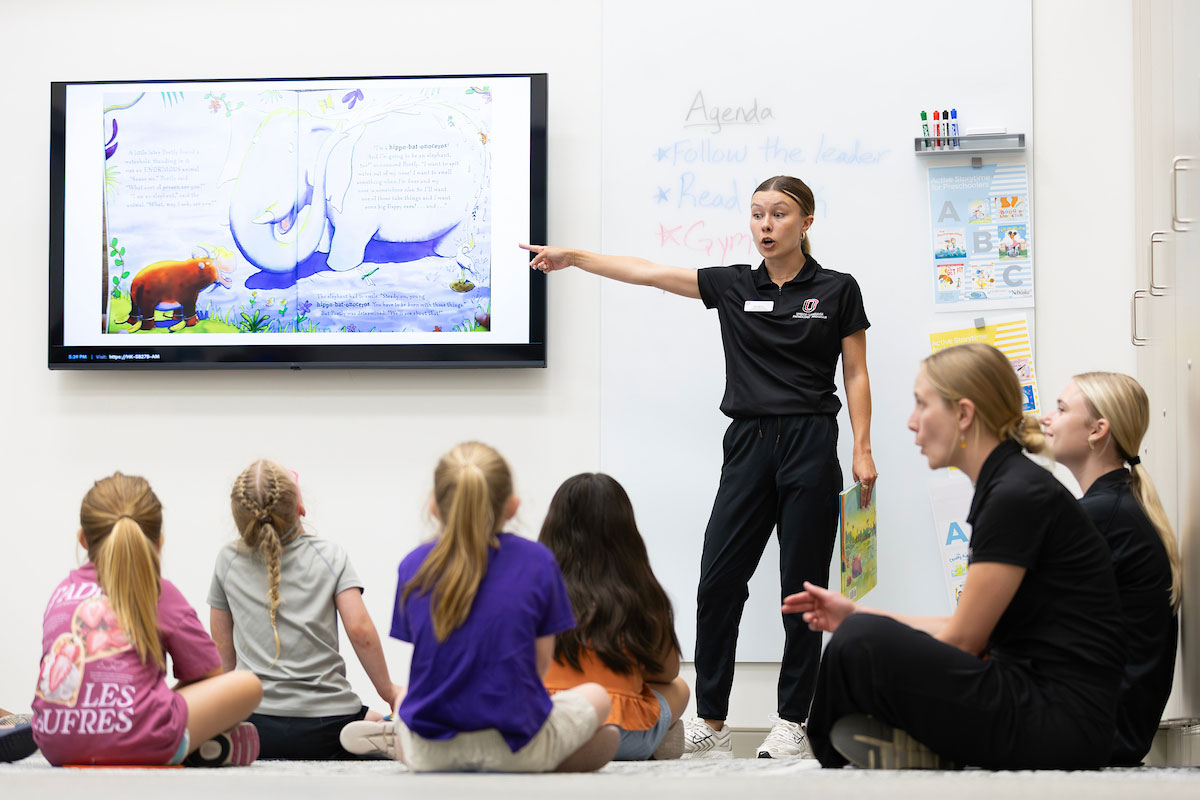
Speech-Language Pathology Program graduate students and Kinesiology undergraduate students with the Special Olympics Young Athletes program work with five to seven-year-olds at the Health Science Collaborative (HSC) in the University of Nebraska at Omaha’s School of Health & Kinesiology in Omaha, Nebraska, on Thursday, June 11, 2026. As a team, the students were working to improve the children’s reading, language, and gross motor skills. (Ryan Soderlin/UNO Marketing and Communications)
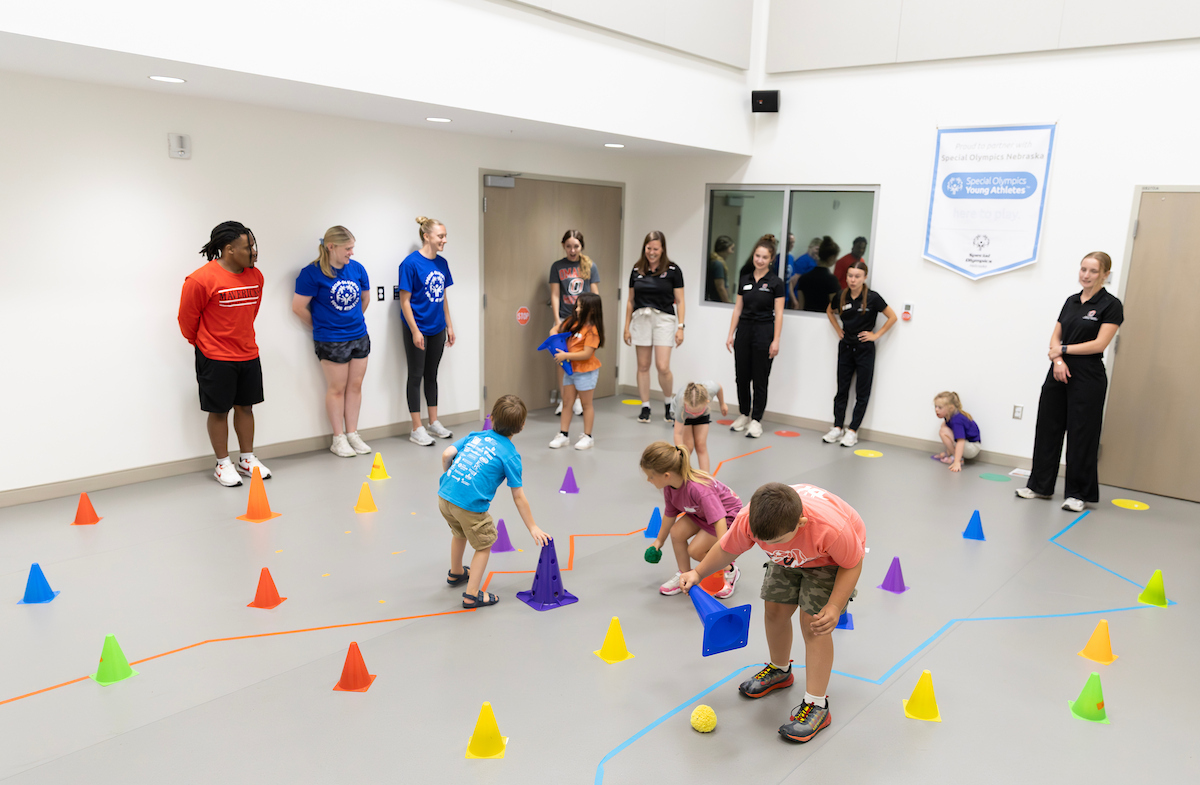
Speech-Language Pathology Program graduate students and Kinesiology undergraduate students with the Special Olympics Young Athletes program work with five to seven-year-olds at the Health Science Collaborative (HSC) in the University of Nebraska at Omaha’s School of Health & Kinesiology in Omaha, Nebraska, on Thursday, June 11, 2026. As a team, the students were working to improve the children’s reading, language, and gross motor skills. (Ryan Soderlin/UNO Marketing and Communications)
Remember being a kid in gym class, and how exciting it was when it was giant parachute day? Everyone grabs a handle on the massive, circular, multi-colored fabric and shakes it up and down, creating air waves coming from every direction. Then, on the count of three, everyone pulls the parachute up and over their heads as quickly as possible, sitting on the edge of the fabric to create a giant air bubble. For a few magical seconds, everyone is inside a different world.
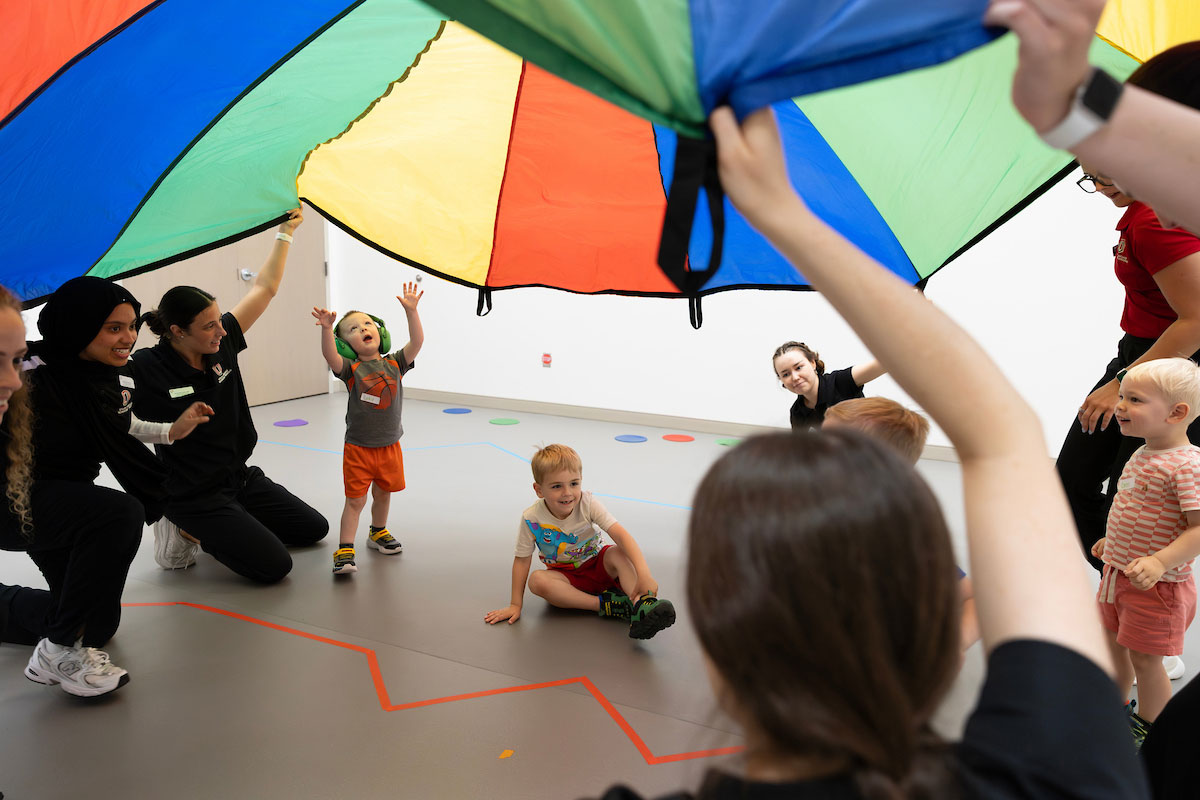
Not only is the activity one of the most exciting parts of the day, but it’s also a learning tool for listening and following instructions for kids at the UNO Young Athletes Program.
“It’s a sports and developmental play program intended to provide inclusive play opportunities for children with and without intellectual and developmental disabilities,” explains Michaela Schenkelberg, a professor in the School of Health and Kinesiology at UNO’s College of Education, Health, and Human Sciences.
The program is part of the broader Special Olympics International Young Athletes Program, focusing on gross motor development and introduction to basic sports skills. The 8-week summer program sees kids from ages two to seven.
“Everything is really dressed up as games and fun activities, so kids don't really know what they're learning along the way,” she says.
Each week the program is focused on a specific motor development skill; things like walking and balancing, learning how to turn and navigate a space, all while learning to share, take turns, and follow directions.
“Her progress, especially her patience and willingness to, okay, stop, listen to what we're doing, and then do it, it’s come a long way,” says Dusty Rhods, whose daughter, Lexi, has come to the program all three summers that it has been at UNO.
Lexi, who is now seven, has Down syndrome.
“Her first year she was constantly running out, didn't want to be there or anything like that. Every now and then she's still like that, but she's, I would say, 95% better. She's almost always been there wanting to listen, really wanting to learn.”
The program isn’t just for the kids, however. It also offers hands-on learning opportunities for UNO students who run the program as interns.
“It's helped me grow so much,” says Tydell McLaurin, a kinesiology student who will be entering his junior year this fall. “Children who have disabilities can be unpredictable, but they are just like working with any other kid. You have those who love doing sports, love playing with toys, love stories.”
McLaurin is working alongside fellow kinesiology student Julia Thomas to create and carry out daily lesson and activity plans and to coordinate with parents and families.
The value of the program is already having an impact on how McLaurin thinks about his future career, potentially as a personal trainer.
“It would be the same thing, making sure that it’s a program designed to their wants, their needs, making sure I have the equipment and abilities to do that, making sure I have the available space, making sure I have the knowledge.”
This summer, UNO Young Athletes is also partnering with speech-language pathology students for the first time, expanding the program’s focus and helping children better learn to communicate, communicate in different ways, and navigate different social situations.
“This has helped a lot with the collaboration with other future clinicians,” adds Tory Carrick, who is in the first year of her graduate speech-language pathology program.
“We've learned to collaborate with a different expertise, they know a lot about the physical activity, but we know more about the communication activity.”
Carrick always knew she wanted a career working with kids, but it wasn’t until she thought about her own experience as a child seeing a speech therapist that she considered it a job for herself.
“So far in my grad school experience, I haven't done any group work with kids, and so this gave me that like foot in the door of how to work with different kids with different abilities,” she says. “So, if I work in a school, I'll know exactly how to navigate the different communication styles.”
For parents like Rhods, the program is just as beneficial to him as it is to Lexi.
"It kind of brings everybody [together] like a family,” he says. “At times, it is a struggle with, you know, kids with disabilities or anything like that. Not everyone knows how difficult it is, and so, kind of getting around other families and other kids when they can just run for themselves, it's great to see that. It's good for the kids, but also for the parents.”
Schenkelberg says the program is so beneficial that it has a waitlist. Training UNO students to run the Young Athletes programs, she says, hopefully means there will be more access and program availability in the future.
“A single program like this can only reach so many kids, and if we can educate and train up the next generation of health and fitness professionals, then they can go forward and take this knowledge and the understanding of how to adapt and modify opportunities for kids,” she says.
“That can translate across the lifespan into adolescence and adulthood, so we can hopefully have a larger population impact on providing more opportunities for people with intellectual and developmental disabilities.”
🙋Get Involved: Special Olympics Nebraska offers training for volunteers who wish to host Young Athletes Programs. Explore opportunities to volunteer by visiting the Young Athletes Program page.
About the University of Nebraska at Omaha
The University of Nebraska at Omaha (UNO) is Nebraska’s premier metropolitan university, committed to innovating for the public good, advancing social mobility, powering workforce development, and serving as a hub for community engagement. Nearly 15,000 Mavericks choose UNO for its hands-on education experiences, nationally ranked online and graduate programs, military-connected student support, and innovative approaches to supporting lifelong learning. UNO holds the Carnegie Research Activity “R2” designation, securing more than $40 million annually in external research funding and counts its faculty among the world’s most cited scholars. Sixteen Omaha Athletics programs compete in NCAA Division I as members of the Summit League and National Collegiate Hockey Conference (NCHC).
Follow UNO on Facebook, Twitter (X), Instagram, LinkedIn, and YouTube.