
For This Student, Living on Campus Changed Everything
Perla Perez-Tejeda says her world got bigger when she made the leap from living at home to living on campus. She wants to help make your world bigger, too.
- published: 2026/11/25
- contact: Marlo Larsen - UNO Office of Strategic Marketing and Communications
- email: unonews@unomaha.edu
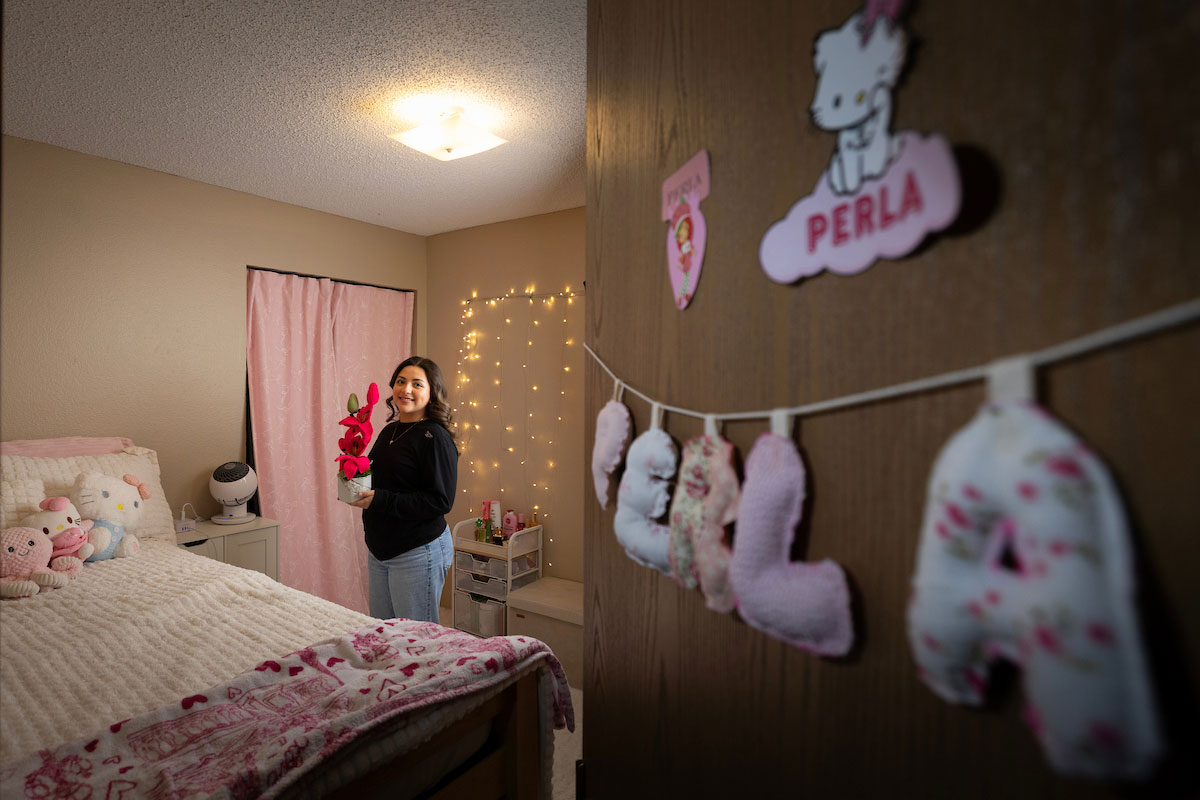
Perla Perez-Tejeda, a sophomore RA in University Village, poses in her dorm room. (UNO/Ryan Soderlin)
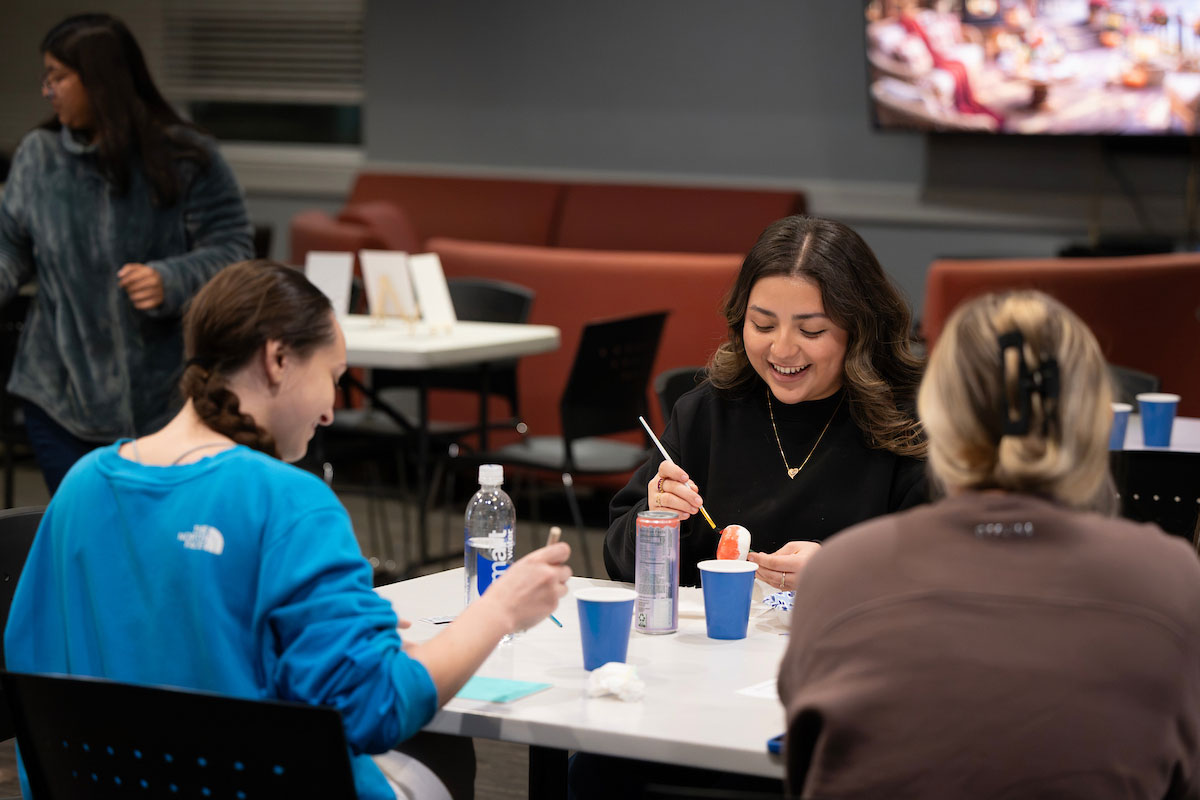
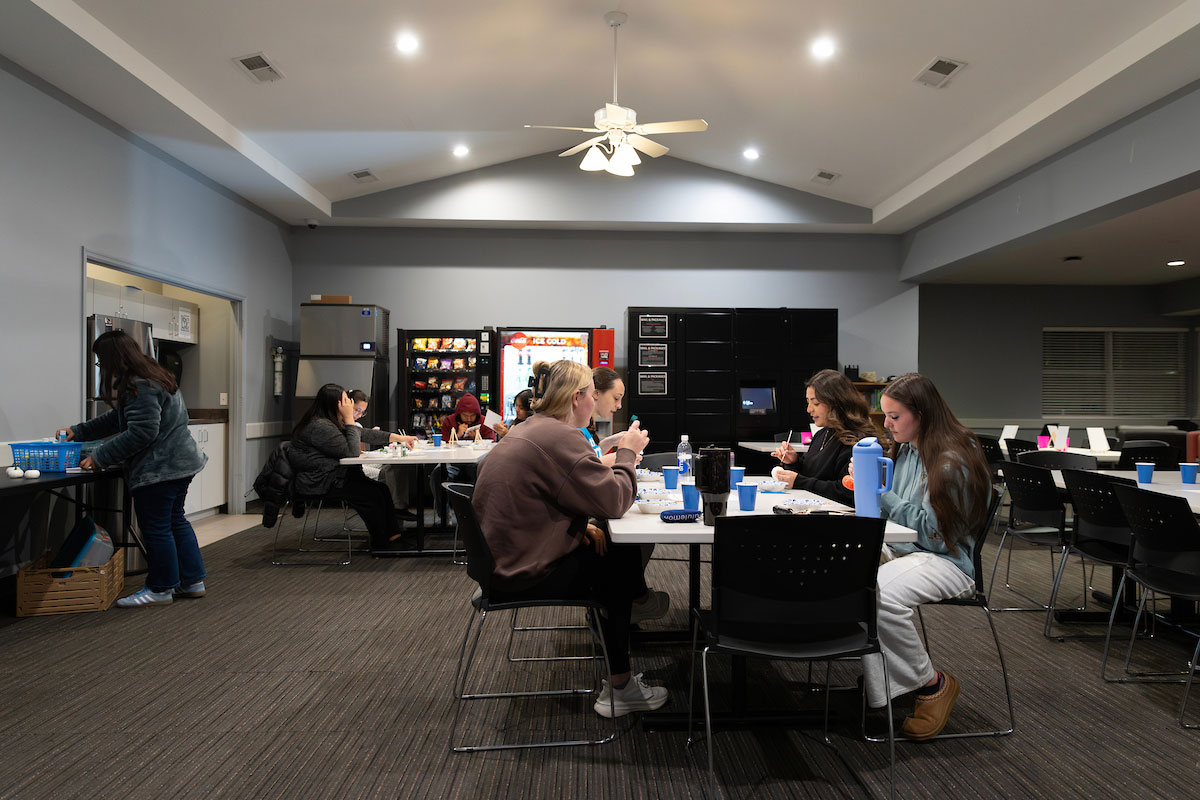
Sophomore RA Perla Perez-Tejeda hosts a pumpkin painting party in the Maverick Village Clubhouse on Dodge Campus on Tuesday, November 24, 2026. (UNO/Ryan Soderlin)
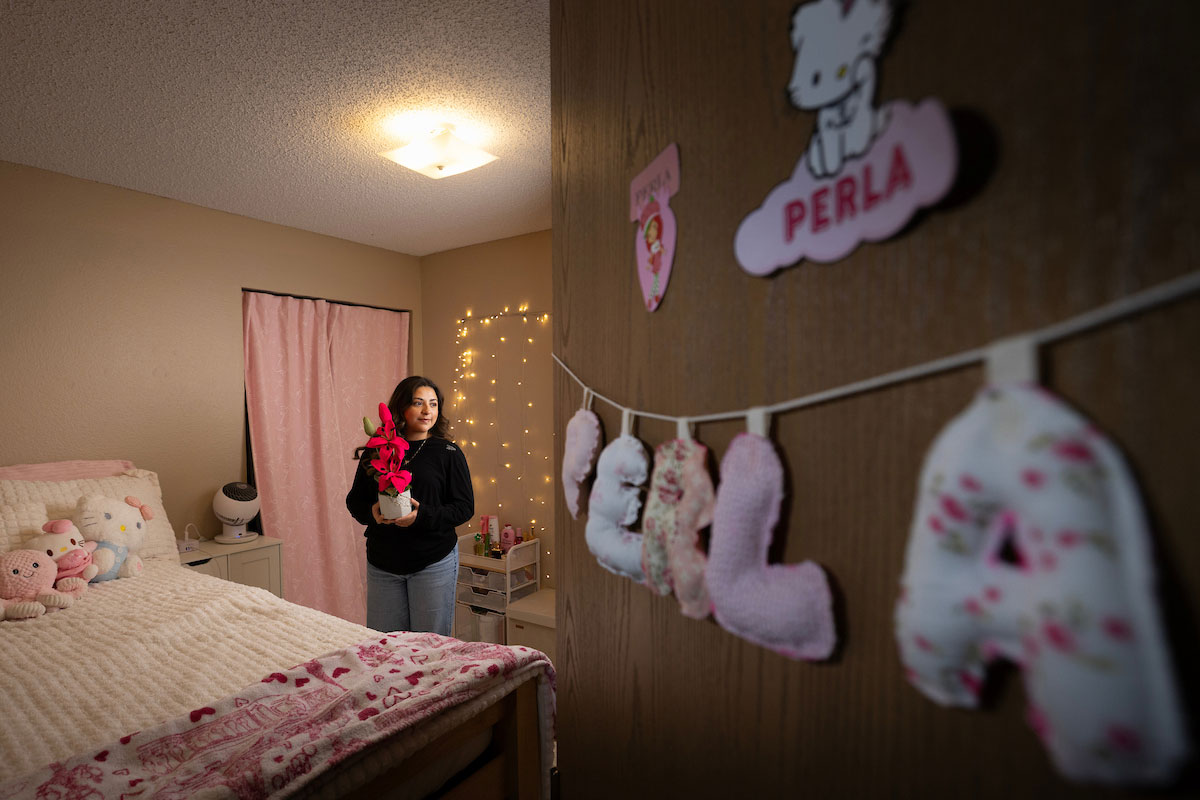
Perla Perez-Tejeda, a sophomore RA in University Village, poses in her dorm room. (UNO/Ryan Soderlin)
In the halls of University Village student housing on the University of Nebraska at Omaha (UNO) campus, you may find Perla Perez-Tejeda, a soft-spoken but bubbly and welcoming personality, chatting with residents, planning monthly events, or simply hanging in her dorm with her door propped open, welcoming anyone inside.
All of that is part of her duties as a resident assistant (RA). But she doesn’t do these things just because it's part of her job description.
“I love it,” she says. “Being an RA, you're really the person that your residents go to for help. If they need anything, let's say they're feeling anxious or something's going on in their dorm, or they need help finding a class, or they don't know when to sign up for class,” she says. “You can be that person for them and help them.”
Perez-Tejeda knows the importance of the role because just one semester earlier, she was one of those students in need of support, connection, and reassurance.
She had moved to on-campus housing after spending her first semester as a freshman living with her family and commuting to school.
“When I wasn’t living on campus, I was just coming to class and leaving. I literally had no friends here. I would just come for class, and that was it,” she admits.
She knew at the time she wanted a different college experience. But, it wasn't a reality for her. That is, until she filled out her FAFSA form.
“I applied and applied and applied, and then I finally got in, and I finally got the funds to be able to pay for it,” she says.
After that, everything changed for Perez-Tejeda.
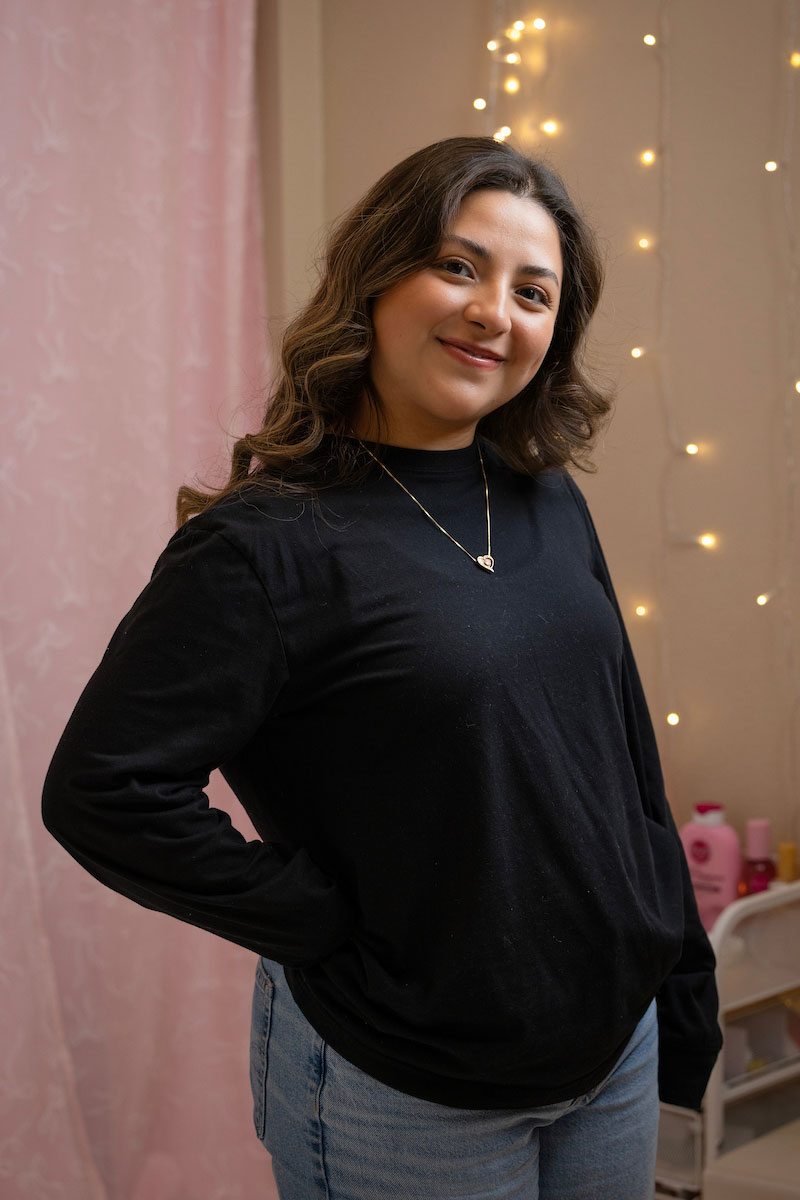
“I'm not gonna lie, it really helped me socialize. And you find your community,” she says about living in student dorms.
"When you move out and live on campus, you kind of find out who you are in a way,” she says. “I feel like I have more peace of mind coming here because you socialize with people that are in the same boat as you.”
As a first-generation college student, making the move to campus was that much more impactful.
“In the beginning, I feel like you don't really know what you're doing. So I was really scared and lost, and asked so many questions that my family couldn't answer. So moving to campus helped a lot with that.”
She quickly realized that living on campus meant being closer to helpful resources, like-minded students, and the chance to learn from and get support from upperclassmen. It also meant being more engaged in her classes and studying.
Perez-Tejeda is on the pre-nursing track, and hoping to one day be a nurse or a doctor.
“What drew me to the medical field was that I really like to help other people. That was always something I was good at,” she says. “When I was younger, I always had someone helping me through whatever I was going through, and I want to be that person for someone else.”
Now, she is that person for a whole dorm building of people as an RA, a job she applied for after just one semester of living on campus.
“I have a lot of freshmen living in my building, and some of them are really scared about not being at home. I like having those conversations with people, telling them I’m here if you need anything,” she says.
“We do monthly events, and you get feedback from your residents and ask them, ‘hey, what would you like to see?’ That way, it makes them more engaged too. I make sure that my residents know about the events, I print out papers, I put it on all of their doors, and I send emails and messages in the group chat. I really try to be as communicative as I can be with them.”
As well as a chance to support new students, her role as an RA has not only helped her financially, but it has also expanded aspects of her personal life.
“I love it because there are times where we have homework and all the RAs just send into the group chat like, ‘anyone want to meet at MB Clubhouse?’ and then we all just go do homework there. And I love that we all built that community.”
Although vastly different from her future goal to be in the medical field, her role as an RA is reassuring Perez-Tejeda that helping others is the right direction for her.
“It kind of shapes my character to who I'm gonna be, because when I do get my career, I have to be very talkative and I have to be there for people whether I'm having a bad day or not,” she says “Sometimes that's difficult, but it's something that I like to do, and it makes me feel better, even on days where like I'm feeling sad or don't feel motivated. Being that person for other people makes me motivated.”
For those considering making the leap to living at UNO?
"Come to campus,” she says. “Because you really find yourself and find out how you live, how you work, and build friendships.”
About the University of Nebraska at Omaha
The University of Nebraska at Omaha (UNO) is Nebraska’s premier metropolitan university, committed to innovating for the public good, advancing social mobility, powering workforce development, and serving as a hub for community engagement. Nearly 15,000 Mavericks choose UNO for its hands-on education experiences, nationally ranked online and graduate programs, military-connected student support, and innovative approaches to supporting lifelong learning. UNO holds the Carnegie Research Activity “R2” designation, securing more than $40 million annually in external research funding and counts its faculty among the world’s most cited scholars. Sixteen Omaha Athletics programs compete in NCAA Division I as members of the Summit League and National Collegiate Hockey Conference (NCHC).
Follow UNO on Facebook, Twitter (X), Instagram, LinkedIn, and YouTube.