
Why Do Some People Thrive on Caffeine, but Others Feel Nothing? Zebrafish Have Some Clues
New UNO research suggests caffeine doesn't affect everyone the same way, at least if you're a zebrafish. The findings could help scientists better understand anxiety and stress in humans.
- published: 2026/06/17
- contact: Sam Peshek - Office of Strategic Marketing and Communications
- email: unonews@unomaha.edu
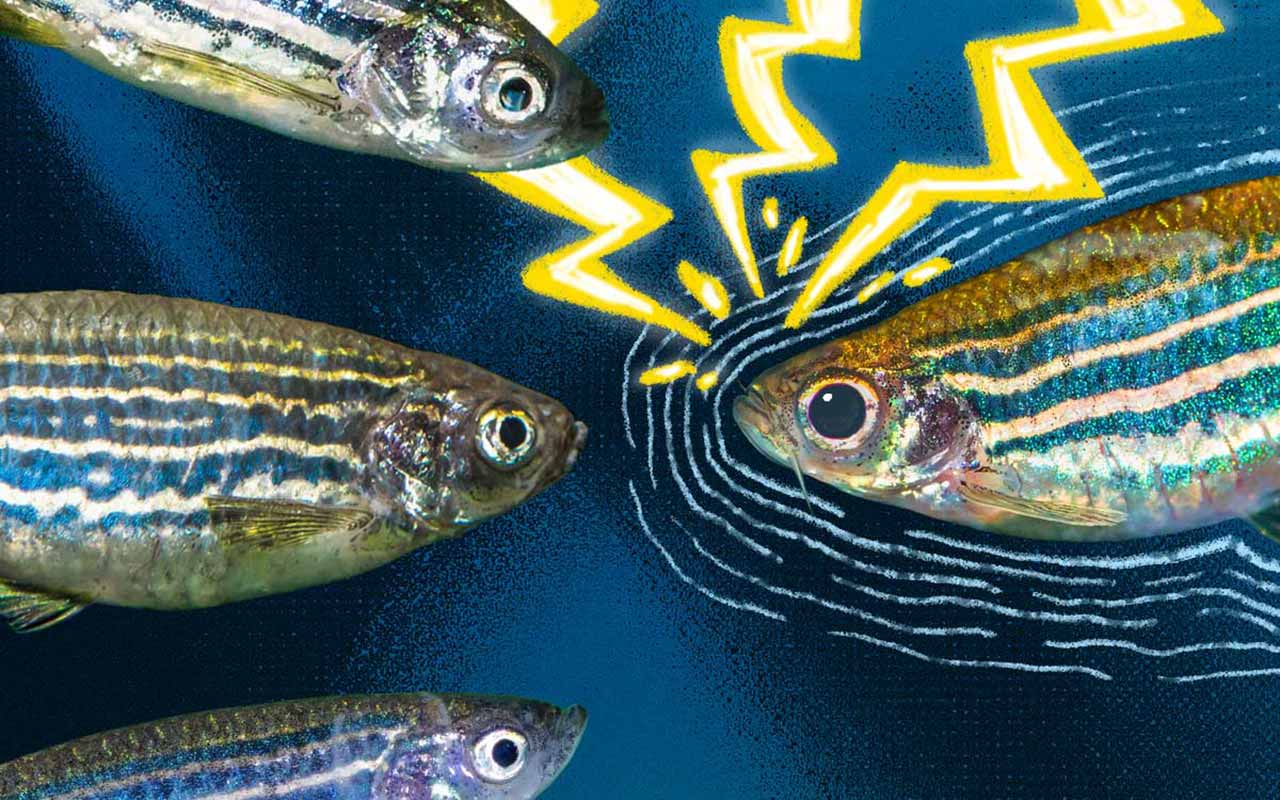
Ever wondered why some people drink a cup of coffee and feel a spark of energy, while others drink the same cup and feel jittery, anxious, or nothing at all?
University of Nebraska at Omaha (UNO) researchers in the College of Arts and Sciences Department of Biology may have found part of the answer using zebrafish.
➡️ What's new: Research led by former UNO undergraduate researcher Sydney Klucas found that found caffeine's effects on anxiety-like behavior vary based on an individual's biological characteristics has been published in the peer-reviewed journal Brain and Behavior.
💡 Why it matters: Caffeine is the most widely consumed psychoactive substance in the world, yet people respond to it differently. Understanding why those differences exist could help researchers better understand anxiety disorders, stress responses, and the biological pathways that influence mental health.
☕️ Key findings: Not everyone responds to caffeine the same way, and neither do zebrafish. Some individuals may be biologically wired to be more sensitive to its effects, and those differences may begin at the molecular level in the brain.
- Researchers found that zebrafish with a naturally more cautious, stress-sensitive personality showed more signs of anxiety than their bolder counterparts. Female zebrafish also tended to show more anxiety-like behaviors than males.
- The surprising finding? A small dose of caffeine didn't make the fish more anxious overall. Instead, caffeine appeared to reduce signs of anxiety in some fish, helping them swim more and freeze less. That effect was strongest among stress-sensitive male zebrafish.
- The team also discovered biological differences in a brain signaling system called the adenosine pathway, which is the same pathway caffeine affects when it helps keep people awake. Stress-sensitive fish had different levels of several adenosine-related genes compared to less stress-sensitive fish, suggesting that these underlying biological differences may help explain why caffeine affects individuals differently.
🔎 Zoom in: Klucas, now a graduate student at the University of Washington, served as lead author on the publication after conducting the research as a UNO student researcher.
- The research was conducted in the laboratory of UNO Associate Professor Ryan Wong, Ph.D., with support from a Fund for Undergraduate Scholarly Experiences (FUSE) grant awarded to Klucas.
- Funding from Wong's National Institutes of Health (NIH) R15 award also supported portions of the project.
🎤 What they’re saying:
- Sydney Klucas, former UNO undergraduate researcher and lead author, now a Pharmacology Ph.D. student at the University of Washington: "One of the most valuable parts of my experience at UNO was having the opportunity to do meaningful research as an undergraduate. I was able to expand on what I learned in the classroom by actively participating in the scientific process and contributing to the field. Being able to design experiments, analyze data, present findings, and ultimately publish this work gave me a level of experience and confidence that prepared me for graduate school."
- Associate Professor Ryan Wong, Ph.D.: “We all know people who can drink coffee all day and feel fine, while others become anxious after a single cup. Our findings suggest that some of those differences may be rooted in underlying biological mechanisms that influence how the brain responds to caffeine and stress, which is exciting on its own. What makes this publication even more special is it shows both UNO undergraduate and graduate students have opportunities to engage in research that asks important questions and helps us better understand the world around us.”
About the University of Nebraska at Omaha
The University of Nebraska at Omaha (UNO) is Nebraska’s premier metropolitan university, committed to innovating for the public good, advancing social mobility, powering workforce development, and serving as a hub for community engagement. Nearly 15,000 Mavericks choose UNO for its hands-on education experiences, nationally ranked online and graduate programs, military-connected student support, and innovative approaches to supporting lifelong learning. UNO holds the Carnegie Research Activity “R2” designation, securing more than $40 million annually in external research funding and counts its faculty among the world’s most cited scholars. Sixteen Omaha Athletics programs compete in NCAA Division I as members of the Summit League and National Collegiate Hockey Conference (NCHC).
Follow UNO on Facebook, Twitter (X), Instagram, LinkedIn, and YouTube.