
UNO Study Reveals How Students Collaborate with AI and What It Means for the Future Workforce
Workforce readiness increasingly depends on knowing how to collaborate with AI, not just extract answers from it.
- published: 2026/04/15
- contact: Sam Peshek - Office of Strategic Marketing and Communications
- email: unonews@unomaha.edu

Student working on a laptop. Photo: Shutterstock
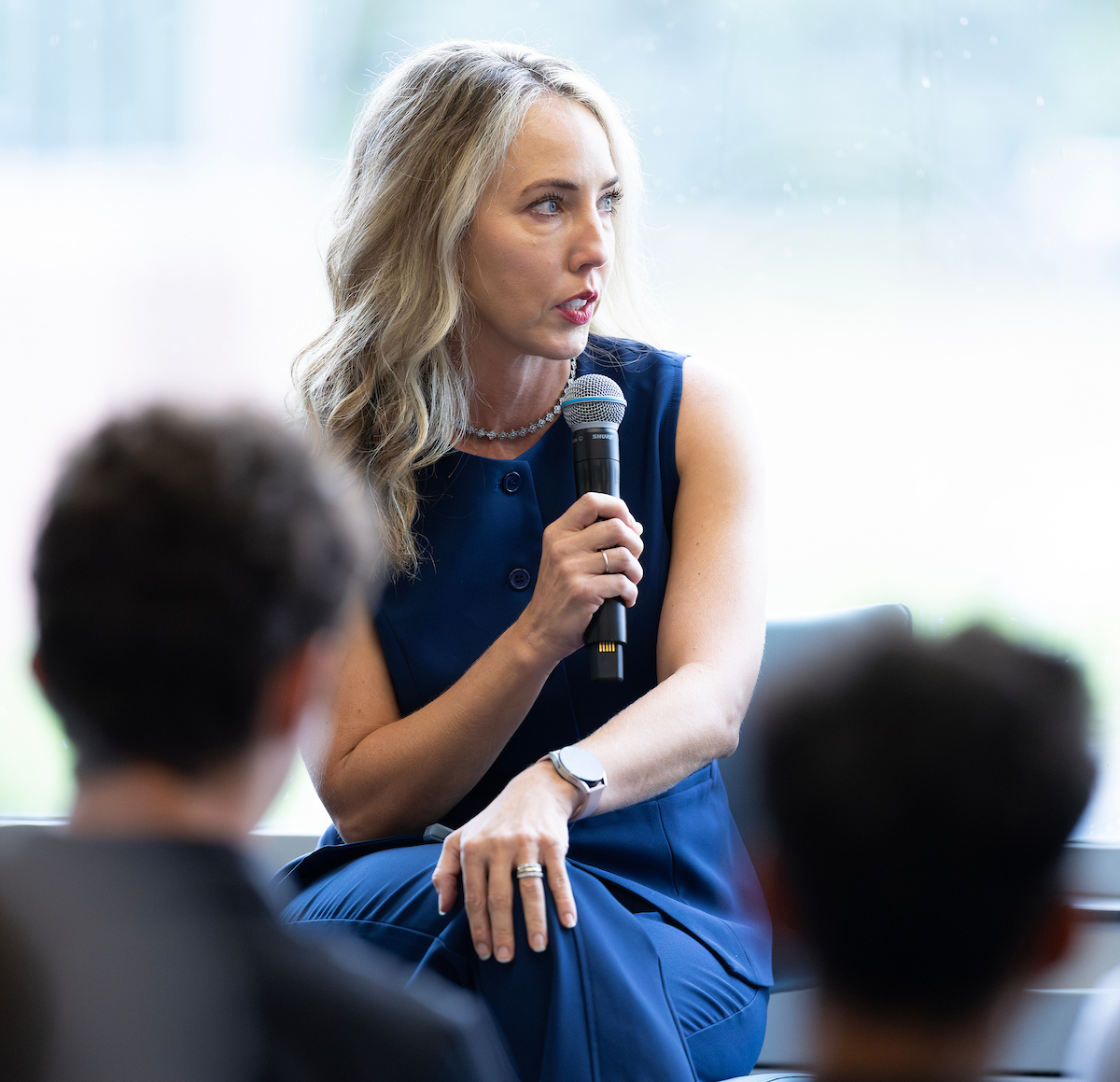
Erin Bass, Ph.D., CBA Management Professor and Center for Competencies, Skills, and Workforce Development Executive Director. Photo: UNO Office of Strategic Marketing and Communications
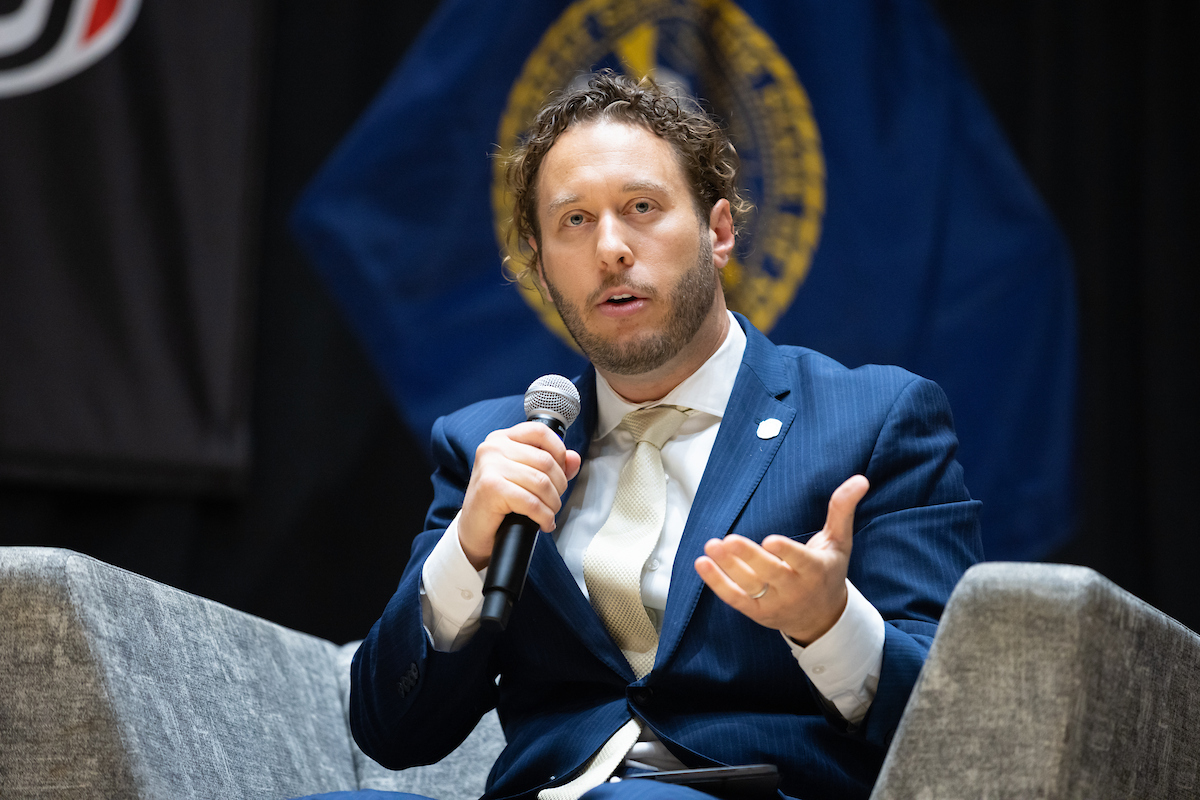
Joel Elson, Ph.D., IS&T Assistant Professor and NCITE Director of Information Science & Technology Research. UNO Office of Strategic Marketing and Communications

Erin G. Pleggenkuhle-Miles, Ph.D., CBA Management Professor. UNO Office of Strategic Marketing and Communications
As generative AI tools rapidly reshape the workplace, universities are exploring how to prepare students to collaborate effectively with these technologies.
A new study from researchers at the University of Nebraska at Omaha (UNO) examines how business students actually use generative AI during strategic decision-making tasks, and what those patterns reveal about preparing the future workforce.
➡️ What’s new: Researchers from UNO’s College of Business Administration (CBA) and College of Information Science & Technology (IS&T) collaborated on the project, combining expertise in strategy, workforce development, and human-AI interaction. The team analyzed how undergraduate business strategy students used generative AI during a business ideation exercise designed to simulate real-world strategic decision-making.
- Their findings, presented at the Hawaii International Conference on System Sciences (HICSS-59), revealed an important insight: while students demonstrated strong strategic thinking, they often used AI tools in limited ways. This finding suggests that students may be capable of strategic reasoning but have not yet learned how to collaborate with AI in ways that fully support that thinking.
- While students demonstrated higher-order thinking, most positioned AI in relatively simple roles, such as generating ideas, rather than using it as a strategic collaborator. The research identified several distinct ways students used AI, ranging from simple idea generation to more advanced forms of collaborative problem-solving.
💡Why it matters: As AI becomes embedded in modern business practice, workforce readiness increasingly depends on knowing how to collaborate with AI, not just extract answers from it.
🔎 Zoom in: The study was conducted across three sections of an undergraduate capstone business strategy course. Students were asked to identify an unmet need and develop a business idea using a customized version of ChatGPT. Researchers analyzed 167 student prompts across 24 chatbot sessions using a dual-framework approach:
- The AI-ICE model, which measures cognitive engagement (ideas, connections, extensions).
- An inductively developed functional typology, identifying how students positioned AI during interaction.
- Using these data, the research team developed a functional typology of AI collaborative roles, describing how students position AI tools in their thinking process—from content generator to thinking partner.
📊 By the numbers: The typology captures how students position AI as a collaborator, from more passive roles (i.e., Content Generator, Task Executor) to more active roles (i.e., Thinking Partner, Role-Shifting). How students positioned AI:
- 54% as a Content Generator
- 10% as a Task Executor
- 16% as an Advisor
- 19% as a Thinking Partner
- 1% engaged in Role-Shifting, asking AI to simulate stakeholder perspectives
🎤 What they’re saying:
- Erin Bass, Ph.D., CBA Management Professor and Center for Competencies, Skills, and Workforce Development Executive Director: “This research tells us that preparing students for an AI-enabled workforce isn’t about restricting these tools but teaching strategic collaboration with them. This research helps us understand not just whether students use AI, but how they collaborate with it. That insight is critical for designing education that prepares graduates for AI-enabled workplaces.”
- Joel Elson, Ph.D., IS&T Assistant Professor and NCITE Director of Information Science & Technology Research: “Many students initially approach generative AI with a search-engine mindset: type a question, accept the answer, and move on. Shifting that perspective requires modeling and practice. Students need to see what iterative dialogue looks like: how to challenge AI outputs, ask follow-up questions, request alternative viewpoints, and treat the tool as a collaborator rather than a vending machine for answers. That shift doesn’t happen automatically. It has to be taught.”
- Erin G. Pleggenkuhle-Miles, Ph.D., CBA Management Professor: “There is a tremendous amount of untapped potential in these tools. Generative AI can help students and budding entrepreneurs pressure-test assumptions, simulate competitive responses, explore trade-offs, and refine strategic positioning in ways that mirror real-world decision-making. When used intentionally, it becomes a thought partner that expands creativity and deepens analysis.”
⚡️What’s next: The research team hopes the framework will help universities design learning experiences that prepare students to collaborate effectively with AI in professional settings.
About the University of Nebraska at Omaha
The University of Nebraska at Omaha (UNO) is Nebraska’s premier metropolitan university, committed to innovating for the public good, advancing social mobility, powering workforce development, and serving as a hub for community engagement. Nearly 15,000 Mavericks choose UNO for its hands-on education experiences, nationally ranked online and graduate programs, military-connected student support, and innovative approaches to supporting lifelong learning. UNO holds the Carnegie Research Activity “R2” designation, securing more than $40 million annually in external research funding and counts its faculty among the world’s most cited scholars. Sixteen Omaha Athletics programs compete in NCAA Division I as members of the Summit League and National Collegiate Hockey Conference (NCHC).
Follow UNO on Facebook, Twitter (X), Instagram, LinkedIn, and YouTube.