

Preparing the Next Generation of Alcohol and Drug Counselors
With just two additional courses, UNO Counseling students can become eligible for Nebraska’s Provisional Licensed Alcohol and Drug Counselor (PLADC) credential.
- contact: College of Education, Health, and Human Sciences
- email: unocehhs@unomaha.edu

Program Highlights and Impact
- New dual licensure opportunity: Students in UNO’s Clinical Mental Health Counseling program can now become eligible for Nebraska’s Provisional Licensed Alcohol and Drug Counselor (PLADC) credential with just two extra courses.
- Training with real-world clients: The program prepares future counselors to treat co-occurring mental health and substance use concerns through coursework and a 300-hour practicum in community clinical settings.
- Meeting a Nebraska workforce need: Graduates help address the state’s shortage of addiction counseling professionals, with workforce demand expected to grow by 33% over the next five years.
UNO’s Clinical Mental Health Counseling program has expanded its reach and impact by offering students a pathway to dual licensure in both mental health and substance use counseling.
In just two additional courses beyond their required coursework, Counseling students can become eligible for Nebraska’s Provisional Licensed Alcohol and Drug Counselor (PLADC) credential through UNO's new Addiction Counseling Professional Program.
This pathway offers far more than an additional credential. It prepares future counselors to understand and address co-occurring disorders—the combination of mental health challenges and substance use—and positions graduates to meet a growing need for these services in Nebraska.
"Pursuing alcohol and drug counseling licensure is a way for students to elevate their expertise, their credentials, and become better clinicians. They are better prepared to treat co-occurring disorders and ultimately better positioned for jobs," said Counseling Department Chair Tina Chasek, Ph.D., LIMHP, LADC.
"Even if a client doesn’t have a substance use disorder, someone in their family or support system often does. This training helps our counselors see the whole picture."
Meeting a Growing Need
According to Chasek, rates of substance use have risen since the pandemic. Many individuals seeking mental health support are also impacted by substance use, either directly or through their families and social systems. Despite this need, only about 10 percent of those who need substance use treatment receive it.
Students enrolled in the dual licensure pathway take a required course in clinical treatment of addictions, along with two electives: one focused on medical and psychosocial issues, and another based on assessment and treatment planning. These courses are taught by full- and part-time faculty, who are licensed professionals active in the field.
With Nebraska’s current licensed addiction counseling workforce aging, and community demand rising, graduates of this program are also filling a vital gap. The average age of licensed addiction counselors in the state is over 50, and new professionals are needed to ensure continued access to services across Nebraska.
"Our goal is not just to train students to pass exams. It’s to graduate counselors who can reduce stigma, deliver culturally responsive care, and change lives."
Additionally, the department’s clinic and internship partnerships help students gain real-world experience working with clients navigating complex and overlapping challenges. The program also supports students through mentorship and professional development, including the opportunity to apply for competitive national fellowships.
Fellowship Support for Future Counselors
Since 2023, three UNO students have been selected for the National Board of Certified Counselors (NBCC) Minority Fellowship Program for Addictions Counselors, a nationally competitive award. The fellowships offer up to $15k in scholarship funding, professional mentorship, and the chance to attend national training events in addiction counseling.
"The fellowship has exposed me to so much important information about substance use and how to best work with many different groups," said UNO’s newest NBCC Fellow, Jessica Ploen. "I’ve picked up so many tools I can use to meet clients where they are and provide integrated, holistic care."
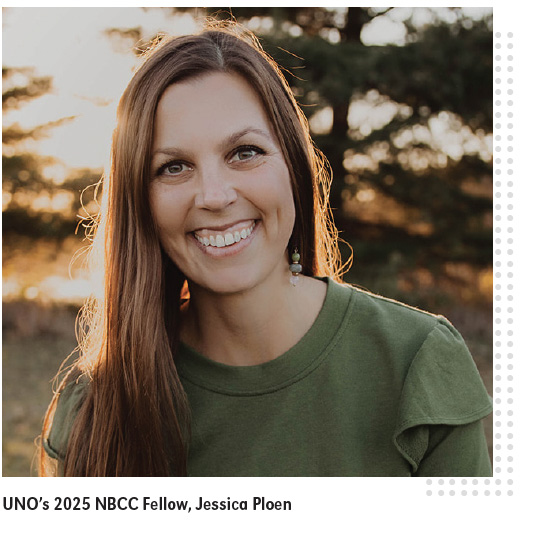
Ploen added that dual training is especially valuable in preparing her to meet client needs. "Someone might come to therapy for depressive symptoms, but along with that they could also be struggling with a substance use disorder," she said. "I wanted to be well equipped to understand, notice, assess, and help with both of those concerns at the same time."
Fellows and other dual-licensure students are required to complete clinical internships that include substance use counseling. The result is more highly trained, trauma-informed professionals who are ready to support underserved populations, including veterans, youth, and rural Nebraskans. Whether they remain in Omaha or relocate across the country, their preparation allows alumni to serve in outpatient clinics, private practices, health centers, and beyond.
"Our goal is not just to train students to pass exams," said Chasek. "It’s to graduate counselors who can reduce stigma, deliver culturally responsive care, and change lives."
Already a licensed mental health professional?
Explore how UNO’s Addiction Counseling Professional Program can expand your expertise and qualify you for Nebraska’s Provisional Licensed Alcohol and Drug Counselor (PLADC) credential.
For further details, contact Dr. Tina Chasek at christinechasek@unomaha.edu or Instructor Tom Maxson at tmaxson@unomaha.edu. For questions about applying to UNO, contact the graduate office at gradschool@unomaha.edu or 402.554.2341.