
UNO’s First Presidential Chair Working to Improve Statewide Literacy
Jennifer Lemke, Ed.D., the inaugural recipient of the Lozier Endowed Presidential Chair in Literacy, seeks to build a better generation of readers in Nebraska.
- published: 2026/06/10
- contact: Connie White - University of Nebraska Foundation
- email: connie.white@nufoundation.org
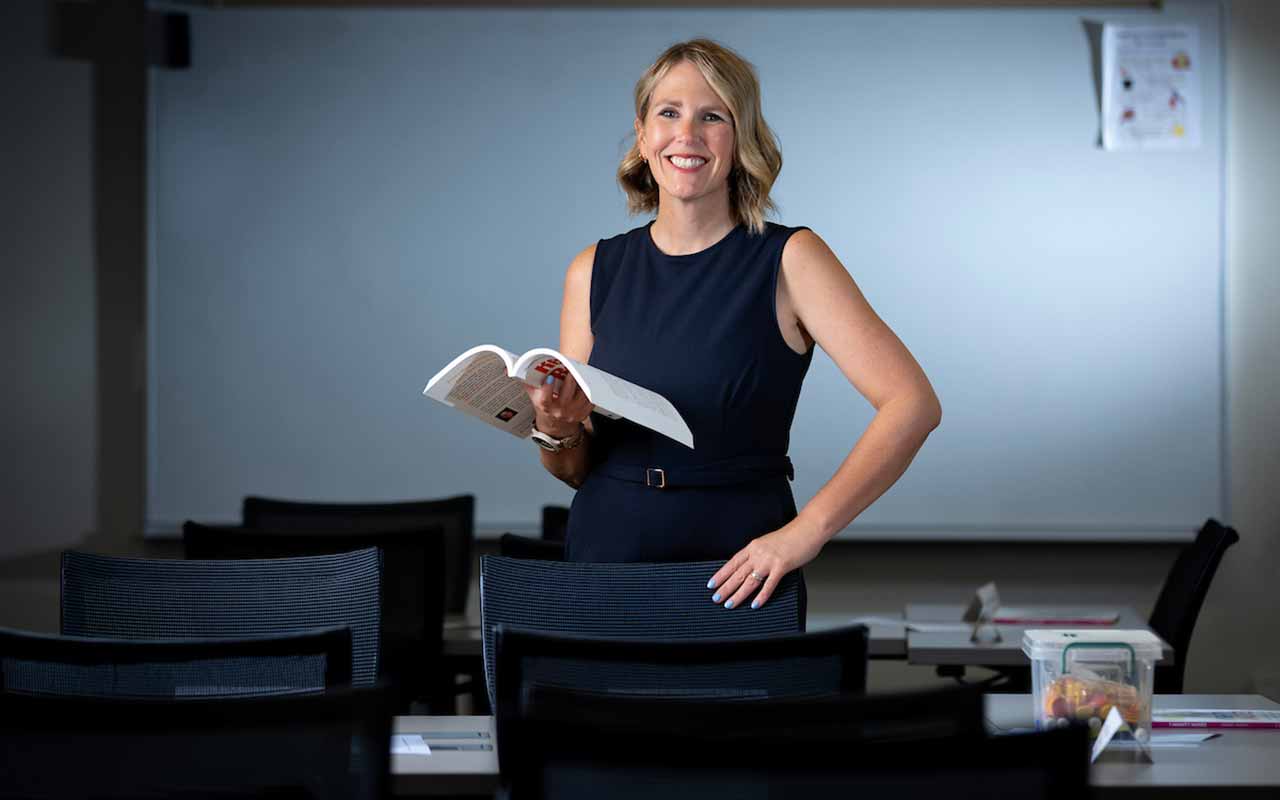
Jennifer Lemke, Ed.D., is the inaugural recipient of the Lozier Endowed Presidential Chair of Literacy, UNO’s first presidential chair. Photo: Ryan Soderlin, UNO Office of Strategic Marketing and Communications
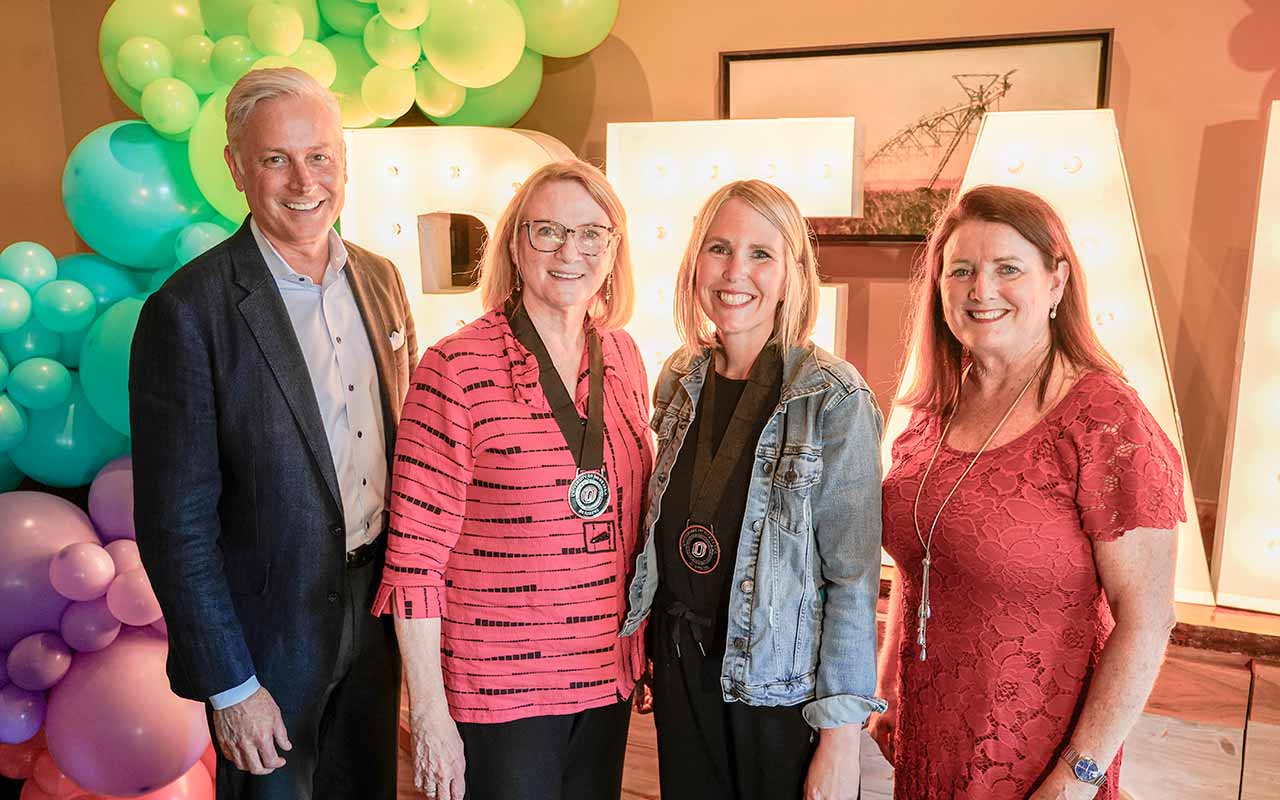
Jennifer Lemke, Ed.D., associate professor of literacy at UNO, third from left, is pictured with Lozier Foundation representatives Tre Brashear, Dianne Lozier and Susan Toohey. Photo: Josh Gear, Lozier
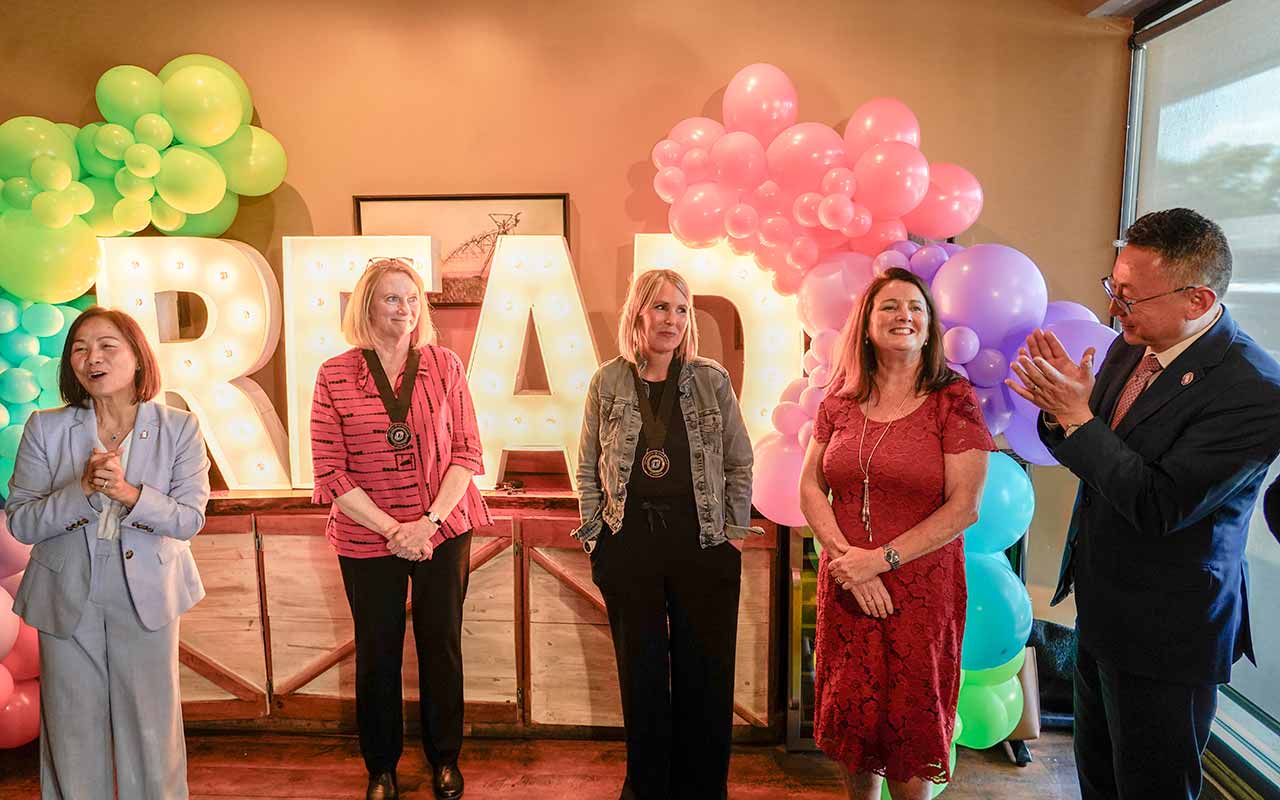
Jennifer Lemke, Ed.D., associate professor of literacy at UNO, third from left, is pictured with UNO Chancellor Joanne Li, Ph.D., CFA, Lozier Foundation representatives Dianne Lozier and Susan Toohey and UNO Senior Vice Chancellor for Academic Affairs Phil He, Ph.D. Photo: Josh Gear, Lozier
Jennifer Lemke, Ed.D., the inaugural recipient of the University of Nebraska at Omaha’s (UNO) first presidential chair, wants every Nebraskan to experience the gift of reading.
She serves as director of the Nebraska Early Literacy Workshop, which was formed to provide K-3 teachers with professional development in the science of reading — that is, evidence-based early literacy instruction. Working with a team of six UNO colleagues, Lemke has developed a network of facilitators across Nebraska who collaborate with school districts and regional partners to conduct workshops across the state.
Lemke is also helping guide the development of the Midwest Literacy Collective, a new statewide initiative launched by the Lozier Foundation. Its mission is to serve as a trusted hub for evidence-based resources to advance literacy for all learners in Nebraska, from birth to adulthood.
UNO’s First Presidential Chair
To support UNO’s literacy education efforts, the Lozier Foundation made a gift through the University of Nebraska Foundation to establish the Lozier Endowed Presidential Chair of Literacy.
“Literacy is the foundation of Nebraska’s future, and Dr. Lemke’s leadership is vital to Nebraska’s literacy education efforts,” said Dianne Lozier, who leads the Lozier Foundation. “By establishing this presidential chair, we are investing in her work and elevating UNO’s expertise and community outreach in literacy. Reading is a building block that every Nebraskan needs to thrive.”
Lemke’s appointment is pending formal approval by the University of Nebraska. A presidential chair is one of the university’s most prestigious faculty awards. The Lozier Endowed Presidential Chair of Literacy will provide an annual salary stipend and funding to support UNO’s literacy research, community outreach and statewide initiatives.
“Jennifer Lemke represents the very best of what UNO has to offer our community and our state,” said UNO Chancellor Joanne Li, Ph.D., CFA. “As a UNO graduate, a classroom teacher in the Omaha area and now one of Nebraska’s leading scholars in literacy, Jennifer has dedicated her career to serving others and expanding opportunities through education. This honor recognizes a lifetime of her selfless service and leadership, as well as a promise to improve the quality of life for all Nebraskans through teaching, outreach and research. The Lozier Foundation’s generous investment sends a powerful message that the work happening at UNO is making a meaningful difference in communities across our state.”
Lemke graduated from UNO in 2004 with a bachelor’s degree in elementary education. She began her career as a teacher in the Omaha Public Schools and later served as a teacher and reading interventionist in the Bennington Public Schools before joining UNO’s faculty in 2013. She earned a doctorate in educational leadership from UNO in 2020.
Lemke expressed gratitude to the Lozier Foundation for its investment.
“It’s an honor to come to work every day and do a job that brings you joy,” she said. “The Lozier Foundation has been an incredible champion of UNO’s work. When we’ve come across barriers in our statewide literacy efforts, the Lozier Foundation has been a problem-solver along with us to ensure our continued success.”
Nebraska Early Literacy Workshop
The Nebraska Early Literacy Workshop grew out of legislation enacted by the Nebraska Legislature in 2018, intended to ensure young Nebraska readers stay on track with reading. The Nebraska Reading Improvement Act requires schools to identify K-3 students with reading deficiencies and to deliver targeted foundational skills instruction. The act also requires professional development in early literacy for K-3 educators.
In partnership with the Nebraska Department of Education and with the support of the state’s philanthropic community, the UNO College of Education, Health, and Human Sciences (CEHHS) created the Nebraska Early Literacy Workshop.
Over the past year, 1,500 K-3 educators and 42 facilitators across Nebraska have received training through the workshop, impacting about 30,000 children. Its goal is to provide professional development to more than 7,000 K-3 educators across Nebraska by 2030.
“I love this work because we’re still very much connected to districts, schools and classrooms,” Lemke said. “That connection allows us to understand what’s happening in classrooms and respond to the needs of districts, teachers and students.”
Learning to read is a complex process, she said, that involves sounding out letters, decoding words and understanding the meaning of words and sentences. It’s a myth that children learn to read simply by memorizing words.
“As humans, our brains are not wired for written language in the same way that they are for oral language,” she said. “It requires this explicit, systematic, cumulative approach so that kids can develop as skilled readers. We need to understand, at a basic level, how the brain works.”
Early data shows that teachers who participate in the Early Literacy Workshop report higher knowledge and understanding of how early readers develop. Students taught by teachers who complete the workshop demonstrate higher levels of success on literacy assessments and classroom measures.
The Nebraska Department of Education has set a goal to increase third-grade proficiency in English language arts to 75% on the Nebraska Student-Centered Assessment System by 2030. (For the 2024-25 school year, 57% of third-graders were proficient.)
Research underscores the importance of improving literacy for early readers, Lemke said. If a child leaves the first grade reading below grade level, they are more likely to experience academic difficulties later.
“Those academic difficulties can sometimes lead to societal challenges,” she said. “Think about how many times a day you use your literacy skills. If that’s a challenge that you face, it's going to impact every aspect of your life.”
Lemke also serves on the steering committee of the Midwest Literacy Collective, which seeks to improve literacy outcomes by supporting educators through professional learning and coaching, by using research and data to strengthen practice and policy, and by partnering with families, communities and adult learning providers in Nebraska.
“Reading is a gift, whether you’re reading for pleasure, school or work,” she said. “There’s nothing else like it. We want all Nebraskans to share in this extraordinary gift.”
About the University of Nebraska Foundation
The University of Nebraska Foundation grows relationships and resources that enable the University of Nebraska to change lives and save lives. During fiscal year 2025, a record $416.6 million was committed to aid UNK, UNL, UNO, NCTA and UNMC and its clinical partner, Nebraska Medicine. In addition, a record 60,602 donors supported the University of Nebraska. Alumni engagement and fundraising are efficient, with the University of Nebraska receiving more than $7 in gifts for every $1 spent. Only in Nebraska: A Campaign for Our University’s Future is the current campaign with a goal to raise $3 billion from 150,000 unique benefactors to support the University of Nebraska. More information is at OnlyinNebraska.org.
About the University of Nebraska at Omaha
The University of Nebraska at Omaha (UNO) is Nebraska’s premier metropolitan university, committed to innovating for the public good, advancing social mobility, powering workforce development, and serving as a hub for community engagement. Nearly 15,000 Mavericks choose UNO for its hands-on education experiences, nationally ranked online and graduate programs, military-connected student support, and innovative approaches to supporting lifelong learning. UNO holds the Carnegie Research Activity “R2” designation, securing more than $40 million annually in external research funding and counts its faculty among the world’s most cited scholars. Sixteen Omaha Athletics programs compete in NCAA Division I as members of the Summit League and National Collegiate Hockey Conference (NCHC).
Follow UNO on Facebook, Twitter (X), Instagram, LinkedIn, and YouTube.