
How All of Omaha Can Navigate the AI Era Together
Omaha Mayor John W. Ewing, Jr., UNO Chancellor Joanne Li, Ph.D., CFA., and Omaha Chamber President and CEO Heath Mello outline three guiding principles for positioning Omaha for success.
- published: 2026/06/25
- contact: John W. Ewing, Jr., Joanne Li, Ph.D., CFA., and Heath Mello
- email: unonews@unomaha.edu
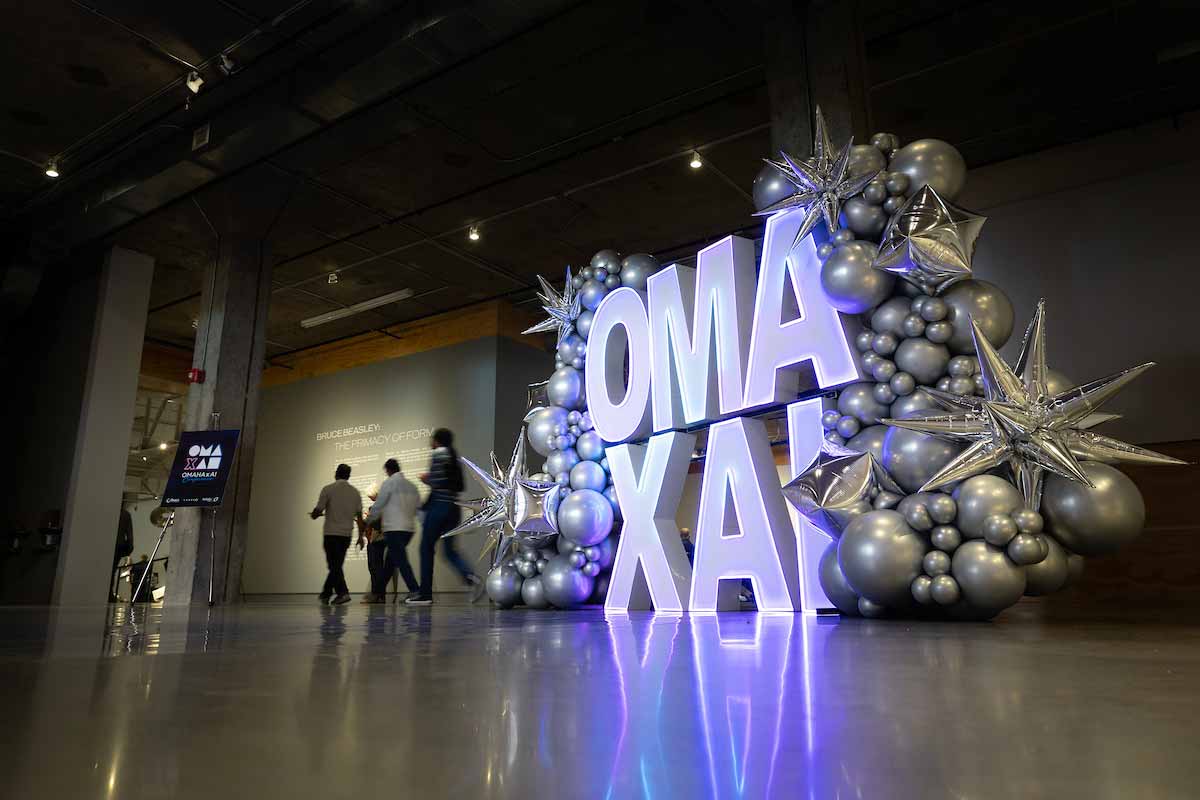
The University of Nebraska at Omaha (UNO) will host its second OMA x AI Conference Tuesday, June 30. Photo: UNO Office of Strategic Marketing and Communications.
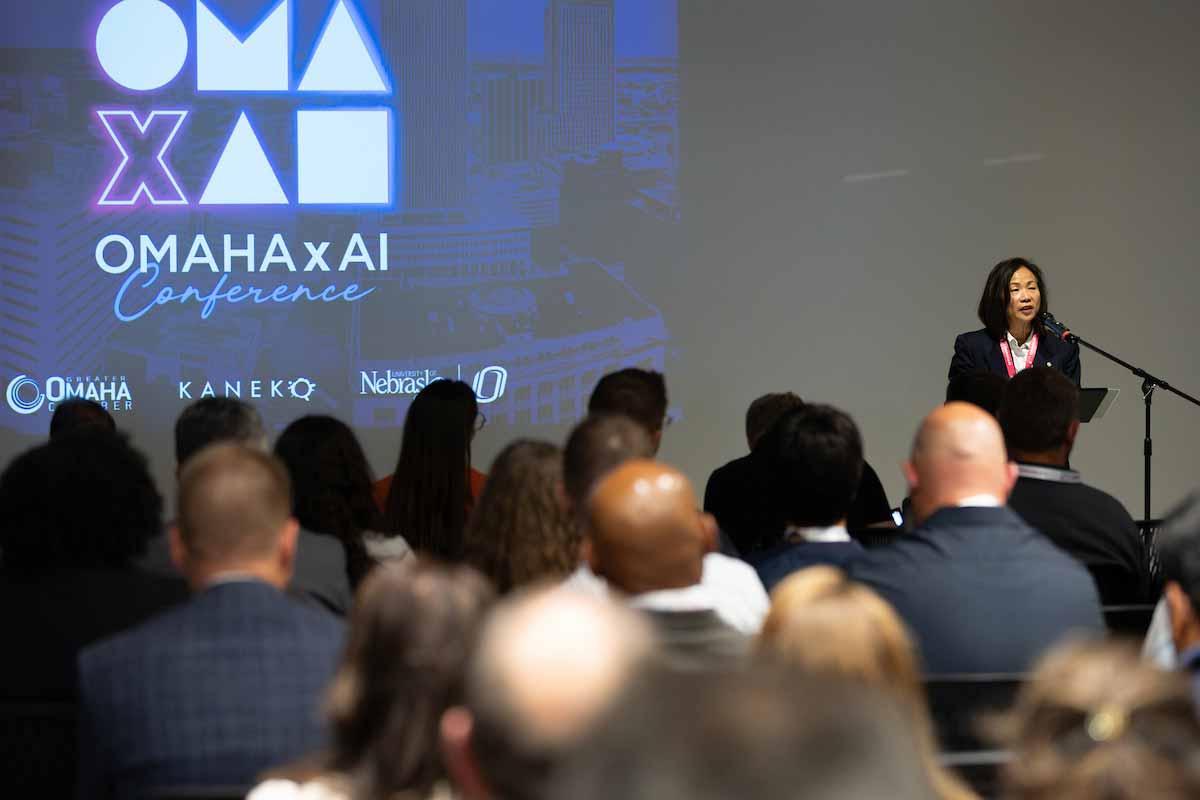
University of Nebraska at Omaha Chancellor Joanne Li, Ph.D., CFA., delivers remarks at the 2025 OMA x AI Conference. Photo: University of Nebraska at Omaha (UNO) Office of Strategic Marketing and Communications.
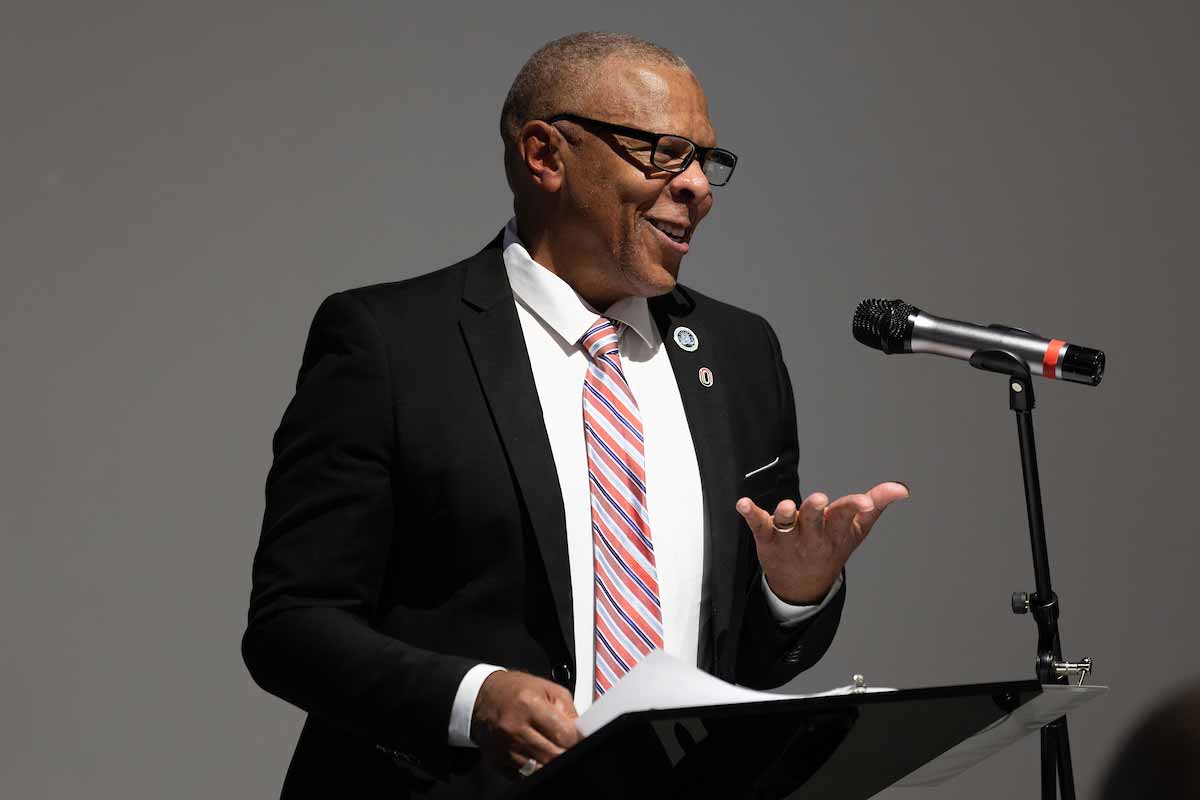
Omaha Mayor John W. Ewing, Jr., delivers remarks at the 2025 OMA x AI Conference. Photo: University of Nebraska at Omaha (UNO) Office of Strategic Marketing and Communications.
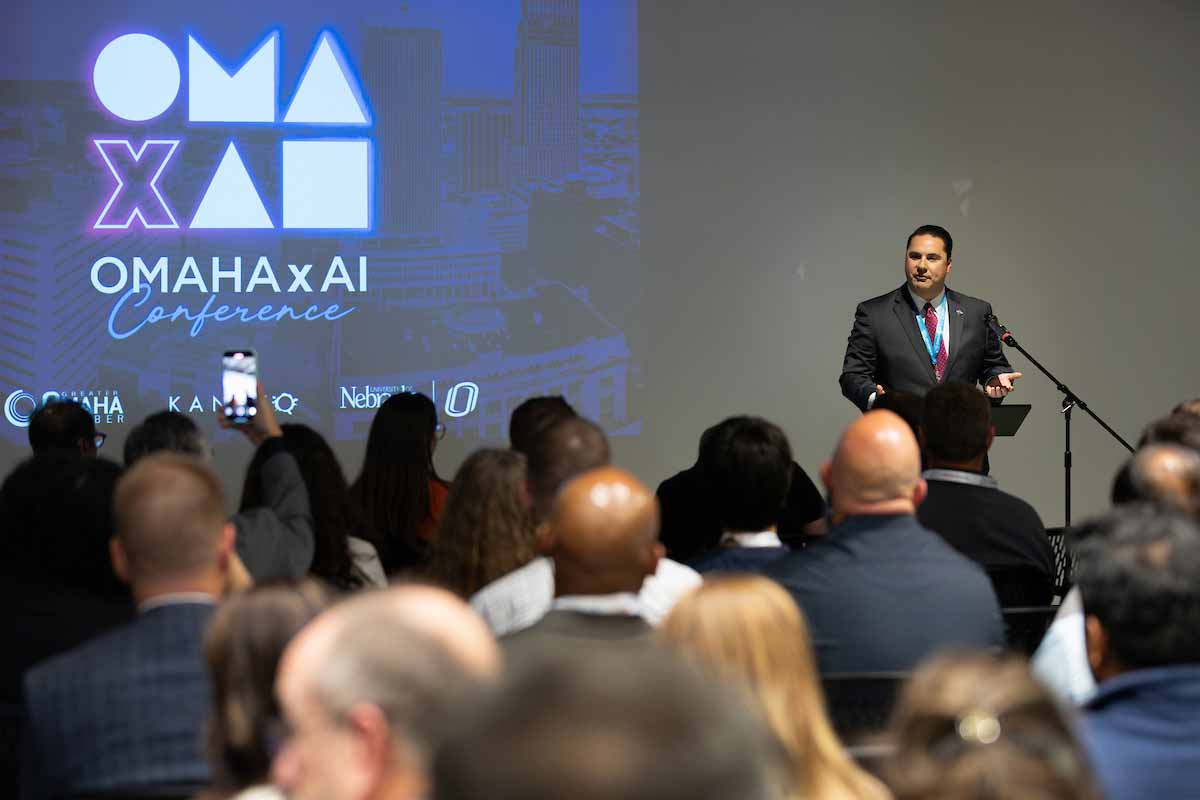
Omaha Chamber President & CEO Heath Mello delivers remarks at the 2025 OMA x AI Conference. Photo: University of Nebraska at Omaha (UNO) Office of Strategic Marketing and Communications.
Throughout human history, innovation sends shockwaves through society. There are winners and losers, disruptions, revolutions, and seismic change.
Take the printing press. The car. The internet. The cell phone. Each upended an old order, with benefits and costs we grapple with today.
Now, artificial intelligence is here. We are using this tool that – like inventions before it – is already presenting society with questions, concerns and regardless, change. We know that AI presents a force that is both capable of breakthroughs that will benefit all humankind and devastating disruptions.
Perhaps unlike prior inventions, we do not have time to watch those changes take hold. Rapid advancement and adoption of AI is causing change on a global scale in real time. As leaders of the City of Omaha, the Greater Omaha Chamber, and the University of Nebraska at Omaha, we believe we have the ability and the duty to steer this shockwave to the benefit of our community rather than be swept up in it. This is our shared vision of how we will lead through this AI-enabled era.
First, we are focused on developing, deploying, and retaining talent locally.
It is easy to say we need to attract more talent from out of state and reverse brain drain, but the most important thing a city, a business community, and its anchor university can do in this moment is to keep the talent pipeline close to home. This means recruiting Omaha area high schoolers to UNO and other local institutions, equipping them with high-demand and AI-proof skills, and employing them at Omaha companies so they can set down roots in this city.
UNO is embedding AI literacy across disciplines beyond computer science because the workers who will shape how AI is used in Omaha will not strictly be the ones writing the code. It is nurses who use AI-powered imaging software, bankers who use AI to detect fraud, entrepreneurs who use AI to build business plans, and educators building lesson plans that uphold academic rigor for AI natives.
At the same time, we recognize that AI will displace some workers or some portion of their work. Omaha's public university, city government, and Chamber share a responsibility to make retraining and up-skilling affordable and accessible for workers and help them make connections to future employers. UNO is doing this through the development of skill badges, certificates, and programs geared toward working professionals. Workforce development that does not reach the workers most vulnerable to automation is not workforce development at all.
Second, we will use AI transparently and accountably.
UNO, the Chamber, and the City of Omaha are committed to using AI only where it demonstrably improves outcomes. We are incredibly fortunate to have forums like UNO’s annual OMA x AI Conference and UNO faculty who are experts in artificial intelligence to help keep leaders informed. It gives us a massive advantage over many of our peer cities.
Finally, our people will always come first.
The printing press enabled the rapid spread of revolutionary ideas, but literacy remained a privilege for an elite few for generations.
AI will follow this pattern unless universities, the business community, and city leadership are actively engaged and listen to the people they serve. That means asking at every stage who has access to this technology, who is trained to use it, how it will be used, who benefits from its deployment, and who bears its costs.
Ensuring AI-driven economic opportunity reaches every corner of the city, businesses, and UNO — a university that serves first-generation students and working adults and draws 80 percent of its students from the Omaha area — is at the center of this transformation.
The future is unpredictable, but cities should not wait for federal direction or Silicon Valley permission to take AI seriously and be proactive. The institutions that shape the AI era in a positive direction will be the ones that move with purpose at the local level to define what the future looks like for their communities and the people in it.
The Omaha area has a chance to be leaders nationwide with this earth-changing technology; all we have to do is lean in.
About the University of Nebraska at Omaha
The University of Nebraska at Omaha (UNO) is Nebraska’s premier metropolitan university, committed to innovating for the public good, advancing social mobility, powering workforce development, and serving as a hub for community engagement. Nearly 15,000 Mavericks choose UNO for its hands-on education experiences, nationally ranked online and graduate programs, military-connected student support, and innovative approaches to supporting lifelong learning. UNO holds the Carnegie Research Activity “R2” designation, securing more than $40 million annually in external research funding and counts its faculty among the world’s most cited scholars. Sixteen Omaha Athletics programs compete in NCAA Division I as members of the Summit League and National Collegiate Hockey Conference (NCHC).
Follow UNO on Facebook, Twitter (X), Instagram, LinkedIn, and YouTube.