
Clayton Lab Lets Students Conduct Gutsy Research
Inside the Clayton Lab, researchers are expanding our knowledge of how the gut microbiome works. This work includes undergraduate students who conduct experiments and gain experience in science and medicine.
- published: 2026/04/10
- contact: Jared Craig
- email: unonews@unomaha.edu
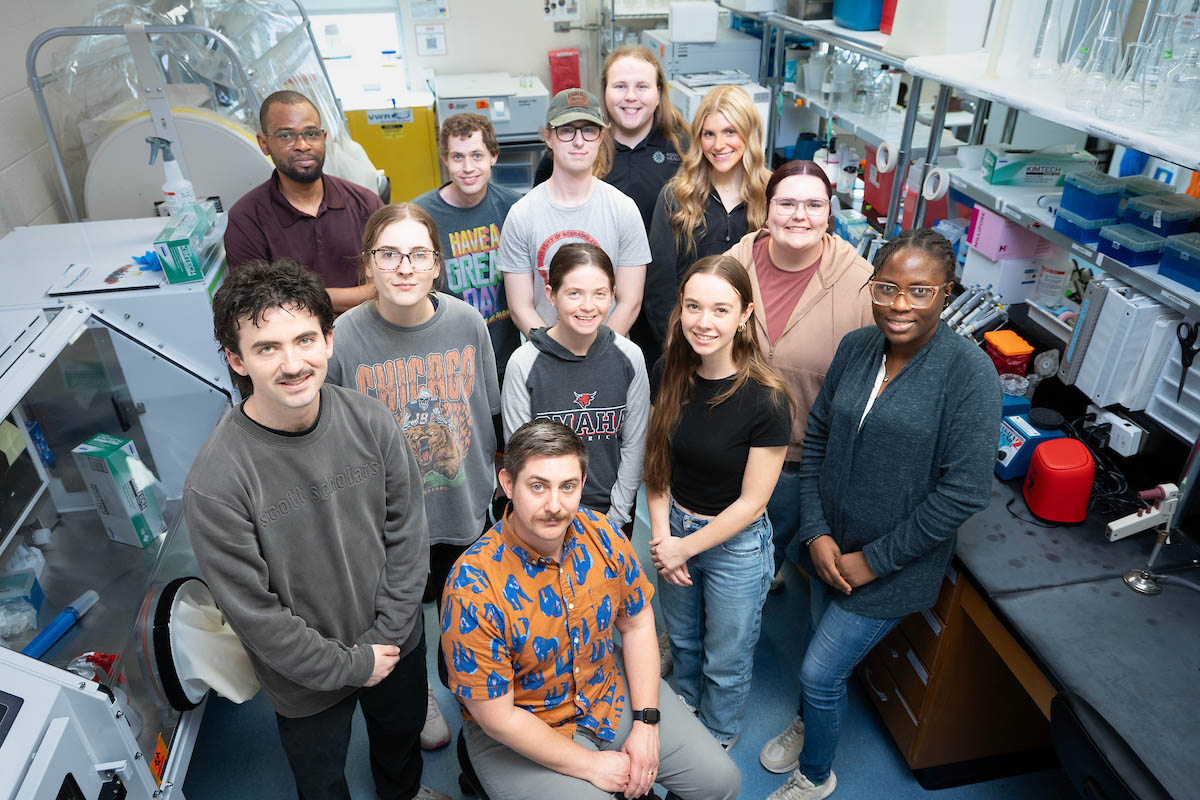
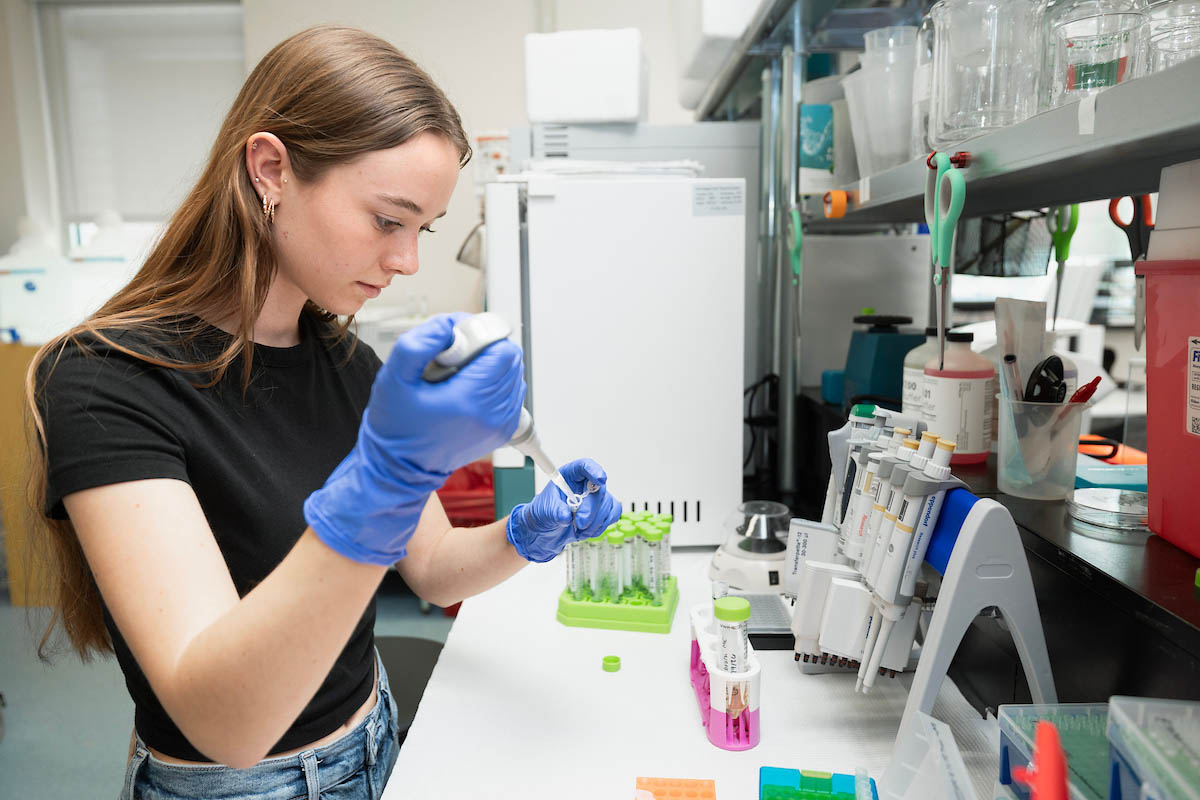
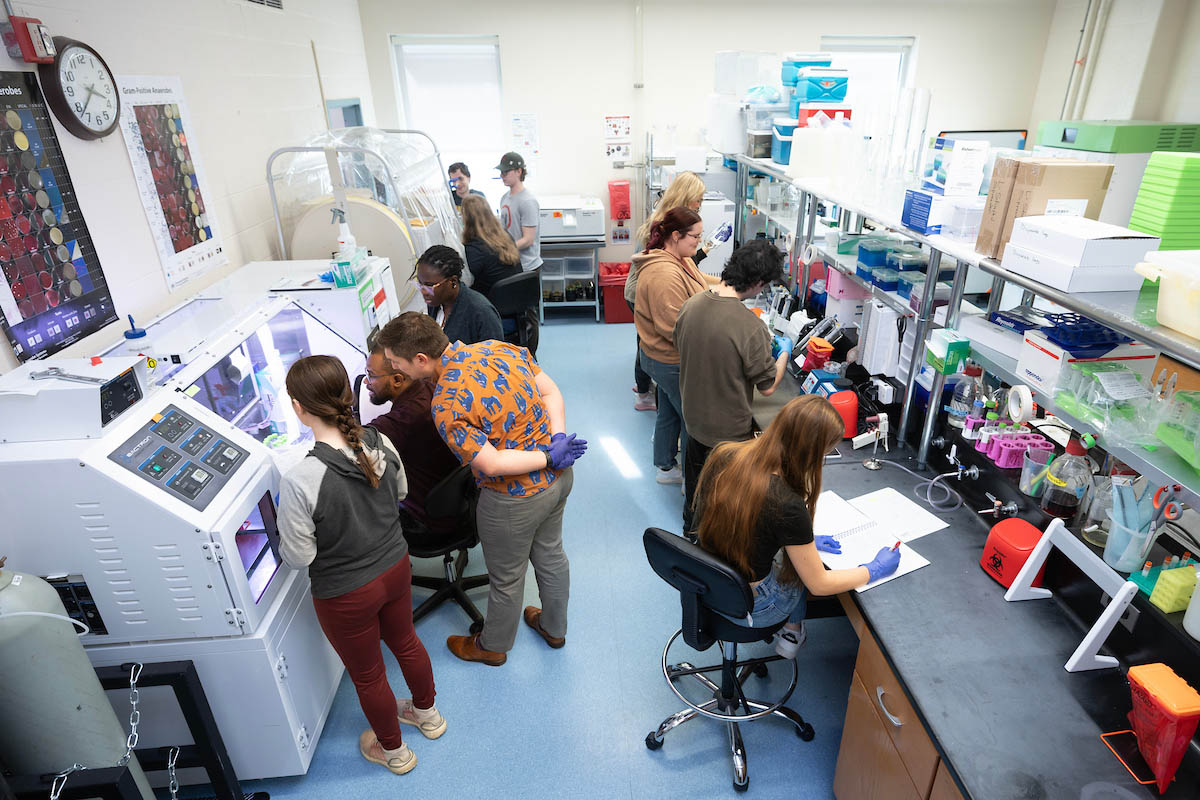
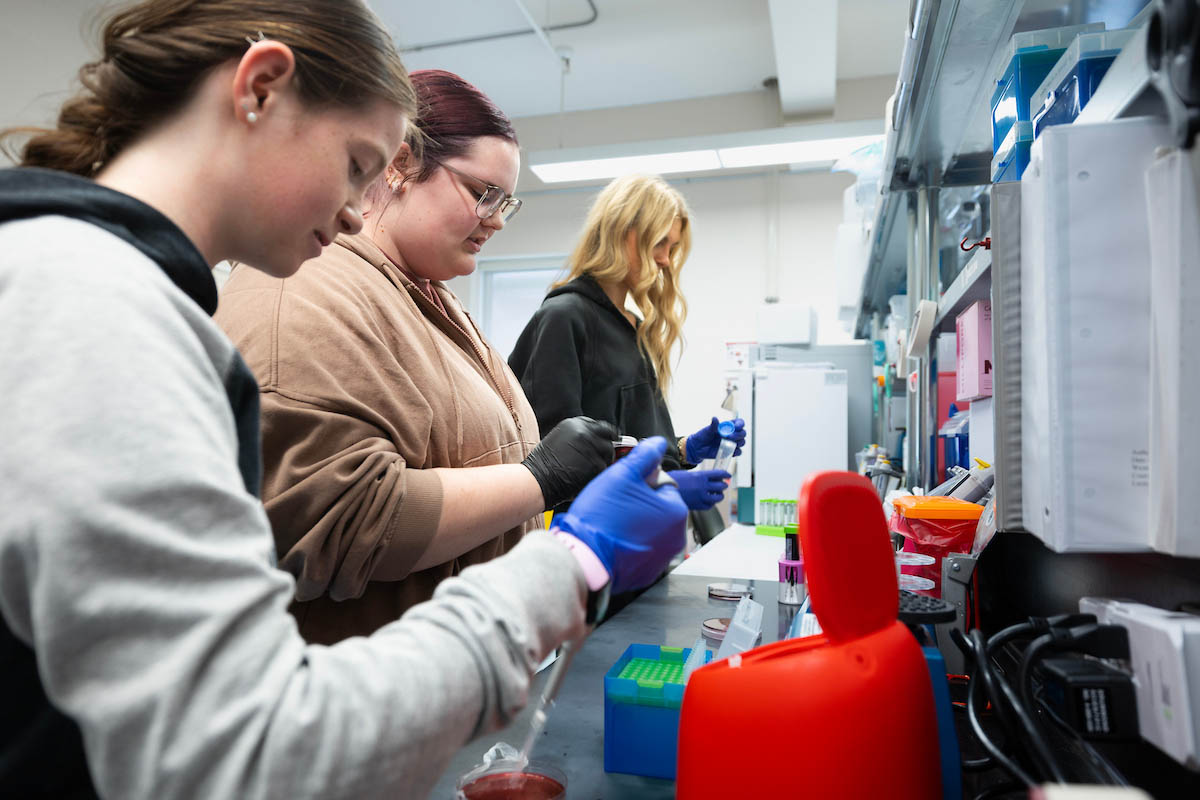
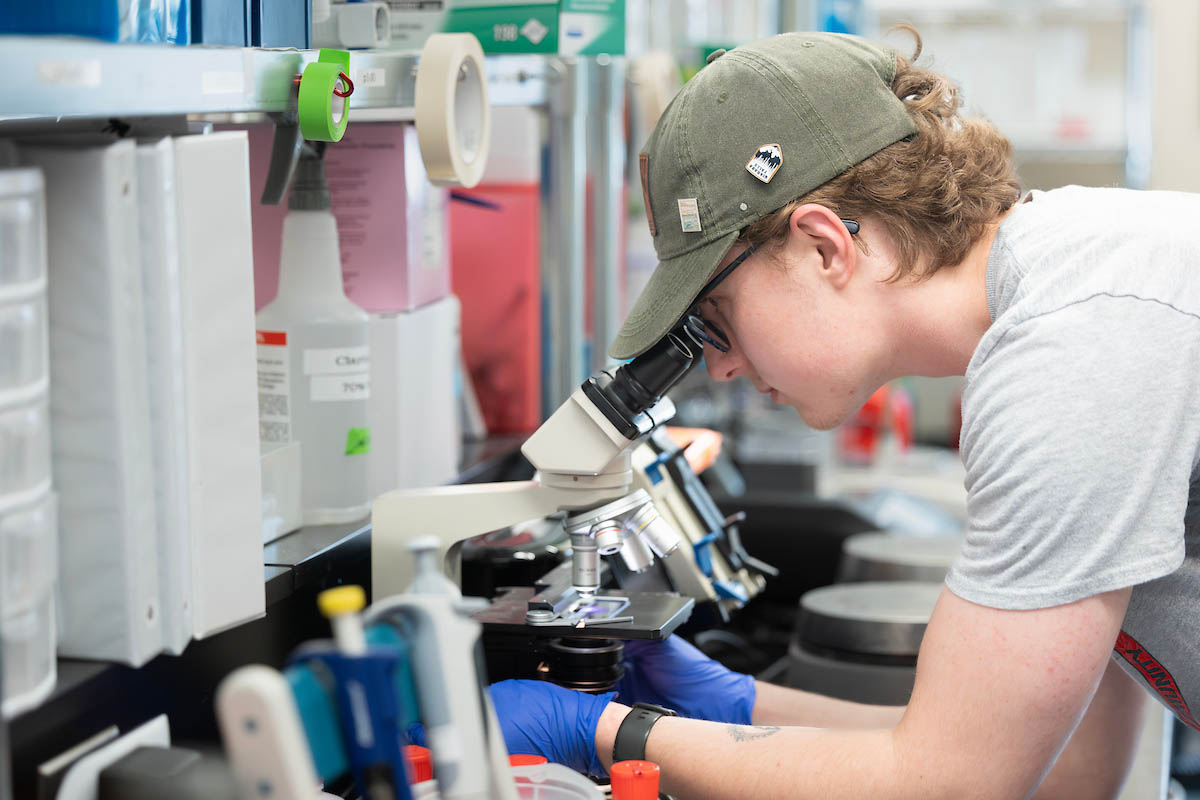
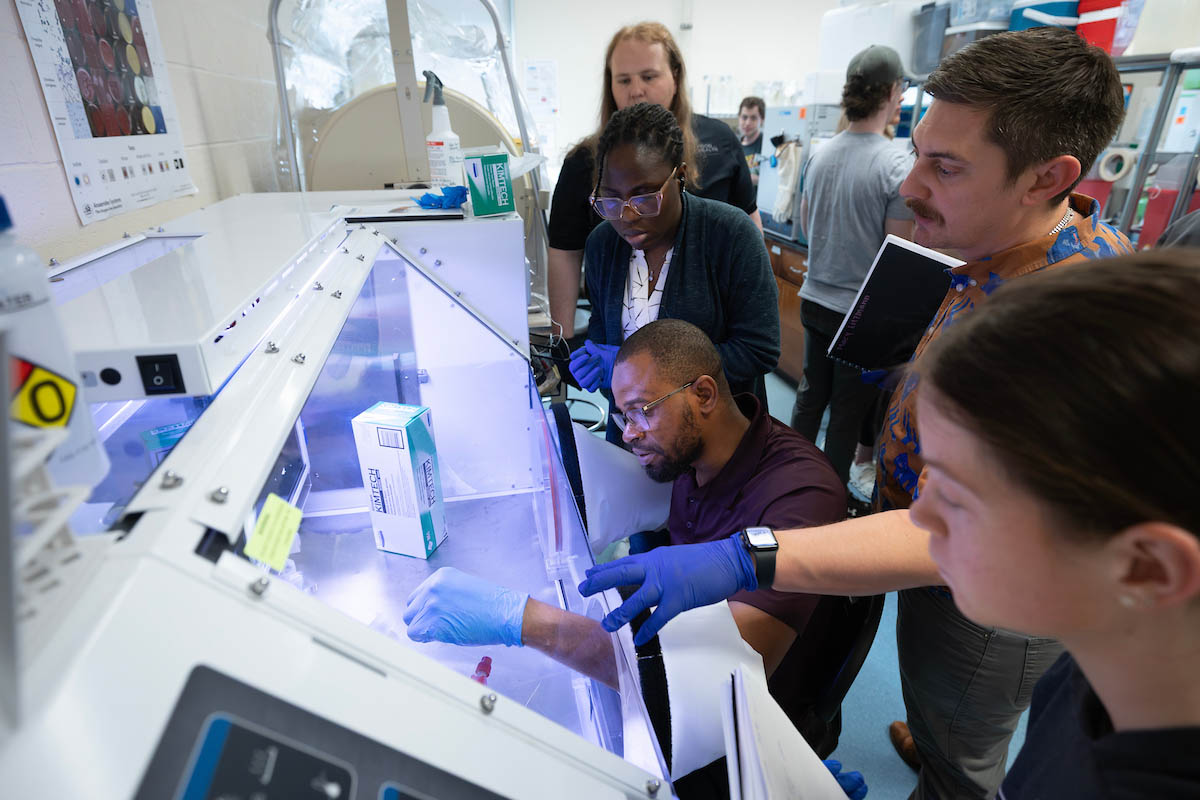
For these students at the Clayton Lab at the University of Nebraska at Omaha (UNO), lab work is building a foundation for futures in medicine and science — as well as keeping Nebraskans healthy.
The Clayton Lab studies the gut microbiome, the ecosystem inside intestines that is filled with trillions of microscopic organisms and is critical to health and how the body metabolizes nutrients. The lab focuses on major questions related human health, while also taking on projects that directly support animal care, as animals, too, have microbiomes.
Jonathan Clayton, assistant professor of biology, said the lab’s two main areas of focus are the relationship between gut bacteria and mental health, and the relationship between diet, the microbiome and health outcomes such as obesity and other metabolic diseases.
Clayton said the research has real-world value beyond the lab itself. Because the team uses animal models for human disease, their work has the potential to inform future treatments for people while also improving the care of animals. The lab has partnered with zoos and other universities on projects involving gastrointestinal illness and primate health.
That makeup made the lab a unique place for undergraduates to learn. Clayton said UNO’s research setting allowed students to be part of work that is both community-minded and impactful.
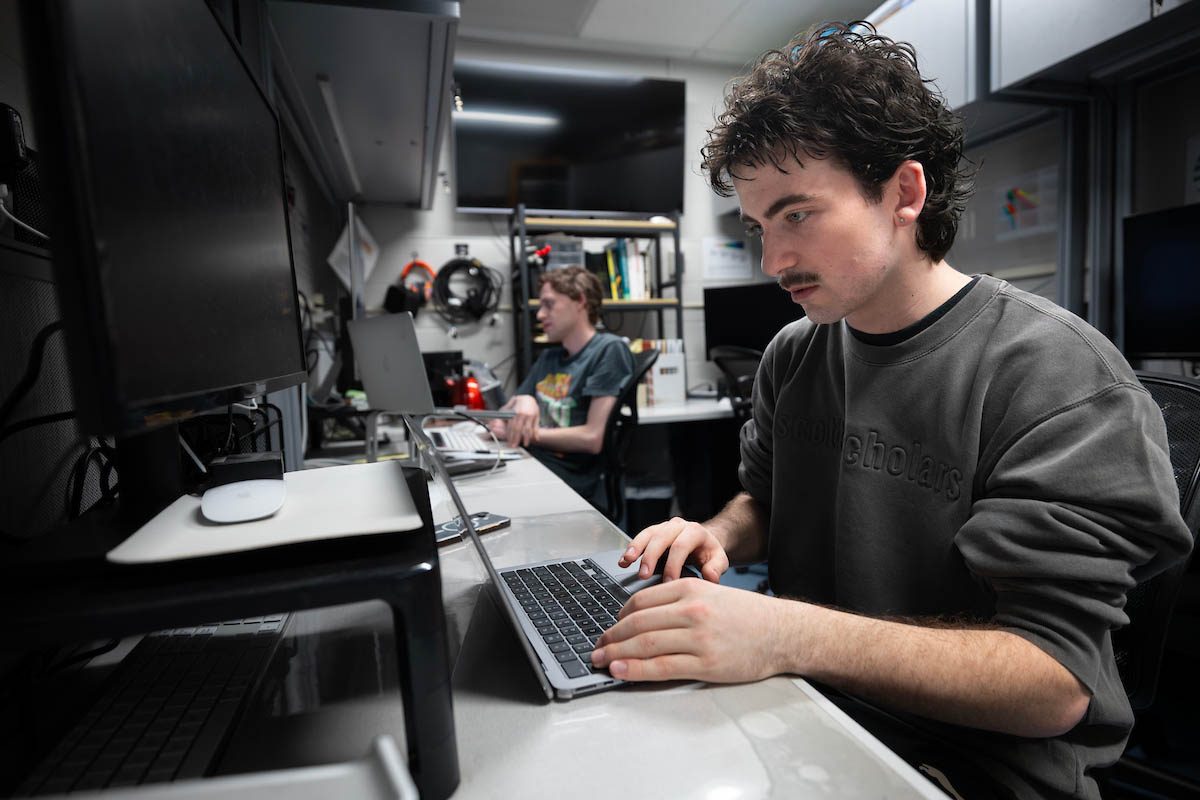
For Chris Schinzel, a biology major, joining the lab started with a professor who noticed his interest in bioinformatics, a field that develops visual models to better analyze and understand data. After six months of doing research during his freshman year, that professor recommended the Clayton Lab. Schinzel met with Clayton, talked about what he enjoyed and what he wanted to pursue, and from there, as he put it, “we just took off.”
Since then, Schinzel has spent more than two years working with gut microbiome data and developing a bioinformatics pipeline for the Clayton Lab and other research labs to use for data analysis purposes. He said the experience helped prepare him for his next step: medical school at the University of Nebraska Medical Center (UNMC).
“I was accepted into UNMC, which is awesome. I credit a lot of this to my work in the lab,” he said.
Kaitlyn Oswald, a neuroscience and gerontology major, found the lab in a different way. At the beginning of her freshman year, she saw a flyer in the building inviting students interested in research to send an email. She did, met with Clayton and was placed on a project she is still working on today.
Now, as she graduates in May, she plans to pursue a Ph.D. in neuroscience at the University of Iowa, with interests in healthy aging and changes in cognition over time. Even though microbiology differs from her long-term field, she said the lab has given her skills she will carry forward.
“Microbiology is very different than neuroscience, but there’s still a lot of skills that are very applicable across fields,” she said. “Just a lot of the basic research skills, understanding the research process, being able to communicate, work in a team, be teachable, and to learn from that mentor.”
Both students said the lab has given them experiences they would not have found in a classroom alone. Along with bioinformatics, Schinzel’s research pushed him beyond computer work and into wet lab responsibilities. Taking himself out of his comfort zone only helped him grow.
“You can do things that seem really difficult, but if you put in consistent amounts of work over time, you can do things you did not think were possible,” he said.
Oswald said research surprised her in a similar way.
“I got started in research just kind of on a whim, and I was kind of shocked by how much I enjoyed it,” she said.
She credited Clayton’s mentorship with helping her gain confidence and direction.
“He’s very interested in making sure if you want experience presenting, you’re going to get experience presenting,” she said. “He’s just very eager to help people meet their specific goals.”
Clayton said that is exactly what he hopes the lab provides. He wants students to learn how to do research, feel proud of their work, and leave with experiences that support their long-term goals. In his lab, he said, undergraduates are essential to the research that is coming out.
“They really drive the research,” Clayton said. “From start to finish, they are involved in every part of the process.”
About the University of Nebraska at Omaha
The University of Nebraska at Omaha (UNO) is Nebraska’s premier metropolitan university, committed to innovating for the public good, advancing social mobility, powering workforce development, and serving as a hub for community engagement. Nearly 15,000 Mavericks choose UNO for its hands-on education experiences, nationally ranked online and graduate programs, military-connected student support, and innovative approaches to supporting lifelong learning. UNO holds the Carnegie Research Activity “R2” designation, securing more than $40 million annually in external research funding and counts its faculty among the world’s most cited scholars. Sixteen Omaha Athletics programs compete in NCAA Division I as members of the Summit League and National Collegiate Hockey Conference (NCHC).
Follow UNO on Facebook, Twitter (X), Instagram, LinkedIn, and YouTube.