
UNO Researchers Publish Report on the Impact of COVID-19 on Local Organizations Working with Mobile Vulnerable Populations in Omaha
- published: 2023/06/06
- contact: Cristián Doña-Reveco, Ph.D. - Office of Latino/Latin American Studies
- email: cdona@unomaha.edu
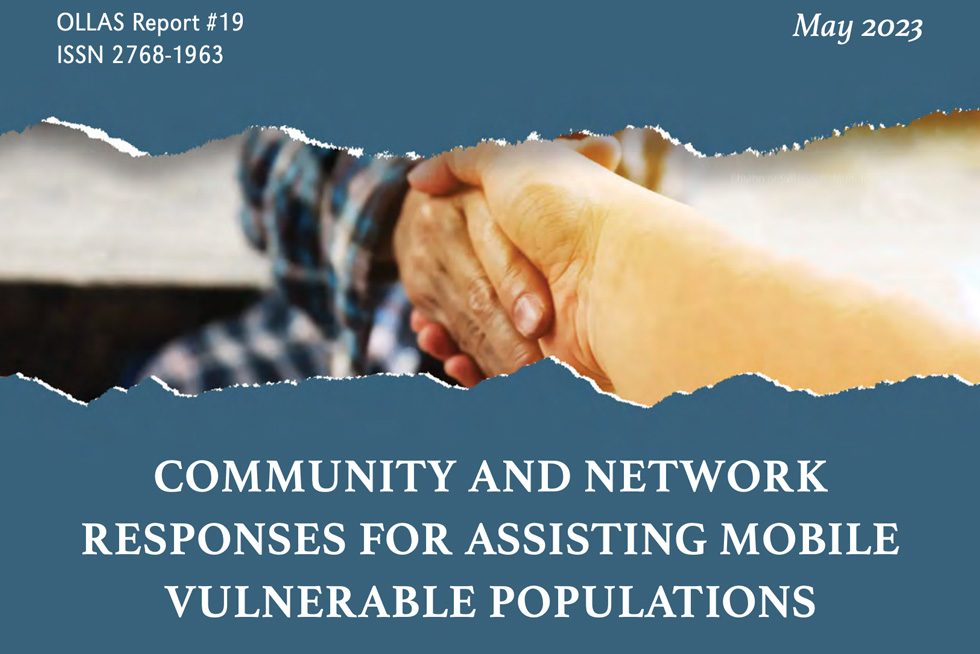
A new study conducted by researchers in the School of Criminology and Criminal Justice (SCCJ), the Department of Sociology & Anthropology, the Department of Religious Studies, and the Office of Latino/Latin American Studies at the University of Nebraska at Omaha (UNO), is expanding our understanding of the effects of COVID-19 in local organizations that work with mobile vulnerable populations in Omaha.
For this project, the research team conducted both a survey and in-depth interviews with executive directors and service providers from agencies working with victims of human trafficking, people experiencing homelessness, refugees, immigrants, and the Latino community in Omaha. The study focused on mobile vulnerable populations because of the compounding challenges that these populations can face, such as poverty, citizenship status, physical insecurity, and reduced English language comprehension.
Researchers found that most organizations that serve mobile vulnerable populations were already under-resourced prior to the pandemic. As these populations’ vulnerabilities increased during COVID-19, so did the needs of the organizations that serve them.
Overall, agencies found substantial increases in client need for mental health, substance use disorder, and childcare services. Despite successfully leveraging different strategies to rapidly adapt and shift services to meet clients’ needs in response to the pandemic, interviewees expressed concern about their ability to respond to the long-term effects of the pandemic on their clients and organizations.
The study focused on connections between community organizations and both UNO and the University of Nebraska Medical Center (UNMC). Stronger, formalized, and constant collaborations between the university and the agencies could have lessened the impact of the pandemic on these organizations and their clients. This research demonstrates the important role that UNO and UNMC can play in working together with community organizations to reduce population vulnerabilities.
The report proposes that UNO and UNMC build deeper connections with community organizations that serve mobile vulnerable populations, to benefit the community and promote workforce growth and development among students who can engage in training and pre-professional opportunities.
About the Study
The project, which was developed and carried out by Teresa Kulig, Ph.D., Allison Schlosser, Ph.D., Morgan VanSlyke, Laura Alexander, Ph.D., and Cristián Doña-Reveco, Ph.D., came out of a cross-disciplinary collaboration between scholars all seeking to address the needs of at-risk individuals.
Kulig noted that “a project of this nature would not have been possible without the support of our colleges at UNO or the reputation of the institution that facilitated trust between our local community and researchers.” She further commented that “the insights from this project have provided pathways for the university to continue to strengthen these relationships and further assist organizations in their important work.”
This study, published as part of the Office of Latino/Latin American Studies (OLLAS) Report series, adds to the growing number of studies produced by SCCJ’s Victimology and Victim Studies Research Lab (VVSRL), OLLAS, and other academic units on the impact of COVID-19 in the Omaha Metropolitan Area and the post-pandemic needs and opportunities of our community.
Funding for the study came from UNO’s College of Public Affairs and Community Service and the College of Arts and Sciences. The full report and an executive summary may be found on the UNO OLLAS website.
For questions about the report, please contact Teresa Kulig, Ph.D., at tkulig@unomaha.edu.
KETV spoke with one of the organizations included in the study as well as Laura Alexander, Ph.D., Goldstein Family Chair in Human Rights and associate professor of religious studies. The full story can be viewed on the KETV website.