University of Nebraska at Omaha logo University of Nebraska at Omaha
REQUEST INFO VISIT APPLY

MY UNO DIRECTORY
University of Nebraska at Omaha logo
Division of Innovative and Learning-Centric Initiatives
REQUEST INFO VISIT APPLY
MY UNO DIRECTORY
  • About Us Backback to Main menu
    • Welcome
    • Our Purpose
    • Our Team
    • Advisory Committees
    • Facts and Figures
  • Services We Offer Backback to Main menu
    • Innovation Funding
    • Digital Learning
    • Online Program Development
    • Microcredential Development
    • Market Research & Demand
    • Digital Learning Research Support
  • Digital Accessibility Backback to Main menu
    • Resources
    • Digital Accessibility Challenge
    • Getting Started
    • Wall of Fame
  • Projects, Pilots & Initiatives Backback to Main menu
    • Microcredentials
    • NU Advance
    • Open Nebraska
    • Student Badging Resources
    • Badging at UNO
  • Events, News, & Success Stories Backback to Main menu
    • News
    • Faculty Champions & Recognition
    • Digital Learning Showcase
    • Previous Events
    • Digital Learning Newsletters
    • Subscribe to Our Newsletter "The Worksheet"
    • Online Rankings
  • AI Learning Lab Backback to Main menu
    • Overview
    • ChatGPT Services
    • AI Support
    • ChatGPT EDU
    • AI Campus Consortium
    • AI-Powered Educator Program
    • AI-Powered Teaching Grants
    • Students x ChatGPT Pilot Program
    • AI Summit
  • CCSW Backback to Main menu
    • About Us
    • Competency-Based Education
    • Skills Lab
    • Future of Work Symposium
    • Workforce Partnerships Program
    • Our Team
    • Advisory Board

Division of Innovative and Learning-Centric Initiatives News

Monday, January 26, 2026
  1. UNO
  2. Division of Innovative and Learning-Centric Initiatives
  3. Newsroom
indextrue176892410935695799870Division of Innovative and Learning-Centric Initiatives News RoomThe landing space for all news, newsletters, and blogs for the Division of Innovative and Learning-Centric Initiatives.1462078800000Division of Innovative and Learning-Centric Initiatives News Room/news/indexInnovative and Learning-Centric Initiativessite://Innovative and Learning-Centric Initiatives/news/indexcjanes16607552762468219740717694594098121760072400000
News ReleaseNoNoYesYes1767794400000/_files/images/are-mc-for-me_header.jpgnavigationYessite://Innovative and Learning-Centric Initiatives/_files/images/are-mc-for-me_header.jpgInnovative and Learning-Centric Initiativesare-mc-for-me_header.jpg31679026191758An overhead view of a person using a laptop, with hands on the keyboard, on a clean white background. ///YouTube

Upskill. Reskill. Professional development hours. Training requirements. Whether you’re responsible for sourcing and administering learning opportunities in your organization (managers, leaders, HR professionals) or are just itching to add a new credential to your resume, you’ll find that the opportunities to grow are somewhat limitless.

However, more than just the opportunity, you’ll need something that 1) is affordable, 2) is accessible, 3) runs on your own timeline, and 4) gives you a real credential that others can see. Most online learning platforms don’t check these boxes, and if they do, the learning sources are OK at best.

This is exactly why new learners and seasoned professionals alike are choosing a new path—microcredentials at the University of Nebraska at Omaha (UNO).

What is a microcredential course?

Put simply: microcredentials are non-credit courses (from an accredited university) that offer valuable skill building across a multitude of disciplines and industries, as well as a digital badge to showcase what you’ve learned.

At UNO, these microcredentials are not a “lower level” learning course that is less effective than traditional degree courses, but an easy and useful way to continue learning long after you’ve completed a degree. 

Want to try something outside of your wheelhouse? There’s a microcredential for that. Looking to fill a knowledge gap in your team at work? Microcredential courses can be purchased in bulk to ensure your whole team learns a new skill and can apply it right away.

Professional development made accessible

Because we believe education should continue long after you earn a degree, we also believe we have responsibility in making sure that education is accessible to all. Microcredential courses are 100% online. You can do them from anywhere you have access to your device. Plus, they are formatted as asynchronous, which means you can complete them at any time. Early bird? Night owl? Log on when it works best for you. Finally, there are no pre-requisites. Just enroll in a course and start learning. 

Professional credentials made affordable

These courses are low cost with an ever-growing library of options to choose from. They are also created with your time in mind. More than money, we know a barrier to learning for many people is the busyness of their regular lives—most courses require only 3–5 hours a week. 

Employee development, meet microcredential courses

It’s time to enter into a new era for learning. Half-day seminars and conferences that try to cover a lot of knowledge generally fall short on informational depth—and this is what employees need most to grow. The answer? Microcredentials.

For the employee whose background is in business but needs to learn more about successful grant development for their new role.

For the Chief Human Resource Officer (CHRO) who is trying to help their organization navigate work in the AI era.

For the longstanding employee who hasn’t been to school in years but needs training in project management tools and strategies to learn the most up-to-date techniques.

There’s something for everyone at UNO, and our microcredential courses make learning from an accredited university the most accessible and affordable it’s ever been. Discover our growing library of microcredentials and consider enrolling today.


About the University of Nebraska at Omaha

Located in one of America’s best cities to live, work and learn, the University of Nebraska at Omaha (UNO) is Nebraska’s premier metropolitan university. With more than 15,000 students enrolled in 200-plus programs of study, UNO is recognized nationally for its online education, graduate education, military friendliness and community engagement efforts. Founded in 1908, UNO has served learners of all backgrounds for more than 100 years and is dedicated to another century of excellence both in the classroom and in the community.

Follow us on Facebook, Instagram, and LinkedIn.

/
///No
/news/2026/01/how-microcredential-courses-answer-the-call-for-a-new-way-to-learndepartmentphoneemailinnovate@unomaha.educategoryFacultyStaffGeneral Publiclocationevent-startsevent-endssite://Innovative and Learning-Centric Initiatives/news/2026/01/how-microcredential-courses-answer-the-call-for-a-new-way-to-learnInnovative and Learning-Centric Initiativeshow-microcredential-courses-answer-the-call-for-a-new-way-to-learn[Article Heading]How Microcredential Courses Answer the Call for a New Way to LearnMicrocredentialsUNO Division of Innovative and Learning-Centric Initiatives (ILCI)How Microcredential Courses Answer the Call for a New Way to LearnJan 6, 2026 12:00 AM
News ReleaseNoNoYesYes1761051600000/_files/images/blog-21_header.jpgnavigationYessite://Innovative and Learning-Centric Initiatives/_files/images/blog-21_header.jpgInnovative and Learning-Centric Initiativesblog-21_header.jpg16353726191758Illustration with the headline text: “Preparing Students for the Workforce with AI-Driven Tools.” Below the text, a student in a red shirt works on a laptop while engaging in a virtual conversation with another person appearing in a pop-up screen. The image represents AI-powered learning and career preparation.///YouTube

AI is redefining professional preparation in higher education, equipping students with the skills and tools needed to succeed in rapidly evolving industries. At the University of Nebraska at Omaha (UNO), faculty are integrating AI into courses and initiatives to help students gain hands-on experience and build marketable skills. Here, we explore three projects that highlight the role of AI in workforce development.

AI in Strategic Decision-Making for Supply Chain Management

Project Lead: Anh Ta

In the graduate-level course BSAD 8710: Supply Chain Management, Anh Ta is integrating AI tools to prepare students for the complexities of AI-driven industries. By leveraging AI for scenario analysis, predictive modeling, and strategic planning, students gain practical experience solving real-world challenges. The course emphasizes ethical considerations, ensuring that students not only understand the technological applications but also the responsibilities of using AI in professional environments.

AI-Enhanced Learning in Sales Education

Project Lead: Anne Herman

Anne Herman’s project focuses on enhancing sales education through AI tools, particularly in the Professional Selling and Consultative Selling courses. By incorporating AI into role-play scenarios, case studies, and feedback processes, students practice and refine their sales techniques in a structured environment. The initiative also allows instructors to streamline preparation for class projects, providing students with high-quality, interactive learning experiences while fostering teamwork and critical thinking.

AI in Genomics and Bioinformatics

Project Lead: Guoqing Lu

Guoqing Lu is integrating AI tools into genomics and bioinformatics courses to enhance both teaching and research. Students use AI to personalize learning experiences, conduct interactive simulations, and receive automated feedback, enabling a deeper understanding of complex biological concepts. For researchers, AI tools streamline routine tasks, accelerating data analysis and fostering innovative discoveries. By bridging education and research, this project prepares students for impactful careers in bioinformatics.

AI as a Workforce Game-Changer

By integrating AI into professional preparation, these projects highlight UNO’s commitment to ensuring students are ready to meet the demands of an AI-driven workforce. Through hands-on learning, ethical considerations, and practical applications, these initiatives empower students to succeed in industries where technology plays a pivotal role.


 About the University of Nebraska at Omaha

Located in one of America’s best cities to live, work and learn, the University of Nebraska at Omaha (UNO) is Nebraska’s premier metropolitan university. With more than 15,000 students enrolled in 200-plus programs of study, UNO is recognized nationally for its online education, graduate education, military friendliness and community engagement efforts. Founded in 1908, UNO has served learners of all backgrounds for more than 100 years and is dedicated to another century of excellence both in the classroom and in the community.

Follow us on Facebook, Instagram, and LinkedIn.

/
///No
/news/2025/10/preparing-students-for-the-workforce-with-ai-driven-toolsdepartmentphoneemailinnovate@unomaha.educategoryStaffGeneral PublicFacultylocationevent-startsevent-endssite://Innovative and Learning-Centric Initiatives/news/2025/10/preparing-students-for-the-workforce-with-ai-driven-toolsInnovative and Learning-Centric Initiativespreparing-students-for-the-workforce-with-ai-driven-toolsPreparing Students for the Workforce with AI-Driven ToolsPreparing Students for the Workforce with AI-Driven ToolsUNO Division of Innovative and Learning-Centric Initiatives (ILCI)Faculty at UNO are integrating AI into courses and initiatives to help students gain hands-on experience and build marketable skills.Oct 21, 2025 8:00 AM
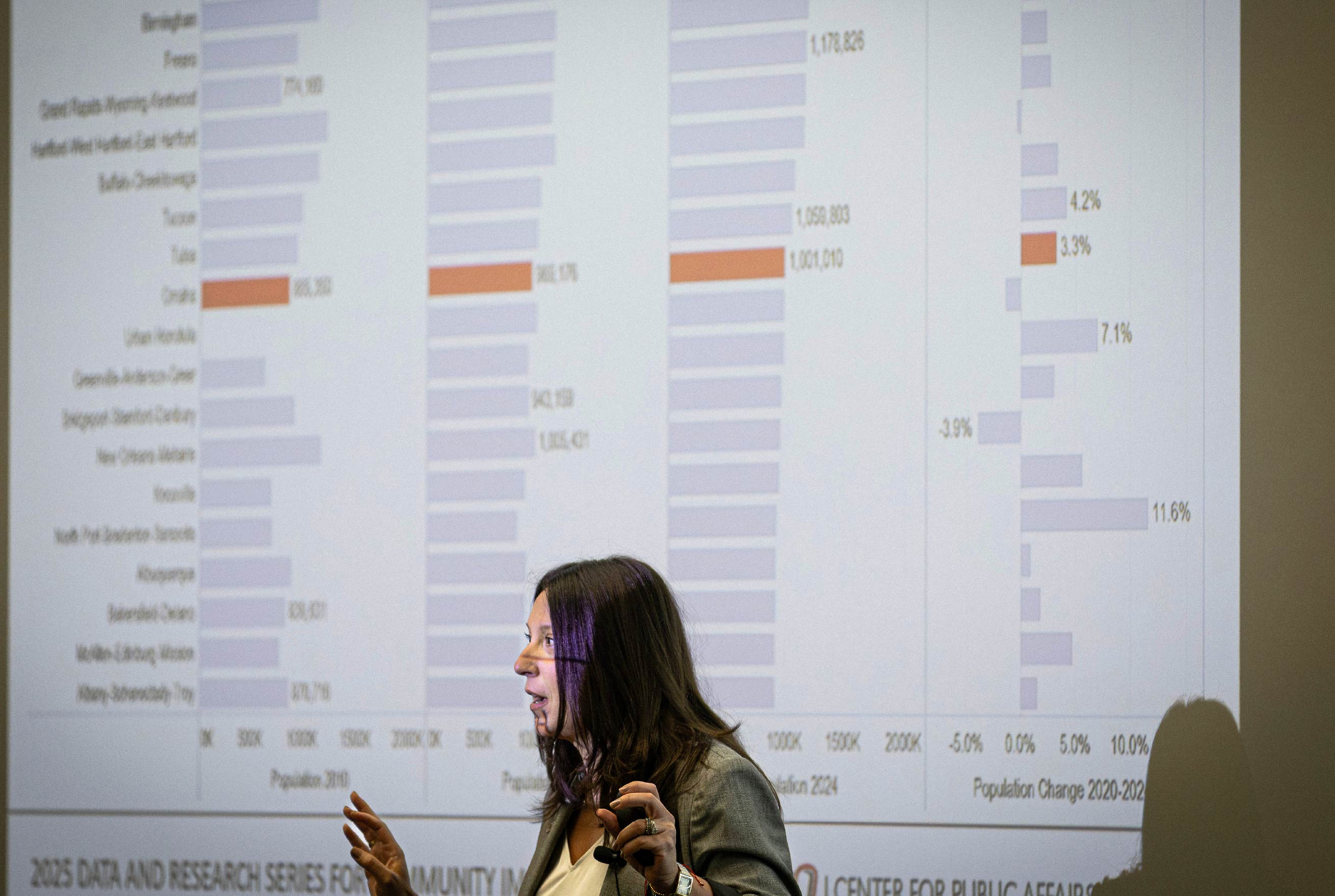
News ReleaseNoNoYesYes1766152800000/_files/images/cpar-images-header.jpgnavigationYessite://Innovative and Learning-Centric Initiatives/_files/images/cpar-images-header.jpgInnovative and Learning-Centric Initiativescpar-images-header.jpg45655226191758Josie Gatti Schafer, Ph.D., Director of the Center for Public Affairs Research, speaks during the CPAR Data and Research Series for Community Impact. Josie Gatti Schafer, Ph.D., Director of the Center for Public Affairs Research, speaks during the CPAR Data and Research Series for Community Impact. ///YouTube

The Center for Public Affairs Research (CPAR) at the University of Nebraska at Omaha (UNO) participated in exploring how ChatGPT EDU Access (formerly the OpenAI Challenge) can support high-quality research and professional development. Offered by UNO’s AI Learning Lab, this ChatGPT access allowed their team to experiment with new tools in a structured, ethical environment—aligning with CPAR’s core values of producing scholarship that is purposeful, aspirational, and of high research integrity. 

The Vision for AI at CPAR

At CPAR, the research process does not end when data collection is complete. A core part of their mission is making information digestible and actionable for state agencies, nonprofits, local governments, and the public more broadly. Translating complex data analyses into insights that decision-makers can use often requires significant time and creativity. Through ChatGPT EDU Access, their team explored how AI can assist with this process, helping them communicate research findings more efficiently and effectively.

One recent example comes from their statewide study on the impact of arts, culture, and humanities in Nebraska. After conducting interviews and writing five in-depth community case studies, they used AI as a thought partner to help summarize the case study narratives. AI highlighted which elements were most important to feature in one-page community summaries and helped identify key themes across case studies. In many cases, AI confirmed the conclusions they had already reached but did so quickly, giving them as the researchers more time to focus on deeper analysis and create project deliverables for their partners.

CPAR’s Discoveries & Thoughts on AI

For their team, AI has become a useful thought partner, but not a decision-maker. It helps them simplify complex information, create consistent messaging, and adapt materials for different audiences. For a small, multidisciplinary research team, these efficiencies matter. But AI cannot replace the contextual knowledge, lived experience, and long-standing relationships that shape CPAR’s approach to community-engaged research. The team’s ability to understand partner needs, interpret local conditions, and translate findings into meaningful solutions for Nebraska communities is something that AI can support, but that only human intelligence can provide.

Learn more about UNO's AI Learning Lab and ChatGPT Edu.


/
///Yes
/news/2025/12/cpar-uses-unos-chatgpt-edu-access-to-explore-practical-ethical-ways-to-use-ai-in-community-engaged-researchdepartmentphoneemailinnovate@unomaha.educategoryStaffGeneral PublicFacultylocationevent-startsevent-endssite://Innovative and Learning-Centric Initiatives/news/2025/12/cpar-uses-unos-chatgpt-edu-access-to-explore-practical-ethical-ways-to-use-ai-in-community-engaged-researchInnovative and Learning-Centric Initiativescpar-uses-unos-chatgpt-edu-access-to-explore-practical-ethical-ways-to-use-ai-in-community-engaged-researchCPAR Uses UNO’s ChatGPT EDU Access to Explore Practical, Ethical Ways to Use AI in Community-Engaged ResearchCPAR Uses UNO’s ChatGPT EDU Access to Explore Practical, Ethical Ways to Use AI in Community-Engaged ResearchTranslating complex data into insights that decision-makers can use requires significant time and creativity. The CPAR team used AI to assist with this process, helping them communicate research findings more efficiently and effectively.UNO Division of Innovative and Learning-Centric Initiatives (ILCI)UNO’s Center for Public Affairs Research (CPAR) leverages ChatGPT EDU access to study practical and ethical AI uses in community-engaged research.Dec 17, 2025 8:00 AM
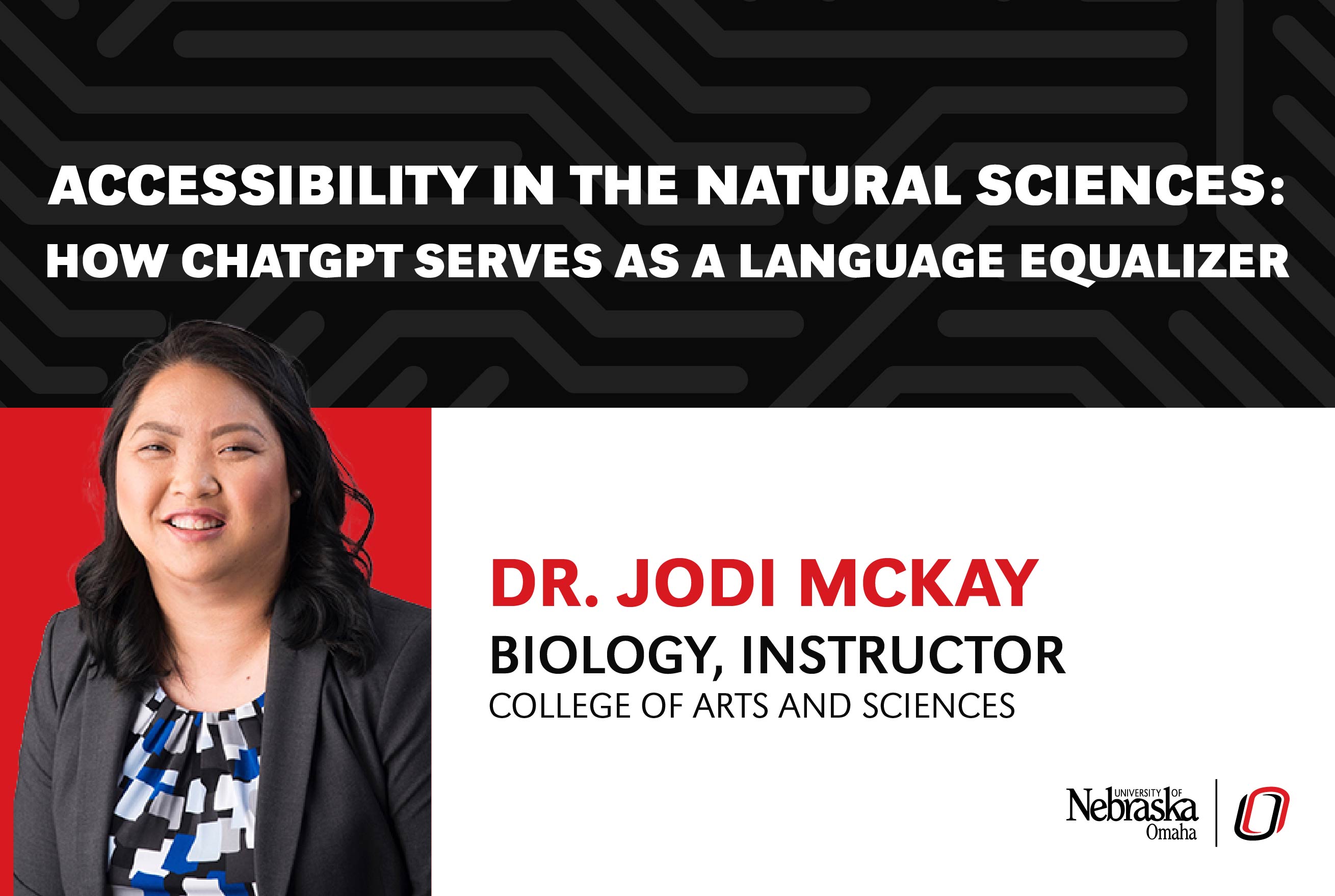
News ReleaseNoNoYesYes1763733600000/_files/images/jodi-mckay_web.jpgnavigationYessite://Innovative and Learning-Centric Initiatives/_files/images/jodi-mckay_web.jpgInnovative and Learning-Centric Initiativesjodi-mckay_web.jpg28544426191758Dr. Jodi McKay, a biology instructor in the College of Arts and Sciences at the University of Nebraska at Omaha, is pictured smiling in professional attire. The text on the image reads: "Accessibility in the Natural Sciences: How ChatGPT Serves as a Language Equalizer." The background features black circuit-like lines on the top, a red and white split background below, and the UNO logo at the bottom right.///YouTube


An instructor who notices is an instructor who cares. 

It all started when Dr. Jodi McKay, instructor in the biology department at the University of Nebraska at Omaha, noticed one of her students struggling to grasp anatomy and physiology topics, because English was not their first language. 

McKay saw a potential use for artificial intelligence as an equalizer within her classroom. Learning scientific terms in a language that is not their primary means students may have to take a lot of extra time to learn something just because of translation alone. 

So her participation in the ChatGPT EDU Access began. “I see tremendous potential for AI to act as a great equalizer when used thoughtfully. This is especially true for individuals with disabilities and for people who speak English as a second language,” McKay said. “As someone who personally identifies with both of those experiences, I was eager to explore how AI could enhance my own life and support students who face similar challenges.”

AI’s Roles: Creative Partner & Decision Maker

McKay uses AI in two main ways in her work. The first: a creative partner in her teaching. She uploaded existing assignments and asked for feedback on how they could be refined or elevated. In this use case, she could take the work she had already done and get a fresh outlook to ensure her students are continually challenged in new ways.


Second, when faced with different approaches, she used her custom GPT as a decision-making tool. From generating pros and cons, providing a structure to evaluate options, identifying risks and pitfalls in her in-class activities, and so much more.


“I treat AI like a consultant,” McKay continued. “Someone I can turn to for early feedback on first drafts or the initial phases of projects. It helps me refine ideas before presenting them to students, saving time and adding depth to my teaching practice.”

 The Heart (and Help) Behind It All

Watching one of her students experiment with ChatGPT in their own learning helped inspire her desire for greater accessibility in communication within her classroom. But where does one even begin? McKay partnered with the AI Learning Lab to access the enterprise version of ChatGPT, as well as learn how to implement the technology while being supported along the way. 

“Knowing that I had a dedicated team I could reach out to—whether to brainstorm ideas, troubleshoot challenges, or simply talk through possibilities—was essential,” she said. “That combination of technical access and personal collaboration made it much easier for me to explore AI confidently and creatively in my work. The Lab’s support has been helpful not only in my teaching but also in my personal workflow.”

If you have an idea for AI integration but don’t know where to start, check out UNO’s ChatGPT EDU Access to learn more. But don’t just take our word for it. McKay’s advice for those starting out is simple:

“AI can be intimidating from the outside, but once you step into it with curiosity and intention, it can also be empowering. My advice: start exploring, stay reflective, and let AI be a tool that helps you unlock new possibilities.”


About the University of Nebraska at Omaha

Located in one of America’s best cities to live, work and learn, the University of Nebraska at Omaha (UNO) is Nebraska’s premier metropolitan university. With more than 15,000 students enrolled in 200-plus programs of study, UNO is recognized nationally for its online education, graduate education, military friendliness and community engagement efforts. Founded in 1908, UNO has served learners of all backgrounds for more than 100 years and is dedicated to another century of excellence both in the classroom and in the community.

Follow us on Facebook, Instagram, and LinkedIn.


/
///No
/news/2025/11/accessibility-in-the-natural-sciences-how-chatgpt-serves-as-a-language-equalizerdepartmentphoneemailinnovate@unomaha.educategoryGeneral PublicFacultyStafflocationevent-startsevent-endssite://Innovative and Learning-Centric Initiatives/news/2025/11/accessibility-in-the-natural-sciences-how-chatgpt-serves-as-a-language-equalizerInnovative and Learning-Centric Initiativesaccessibility-in-the-natural-sciences-how-chatgpt-serves-as-a-language-equalizerAccessibility in the Natural Sciences: How ChatGPT Serves as a Language EqualizerAccessibility in the Natural Sciences: How ChatGPT Serves as a Language EqualizerUNO Division of Innovative and Learning-Centric Initiatives (ILCI)UNO biology instructor uses ChatGPT to support students learning science in English as a second language, making learning clearer and more accessible.Nov 19, 2025 12:00 AM
AI Learning Lab
News ReleaseNoNoYesYes1761310800000/_files/images/katie-robbins-story_heaader.jpgnavigationYessite://Innovative and Learning-Centric Initiatives/_files/images/katie-robbins-story_heaader.jpgInnovative and Learning-Centric Initiativeskatie-robbins-story_heaader.jpg34717526191758Graphic featuring the title “Social Work, Artificial Intelligence, and Leaving a Lasting Impact” with a headshot of Katie Robbins, identified below as Senior Outreach Coordinator at the Grace Abbott Training and Supervision Academy. The University of Nebraska at Omaha logo is displayed in the bottom right corner.///YouTube

Artificial intelligence doesn’t feel. Humans do. So how can we use this new technology to help human beings do emotional, meaningful, and long-lasting work? Katie Robbins, senior outreach coordinator in the Grace Abbott Training and Supervision Academy, created two custom GPTs that help answer this question.

As a participant in UNO’s ChatGPT Edu (formerly OpenAI Challenge), Robbins got creative building AI tools that help her manage a grant through the Behavioral Health Education Center of Nebraska (BHECN). “In academia, I think it’s important for us to really look at the positive and challenging changes happening in our world, and to approach them with curiosity and intentionality,” said Robbins. “Participating in the OpenAI Challenge was a way to thoughtfully explore how AI could be incorporated into my work.”

The Reflective Practice Compass & Sage: Two AI Use Cases

Inspiration for the two custom GPTs came from Robbins’ work with Project REST (Reflect and Explore in Supervision Training), where they provide resources, training, and consultation within an NU Advance course. 

The first is The Reflective Practice Compass. This AI tool is built around the reflective practice supervision model in social work. It helps supervisors explore how to use the model with their supervisees, offering ideas and feedback grounded in the realities of social work and counseling. This model can help individuals stewarding highly emotional situations think more strategically about how they offer care.

The second, Sage, was designed for case consultation. Because clinical work is often complex, trauma-filled, and emotionally demanding, Sage draws on evidence-based treatment modalities, strategies for client engagement, and best practices for supervision—including how to provide tough feedback. It also knows when to redirect users toward seeking human consultation for more nuanced support.

“Both bots are designed as ‘first stops’ for problem-solving. Importantly, participants are also encouraged to use discussion boards to process the bots’ suggestions together and build collective insight,” Robbins said, which helps emphasize collaboration and discourage full trust in the AI tools without the addition of human critical thinking.

More Than Clinical Support

In addition to the custom GPTs, AI has been an especially helpful tool amidst daily tasks like brainstorming, editing emails and documents, and even designing new learning tools. Used for tasks both big and small, Robbins found multiple ways to maximize her time while providing better and more meaningful clinical experiences to the individuals she serves.

“In social work, we’re asking hard questions about the environmental cost of this technology and how to balance its use while keeping human connection at the heart of our work. I encourage people to treat AI as a companion or collaborator,” Robbins shares. “For me, it began simply by logging onto ChatGPT and starting a conversation.”

Robbins’ ideas grew from conversations she had at the AI Summit, hosted by the Division for Innovative and Learning-Centric Initiatives. It was there she felt challenged to stretch her expectations for AI and start experimenting with the technology for more specialized purposes. Learn how you can get access to ChatGPT Edu.


About the University of Nebraska at Omaha

Located in one of America’s best cities to live, work and learn, the University of Nebraska at Omaha (UNO) is Nebraska’s premier metropolitan university. With more than 15,000 students enrolled in 200-plus programs of study, UNO is recognized nationally for its online education, graduate education, military friendliness and community engagement efforts. Founded in 1908, UNO has served learners of all backgrounds for more than 100 years and is dedicated to another century of excellence both in the classroom and in the community.

Follow us on Facebook, Instagram, and LinkedIn.

/
///No
/news/2025/10/social-work-artificial-intelligence-and-leaving-a-lasting-impactdepartmentphoneemailinnovate@unomaha.educategoryFacultyGeneral PublicStafflocationevent-startsevent-endssite://Innovative and Learning-Centric Initiatives/news/2025/10/social-work-artificial-intelligence-and-leaving-a-lasting-impactInnovative and Learning-Centric Initiativessocial-work-artificial-intelligence-and-leaving-a-lasting-impactSocial Work, Artificial Intelligence, and Leaving a Lasting ImpactSocial Work, Artificial Intelligence, and Leaving a Lasting ImpactUNO Division of Innovative and Learning-Centric Initiatives (ILCI)How AI tools support social work at UNO, helping professionals with daily tasks and problem-solving in the field.Oct 21, 2025 8:00 AM
News ReleaseNoNoYesYes1761051600000/_files/images/blog-21_header.jpgnavigationYessite://Innovative and Learning-Centric Initiatives/_files/images/blog-21_header.jpgInnovative and Learning-Centric Initiativesblog-21_header.jpg16353726191758Illustration with the headline text: “Preparing Students for the Workforce with AI-Driven Tools.” Below the text, a student in a red shirt works on a laptop while engaging in a virtual conversation with another person appearing in a pop-up screen. The image represents AI-powered learning and career preparation.///YouTube

AI is redefining professional preparation in higher education, equipping students with the skills and tools needed to succeed in rapidly evolving industries. At the University of Nebraska at Omaha (UNO), faculty are integrating AI into courses and initiatives to help students gain hands-on experience and build marketable skills. Here, we explore three projects that highlight the role of AI in workforce development.

AI in Strategic Decision-Making for Supply Chain Management

Project Lead: Anh Ta

In the graduate-level course BSAD 8710: Supply Chain Management, Anh Ta is integrating AI tools to prepare students for the complexities of AI-driven industries. By leveraging AI for scenario analysis, predictive modeling, and strategic planning, students gain practical experience solving real-world challenges. The course emphasizes ethical considerations, ensuring that students not only understand the technological applications but also the responsibilities of using AI in professional environments.

AI-Enhanced Learning in Sales Education

Project Lead: Anne Herman

Anne Herman’s project focuses on enhancing sales education through AI tools, particularly in the Professional Selling and Consultative Selling courses. By incorporating AI into role-play scenarios, case studies, and feedback processes, students practice and refine their sales techniques in a structured environment. The initiative also allows instructors to streamline preparation for class projects, providing students with high-quality, interactive learning experiences while fostering teamwork and critical thinking.

AI in Genomics and Bioinformatics

Project Lead: Guoqing Lu

Guoqing Lu is integrating AI tools into genomics and bioinformatics courses to enhance both teaching and research. Students use AI to personalize learning experiences, conduct interactive simulations, and receive automated feedback, enabling a deeper understanding of complex biological concepts. For researchers, AI tools streamline routine tasks, accelerating data analysis and fostering innovative discoveries. By bridging education and research, this project prepares students for impactful careers in bioinformatics.

AI as a Workforce Game-Changer

By integrating AI into professional preparation, these projects highlight UNO’s commitment to ensuring students are ready to meet the demands of an AI-driven workforce. Through hands-on learning, ethical considerations, and practical applications, these initiatives empower students to succeed in industries where technology plays a pivotal role.


 About the University of Nebraska at Omaha

Located in one of America’s best cities to live, work and learn, the University of Nebraska at Omaha (UNO) is Nebraska’s premier metropolitan university. With more than 15,000 students enrolled in 200-plus programs of study, UNO is recognized nationally for its online education, graduate education, military friendliness and community engagement efforts. Founded in 1908, UNO has served learners of all backgrounds for more than 100 years and is dedicated to another century of excellence both in the classroom and in the community.

Follow us on Facebook, Instagram, and LinkedIn.

/
///No
/news/2025/10/preparing-students-for-the-workforce-with-ai-driven-toolsdepartmentphoneemailinnovate@unomaha.educategoryStaffGeneral PublicFacultylocationevent-startsevent-endssite://Innovative and Learning-Centric Initiatives/news/2025/10/preparing-students-for-the-workforce-with-ai-driven-toolsInnovative and Learning-Centric Initiativespreparing-students-for-the-workforce-with-ai-driven-toolsPreparing Students for the Workforce with AI-Driven ToolsPreparing Students for the Workforce with AI-Driven ToolsUNO Division of Innovative and Learning-Centric Initiatives (ILCI)Faculty at UNO are integrating AI into courses and initiatives to help students gain hands-on experience and build marketable skills.Oct 21, 2025 8:00 AM
News ReleaseNoNoYesYes1760706000000/_files/images/blog-20_header.jpgnavigationYessite://Innovative and Learning-Centric Initiatives/_files/images/blog-20_header.jpgInnovative and Learning-Centric Initiativesblog-20_header.jpg12963126191758Graphic with the text “Enhancing Operational Efficiency Through AI” above a hand launching a red rocket surrounded by icons representing innovation and technology.///YouTube

AI is revolutionizing administrative operations across industries, and higher education is no exception. At the University of Nebraska at Omaha (UNO), faculty and staff are leveraging AI to streamline workflows, reduce inefficiencies, and improve organizational processes. Here, we highlight three projects that showcase how AI is driving operational excellence.

MAPRO Operations and Efficiency

Project Lead: Brian Knarr

The Machining and Prototyping Core (MAPRO) at UNO’s Department of Biomechanics serves a diverse clientele, from internal researchers to external partners. Brian Knarr’s project focuses on integrating AI into MAPRO’s operations to improve market research, communication, and technical documentation. By leveraging AI for administrative tasks, such as drafting marketing materials and optimizing workflows, the initiative is enhancing MAPRO’s ability to innovate and meet the needs of its clients.

Office of Engagement Administrative Initiatives

Project Lead: Jason Jones

The Office of Engagement (OE) uses AI to automate routine administrative tasks and create advanced evaluation tools. From gathering qualitative data in focus groups to building automated systems for collaboration between faculty and community partners, Jason Jones’ project enhances the OE’s capacity to serve students and faculty. This initiative also includes developing job readiness and professional development workshops, ensuring students receive impactful opportunities for personal and professional growth.

B&F Division Operational Transformation

Project Lead: Karen Watterson

UNO’s Business and Finance Division is integrating AI tools to optimize processes and improve data analysis. Karen Watterson’s project focuses on automating routine tasks, enhancing budget analysis, and developing an AI-powered FAQ section for the university website. These efforts not only streamline workflows but also improve stakeholder engagement, ensuring that students, staff, and faculty benefit from timely and accurate information.

AI-Powered Efficiency at UNO

These projects illustrate how AI is transforming operations at UNO, enabling departments to allocate resources more effectively and focus on strategic priorities. By embracing AI-driven solutions, UNO continues to set a standard for innovation and efficiency in higher education.


About the University of Nebraska at Omaha

Located in one of America’s best cities to live, work and learn, the University of Nebraska at Omaha (UNO) is Nebraska’s premier metropolitan university. With more than 15,000 students enrolled in 200-plus programs of study, UNO is recognized nationally for its online education, graduate education, military friendliness and community engagement efforts. Founded in 1908, UNO has served learners of all backgrounds for more than 100 years and is dedicated to another century of excellence both in the classroom and in the community.

Follow us on Facebook, Instagram, and LinkedIn.

/
///No
/news/2025/10/enhancing-operational-efficiency-through-aidepartmentphoneemailinnovate@unomaha.educategoryStaffGeneral PublicFacultylocationevent-startsevent-endssite://Innovative and Learning-Centric Initiatives/news/2025/10/enhancing-operational-efficiency-through-aiInnovative and Learning-Centric Initiativesenhancing-operational-efficiency-through-aiEnhancing Operational Efficiency Through AIEnhancing Operational Efficiency Through AIUNO Division of Innovative and Learning-Centric Initiatives (ILCI)UNO faculty and staff are leveraging AI to streamline workflows, reduce inefficiencies, and improve organizational processes. Oct 15, 2025 8:00 AM
Center for Competencies, Skills, and Workforce Development
/
/
/
/http:///http:////////http:///http:///http:///http://
/
BelowCSS/http://

Featured

An overhead view of a person using a laptop, with hands on the keyboard, on a clean white background.

How Microcredential Courses Answer the Call for a New Way to Learn

How Microcredential Courses Answer the Call for a New Way to Learn

Illustration with the headline text: “Preparing Students for the Workforce with AI-Driven Tools.” Below the text, a student in a red shirt works on a laptop while engaging in a virtual conversation with another person appearing in a pop-up screen. The image represents AI-powered learning and career preparation.

Preparing Students for the Workforce with AI-Driven Tools

Faculty at UNO are integrating AI into courses and initiatives to help students gain hands-on experience and build marketable skills.

Josie Gatti Schafer, Ph.D., Director of the Center for Public Affairs Research, speaks during the CPAR Data and Research Series for Community Impact.

CPAR Uses UNO’s ChatGPT EDU Access to Explore Practical, Ethical Ways to Use AI in Community-Engaged Research

Translating complex data into insights that decision-makers can use requires significant time and creativity. The CPAR team used AI to assist with this process, helping them communicate research findings more efficiently and effectively.

Dr. Jodi McKay, a biology instructor in the College of Arts and Sciences at the University of Nebraska at Omaha, is pictured smiling in professional attire. The text on the image reads: "Accessibility in the Natural Sciences: How ChatGPT Serves as a Language Equalizer." The background features black circuit-like lines on the top, a red and white split background below, and the UNO logo at the bottom right.

Accessibility in the Natural Sciences: How ChatGPT Serves as a Language Equalizer

UNO biology instructor uses ChatGPT to support students learning science in English as a second language, making learning clearer and more accessible.

AI Learning Lab

more
Graphic featuring the title “Social Work, Artificial Intelligence, and Leaving a Lasting Impact” with a headshot of Katie Robbins, identified below as Senior Outreach Coordinator at the Grace Abbott Training and Supervision Academy. The University of Nebraska at Omaha logo is displayed in the bottom right corner.

Social Work, Artificial Intelligence, and Leaving a Lasting Impact

How AI tools support social work at UNO, helping professionals with daily tasks and problem-solving in the field.

Illustration with the headline text: “Preparing Students for the Workforce with AI-Driven Tools.” Below the text, a student in a red shirt works on a laptop while engaging in a virtual conversation with another person appearing in a pop-up screen. The image represents AI-powered learning and career preparation.

Preparing Students for the Workforce with AI-Driven Tools

Faculty at UNO are integrating AI into courses and initiatives to help students gain hands-on experience and build marketable skills.

Graphic with the text “Enhancing Operational Efficiency Through AI” above a hand launching a red rocket surrounded by icons representing innovation and technology.

Enhancing Operational Efficiency Through AI

UNO faculty and staff are leveraging AI to streamline workflows, reduce inefficiencies, and improve organizational processes.

Events

view more

Division of Innovative and Learning-Centric Initiatives

  • 110 Eppley Administration Building
  • 6001 Dodge Street
  • Omaha, NE 68182
  • 402.554.2020
  • innovate@unomaha.edu
More
  • About Us
  • Our Team
UNO Dodge Campus at sunset. The Henningson Memorial Campanile is center image with burnt orange clouds in the background.

Services and Resources

  • Academic Calendar
  • Course Catalogs
  • MavCARD Services
  • MavLINK
  • my.unomaha.edu
  • UNO Brand Guide

Related Links

  • A-Z List
  • Employment
  • University of Nebraska System

Campus Links

  • Accessibility
  • Billing Office
  • Buildings and Maps
  • Campus Directory
  • Campus Safety
  • Events
  • Human Resources
  • Library
  • Military-Connected Resource Center
  • News
  • Registrar
  • Samuel Bak Museum: The Learning Center

Policies and Reporting

  • Emergency Information Alert
  • MavsReport
  • Notice of Nondiscrimination
  • NU Foundation
  • Privacy Statement
  • University Policies
  1. Privacy Statement
  2. Accessibility
  1. 402.554.2800

University of Nebraska at Omaha
University of Nebraska at Omaha, 6001 Dodge Street, Omaha, NE, 68182
  • ©  

Social Media


Omaha Skyline

Our Campus. Otherwise Known as Omaha.

The University of Nebraska does not discriminate based on race, color, ethnicity, national origin, sex, pregnancy, sexual orientation, gender identity, religion, disability, age, genetic information, veteran status, marital status, and/or political affiliation in its education programs or activities, including admissions and employment. The University prohibits any form of retaliation taken against anyone for reporting discrimination, harassment, or retaliation for otherwise engaging in protected activity. Read the full statement.