

Lindsay Wilkinson, Ph.D., Brings Research, Collaboration to UNO Gerontology Leadership
As the new department chair of UNO’s Department of Gerontology, Wilkinson brings a nationally recognized research program focused on aging, health and social inequality.
- published: 2026/08/28
- contact: Amber Evenson - College of Public Affairs and Community Service
- email: unocpacs@unomaha.edu
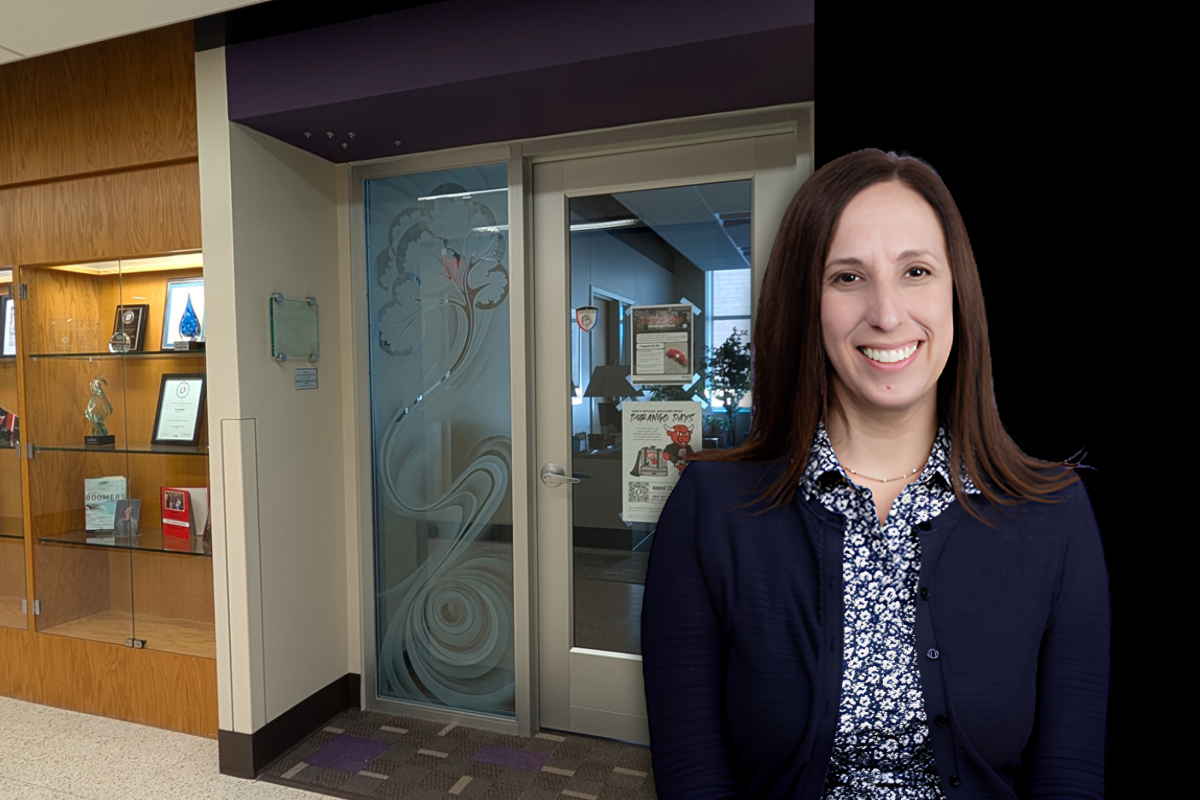
For Lindsay Wilkinson, Ph.D., understanding how people age means looking at much more than age itself. It means asking how health, economic circumstances and life experiences shape people's lives over time, and how those forces can influence those who have the opportunity to age well.
Now, Wilkinson is bringing that perspective to her new leadership role as chair of the University of Nebraska at Omaha's Department of Gerontology.
An associate professor and Dr. Chuck Powell Professor of Gerontology, Wilkinson has built a nationally recognized research program examining the relationship between health and social inequality across the life course. She was named a Fellow of the Gerontological Society of America in 2024, one of the field's highest professional honors.
Research that looks at the bigger picture
Wilkinson's work asks a deceptively simple question: How do our social circumstances affect our health, and how does our health, in turn, affect our social circumstances?
Her research explores that relationship across middle and later life, with a particular focus on social inequality, health, and aging. Her current work examines the long-term health consequences of the Great Recession, the effects of early-life adversity on health and the ways health and poverty can shape one another across the life course.
The questions have broad implications.
Economic downturns, childhood adversity, and unequal access to resources can have effects that stretch far beyond the moment they occur. By studying those connections, Wilkinson's research helps illuminate why some populations face greater health challenges as they age and can provide insights that inform policies and practices designed to improve outcomes for vulnerable populations.
Her scholarship has appeared in leading journals including American Sociological Review, The Gerontologist, Journal of Gerontology: Social Sciences, Journal of Health and Social Behavior, Social Forces and Social Science & Medicine.
From research to the classroom
Wilkinson's approach to research also shapes her teaching.
Her teaching interests include quantitative methods, health and aging, and sociology of aging. With a dual-title Ph.D. in sociology and gerontology from Purdue University and training as a National Institute on Aging Predoctoral Fellow, she brings an interdisciplinary perspective to the classroom.
That combination is especially important in gerontology, a field that draws on multiple disciplines to understand the experiences of aging and the systems that shape them.
For Wilkinson, research and teaching are closely connected. Her work gives students opportunities to engage with questions that affect individuals, families, and communities, and to see how data can be used to better understand complex social issues.
A career focused on aging and inequality
Wilkinson's commitment to understanding the experiences of disadvantaged older adults began early in her career. In 2014, she received the Senior Service America Junior Scholar Award for Research Related to Disadvantaged Older Adults from the Gerontological Society of America.
More than a decade later, her research continues to examine the forces that can create or widen disparities throughout people's lives.
As chair of the Department of Gerontology, Wilkinson will have an opportunity to build on that work while helping advance the department's teaching, research and service mission.
The big picture
Gerontology is increasingly important as communities, health systems, and policymakers navigate the opportunities and challenges associated with an aging population.
Wilkinson's leadership brings that work squarely into UNO's mission as a metropolitan research university. Her research connects rigorous scholarship with issues that affect people's everyday lives, while her teaching helps prepare students to understand and address those challenges.
It's a natural fit for a university committed to impactful research, lifelong learning and improving quality of life locally and beyond.
What’s next
As she steps into the chair role, Wilkinson will continue building on the department's strengths in research and education while bringing her own expertise in aging, health and social inequality to the work.
The questions at the heart of her research are bigger than any single study: How do our experiences shape how we age? Why do inequalities persist across the life course? And what can we do to create better outcomes for people as they grow older?
Those are questions Wilkinson has spent her career investigating—and now she'll help lead the department that is preparing for the next generation to ask and answer while bringing innovative thought to healthy aging in our communities.