

Tara Richards, Ph.D., Named Interim Director of UNO's School of Criminology and Criminal Justice
Innovation, collaboration, and mentorship have shaped the career of Tara Richards, Ph.D., and now they will help guide the next chapter of the University of Nebraska at Omaha’s (UNO) School of Criminology and Criminal Justice (SCCJ).
- published: 2026/07/28
- contact: Amber Evenson - College of Public Affairs and Community Service
- email: unocpacs@unomaha.edu
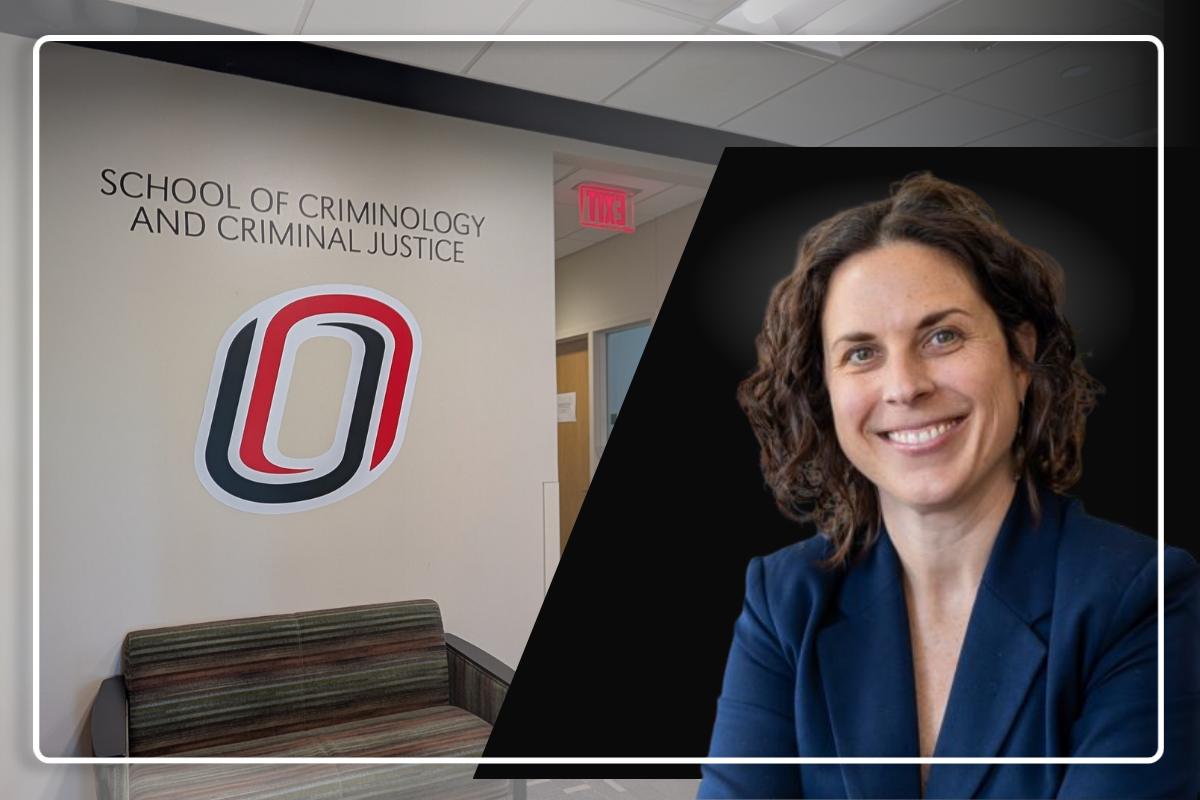
Richards has been named interim director of SCCJ, where she will lead the school during a national search for its next permanent director. A nationally recognized victimology scholar and dedicated mentor, Richards brings a strong record of research, community engagement, and collaboration to the role. As interim director, she hopes to build on SCCJ’s momentum by creating opportunities for faculty and students to explore new ideas, strengthen partnerships, and turn innovation into impact.
“I’ve always loved solving problems and building things,” Richards said. “This is a close-knit group in SCCJ, and it’s an exciting time to lead the team.”
For Richards, leadership is not about standing at the front of the room. It’s about creating opportunities for others to thrive.
“I want to help make other people’s ideas come to life,” she said. “I’m excited to be the one that gets to say yes.”
A leader shaped by research and mentorship
Since joining UNO, Richards has embraced opportunities to grow as a scholar, educator, and mentor while remaining grounded in two passions: research and teaching.
Her contributions in both areas have earned national recognition. In 2025, Richards received UNO’s Award for Distinguished Research or Creative Activity, the university’s highest honor recognizing faculty whose scholarship demonstrates originality, national impact, and academic distinction.
Richards is widely recognized as a national leader in victimology, specializing in prevention, intervention, and system responses to sexual assault, intimate partner violence, and child abuse and neglect. She has authored almost 100 peer-reviewed journal articles that have been cited more than 4,100 times, placing her among the top 2% of criminology researchers worldwide, according to the 2023 Stanford University/Elsevier Annual Report.
Recently, Richards was appointed to the Nebraska Domestic Abuse Death Review Team (DADRT), a statewide group established following the 2022 Domestic Abuse Death Review Act. The team reviews domestic abuse-related deaths to identify gaps in services, improve responses, and help prevent future tragedies. Richards’ expertise in victimology and data-driven research brings a valuable perspective to this work.
“Domestic Abuse Death Review Teams provide crucial opportunities to better understand gaps in the criminal justice and victim service systems and identify interventions that are not working as intended,” Richards said.
Her commitment to understanding victim experiences and improving outcomes is also at the heart of the Victimology and Victim Studies Research Lab, which Richards helped establish and has co-directed over the past six years. The lab brings together faculty and students to examine crime and victimization, producing research that informs public policy, improves professional practice, and advances prevention and intervention efforts.
The lab's impact extends beyond campus. Through projects such as an on-going evaluation of ENCOMPASS Omaha, a hospital-based violence intervention program at Nebraska Medicine and the University of Nebraska Medical Center, Richards partners with healthcare professionals and community agencies to support strategies that reduce repeat violence and connect victims with long-term support. The work also gives undergraduate and graduate students the opportunity to contribute to research that directly benefits Nebraska communities.
Through partnerships such as the Nebraska Victim Assistance Academy, Nebraska's 40-hour certification program for victim service professionals, and Nebraska's Domestic Violence Intervention Program State Standards Committee, Richards continues to connect research with practice while creating opportunities for students to engage in work that has a meaningful impact.
At the same time, the lab serves as a training ground for future scholars. Undergraduate, master's, and doctoral students work alongside faculty on funded research projects while participating in a mentoring model centered on collaboration, peer learning, and professional development.
“My mentors had a tremendous impact on my career,” Richards said. “Helping students discover their passions and build their own careers is one of the most rewarding parts of what I do.”
Building a culture of curiosity
As interim director, Richards hopes to bring that same collaborative spirit to the entire school.
Her focus is on creating an environment where faculty are encouraged to explore new ideas, embrace an entrepreneurial mindset, and solve challenges together.
“I want us to experiment as a team,” she said. “Let’s try new things, plan, and solve problems together.”
Richards is especially excited to support junior faculty members as they establish their teaching and research careers. She is also serving on the search committee for SCCJ’s next permanent director, giving her a unique perspective on helping guide the school during this period of transition.
Preparing students for careers—and life
Whether she is teaching in the classroom, mentoring researchers, or connecting students with community partners, Richards hopes every student leaves UNO with more than technical expertise.
“I hope students walk away with curiosity, along with the disciplinary skills they’ll need,” she said. “I want them to become lifelong learners.”
Just as importantly, Richards wants students to know they belong.
“I want them to know our faculty care about them as people,” she said. “I hope they gain friends and colleagues for life.”
Looking ahead
Outside of work, Richards enjoys traveling with her husband and two sons and has previously led students on study abroad experiences across Europe. Those experiences reflect her belief that learning extends well beyond the classroom.
As she begins her interim appointment, Richards is energized by the opportunities ahead.
“I’m looking forward to getting stuff done,” Richards said. “Making big moves. Helping other people’s ideas come to life.”
Her outlook for the year ahead is simple.
“It’s going to be a great year.”