

Innovation in Aviation: NeuroTrainer Advances Student Success
- contact: UNO Aviation Institute
- phone: 402.554.3424
- email: unoaviation@unomaha.edu
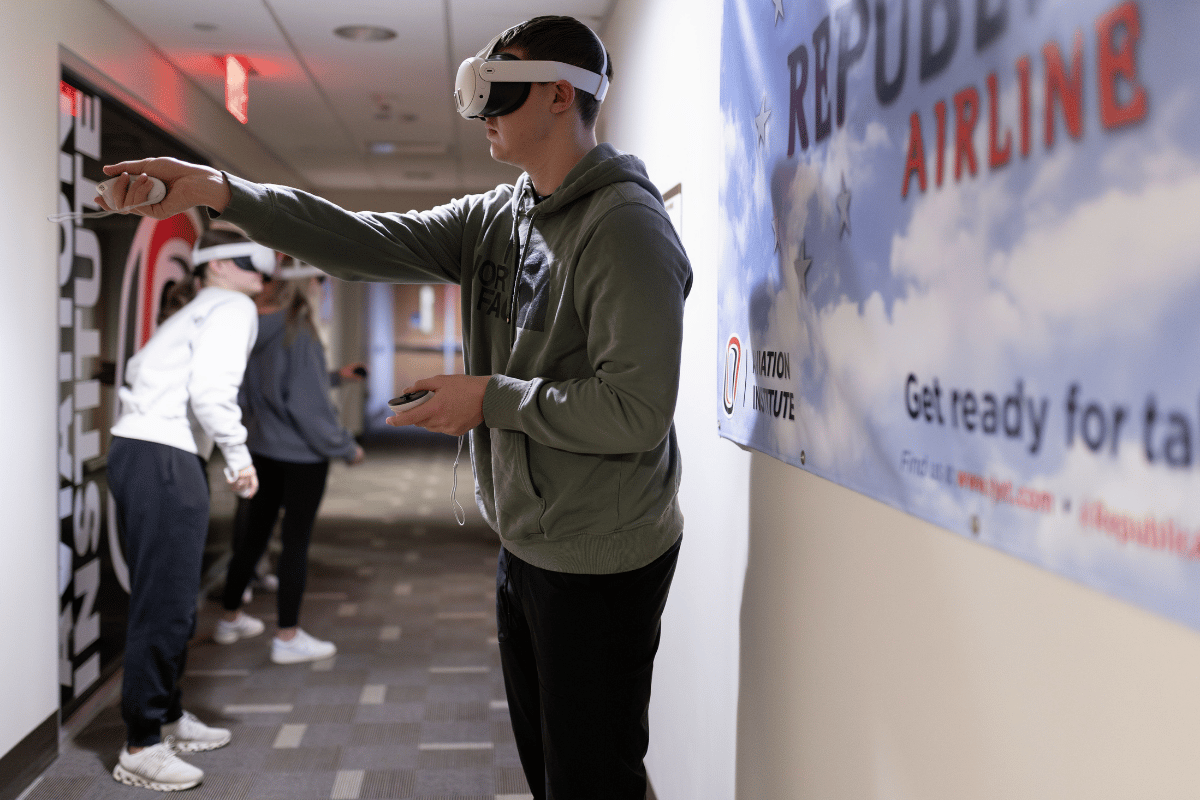
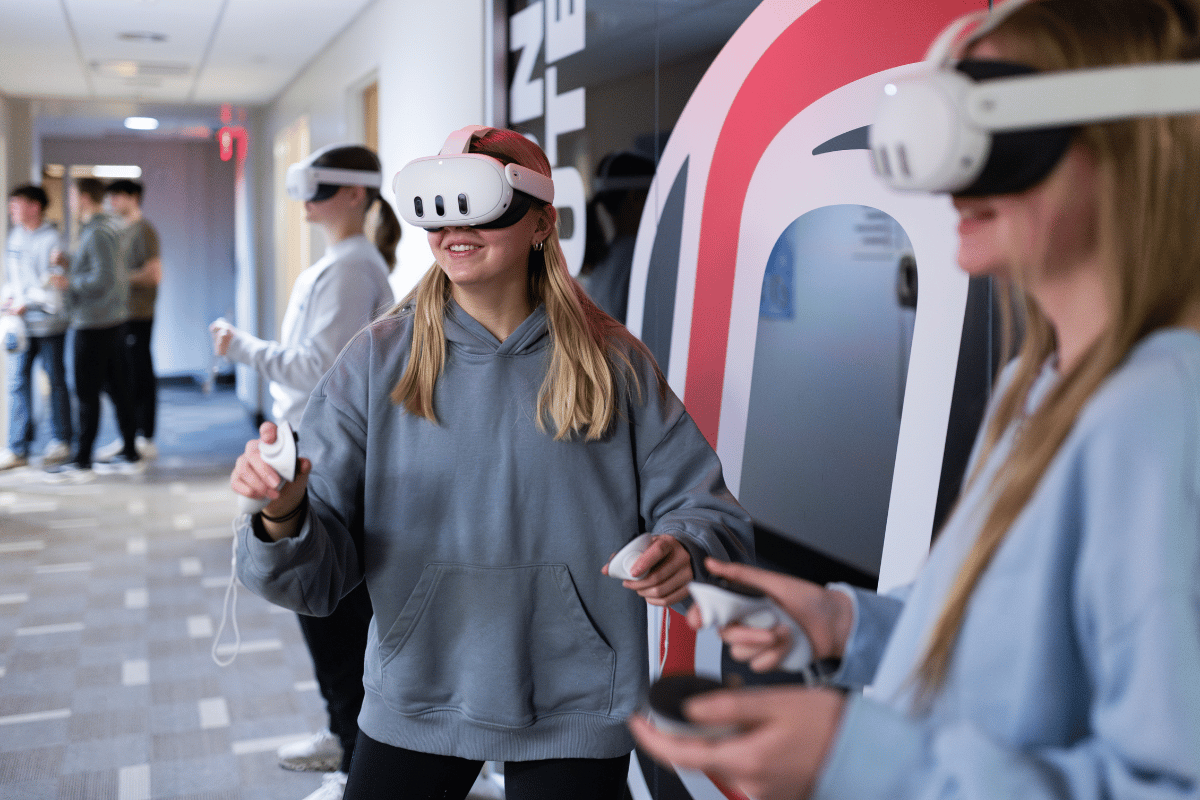
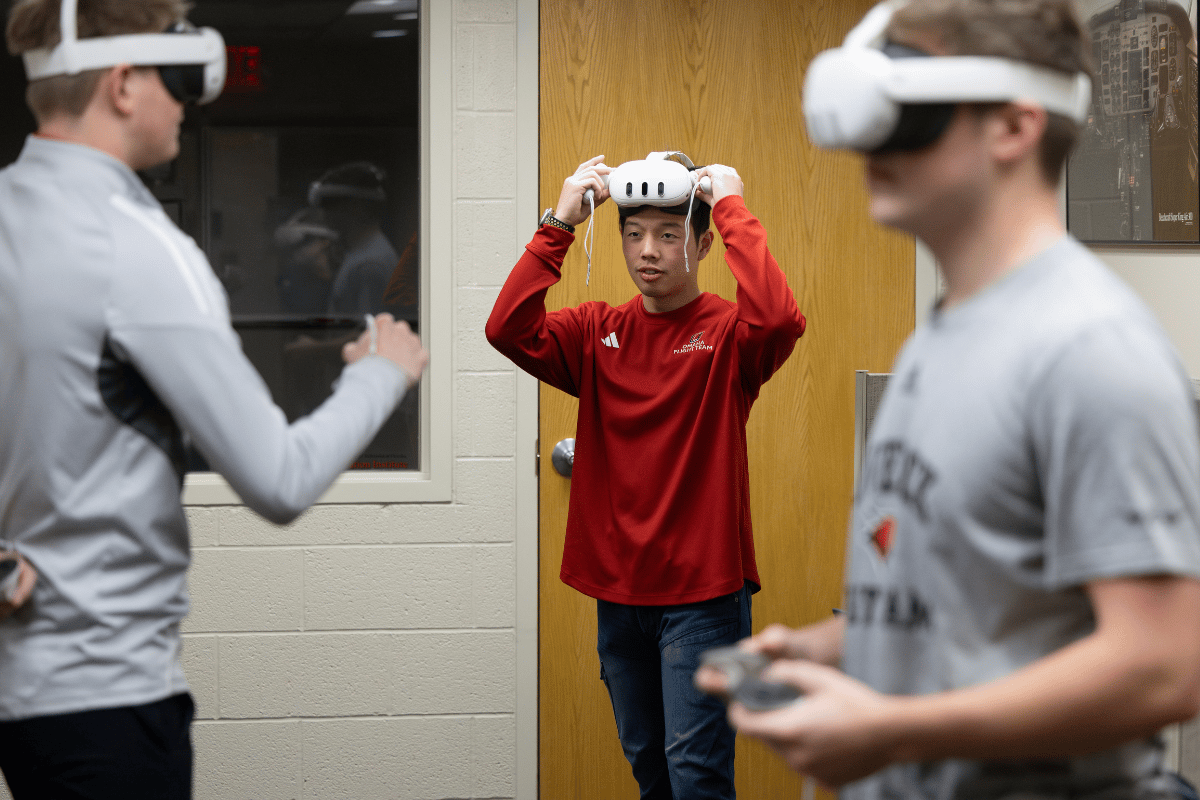
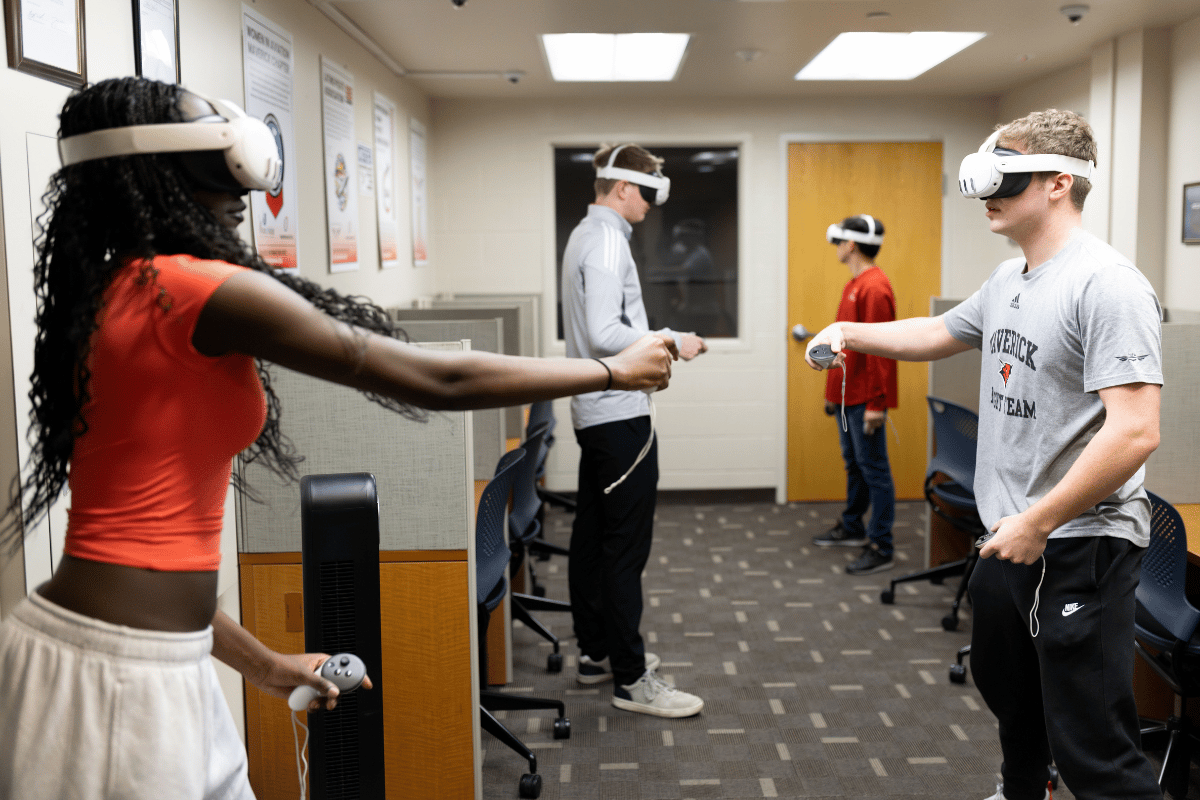
The University of Nebraska at Omaha Aviation Institute is expanding the way students prepare for success in aviation through innovative technology and research-driven training. Thanks to a $65,000 grant from the Barbara Weitz Innovation and Excellence Fund, Aviation Institute project lead Hunter Pehrson helped introduce NeuroTrainer, a virtual reality-based cognitive training platform, to UNO Flight Team members during the program’s first year.
The Innovation in Aviation Flight Training project was designed to strengthen skills that are critical to aviation performance, including hand-eye coordination, object tracking, decision-making, attention management, and focus under pressure. By integrating NeuroTrainer into Flight Team training, the project explored how cognitive training could complement traditional flight preparation and competitive aviation activities.
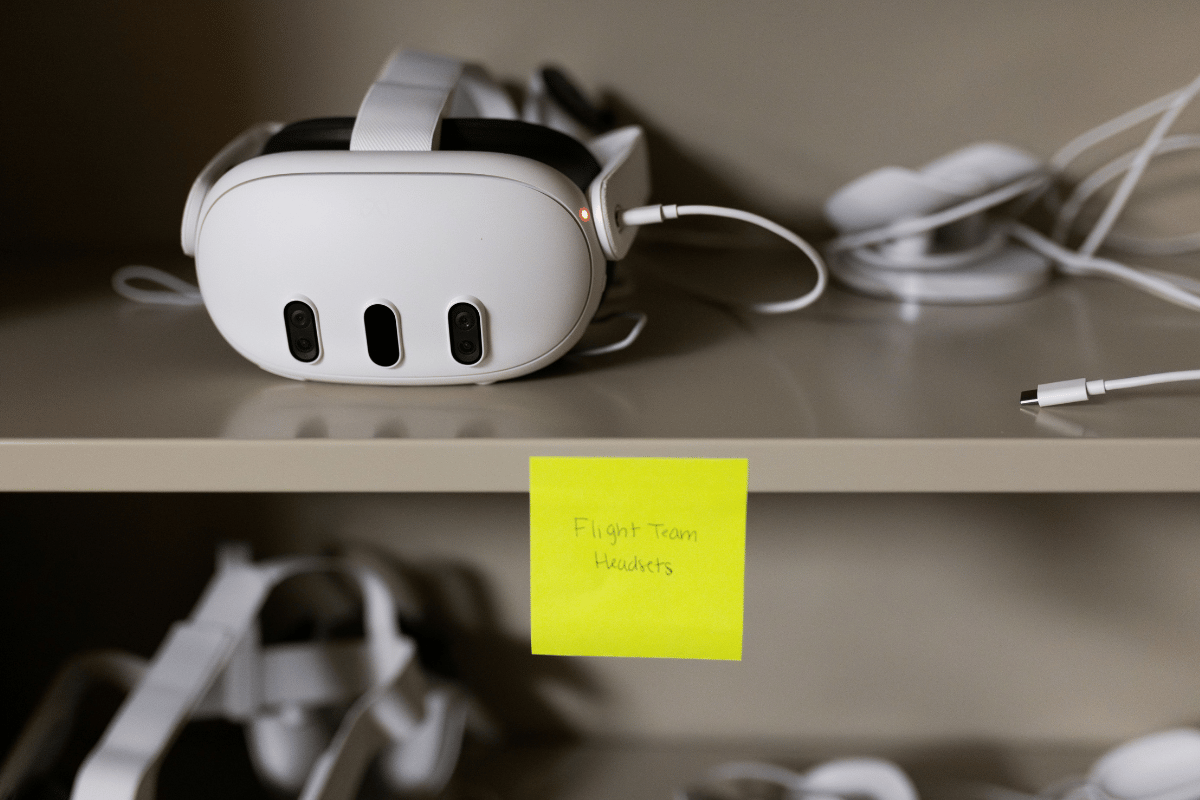
Over the past year, the project progressed from initial equipment setup to full implementation. All the Meta Quest 3 virtual reality headsets owned by the Aviation Institute were configured with NeuroTrainer software, creating a scalable training environment for students. Flight Team members were assigned three training sessions per week, with opportunities to complete additional workouts as their schedules allowed.
“The first year exceeded expectations,” said Pehrson. “We were able to successfully integrate NeuroTrainer into our training routine, establish consistent student participation, and gather valuable data that will help guide future expansion.”
The impact of the project was evident throughout the year. Twenty-five Flight Team students completed approximately 1,788 NeuroTrainer workouts, totaling more than 9,100 minutes of training. On average, students completed 72 workouts and logged more than six hours of cognitive training each. Seven students surpassed 100 workouts, while six students accumulated more than 570 minutes of training.
While NeuroTrainer was only one component of the team’s preparation, the technology helped reinforce a culture of consistency, focus, and deliberate practice. Those qualities were reflected in the team’s historic performance at the 2026 National Intercollegiate Flying Association (NIFA) SAFECON Championship.
Fourteen UNO students competed at nationals, where the Flying Mavs earned an eighth-place overall finish among the nation’s top collegiate aviation programs. The team also celebrated a milestone achievement as three students earned individual National Champion honors—the first national championships in program history. Thomas Reid placed first in Instrument Simulated Flight, while Cullen Leitner and Will Skradski captured first place in Traditional Navigation.
The project also provided valuable lessons in technology management and student engagement. Because the NeuroTrainer platform lacked a centralized device management system, each headset required individual setup and maintenance. To address this challenge, the project team developed internal procedures for equipment setup, charging, storage, tracking, and transportation. Coaches and student leaders also worked to connect NeuroTrainer activities to real-world aviation skills, helping students understand the value of incorporating cognitive training into their routines.
With the first year complete, the Aviation Institute is now preparing for the next phase of the project: expanding NeuroTrainer access beyond Flight Team members and into the broader aviation student population. Building on the success of the initial trial, institute leaders will evaluate how the technology can be incorporated into aviation coursework, flight training preparation, and student development opportunities. By making NeuroTrainer available to more students, the Aviation Institute hopes to provide additional tools that support focus, decision-making, situational awareness, and performance in high-pressure environments.
"The results we've seen with Flight Team have given us a strong foundation to build on," Pehrson said. "Our next goal is to make this resource available to more aviation students and continue exploring how cognitive training can enhance learning and performance across the program."
Funding supported NeuroTrainer software, Meta Quest 3 headsets, protective equipment, charging systems, storage carts, and transportation cases—all resources that will continue supporting student development for years to come.
As the Aviation Institute looks ahead, the success of the NeuroTrainer initiative demonstrates how innovative technology can enhance aviation education, support student achievement, and create new opportunities for learning both inside and outside the cockpit. With plans to expand access to the wider student population, the project is positioned to make an even greater impact on the future of aviation training at UNO.
Our next goal is to make this resource available to more aviation students and continue exploring how cognitive training can enhance learning and performance across the program."