


Social Cognition and Peer Experience (SCOPE) Lab
The Social Cognition and Peer Experience Lab examines the development of social cognition across adolescence and emerging adulthood, with particular emphasis on how young people interpret, respond to, and learn from social experiences, and the role of peers in these processes. Our goal is to generate research that advances our understanding of how adolescents and emerging adults navigate complex social worlds.
 Ongoing Research
Parents’ Messages and Friendship in Emerging Adults
This study aims to better understand developmental predictors of friendship similarity and influence. After completing a brief, 5-minute introductory questionnaire to determine your eligibility, you and a friend will schedule an appointment in the lab. There, you will each complete a survey about your beliefs on various topics and about the kinds of messages you received from your parents growing up. After the survey, you will have a conversation with your friend in response to a prompt. The whole session will take approximately 45–60 minutes to complete. In 6 months, you will be contacted to answer a brief 10–20-minute online survey about your beliefs.
You are eligible if you have a close friend who can come with you to participate in the lab, and if both of you are 18–30 years of age and fluent in English. Participants will receive a digital gift card as compensation for their time.
If you are interested in participating, scan the QR code below, or follow this link https://unomaha.az1.qualtrics.com/jfe/form/SV_6mSrxqpQWf1FJ9Y to be screened for eligibility.

Publications
*Mack, D., Yang, J.Y., & McDonald, K. L. (2026). The roles of moral disengagement and perceived anti-bullying norms in the aggression of American and South Korean victimized youth. International Journal of Developmental Science.
Yang, J.Y., & McDonald, K.L. (2025). Who said it matters: White emerging adults’ recollections parents vs. peers’ messages about race and their differential associations with responses to racial bias feedback. Journal of Youth and Adolescence.
Kim, Y., Kim, H. K, Yang, J. Y., Seo, S., McDonald, K. L., & Park M. Y. (2024). The Developmental Pathways From Peer Victimization to Self-Worth through Characterological Self-Blame and Internalizing Problems among Early Adolescents: Differences between Korea and the U.S.. Korean Journal of Youth Studies, 31(6), 401-427. 10.21509/KJYS.2024.06.31.6.401
Yang, J.Y., McDonald, K.L., & Seo, S. (2023). Coping strategies in response to peer victimization: Comparing adolescents in the U.S. and Korea. Journal of Research on Adolescence.
Seo, S., Yang. J., & McDonald, K. L. (2023). Yearning for popularity: How do popularity goals and self-perceived popularity predict aggression and victimization? The Journal of Early Adolescence.
Yang, J., McDonald, K. L., & Seo, S. (2022). Attributions about peer victimization in US and Korean adolescents and associations with internalizing problems. Journal of Youth and Adolescence.
Meet the Team
Principal Investigator
Dr. Joo Young Yang

Dr. Yang is a developmental psychologist and the principal investigator of the SCOPE Lab. She joined the University of Nebraska at Omaha in the Fall of 2023. Broadly, her research examines peer relations and racial/ethnic socialization during adolescence and emerging adulthood. She is also interested in investigating cross-cultural differences in social cognitive processes involved especially in emotional and self-relevant experiences.
Graduate Students
Sierra Hecktor

Sierra Hecktor is a master’s student in Developmental Psychology at the University of Nebraska at Omaha. Her research examines how ethnic–racial socialization within families and through peers shapes attitudes, identity development, and perceptions of others across adolescence and emerging adulthood. She is particularly interested in how parents and peers communicate messages about race and how these messages interact with broader social and institutional contexts. Sierra’s work integrates qualitative and mixed-methods approaches to better understand how socialization processes influence the development of racial attitudes and intergroup perceptions.
Elise Smith
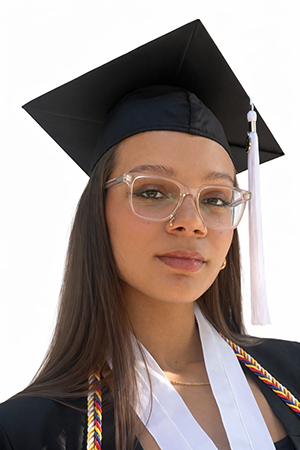
Elise's research interests center on the role of cultural context in identity development and experiences of belonging. Current work examines cross-cultural processes within Middle East and North Africa (MENA) populations, with an emphasis on religious identity and its role in shaping individuals’ sense of community. Broader interests include cultural frameworks of development and identity formation across diverse populations.