Rebuilding Community: The Revival of EGO
For many graduate students, one of the most rewarding parts of the journey is finding a sense of community—a space to share ideas, collaborate, and grow together. At UNO, the English graduate program brings together an incredibly diverse group of thinkers, writers, and educators, each with their own passions and perspectives. Amid the demands of teaching assistantships, coursework, and research, the newly revitalized English Graduate Organization (EGO) has once again emerged to strengthen those connections and celebrate the shared spirit of discovery that defines the program.
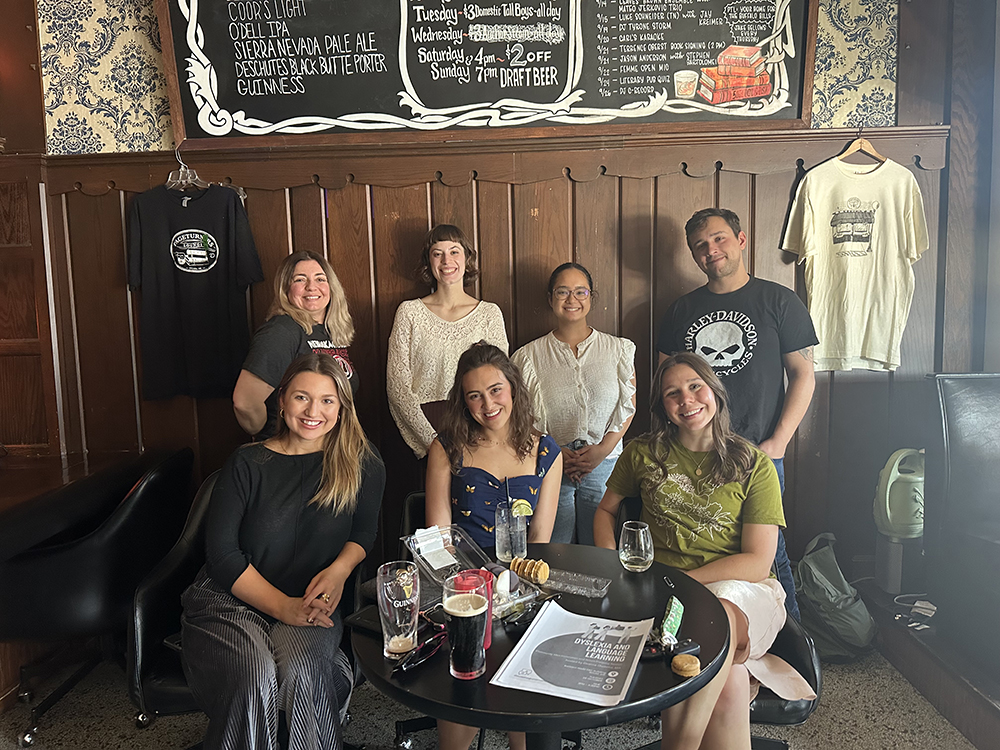
Now led by second-year graduate student and teaching assistant Cassie Provost, EGO is being reimagined as a hub for connection, professional development, and collaboration across all areas of English studies. Its membership spans education majors, creative writers, literature scholars, and technical communicators alike.
“When I started the program, I was hungry for community,” Provost shared. “There wasn’t a clear line of communication between students, and the organization wasn’t active. I wanted a space where I could meet like-minded English students who were serious about their academic and professional goals.”
After exploring other organizations, such as the Sigma Tau Delta English Honor Society, and finding they didn’t fully meet the need for graduate-level mentorship and engagement, Provost decided to create the kind of group she wished existed. With the support of faculty advisor Annie Johnson, the First-Year Writing Director, and encouragement from fellow graduate students, including Provost’s longtime friend and EGO vice president Heidi Kerr, the revived EGO is taking shape as both a prototype and a promise: a space to experiment, learn, and grow together.
EGO’s upcoming calendar, as Provost explained, includes a mix of social and professional development opportunities. Regular meetings will serve as open forums for conversation, collaboration, and support, while special events will highlight career pathways, teaching experiences, and graduate research. The organization also plans to host panels and workshops that bridge the gap between undergraduate and graduate study, offering insight into the next steps of an English student’s academic journey.
Beyond the programming, though, the heart of EGO lies in its mission to foster community. “When you’re a TA, you have that communal office; you learn from each other,” Kerr explained. “Without that, it’s easy to feel disconnected. Humanities work can be a lonely place, and we want to change that.”
EGO also hopes to extend its reach beyond campus, connecting students with local community leaders and alumni who can share their experiences and insights. The long-term goal is to build a sustainable structure with elected officers, including first-year representatives, to ensure the organization’s continuity for years to come, all while documenting its rebuilding process along the way.
Ultimately, EGO is about more than meetings or events; it’s about creating an academic home where every graduate student can thrive. “The English graduate program has changed a lot in the past two years,” Kerr reflected. “This is our chance to reconnect; to love each other, know each other, and build something lasting.”