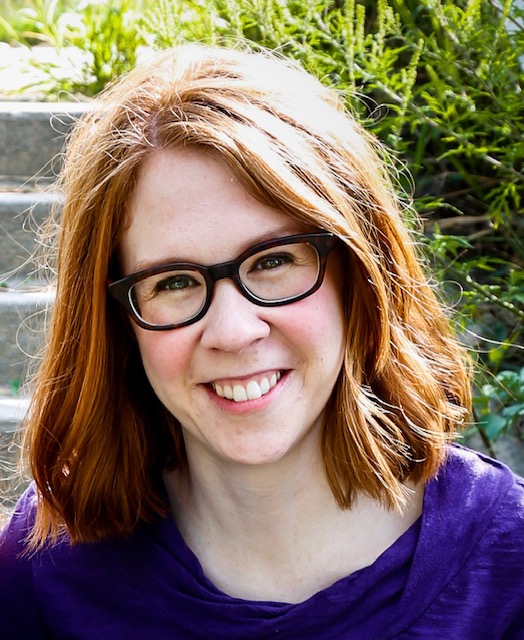
From UNO to AI Ethics: Sara Tangdall on the Power of Language in a Technological World
When Sara Tangdall graduated from the University of Nebraska at Omaha with her English degree, she never imagined her career would lead her into the world of artificial intelligence. Today, Sara Tangdall is the Senior Principal of AI Ethics & Compliance at Nike, with a resume that also includes leadership roles at Google and Salesforce. Her work centers on AI governance, helping major companies ensure that emerging technologies are developed and used responsibly.
“I help companies figure out how to keep AI from doing harm to their customers and business,” Tangdall explained. “That usually includes tracking AI development, advising on products and services, educating employees, keeping up with global regulations, writing policy, and implementing risk assessment frameworks.”
Despite her current role in one of the most complex and fast-paced fields in technology, Tangdall’s path to AI wasn’t planned. “To be honest, I didn’t pursue a career in AI after studying English!” she said. “My path was the result of the right skillset, timing, and location.”
After working in applied ethics nonprofits, Tangdall joined Santa Clara University’s Markkula Center for Applied Ethics in 2017, just as the tech industry was facing public scrutiny over privacy and data issues. When Google launched its AI Principles the following year, a recruiter found her on LinkedIn. “They saw my background in applied ethics; I was helping companies take their core values and put them into practice via policies and processes, and Google wanted to do the same with their AI Principles,” she said. “I happened to be in the right place at the right time with the relevant expertise.”
Tangdall credits her time in UNO’s English Department, and one professor in particular, with shaping her trajectory. “Dr. McKenna heavily influenced my career,” she said. “He’s the one who encouraged me to apply for the TA program. Without that encouragement or his letter of support, I’m unsure I would’ve applied and become a teacher.” That teaching experience, she noted, opened the door to her first professional role at Creighton University’s Business Ethics Alliance, where she was hired “because I knew how to build and deliver curriculum, not because I was a philosopher or expert in business.”
For Tangdall, her English degree continues to play a direct role in her work. “My job is all about language and storytelling, I literally get to write about AI gone wrong (or right) every day,” she explained. “With the generative AI craze, my job is literally about language, because generative AI is powered by Large Language Models.”
She believes that critical thinking and communication skills, core to English studies, are more essential than ever. “Critical thinking skills are more vital in the Age of AI than they ever were before,” she said. “We need more critical thinkers, not less.”
Tangdall also urges students to stay open to nontraditional career paths. “Be open to side-door opportunities,” she advised. “You may want to go a certain direction, but are frustrated with how to get there because the job isn’t immediately available. Look for tangential entry points, in areas like privacy, trust and safety, or policy, to get your foot in the door.”
Reflecting on her own path, she offered simple but enduring advice: “Don’t worry too much about what degree you get. Just get the education and then work hard at whatever job you have. If you work hard and say yes to opportunities, you build up a solid foundation of people who are willing to introduce you to others, that goes a long way.”
Tangdall’s career may have begun with literature and language, but her work now lies at the intersection of ethics, innovation, and humanity. As she put it, “I like to tell people that even though I work on solving complex AI problems, I am fundamentally solving human problems.”
All opinions are Sara’s own and not that of her employer.