University of Nebraska at Omaha logo University of Nebraska at Omaha
REQUEST INFO VISIT APPLY

MY UNO DIRECTORY
University of Nebraska at Omaha logo
College of Public Affairs and Community Service School of Public Administration
REQUEST INFO VISIT APPLY
MY UNO DIRECTORY
  • About Us Backback to Main menu
    • National Rankings
    • Director's Message
    • Alumni
    • Student Resources
    • Frequently Asked Questions
    • Directions & Parking
    • Faculty and Staff Directory
  • Undergraduate Programs Backback to Main menu
    • Aviation
    • Emergency Management and Disaster Science
    • Undergraduate Minors & Certificates
  • Graduate Programs Backback to Main menu
    • Master of Public Administration
    • Ph.D. in Public Administration
    • Master in Urban Studies & MSUS Fast-Track
    • Graduate Certificates
    • Public Administration Online Programs
  • Admissions and Aid Backback to Main menu
    • Advising
    • Admissions
    • International
    • Scholarships
  • Professional Programs Backback to Main menu
    • All Programs
    • Nebraska Certified Public Manager Program
    • Nebraska City County Managers Association
    • Certificate in Fundraising Management
    • Certificate in Emerging Nonprofit Leadership
    • Nebraska Municipal Clerks Institute and Academy
    • The Great Plains Government Finance Officers Association (GPGFOA)
    • Local Government 2030
  • Engagement Backback to Main menu
    • Engagement Directory
    • 2025 Awards Ceremony & Graduation Reception
    • Civic Mobility in the Heartland Research
    • Find an Expert
    • 2025 Heartland Civic Summit
    • PASA Student Group
    • ASPA Nebraska
  • Research Centers Backback to Main menu
    • Faculty & Staff Research
    • Digital Governance & Analytics Lab
    • Nebraska State & Local Government Finance Lab
    • NASA Nebraska Space Grant
  • Support SPA

Doctoral Program in Public Administration

  1. UNO
  2. School of Public Administration
  3. Academic Programs
  4. Doctoral Program in Public Administration
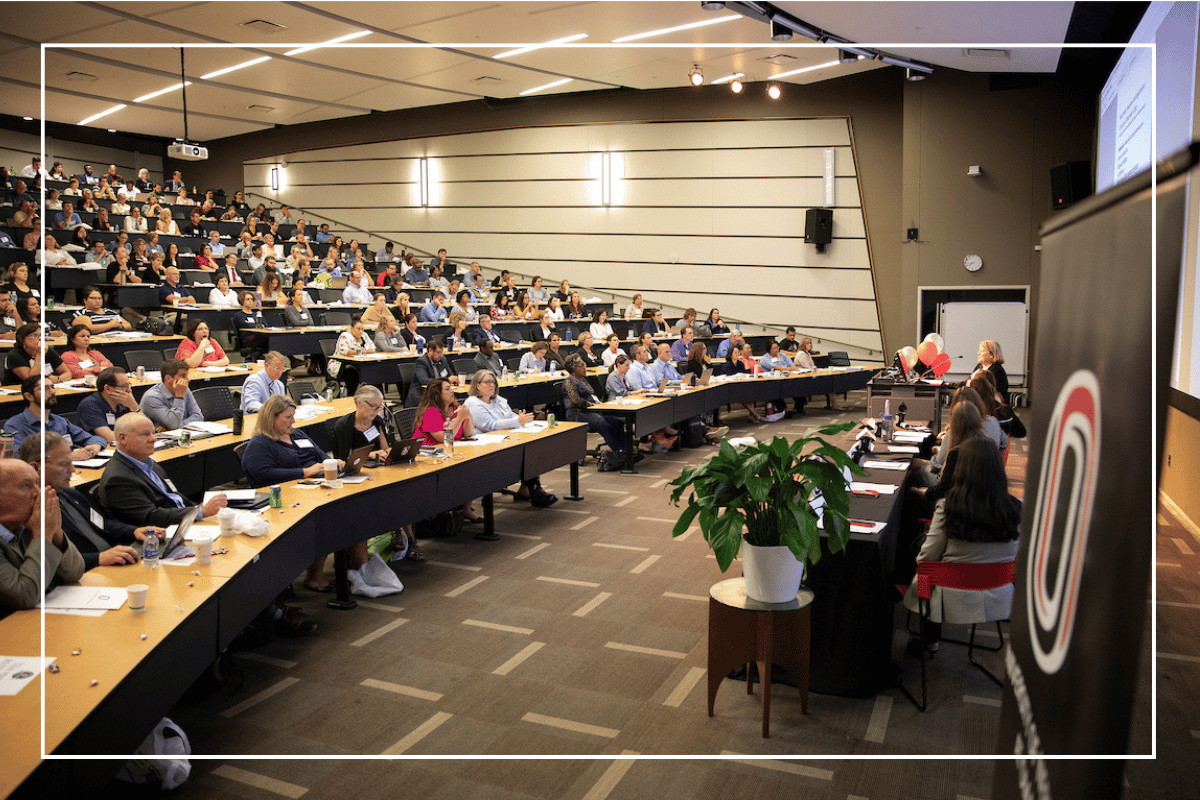
adult students sitting in a large lecture hall.

Building Careers and Enriching Lives

image

Why Choose UNO's Ph.D. in Public Administration

Our Ph.D. program is unique in creating a supportive, collaborative, and rigorous environment for students to develop their intellectual identities and a comprehensive understanding of the field and a range of research traditions.

Everything You Need for Your Ph.D. Journey

checklist on a clipboard icon.

Entry Requirements

Review the complete list of admission criteria, required application materials, and timelines for applying to the Ph.D. in Public Administration program.
View the Application Checklist
open book with pen icon.

Curriculum

The Ph.D. curriculum includes advanced coursework, field examinations, a dissertation proposal, and the doctoral dissertation. View the complete curriculum overview online.
View the Ph.D. Program Curriculum
hand holding dollar sign icon.

Funding Your Education

Explore scholarship opportunities and financial aid resources that can help support your Ph.D. journey.
View Scholarship and Financial Aid Information
image

Making a Difference as an International Student

Coming to a large university and adapting to a new country and culture can be a challenge. Fortunately, the University of Nebraska at Omaha along with the School of Public Administration will help you make the transition to living and studying in the U.S. with a number of resources designed to address the concerns of International Students.
Visit the International Programs Website

Frequently Asked Questions

  • Where do I apply?

You can apply online.

  • What should be included in the application?

See full application checklist for the Public Administration PhD program.

  • How much weight is put on each aspect of the application?

Doctoral program committee members review each application as a portfolio. One of the most important elements of the application is the statement of intent. Doctoral program committee members look at fit with the program and that you’ve identified research interests and faculty with whom you might work related to your research interests, that you understand the scholarly focus of the PhD program, and that you’ve conveyed an openness to learning and growing as a scholar.

  • What should be included in my statement of intent?

The five-page statement of intent should: describe the career you wish to pursue after completion of the PhD, research interests and desired areas of specialization offered in the PhD program, faculty with whom you would like to work, and an explanation of academic and professional backgrounds and interests.

Doctoral program committee members look primarily at fit with the program and that you’ve identified faculty with whom you might work related to your research interests, that you understand the scholarly focus of the PhD program, and that you’ve conveyed an openness to learning and growing as a scholar.

See sample statements from accepted applicants: sample 1, sample 2, sample 3.

  • I've already earned graduate credits. Can these be transferred to the program?

You can transfer in a maximum of 36 graduate credits towards the 92 credits required to complete the PhD program.

  • My master’s degree is not in Public Administration, can I still apply?

Yes! Several students in our program do not have a public administration background but do well in the program. You may be asked to do preliminary reading or take pre-requisite courses before starting the program.

  • Should I contact faculty before I apply?

You’re welcome to reach out to any faculty member; however, there is no requirement to contact faculty before you apply. We do encourage you to do research on our faculty to understand their research interests so you can address how your interests align with faculty in your statement of intent. Find more information about faculty members in Public and Nonprofit Administration, Emergency Management and Disaster Science, and Aviation.

  • When is the deadline to apply?

There are two application deadlines each year, the first is January 15 for applicants seeking financial assistance and the second is March 15 for all other students seeking admission. If accepted, students start the fall semester of the same year.

  • I've missed the application deadline. May I still apply?

Typically, it’s not possible to apply after the March 15 deadline has passed.

  • What happens once I submit my application?

After the application deadline, the doctoral program committee reviews applications. Typically, interviews are conducted with top applicants before a final decision is made regarding acceptance (and funding). The entire process takes around 1 to 2 months.

  • I've submitted my completed application. When will I receive a decision?

It will typically take around 1-2 months before we are able to provide a decision.

  • How will I receive my decision?

All applicants will be contacted by Graduate Studies. If you are accepted or selected to receive funding, the program doctoral committee chair will also be in touch with additional information.

  • Is the GRE required?

No, the GRE is not required.

  • What makes this program different from other Public Administration PhD programs?

Our program is unique in creating a supportive, collaborative, and rigorous environment for students to develop their intellectual identities and a comprehensive understanding of the field and a range of research traditions. We value intellectual openness, collaboration, diversity, and excellence. We provide substantial support and opportunities for students to prepare to be well-rounded scholars and instructors.

Our program learning outcomes are that students will:

  • understand multiple epistemologies, discourses, and theories in the field of public administration.
  • understand quantitative and qualitative research designs and methodologies applicable to the field of public administration.
  • design, carry out, and defend an independent research project related to the field of public administration.
  • Can I start the program in the spring?

Unfortunately, no. Cohorts start only in the fall each year.

  • Is the program offered on-line or via long-distance?

Unfortunately, no. All our PhD courses are offered in person. Some elective courses may be taken online.

  • Can the program be done while I’m also working full time?

Yes! We have several students in the program who are also working full-time. It can be a challenge to juggle, but it is possible.

  • Is the program part-time or full-time?

A student can complete the program either part-time or full-time; however, the university requires that all students complete 24 credit hours within the first 24 months of the program in order to meet the residency requirement of UNO. This means that most students take at least two courses each fall and spring semesters for the first two years of the program. In addition, the time limit to complete the degree is eight years.

  • What days of the week and times are the courses offered?

Courses are typically offered Monday through Thursday, 5:30-8:10pm.

  • About how long does it take to complete the program?

The average time it takes a student to complete the program (calculated for the last 18 graduates) is 5 years (the range is 3.5 years to 7 years).

  • What is the application fee? Can the application fee be waived?

The application fee is $50. The application fee may be waived for U.S. Military and Veteran applicants and their dependents with proof of military status. More information can be found within the graduate admissions guide.

  • What is the general cost of the PhD program?

The PhD requires 56 credits (in addition to what you transfer in for master’s credit; a maximum of 36 credits). See the latest tuition rates and student fees. You can apply, as part of your application, for a graduate assistantship, which would cover most or all of your tuition.

See also more information about financing your degree.

  • What type of funding is available?

The program awards a limited number of graduate assistantships (GAs) each year. GAs typically include tuition, a stipend of $20,000 per academic year (for 9 months), subsidized health insurance, and office space with computer. Assistantships typically include four years of funding (dependent on the student continuing to meet program requirements)

To apply for an assistantship in the School, applicants need to submit their applications by the January 15 deadline and indicate their request for funding in the application.

Some of our students also work as GAs in other departments on campus. See GA job openings.

All PhD students in our program can also apply for conference travel funding (for around $1,000 a year) and additional university research support ($5,000 twice while in the program). Summer teaching or research opportunities may also be available for additional pay.

Other funding opportunities are also available.

  • Is there a separate application for department assistantships?

No. To apply for an assistantship in the School, applicants need to submit their applications to the program by the January 15 deadline and indicate their request for funding in the application.

To apply in other departments on campus, see GA job openings.

  • What is the cost of living in Omaha?

Omaha is among the most affordable places to live while working on a PhD, with a cost of living among the lowest in the country.

  • What is it like to live in Omaha?

Omaha is a great place to live while in school. The cost of living is low, there are plenty of things to do (when you’re not studying), and the people are friendly. 

  • Where do your graduates get jobs after they graduate?

Overall, 80% of graduates are employed in academic positions in the U.S. and abroad. Our remaining graduates work in upper-level administrative positions in public, nonprofit, and for-profit organizations.

In 2024, we saw 100% Placement of our graduates!

Some examples of where our graduates work at include:

  • Bowling Green State University
  • John Jay College of Criminal Justice of the City University of New York
  • Kean University
  • University of Illinois Springfield
  • National Cheng Kung University, Tainan, Taiwan
  • University of La Verne
  • Community Crops
  • Federal Reserve Bank of Kansas City
  • Korea University
  • Rutgers University-Newark
  • Sun Yat-sen University
  • Tennessee State University
  • University of Alabama
  • University at Albany, SUNY
  • University of Colorado-Denver
  • University of Nebraska Medical Center

See our PhD alumni profiles for more information.

International Applicant Frequently Asked Questions About TOEFL/IELTS

For international students, TOEFL or IELTS is required unless alternate proof of English proficiency can be provided. This includes proof of graduation from an accredited U.S. college or university with a bachelor's degree or higher or proof that your education has been completed in an approved English-speaking country. Check the list of approved English-speaking countries.

To use these alternatives or if you have other questions, please contact International Admissions at: unoadmissions@unomaha.edu or 1.877.884.6287.

A minimum TOEFL score of 557 (or 233 on computer-based test or 90 on Internet based test) or minimum IELTS score of 6.5 is required. Duolingo is also currently being accepted (minimum score 110).

TOEFL scores may be sent to gradschool@unomaha.edu or 6001 Dodge St., Eppley Admin. Building, Rm. 203, Omaha, NE. Unofficial scores may be sent before admission; however, official scores are required before an applicant can be accepted into the program.

No. A waiver of the TOEFL/IELTS score requirement is granted for persons who have received a baccalaureate or other advanced degree from an institution in the United States.

The TOEFL/IELTS requirement will also be waived for applicants who have received or will be receiving a baccalaureate or other advanced degree from a pre-determined country on the waiver list.

For the purposes of having your application reviewed by the School of Public Administration, you may submit a copy of your unofficial transcripts, in addition to all other application materials. Should the department wish to make a recommendation for admission, you will be required to have a course-by-course transcript evaluation completed by WES, ECE, or Educational Perspectives prior to your admission being formally reviewed and processed by the Office of Graduate Studies.

School of Public Administration

CONTACT US
  • College of Public Affairs and Community Service
  • 111 CPACS
  • 6001 Dodge Street
  • Omaha, NE 68182
  • 402.554.2625
Social media
Academic Programs
  • Master of Public Administration
  • Master of Science in Urban Studies and MS Fast-Track
  • PhD in Public Administration
  • Aviation Institute
  • Emergency Management and Disaster Science
  • Graduate Certificates
  • Undergraduate Minors
  • NexGen Leadership Corps
US News & World Report badge for Best Grad Schools Public Affairs 2023

Services and Resources

  • Academic Calendar
  • Course Catalogs
  • MavCARD Services
  • MavLINK
  • my.unomaha.edu
  • UNO Brand Guide

Related Links

  • A-Z List
  • Employment
  • University of Nebraska System

Campus Links

  • Accessibility
  • Billing Office
  • Buildings and Maps
  • Campus Directory
  • Campus Safety
  • Events
  • Human Resources
  • Library
  • Military-Connected Resource Center
  • News
  • Registrar

Policies and Reporting

  • Emergency Information Alert
  • MavsReport
  • Notice of Non-Discrimination
  • NU Foundation
  • Privacy Statement
  • University Policies
  1. Privacy Statement
  2. Accessibility
  1. 402.554.2800

University of Nebraska at Omaha
University of Nebraska at Omaha, 6001 Dodge Street, Omaha, NE, 68182
  • ©  

Social Media


Omaha Skyline

Our Campus. Otherwise Known as Omaha.

The University of Nebraska does not discriminate based on race, color, ethnicity, national origin, sex, pregnancy, sexual orientation, gender identity, religion, disability, age, genetic information, veteran status, marital status, and/or political affiliation in its education programs or activities, including admissions and employment. The University prohibits any form of retaliation taken against anyone for reporting discrimination, harassment, or retaliation for otherwise engaging in protected activity. Read the full statement.