

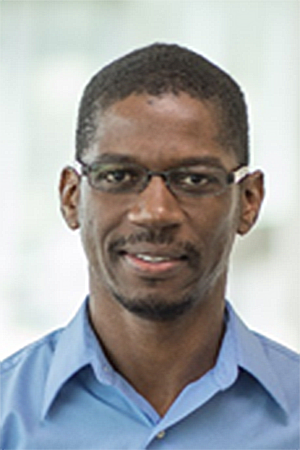
Ernest Chivero, Ph.D.
- Assistant Professor
- AH 419A
- Neuroscience
Biography
B.Sc. in Biology, M.Sc. in Biotechnology (University of Zimbabwe), MBA (Midlands State), Master of Intellectual Property (Africa University), PhD in molecular and cellular biology (University of Iowa), Post-doctoral training in experimental neuroscience and substance abuse (University of Nebraska Medical Center, UNMC).
More on Google Scholar
Teaching Interests
- Introduction to Neuroscience 1
- Introduction to Neuroscience 2
- Neuroimmunology
- Systems neuroscience
- Advanced Neurobiology
Research Interests
Microglia are the primary immune cells of the central nervous system (CNS) and play a crucial role in maintaining brain health and function. Acting as the first line of defense, microglia continuously monitor the brain environment for signs of infection or injury. When activated, they become highly responsive, capable of modulating inflammatory responses, clearing cellular debris, and maintaining neuronal homeostasis. Microglia also play a significant role in synaptic pruning, which is essential for normal brain development and plasticity. However, when microglial activation becomes dysregulated, often due to factors like substance use, chronic stress, or neurodegenerative diseases, it can lead to neuroinflammation that underlies several neurological disorders. Thus, understanding the role of microglia is critical not only to fundamental neuroscience but also to the development of therapeutic strategies for CNS-related disorders. We study the molecular mechanisms underlying microglia dysregulation caused by substance use.
One of our focus areas is methamphetamine use disorder (MUD), which is a major public health problem associated with neurotoxicity and glial cell dysfunction. In the CNS, neurotoxic pathways are typically counterbalanced by cytoprotective pathways, but this balance is disrupted by substance use. There are currently no FDA-approved pharmacologic treatments for MUD. We are exploring cytoprotective molecules that could restore homeostasis in the CNS. Our long-term goal is to identify novel or repurposed molecules that regulate cellular activation, oxidative stress, and neuroinflammation in the context of substance use disorders (SUD).
To better understand these challenges, we investigate the molecular mechanisms involved in SUD, particularly through the lens of microglia, the primary resident immune cell type in the CNS. Using cell culture and mouse models, we assess how cytoprotective molecules might mitigate the effects of SUD-induced neuroinflammation and oxidative stress, ultimately aiming to re-balance disrupted pathways and promote CNS health.
Peer-reviewed Publications
*Undergraduate student at UNO, #Graduate Student at UNO
2026
Torres J#, Bredenkamp C*, Vazquez A*, Chivero ET+. Disruption of Dopamine Homeostasis by Psychostimulants. Mol Neurobiol. 2026 Mar 5;63(1):487. doi: 10.1007/s12035-026-05769-0. PMID: 41784673; PMCID: PMC12963094. +corresponding author.
Garcia EJ, Estrella LD, McCool S, Chivero ET. An antidote in arms: A monoclonal antibody intervention to reverse fentanyl-induced respiratory apnea. J Pharmacol Exp Ther. 2026 May 26;393(6):104930. doi: 10.1016/j.jpet.2026.104930. Epub ahead of print. PMID: 42190316. DOI: 1016/j.jpet.2026.104930
2024
Chivero ET. Primary Literature for Teaching Neuroimmunology - An Instructor's Resource. J Undergrad Neurosci Educ. 2024 Dec 24;23(1):R1-R4. doi: 10.59390/QLFC4698. PMID: 39810967; PMCID: PMC11728992.
2023
Singh S, Thangaraj A, Chivero ET, Guo ML, Periyasamy P, Buch S. Role of Dysregulated Autophagy in HIV Tat, Cocaine, and cART Mediated NLRP3 Activation in Microglia. J Neuroimmune Pharmacol. PMID: 37148425.
Pillai PP, Kannan M, Sil S, Singh S, Thangaraj A, Chivero ET, Dagur RS, Tripathi A, Hu G, Periyasamy P, Buch S. Involvement of lncRNA TUG1 in HIV-1 Tat-Induced Astrocyte Senescence. Int J Mol Sci. 2023. PMID: 36901763.
2022
Chivero ET+, Sil S+, Kumar M, Buch S. Substance use, microbiome and psychiatric disorders. Pharmacol Biochem Behav. PMID:35905802. +co-corresponding author.
Chivero ET+, Sil S, Singh S, Thangaraj A, Gordon L, Evah-Nzoughe GB, Ferguson N, Callen S, Buch S+. Protective role of Lactobacillus rhamnosus probiotic in reversing cocaine-induced oxidative stress, glial activation and locomotion in mice. Journal of Neuroimmune Pharmacology. 2022. PMID:34628571. +co-corresponding author
2021
Guo, M. L., Chivero, ET., Callen, S. E., Buch, S. NLRP3 Inflammasome Is Involved in Cocaine-Mediated Potentiation on Behavioral Changes in CX3CR1-Deficient Mice. Journal of Personalized Medicine. 2021. PMID:34683104.
Sil S, Singh S, Chemparathy DT, Chivero ET, Gordon L, Buch S. Astrocytes & astrocyte derived extracellular vesicles in morphine induced amyloidopathy. Aging and Disease. PMID:34527417.
Chivero ET+, Dagur RS, Peeples ES, Sil S, Liao K, Ma R, Chen L, Gurumurthy CB, Buch S, Hu G+. Biogenesis, physiological functions and potential applications of extracellular vesicles in substance use disorders. Cellular and Molecular Life Sciences. 2021. PMID: 33821293. +co-corresponding author.
Chivero ET, Thangaraj A, Tripathi A, Periyasamy P, Guo ML, Buch S. NLRP3 inflammasome blockade reduces cocaine-induced microglial activation and neuroinflammation. Molecular Neurobiology. 2021 Jan 8. PMID:33417223.
Sil S, Thangaraj A, Chivero ET, Niu F, Kannan M, Liao K, Silverstein PS, Periyasamy P, Buch S. HIV-1 and drug abuse comorbidity: Lessons learned from the animal models of NeuroHIV. Neuroscience Letters. PMID:33794296.
2020
Thangaraj A, Chivero ET, Tripathi A, Guo ML, Pillai P, Periyasamy P, Shilpa Buch. HIV-1 TAT-mediated microglial senescence: Role of SIRT3-dependent mitochondrial oxidative stress. Redox Biology. 2020 Dec 23. PMID:
Chivero ET, Liao K, Niu F, Tripathi A, Tian C, Hu G, Buch S. Engineered extracellular vesicles loaded with miR-124 attenuate cocaine-mediated activation of microglia. Front Cell Dev Biol. 2020;8:573. 2020. doi:10.3389/fcell.2020.00573. PMID:32850781.
Tripathi A, Thangaraj A, Chivero ET, Periyasamy P, Burkovetskaya ME, Niu F, Guo ML, Buch S. N-Acetylcysteine reverses antiretroviral-mediated microglial activation by attenuating autophagy-lysosomal dysfunction. Front Neurol. 2020;11:840. doi: 10.3389/fneur.2020.00840. PMID: 33013619.
Buch S, Periyasamy P, Thangaraj A, Sil S, Chivero ET, Tripathi A. Opioid-Mediated HIV-1 immunopathogenesis. J Neuroimmune Pharmacol. 2020 Oct 8. doi: 10.1007/s11481-020-09960-5. PMID: 33029670 .
Sil S*, Niu F*, Chivero ET,* Singh S, Periyasamy P, Buch S. Role of inflammasomes in HIV-1 and drug abuse mediated neuroinflammaging. 2020;9(8):E1857. doi: 10.3390/cells9081857. PMID: 32784383. *Contributed equally.
Kutchy NA, Peeples ES, Sil S, Liao K, Chivero ET, Hu G, Buch S. Extracellular Vesicles in viral infections of the nervous system. Viruses. 2020; 28;12(7):700. PMID: 32605316.
Thangaraj A, Periyasamy P, Guo ML, Chivero ET, Callen S, Buch S. Mitigation of cocaine-mediated mitochondrial damage, defective mitophagy and microglial activation by superoxide dismutase mimetics. 2020;16(2):289-312. doi:10.1080/15548627.2019.1607686. PMID: 30990365.
2019
Chivero ET, Ahmad R, Thangaraj A, Periyasamy P, Kumar B, Kroeger E, Feng D, Guo ML, Roy S, Dhawan P, Singh AB, Buch S. Cocaine induces inflammatory gut milieu by compromising the mucosal barrier integrity and altering the gut microbiota colonization. Sci Rep. 2019 Aug 21;9(1):12187. doi: 10.1038/s41598-019-48428-2. PMID: 31434922.
Tripathi A, Thangaraj A, Chivero ET, Periyasamy P, Callen S, Burkovetskaya ME, Guo ML, Buch S. Antiretroviral-mediated microglial activation involves dysregulated autophagy and lysosomal dysfunction. 2019;8(10):1168. doi:10.3390/cells8101168. PMID: 31569373.
2018
Sil S, Periyasamy P, Thangaraj A, Chivero ET, Buch S. PDGF/PDGFR axis in the neural systems. Mol Aspects Med. 2018;62:63-74. doi:10.1016/j.mam.2018.01.006. PMID: 29409855.
2017
Chivero ET, Guo M, Periyasamy P, Liao K, Callen SE and Buch S. HIV Tat primes and activates microglial NLRP3 inflammasome-mediated neuroinflammation. Neurosci. 2017;37(13):3599-3609. doi:10.1523/JNEUROSCI.3045-16.2017. PMID:28270571.
2016 Buch S, Chivero ET, Hoare J, Jumare J, Nakasujja N, Mudenda V, Paul R, Kanmogne GD, Sacktor N, Wood C, Royal W, Joseph J. Proceedings from the NIMH symposium on "NeuroAIDS in Africa: neurological and neuropsychiatric complications of HIV". J Neurovirol. 2016;22(5):699-702. doi:10.1007/s13365-016-0467-y. PMID: 27473196.
2015
Chivero ET, Bhattarai N, McLinden JH, Xiang J, Stapleton JT. Human Pegivirus (HPgV; formerly known as GBV-C) inhibits IL-12 dependent natural killer cell function. Virology. 2015 Nov;485:116-27. 1016/j.virol.2015.07.008. Epub 2015 Aug 1. PMID: 26245365.
Chivero ET, Stapleton JT. Tropism of Human Pegivirus (formerly known as GB virus C/Hepatitis G virus) and host immunomodulation: insights into a highly successful viral infection. J Gen Virol. 2015 Feb 9: vir.0.000086. doi:10.1099/vir.0.000086, PMID: 25667328.
2014
Stapleton JT, Xiang J, McLinden JH, Bhattarai N, Chivero ET, Klinzman D, Kaufman TM, Chang Q. A novel T cell evasion mechanism in persistent RNA virus infection. Trans Am Clin Climatol Assoc. 2014;125:14-24. PMC4112695.
Chivero ET, Bhattarai N, Rydze RT, Winters MA, Holodniy M, Stapleton JT. Human Pegivirus RNA is found in multiple blood mononuclear cells in vivo and serum-derived viral RNA containing particles are infectious in vitro. J Gen Virol. 2014 Jun; 95(Pt 6):1307-19. doi: 10.1099/vir.0.063016-0. Epub 2014 Mar 25. PMC4027039.
2013
Bhattarai N, McLinden JH, Xiang J, Landay AL, Chivero ET, Stapleton JT. GB virus C particles inhibit T cell activation via envelope E2 protein-mediated inhibition of TCR signaling. J Immunol. 2013 Jun 15;190 (12):6351-9. doi: 10.4049/jimmunol.1300589. Epub 2013 May 17. PubMed PMID: 23686495.
2012
Bhattarai N, Rydze RT, Chivero ET, Stapleton JT. GB virus C viremia is associated with higher levels of double-negative T cells and lower T-cell activation in HIV-infected individuals receiving antiretroviral therapy. J Infect Dis. 2012 Nov; 206 (9):1469-72. doi: 10.1093/infdis/jis515. Epub 2012 Aug 20. PubMed PMID: 22927453.
Brown GD, Meintjes G, Kolls JK, Gray C, Horsnell W; Working Group from the EMBO-AIDS Related Mycoses Workshop, Achan B, Alber G, Aloisi M, Armstrong-James D, Beale M, Bicanic T, Black J, Bohjanen P, Botes A, Boulware DR, Brown G, Bunjun R, Carr W, Casadevall A, Chang C, Chivero E, Corcoran C, Cross A, Dawood H et al. AIDS-related mycoses: the way forward. Trends Microbiol. 2014 Mar; 22(3):107-9. doi: 1016/j.tim.2013.12.008. PMCID: PMC4129449.
2001
Chivero ET, Mutukumira AN, Zvauya R. Partial purification and characterization of a xylanase enzyme produced by a micro-organism isolated from selected indigenous fruits of Zimbabwe. Food Chemistry. 72 (2), 2001. pp 179-185. https://doi.org/10.1016/S0308-8146(00)00216-8.Book Chapters
2019
Thangaraj A, Sil S, Tripathi A, Chivero ET, Periyasamy P, Buch S. Targeting endoplasmic reticulum stress and autophagy as therapeutic approaches for neurological diseases. Int Rev Cell Mol Biol. 2020;350:285-325. doi:10.1016/bs.ircmb.2019.11.001. PMID: 32138902.
Additional publications in Pubmed.