

Lab Life: UNO Students Get Practical Research Experience in SoLaS Lab
Get a look inside the Sociolinguistics & Language Structures Lab, where undergraduate students are a core component in research studies.
- published: 2026/11/09
- contact: Annie Albin - College of Arts & Sciences
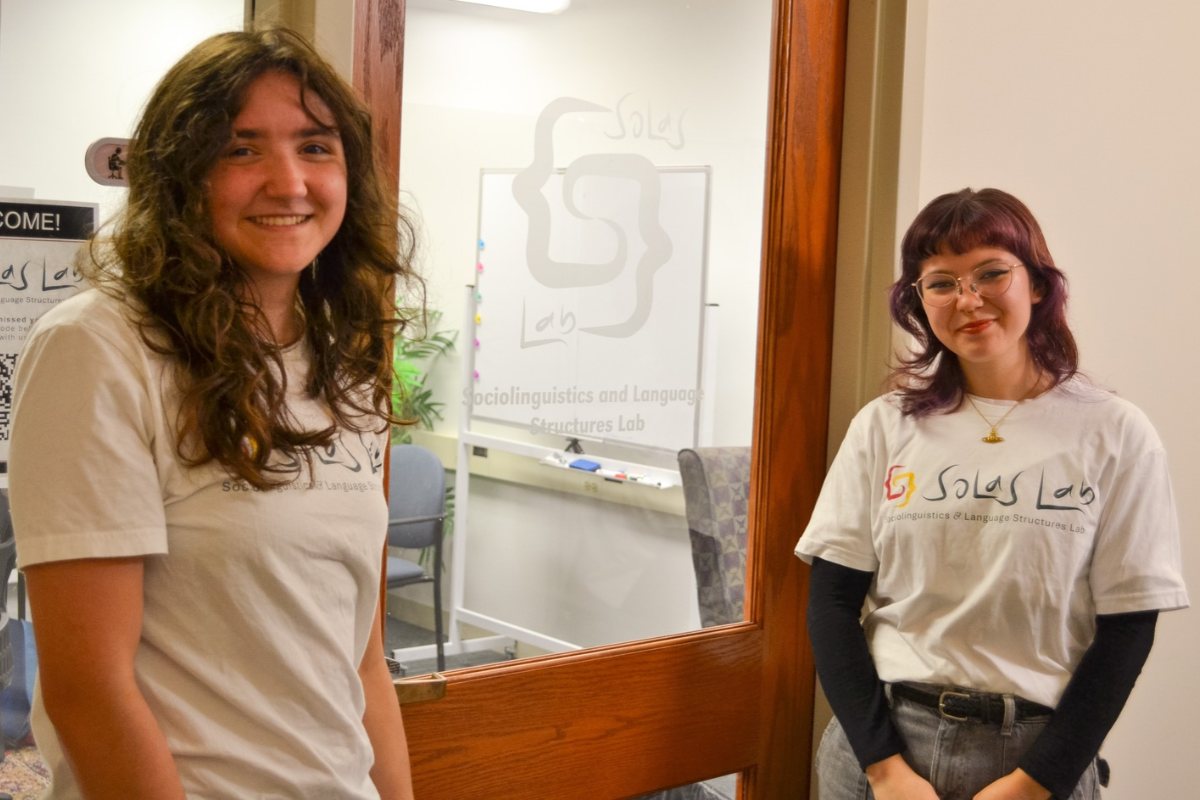
What makes Omahans stand out in a sea of regional dialects? University of Nebraska at Omaha (UNO) students are finding out.
Research at the Sociolinguistics & Language Structures (SoLaS) Lab documents how English is spoken across the metro area. Kevin Samejon, assistant professor of English, is leading the charge — with the help of a few Mavericks.
Samejon is fascinated by Omaha as an understudied region of the US linguistic landscape. Despite falling between a variety of major dialect regions, he explains that not much research has been done on the city’s local English varieties.
“When I moved to Omaha, I became interested in its rich linguistic history, particularly the historical tensions surrounding language, immigration, and identity in the Great Plains,” Samejon said. “There’s already important but older scholarship on these issues, much of it published right here by the University of Nebraska Press. I hope our work can build on that foundation and help us better understand Omaha’s linguistic landscape today.”
Working with him on this research are two UNO undergraduate students, Azumi Kuchma and Kenzie Metzler. Metzler is a first-year English major and became interested in linguistics while learning Spanish as a middle school student. Similarly, Kuchma, a senior French and English major, also found her love for linguistics while learning another language.
The students play a critical role in the research process: collecting data from study participants.
With each data collection session, Kuchma and Metzler record participants as they read certain passages of text. They follow up the readings with a variety of linguistic and cultural questions for the participants.
“We’re starting by documenting how English varies across Omaha’s communities, using tools such as audio recording equipment and software for transcription and acoustic analysis to examine shared and distinct patterns in speech and language use and their social significance,” Samejon said. “Equally important is the lab’s ability to provide students with opportunities to pursue questions about language through systematic, hands-on research. I hope this endeavor lays the groundwork for future research on other languages spoken across Nebraska while helping establish UNO as a hub for research on language and linguistic diversity in our region.”
Participating in the research process has been eye-opening for Metzler and Kuchma. While they’ve taken linguistics courses, walking participants through the data collection process has put a whole new perspective on the subject.
“At the end of the day, it’s all about how humans make connections with their words,” Kuchma said. “And I think that’s beautiful.”