University of Nebraska at Omaha logo University of Nebraska at Omaha
REQUEST INFO VISIT APPLY

MY UNO DIRECTORY
University of Nebraska at Omaha logo
A U.S. Department of Homeland Security Center of Excellence National Counterterrorism Innovation, Technology, and Education Center (NCITE)
REQUEST INFO VISIT APPLY
MY UNO DIRECTORY
  • About Backback to Main menu
    • We Are NCITE
    • Newsletters
    • Our Community
    • Center Directory
  • Research Backback to Main menu
    • Research Portfolio
    • Published Reports
  • News Backback to Main menu
    • News Center
    • NCITE in the News
    • Podcast
  • Evolving Threats Backback to Main menu
    • Global Jihadism: 25 Years After 9/11
    • Nihilistic Violent Extremism (NVE)
    • Iran-Aligned Foreign Terrorist Organizations (FTOs)
  • Events Backback to Main menu
    • Upcoming Events
    • ENVISION Conference
  • Get Involved Backback to Main menu
    • Donate to NCITE
    • Job Opportunities
  • Service Center
  1. UNO
  2. National Counterterrorism Innovation, Technology, and Education Center (NCITE)
  3. News
  4. 2026
  5. 11
  6. FTO Series: Iran-Aligned Groups Pose Multi-Faceted Threats to U.S. in Wake of War

FTO Series: Iran-Aligned Groups Pose Multi-Faceted Threats to U.S. in Wake of War

Understanding how these foreign terrorist organizations operate, coordinate and adapt can help law enforcement and homeland security professionals identify emerging threats and protect vulnerable targets.

  • published: 2026/11/04
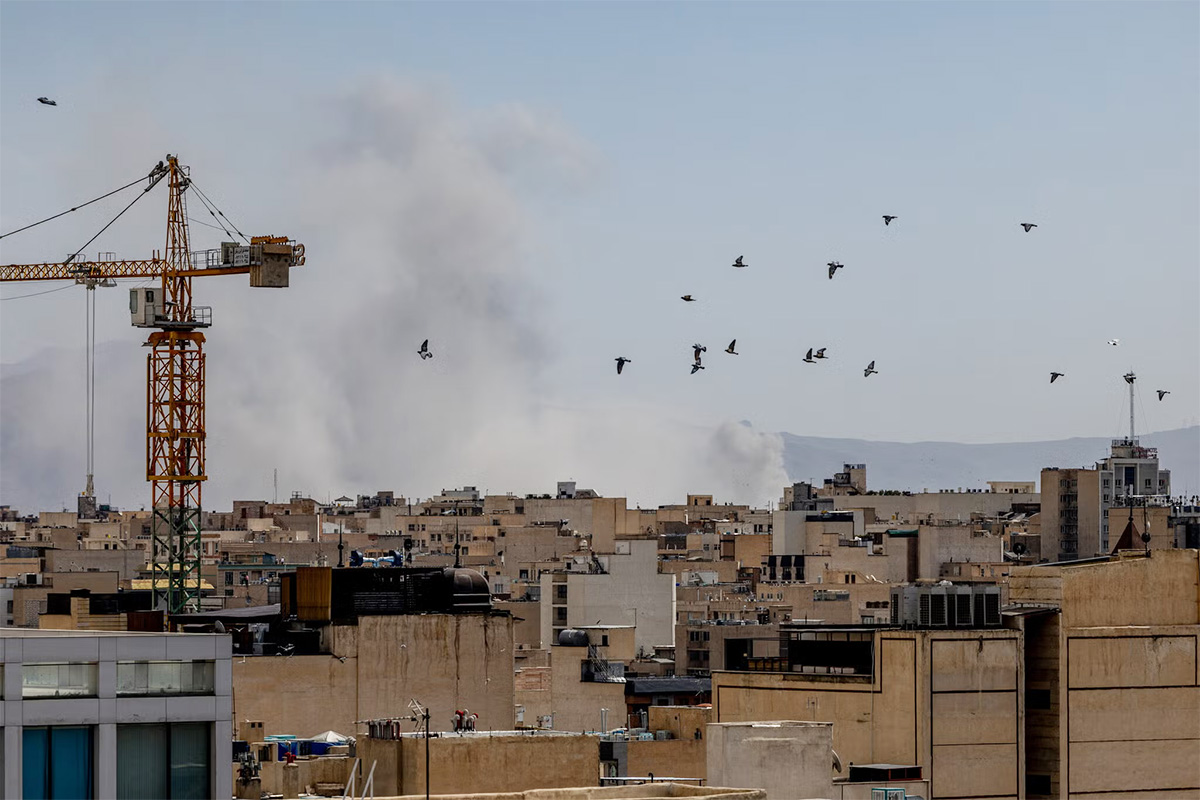
A photo from a rooftop in Tehran, with buildings scattered and a scaffolding crane, and smoke in the background.

Smoke rising from an explosion in Tehran on Feb. 28, the first day of the war. Credit: Arash Khamooshi/Polaris for The New York Times.

Iran-aligned terrorist organizations have long threatened American interests in the Middle East. But as the Iran war intensifies and militant networks evolve, the groups’ abilities to threaten the United States extends via cyberattacks and coordinated plots abroad.

Read the paper: “From the Red Sea to the Homeland: Assessing the Threat from Five Newly Designated Iran-Aligned Foreign Terrorist Organizations” analyzes the capabilities of five new Iran-aligned militia groups by the U.S. Department of State in 2025 and explores how the threat of attacks in the U.S. and internationally — both physical and digital — have heightened since the recent conflict with Iran began in February.

The paper’s authors are NCITE consortium scientists Martha Crenshaw, Ph.D., of Stanford University who leads the Mapping Militants project, and Mackenzie Harms Wickersham, Ph.D., a senior scientist at NCITE, headquartered at the University of Nebraska at Omaha.

Why it matters: The threat posed by Iran-aligned terrorist organizations is no longer confined to the Middle East. As militant groups develop increasingly sophisticated capabilities and operate through decentralized networks, U.S. security officials must account for threats that can emerge across borders, through digital infrastructure and from individuals inspired by overseas conflicts.

Key takeaways:

  • Iran’s proxy network is less predictable. The recent deaths of several senior Iranian leaders have given way to semi-autonomous directives, leading the groups to adapt by recruiting locally which can be harder to deter.
  • Since February 28, Iranian-related groups are behind at least 14 threats and attacks on U.S. soil. Cyberattacks, directed or enabled plots, and inspired violence are the types of threats with greatest risk to the U.S.
  • Weaponized drones are being utilized to attack critical infrastructure. NCITE research examining drone attacks between 2018 and 2024 found that the Houthis were the world's most frequent terrorist users of weaponized drones. Iran-aligned groups have used unmanned aircraft systems to target airports, energy infrastructure, commercial shipping and military installations, demonstrating how relatively accessible technology can disrupt critical operations and international commerce.

What they're saying:

  • Mackenzie Harms Wickersham, Ph.D., FTO series editor
    • “Protecting critical infrastructure, soft targets, and faith-based institutions, and watching for warning signs of network-enabled plots, are as important as the designations themselves. I hope this paper helps readers gain additional insight into those connections.”

What’s next: This white paper is part of a NCITE research series examining the more than 30 groups designated as foreign terrorist organizations by the U.S. Department of State in 2025 and 2026. Look for more reports to be published this month, and a separate page featuring all of the groups.

News Sections

  • National Counterterrorism Innovation, Technology, and Education Center (NCITE) News Center
  • UNO News Center
  • The Maverick
  • The Bullseye
  • Campus Events

Featured

  • FTO Series: Iran-Aligned Groups Pose Multi-Faceted Threats to U.S. in Wake of War
  • DHS Science & Technology Leaders Visit NCITE to Strengthen Government, Academic, Industry Partnerships
  • Criminology Graduate Students Investigate Drug Cartel Money Laundering
  • New NCITE Research: Growing Security Risks to U.S. Data Centers

Most Viewed

  • In Seventh Year, NCITE Adds Projects on CBRN Deterrence, AI Vulnerabilities at Large Venues, and More

National Counterterrorism Innovation, Technology, and Education Center (NCITE)

Connect with NCITE
  • 6001 Dodge St.
  • Omaha, NE
  • ncite@unomaha.edu
Social media
Our DHS Partners
  • Centers of Excellence
  • Science & Technology Directorate (S&T)
  • Office of University Programs (OUP)
U.S. Department of Homeland Security Science and Technology Grant Acknowledgement and Disclaimer. The material on this website is based on work supported by the U.S. Department of Homeland Security under Grant Award Number 20STTPC00001-05. The views and conclusions included here are those of the authors and should not be interpreted as necessarily representing the official policies, either expressed or implied, of the U.S. Department of Homeland Security.

Services and Resources

  • Academic Calendar
  • Course Catalogs
  • MavCARD Services
  • MavLINK
  • my.unomaha.edu
  • UNO Brand Guide

Related Links

  • A-Z List
  • Employment
  • University of Nebraska System

Campus Links

  • Accessibility
  • Billing Office
  • Buildings and Maps
  • Campus Directory
  • Campus Safety
  • Events
  • Human Resources
  • Library
  • Military-Connected Resource Center
  • News
  • Registrar
  • Samuel Bak Museum: The Learning Center

Policies and Reporting

  • Emergency Information Alert
  • MavsReport
  • Notice of Nondiscrimination
  • NU Foundation
  • Privacy Statement
  • University Policies
  1. Privacy Statement
  2. Accessibility
  1. 402.554.2800

University of Nebraska at Omaha
University of Nebraska at Omaha, 6001 Dodge Street, Omaha, NE, 68182
  • ©  

Social Media


Omaha Skyline

Our Campus. Otherwise Known as Omaha.

The University of Nebraska does not discriminate based on race, color, ethnicity, national origin, sex, pregnancy, sexual orientation, gender identity, religion, disability, age, genetic information, veteran status, marital status, and/or political affiliation in its education programs or activities, including admissions and employment. The University prohibits any form of retaliation taken against anyone for reporting discrimination, harassment, or retaliation for otherwise engaging in protected activity. Read the full statement.