University of Nebraska at Omaha logo University of Nebraska at Omaha
REQUEST INFO VISIT APPLY

MY UNO DIRECTORY
University of Nebraska at Omaha logo
A U.S. Department of Homeland Security Center of Excellence National Counterterrorism Innovation, Technology, and Education Center (NCITE)
REQUEST INFO VISIT APPLY
MY UNO DIRECTORY
  • About Backback to Main menu
    • We Are NCITE
    • Newsletters
    • Our Community
    • Center Directory
  • Research Backback to Main menu
    • Research Portfolio
    • Published Reports
  • News Backback to Main menu
    • News Center
    • NCITE in the News
    • Podcast
  • Evolving Threats Backback to Main menu
    • Global Jihadism: 25 Years After 9/11
    • Nihilistic Violent Extremism (NVE)
    • Foreign Terrorist Designations Series
  • Events Backback to Main menu
    • Upcoming Events
    • ENVISION Conference
  • Get Involved Backback to Main menu
    • Donate to NCITE
    • Job Opportunities
  • Service Center
  1. UNO
  2. National Counterterrorism Innovation, Technology, and Education Center (NCITE)
  3. News
  4. 2026
  5. 11
  6. FTO Series: Antifa-Inspired Extremist Organizations Could Influence Violence in U.S.

FTO Series: Antifa-Inspired Extremist Organizations Could Influence Violence in U.S.

A new NCITE report examines four European extremist groups and the warning signs that could help U.S. law enforcement identify coordinated threats.

  • published: 2026/11/20
  • search keywords:
  • Antifa
  • Anti-Fascist
  • Anti-Authoritarian
  • Anti-Capitalist
  • FAI
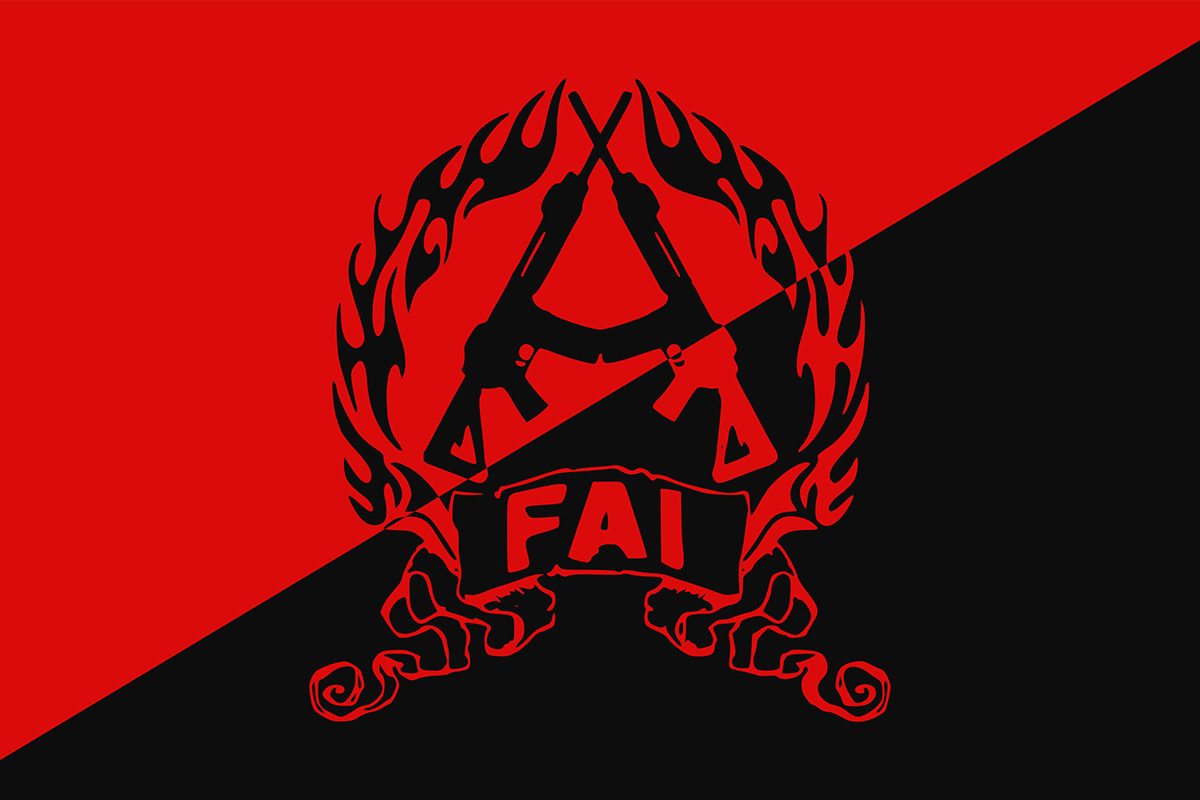
The flag for the Informal Anarchist Federation, one of the groups designated as an FTO by the U.S. State Department.

The flag for the Informal Anarchist Federation, one of the groups designated as an FTO by the U.S. State Department.

Violent extremist groups operating across Europe have used explosives, arson and coordinated assaults to target law enforcement, government institutions and businesses. Although these groups differ in their organizational structures and motivations, their shared anti-authoritarian, anti-capitalist, and anti-fascist ideologies can inspire violence beyond their borders — even without direct coordination.

The U.S. Department of State designated four such groups as foreign terrorist organizations (FTOs), raising questions about how their tactics and influence could shape the threat landscape in the United States.

Read the paper: "Influence Without Borders: Assessing the Threat of Four Antifa-Inspired Designated Foreign Terrorist Organizations" examines the characteristics, tactics, and targets of Antifa Ost, the Informal Anarchist Federation/International Revolutionary Front (FAI/FRI), Armed Proletarian Justice, and Revolutionary Class Self-Defense. The paper's author is Michael Logan, Ph.D., of Kennesaw State University.

Why it matters: Unlike traditional terrorist organizations with centralized leadership, these groups operate within loosely connected ideological networks that can inspire violence without directly organizing attacks. Understanding how violent tactics spread across borders, and how U.S.-based extremists might adopt them, can help homeland security and law enforcement professionals identify emerging threats while distinguishing violent activity from lawful political expression.

Key takeaways:

  • The threat to the U.S. is more likely to come from inspired violence than directly coordinated attacks. The four designated groups operate primarily in Europe, but their ideologies, propaganda, and tactics can influence violent actors elsewhere via websites and social media. Because the broader movement is decentralized and lacks a formal chain of command, identifying threats through traditional organizational connections can be difficult.
  • European extremists have demonstrated more sophisticated and coordinated attack tactics. An analysis of 195 anarchist and antifa-inspired terrorist attacks in Western Europe between 2008 and 2018 found that 48% involved explosives and 41% involved incendiary weapons. Among attacks attributed specifically to FAI, 65% involved explosives. While U.S. incidents have more frequently involved confrontations during protests, recent cases involving firearms, explosives, and advance planning suggest the potential for tactical escalation.
  • Law enforcement, government facilities, and transportation infrastructure face heightened risks if coordinated attacks escalate. In the U.S., antifa-inspired violence has generally been reactive, occurring in response to protests, police actions, or other triggering events. However, European groups have demonstrated a pattern of selecting symbolic targets and planning attacks independently of immediate events. If U.S.-based violent extremists adopt similar approaches, attacks could become more deliberate, coordinated, and difficult to anticipate.

What they're saying:

  • Mackenzie Harms Wickersham, Ph.D., FTO Series Editor
    • “Most people who identify with anti-fascist or anarchist causes do not engage in violence. Counterterrorism tools will be most effective when they focus on violent behavior rather than ideology, separating the small subset of actors who plan attacks from the much larger population engaged in lawful protest and political expression.”

What’s next: This report is part of an ongoing NCITE research series examining the more than 30 groups designated as foreign terrorist organizations by the U.S. Department of State in 2025 and 2026. Look for more reports to be published this month, and go to the series landing page to read about all the groups.

News Sections

  • National Counterterrorism Innovation, Technology, and Education Center (NCITE) News Center
  • UNO News Center
  • The Maverick
  • The Bullseye
  • Campus Events

Featured

  • NCITE Webinar Recap: Tactical Innovation and Special Operations in Mexican Drug Cartels
  • FTO Series: Antifa-Inspired Extremist Organizations Could Influence Violence in U.S.
  • FTO Series: Analyzing Networks of Eight Major Mexican Cartels
  • DHS Science & Technology Leaders Visit NCITE to Strengthen Government, Academic, Industry Partnerships

Most Viewed

  • In Seventh Year, NCITE Adds Projects on CBRN Deterrence, AI Vulnerabilities at Large Venues, and More

National Counterterrorism Innovation, Technology, and Education Center (NCITE)

Connect with NCITE
  • 6001 Dodge St.
  • Omaha, NE
  • ncite@unomaha.edu
Social media
Our DHS Partners
  • Centers of Excellence
  • Science & Technology Directorate (S&T)
  • Office of University Programs (OUP)
U.S. Department of Homeland Security Science and Technology Grant Acknowledgement and Disclaimer. The material on this website is based on work supported by the U.S. Department of Homeland Security under Grant Award Number 20STTPC00001-05. The views and conclusions included here are those of the authors and should not be interpreted as necessarily representing the official policies, either expressed or implied, of the U.S. Department of Homeland Security.

Services and Resources

  • Academic Calendar
  • Course Catalogs
  • MavCARD Services
  • MavLINK
  • my.unomaha.edu
  • UNO Brand Guide

Related Links

  • A-Z List
  • Employment
  • University of Nebraska System

Campus Links

  • Accessibility
  • Billing Office
  • Buildings and Maps
  • Campus Directory
  • Campus Safety
  • Events
  • Human Resources
  • Library
  • Military-Connected Resource Center
  • News
  • Registrar
  • Samuel Bak Museum: The Learning Center

Policies and Reporting

  • Emergency Information Alert
  • MavsReport
  • Notice of Nondiscrimination
  • NU Foundation
  • Privacy Statement
  • University Policies
  1. Privacy Statement
  2. Accessibility
  1. 402.554.2800

University of Nebraska at Omaha
University of Nebraska at Omaha, 6001 Dodge Street, Omaha, NE, 68182
  • ©  

Social Media


Omaha Skyline

Our Campus. Otherwise Known as Omaha.

The University of Nebraska does not discriminate based on race, color, ethnicity, national origin, sex, pregnancy, sexual orientation, gender identity, religion, disability, age, genetic information, veteran status, marital status, and/or political affiliation in its education programs or activities, including admissions and employment. The University prohibits any form of retaliation taken against anyone for reporting discrimination, harassment, or retaliation for otherwise engaging in protected activity. Read the full statement.