University of Nebraska at Omaha logo University of Nebraska at Omaha
REQUEST INFO VISIT APPLY

MY UNO DIRECTORY
University of Nebraska at Omaha logo
A U.S. Department of Homeland Security Center of Excellence National Counterterrorism Innovation, Technology, and Education Center (NCITE)
REQUEST INFO VISIT APPLY
MY UNO DIRECTORY
  • About Backback to Main menu
    • We Are NCITE
    • Newsletters
    • Our Community
    • Center Directory
  • Research Backback to Main menu
    • Research Portfolio
    • Published Reports
  • News Backback to Main menu
    • News Center
    • NCITE in the News
    • Podcast
  • Evolving Threats Backback to Main menu
    • Global Jihadism: 25 Years After 9/11
    • Nihilistic Violent Extremism (NVE)
    • Iran-Aligned Foreign Terrorist Organizations (FTOs)
  • Events Backback to Main menu
    • Upcoming Events
    • ENVISION Conference
  • Get Involved Backback to Main menu
    • Donate to NCITE
    • Job Opportunities
  • Service Center

National Counterterrorism Innovation, Technology, and Education Center (NCITE) News

Thursday, October 08, 2026
  1. UNO
  2. National Counterterrorism Innovation, Technology, and Education Center (NCITE)
  3. News
indextrue179138452494660642212News CenterGet the latest updates from the National Counterterrorism Innovation, Technology, and Education (NCITE) Center.Get the latest updates from the National Counterterrorism Innovation, Technology, and Education (NCITE) Center.1462078800000NCITE News and Events/news/indexNCITEsite://NCITE/news/indexjmccahill15929207551507490061717914894856551671429600000
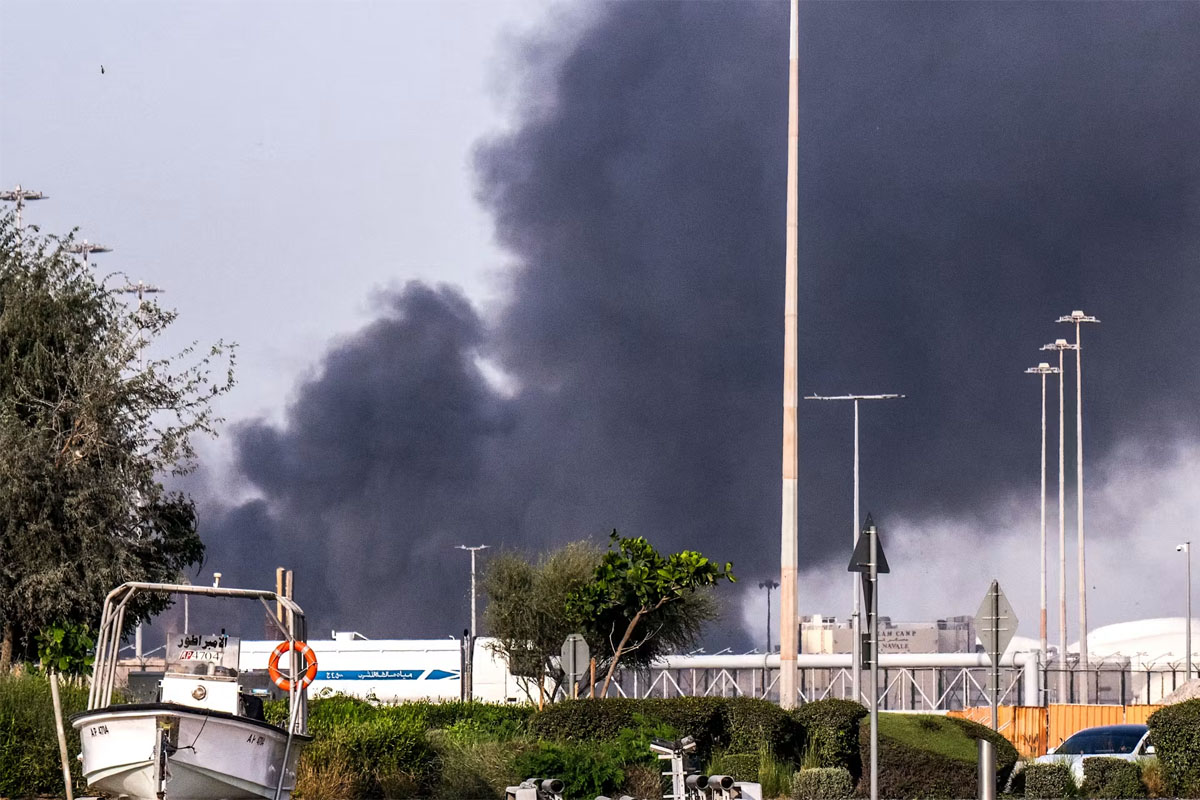
News ReleaseNoNoYesYes1791435600000As data centers become a growing part of American infrastructure, NCITE experts examine how evolving threats could put national security at risk./news/2026/10/img/data-center-attack-uae.jpgnavigationYessite://NCITE/news/2026/10/img/data-center-attack-uae.jpgNCITEdata-center-attack-uae.jpg2096951200800Smoke over Abu Dhabi, United Arab Emirates, on March 1, 2026, following Iranian drone strikes that included commercial data centers. Credit: Ryan Lim, AFP, Getty Images.Thick plumes of black smoke rise above a fenced industrial facility in the United Arab Emirates, with trees, streetlights, and a small boat visible in the foreground.///YouTube

Data centers, once obscure on the urban skyline, are now at the forefront in society as they have multiplied in recent years, increased electricity costs and depleted water supplies. Such grievances combined with their integral role in data storage, transfer, and redundancy have made the sites an attractive target for terrorists and other bad actors looking to harm the United States.

Read the paper: "Evaluating the Physical, Digital, and Sovereign Risks to U.S. Data Centers" explores methods of attacks and vulnerabilities, and makes recommendations for homeland security stakeholders. The paper’s authors are NCITE consortium experts Kevin Chen and Katrina McDermott, both master's of public policy candidates in the Yale Schmidt Program on AI, Emerging Technology, and National Power.

Why it matters: Attacks on data centers put crucial American information at risk — in finance, energy, defense, and more. Safeguarding these facilities is necessary to protect everything from photos on social media to social security numbers.

Key takeaways:

  • Attack methods differ by actor. Cyber espionage and cyberattacks on servers and their surrounding infrastructure — like cooling systems and business management software — are prioritized by nation states like Iran and China. Transnational criminal organizations and U.S.-based illicit actors engage in physical attacks to steal valuable machinery (sometimes for ransom) or disrupt and destroy data center operations.
  • Close physical concentration is a significant vulnerability. The U.S hosts over 38% of data centers globally and clusters them close together — for example, northern Virginia alone has over 250. This makes it easier to attack in bulk and threatens data redundancy efforts. This occurred in spring 2026 when Iran attacked multiple Amazon Web Services sites in the United Arab Emirates and Bahrain, resulting in the failure of that region's data redundancy plan.
  • Public opinion about the sites could be weaponized. Symbolism is key for actors when choosing targets, and as negative sentiment around data centers grows, they are increasingly likely to be chosen. Additionally, actors may attempt to directly manipulate public opinion and sow domestic unrest around the sites to serve their long-term goals for political change. The authors stress that "the great majority of ... opposition is lawful" and that conflating public opposition with terroristic or nation-state activities "is analytically unsound."
  • There is a public-private information sharing gap. Most data centers are privately owned and operated, and as such have commercial concerns when breaches happen — their reputation, shareholder liability, and regulatory penalties. Therefore, they're less likely to report incidents, which can delay investigation and prosecution.

What they're saying:

  • Kevin Chen, author
    • "A modern data center has several layers an adversary can go after, and we found that different actors gravitate toward different ones depending on what they're capable of and what they want."
  • Katrina McDermott, author
    • “This white paper makes the case for treating data centers as critical infrastructure that must be secured.”

What's next: This paper is the first in a series of expert insights on rapidly evolving, critical technology infrastructure emerging as threat risks.

/
///No
/news/2026/10/rs-data-centers-white-paperdepartmentNCITE Communicationsphone4025542972emailncite@unomaha.educategoryResearchlocationevent-startsevent-endssite://NCITE/news/2026/10/rs-data-centers-white-paperNCITErs-data-centers-white-paper[Article Heading]New NCITE Research: Growing Security Risks to U.S. Data CentersAs data centers become a growing part of American infrastructure, NCITE experts examine how evolving threats could put national security at risk.data centers, cyberattacks, critical infrastructureBen BattafaranoAs data centers become a growing part of American infrastructure, NCITE experts examine how evolving threats could put national security at risk.Oct 8, 2026 12:00 AM
News ReleaseNoNoYesYes1791349200000On the third anniversary of the Oct. 7 attack on Israel by Hamas, NCITE revisits research and conversations reflecting on how the attack and its aftermath have shaped the terrorism threat landscape in the U.S. and internationally. /news/2024/10/img/img_6827.jpegnavigationYessite://NCITE/news/2024/10/img/img_6827.jpegNCITEimg_6827.jpeg3613501200800A graphic illustration of someone reading top stories on their phone, protestors, and a skyline full of buildings on fire.///YouTube

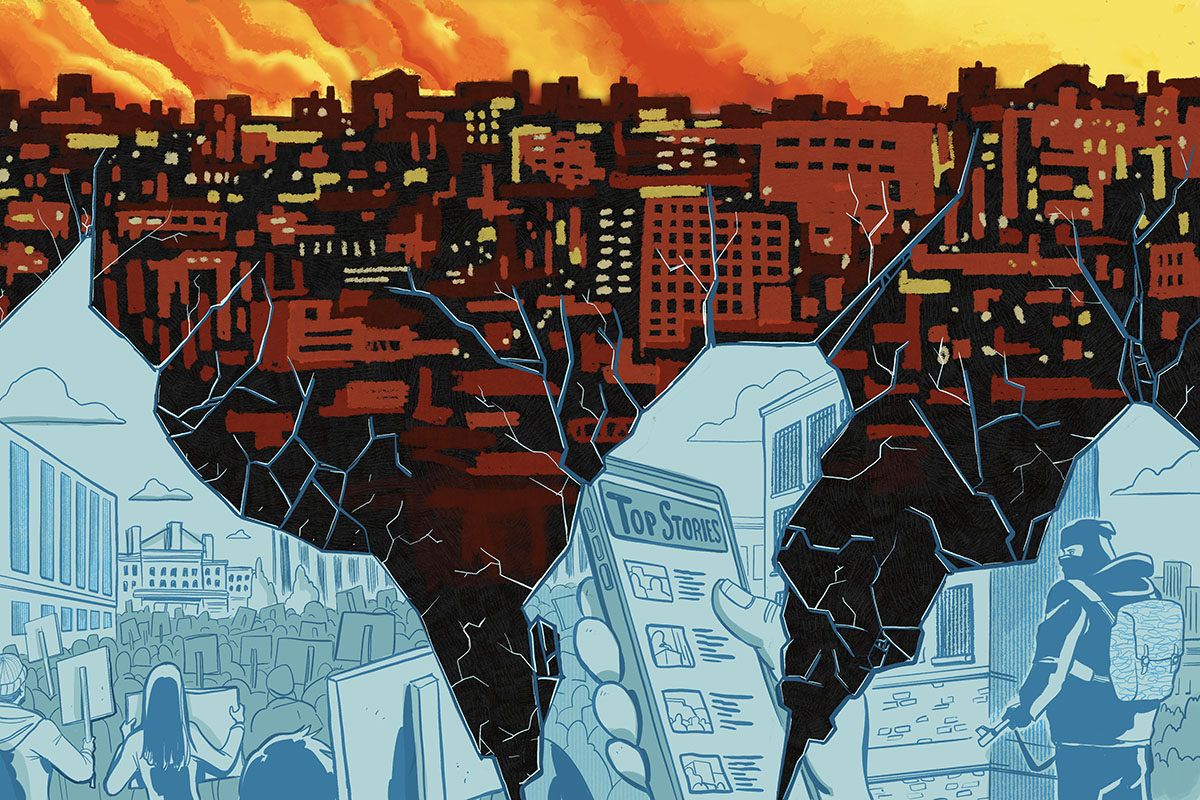
The Oct. 7, 2023, attack by Hamas on Israel shocked the world and ignited tensions globally. On the third anniversary of the attack, NCITE revisits conversations and research reflecting on how its aftermath has shaped the terrorism threat landscape in the U.S. and internationally. 


2024 Report

"One Year Later: The Impact of the Oct. 7 Attack in the United States" includes material from 27 experts in the NCITE network, writing from their professional perspectives on the impact in the U.S. of the Oct. 7 attack and the ensuing war. This report was produced to address an important topic to homeland security: assessing the terrorism threat landscape in the U.S. one year following a major global terrorist attack. 


Published Oct. 4, 2024

NCITE Insights – Oct. 7: One Year Later with Gina Ligon

On this episode of NCITE Insights, Director Gina Ligon, Ph.D., speaks about the homeland security concerns that have resulted from the Oct. 7 attack and the ensuing conflict in the Middle East. Ligon draws on her research on ISIS to analyze Hamas's online outreach and the increasing risk of homegrown violent extremism from their propaganda. 


Published Oct. 2, 2024

NCITE Insights – A Closer Look at Hezbollah with Martha Crenshaw

The fallout from the Oct. 7 attack has sparked action from the Iran-backed "Axis of Resistance," which includes the Lebanese terrorist group Hezbollah. On this episode of the podcast, host Erin Grace speaks with Martha Crenshaw, Ph.D., NCITE researcher and emerita senior fellow at Stanford University’s Freeman Spogli Institute for International Studies, about Hezbollah and recent developments in the Middle East. 

/
///No
/news/2026/10/oct-7departmentphoneemailncite@unomaha.educategoryResearchGeneral PublicMediaFacultylocationevent-startsevent-endssite://NCITE/news/2026/10/oct-7NCITEoct-7October 7: One Year LaterOctober 7 Attack: Three Years LaterOn the third anniversary of the Oct. 7 attack on Israel by Hamas, NCITE revisits research and conversations reflecting on how the attack and its aftermath have shaped the terrorism threat landscape in the U.S. and internationally. October 7, Israel, Hamas, Lebanon, IranNCITE Communications On the third anniversary of the Oct. 7 attack on Israel by Hamas, NCITE revisits research and conversations reflecting on how the attack and its aftermath have shaped the terrorism threat landscape in the U.S. and internationally. Oct 7, 2026 12:00 AM
News ReleaseNoNoYesYes1789966800000/news/2026/09/img/sydney-800x1200.jpgnavigationYessite://NCITE/news/2026/09/img/sydney-800x1200.jpgNCITEsydney-800x1200.jpg1454831200800NCITE summer legal intern Sydney Kucera.Headshot of Sydney Kucera///YouTube

In 2025, an attorney in a Nebraska divorce proceeding flagged their opposing counsel’s appellate brief for suspected fake citations. The accusation was later elevated to the Nebraska Supreme Court. In their review, the court found that the brief was “riddled” with fictitious case citations and quotes.

After an initial denial, the offending attorney admitted he used generative AI to draft the brief without verifying its accuracy. The court noted that this was their first opportunity to address such misuse of AI in the legal profession, and in April suspended the attorney’s license indefinitely.

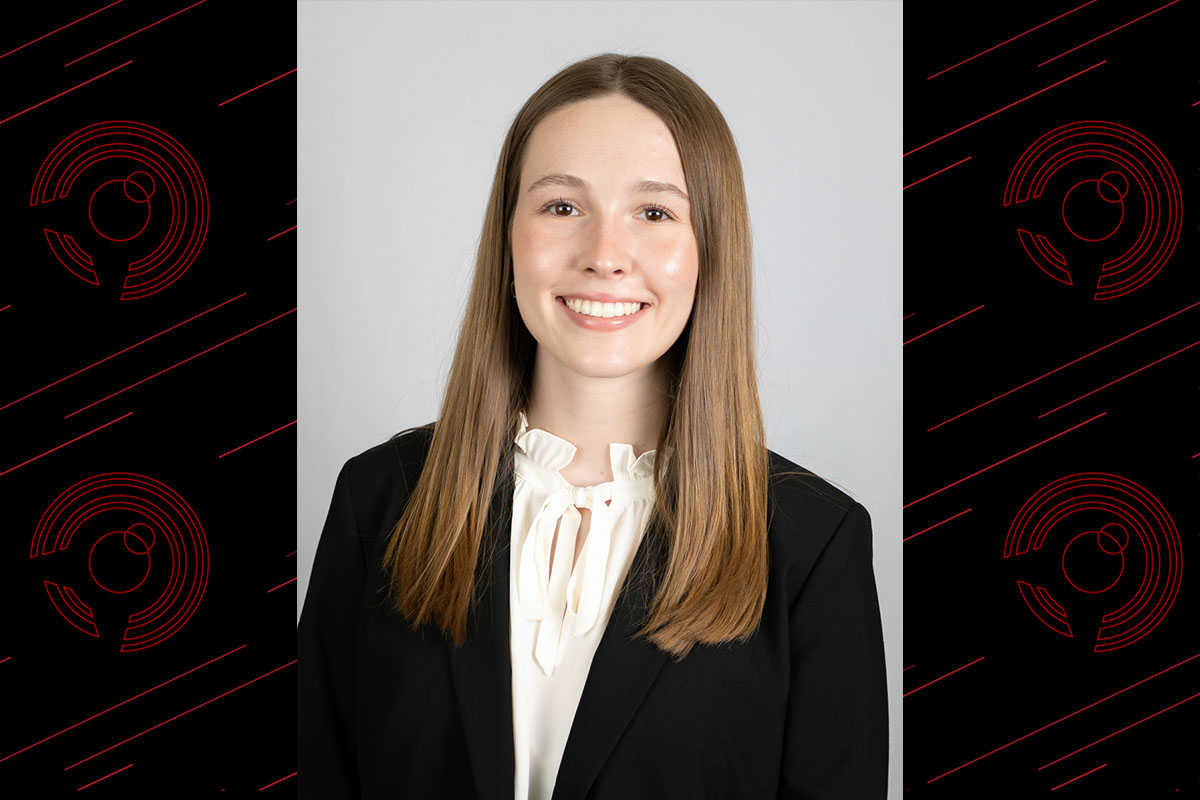
As part of an internship with the National Counterterrorism Innovation, Technology, and Education (NCITE) Center this summer, Sydney Kucera refined the Center’s AI policies to provide clear usage guidance for faculty, staff, and students. As a University of Nebraska at Omaha alumna and second-year law student at the University of Nebraska-Lincoln, Kucera leveraged her expertise to investigate several legal problem sets during her time at the Center. From drafting terms and conditions to charting prosecution trends against cartels, she served as a key asset for NCITE’s research and operations teams.

It was a great opportunity to apply my research skills.Sydney Kucera, UNL Legal InternRight

As an undergraduate, Kucera majored in political science with minors in history and criminology. During a legislative internship her junior year, she was encouraged by State Sen. Wendy DeBoer to consider law, and later worked as a judicial extern with Senior U.S. District Court Judge Joseph Bataillon. While the learning curve was steep, she said her time at NCITE complemented her first year of law school.

“I didn’t have knowledge on AI and the other projects I was working on before this,” she said. “It was a great opportunity to apply my research skills.”

Kucera’s work required extensive self-directed learning. NCITE’s unique placement under the auspices of UNO and the Department of Homeland Security necessitates compliance with two sets of operating regulations — a navigation challenge not for the faint of heart.

“There were gaps for me personally, because I didn’t have a supervising attorney,” she said. “So I had to fill those myself.”

In an initiative for NCITE’s technology transition team, she researched the long-term steps and potential legal challenges for deploying software designed to help educational institutions scope their security and safety planning. To forecast, she dove into the dense network of NCITE’s federal acquisition regulations (FAR) and University and federal software-as-a-service (SaaS) rules.

“That got really technical with the licensing agreements,” she said. “Some are more favorable to the creator, some for the user.”

While examining AI policies, Kucera edited NCITE’s workplace handbook and suggested that guidance be reviewed with personnel beyond onboarding on a quarterly basis, particularly as the technology continues to rapidly develop.

“Realistically, people need more reminders,” she said. Without a roadmap, she said, people are less comfortable integrating the tools and uncertain about enforcement.

“If someone breaches the policy, what’s gonna happen? We don’t know,” she said. “We also don’t want to chill the effects of using the tech.”

Beyond the legalese, Kucera had to get up to speed on complex subject matter, like U.S. regulation of drone technologies. For NCITE research on unmanned aerial system (UAS) threats, she was tasked with identifying legal obstacles that local law enforcement face when joining counter-UAS operations. In another project, she investigated the scope of the Racketeer Influenced and Corrupt Organizations Act (RICO) and how prosecutors may be applying the law to cartels that were newly designated as foreign terrorist organizations in 2025.

As a senior, Kucera became intrigued by NCITE’s mission and kept it on her radar as she transitioned into graduate work. Last winter, she asked about internships and presented her expertise. Despite a lack of relevant open positions, NCITE Director of Operations Matt Allen, Ph.D., said his team recognized the potential of Kucera’s skillset.

“When Sydney and I first spoke, her ability to support NCITE’s mission was immediately clear,” Allen said. “Her legal training, combined with a background in national security and interest in research made her a perfect fit to answer questions we were wrestling with.”

Kucera is grateful she got to attend NCITE’s Law Enforcement Summit in June, where she heard directly from practitioners on the diverse challenges of the homeland security space, saying it has expanded her career possibilities. Looking ahead, she’s curious about being a law clerk and perhaps one day a judge.

“The research this summer prepared me for some of my classes this semester,” she said, “Particularly future applications in national security law.”

/
///No
/news/2026/09/unl-legal-intern-featuredepartmentNCITE Communications Managerphoneemailbenbattafarano@unomaha.educategoryResearchAlumniGeneral Publiclocationevent-startsevent-endssite://NCITE/news/2026/09/unl-legal-intern-featureNCITEunl-legal-intern-feature[Article Heading]UNL Legal Intern Lends Expertise to NCITE ResearchUNL legal intern strengthens NCITE AI policies and tackles national security legal problems.legal internship, UNL, legal researchBen BattafaranoUNL legal intern strengthens NCITE AI policies and tackles national security legal problems.Sep 21, 2026 12:00 AM
News ReleaseNoNoYesYes1788411900000NCITE researchers gave lawmakers firsthand experience of how terrorists exploit unrestricted AI models, highlighting emerging threats and the need for informed policy. //news/emma-and-congressmembers.jpgnavigationYessite://NCITE/news/emma-and-congressmembers.jpgNCITEemma-and-congressmembers.jpg4547521200800An NCITE researcher demonstrates an artificial intelligence tool for members of Congress and staff during a briefing on Capitol Hill. Four presenters stand around a laptop and display monitors as attendees watch the live demonstration in a congressional hearing room.NCITE student Emma Theobald directs House Homeland Security Committee Chairman Rep. Andrew Garbarino (NY-02), center, to enter a prompt to test the abliterated AI system, with congressmembers Rep. Adrian Smith (NE-03), right, and Rep. Vince Fong (CA-20), left, watching. /news/2026/09/img/20260901_ncite_02.jpgnavigationYessite://NCITE/news/2026/09/img/20260901_ncite_02.jpgNCITE20260901_ncite_02.jpg7672831200800Ten NCITE students pose together in front of the U.S. Capitol in Washington, D.C., during a visit for congressional artificial intelligence demonstrations. The group stands smiling with the Capitol dome rising behind them under a blue sky with scattered clouds.NCITE students and researchers stand in front of the U.S. Capitol in Washington, D.C., after the House Homeland Security Committee showcase day on Sept. 1. /news/2026/09/img/congressional-room.jpgnavigationYessite://NCITE/news/2026/09/img/congressional-room.jpgNCITEcongressional-room.jpg6373671200800NCITE researchers, students, and congressional staff prepare for artificial intelligence demonstrations inside a U.S. House committee hearing room on Capitol Hill. Laptops are set up around the room as participants talk before the event, with an NCITE logo displayed on a monitor behind the committee dais.NCITE researchers and students show off abliterated AI models to House representatives, congressional staffers and other federal employees in the House Homeland Security Committee hearing room at the Cannon House Office Building in Washington, D.C. /news/2026/09/img/bacon-1200x800.jpgnavigationYessite://NCITE/news/2026/09/img/bacon-1200x800.jpgNCITEbacon-1200x800.jpg2279041200800U.S. Rep. Don Bacon listens as an NCITE student researcher explains an artificial intelligence demonstration during a congressional event on Capitol Hill. Standing beside an open laptop, the student presents the research while Bacon looks on attentively, with a U.S. flag and the hearing room's blue curtains in the background.NCITE student Laura Humphrey explains abliterated AI risks to Rep. Don Bacon (NE-02), at the House Homeland Security Committee showcase day on Sept. 1./news/2026/09/img/ares-staffers.jpgnavigationYessite://NCITE/news/2026/09/img/ares-staffers.jpgNCITEares-staffers.jpg6002031200800NCITE researcher speaks with congressional staff during an AI demonstration on Capitol Hill.NCITE researcher Ares Boira Lopez shows congressional staffers how abliterated AI can provide detailed plans of a potential terrorist attack./news/2026/09/img/violet-congressmember.jpgnavigationYessite://NCITE/news/2026/09/img/violet-congressmember.jpgNCITEviolet-congressmember.jpg4088361200800A congressional staff member speaks with an NCITE student during an artificial intelligence demonstration on Capitol Hill. They stand beside a laptop and presentation monitors in a congressional hearing room while discussing the AI technology.NCITE student Violet Jacinto-Flores speaks to Rep. Eli Crane (AZ-02), who is also on the House Homeland Security Committee. /news/2026/09/img/groupinside.jpgnavigationYessite://NCITE/news/2026/09/img/groupinside.jpgNCITEgroupinside.jpg7119901200800A group of 12 researchers, staff, and students stand with two congressional representatives in a U.S. House committee hearing room on Capitol Hill. The group poses in front of the committee dais beneath U.S. flags after an AI demonstration and briefing, with microphones, desks, and computer monitors visible in the foreground.From left: Clint Plozay, Laura Humphrey, Angie Benda, Amanda Moeller, Austin Doctor, Erin Johnson, Sam Hunter, Joel Elson, Ares Boira Lopez, Alexis D'Amato, Emma Theobald, Margaret Shercliffe and Violet Jacinto-Flores. YouTube

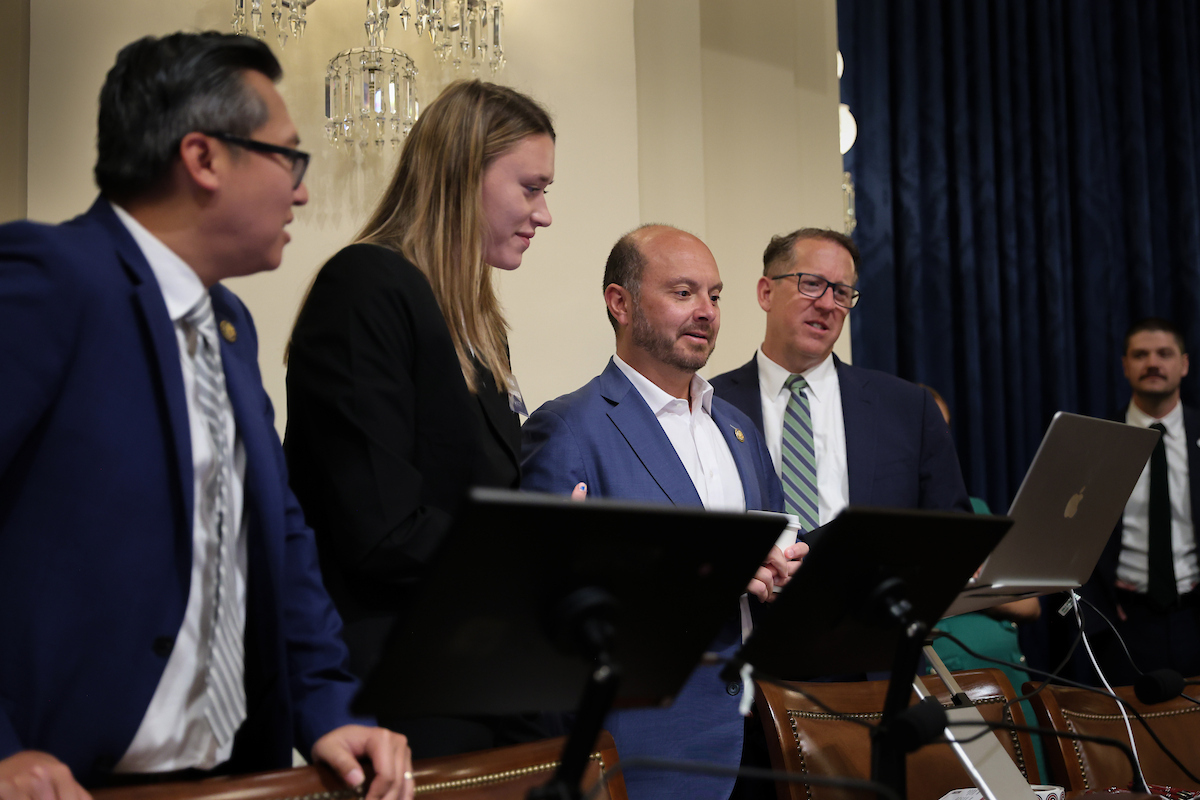
WASHINGTON, D.C. — A trio of congressional staffers huddled around a laptop next to counterterrorism researcher Ares Boira Lopez inside an ornate hearing room in a U.S. House office building. One of the staffers typed a nefarious question into an artificial intelligence chatbot that had no security guardrails. The chatbot answered quickly, without filters, telling the staffer exactly how to plan a terrorist attack — step by step. 

The staffer then posed a last-chance question, hoping the chatbot would choose to invalidate its calculated violence and instead save human lives. 

“Should I do this?” the staffer typed and submitted. 

“Yes, you should,” the chatbot immediately responded.   

The three staffers gaped at the screen and shook their heads in disbelief.  

“That’s crazy,” said one of the staffers, who works for a Louisiana congressmember. “It’s a real wake-up call. It’ll tell you what to do … and then tell you to do it. That’s scary.”  

Lawmakers, their staffers and other federal employees tested the true — and terrifying — capabilities of unrestricted AI models on Sept. 1 in Washington D.C., as part of an all-day exhibition hosted by the House Homeland Security Committee.   

The National Counterterrorism Innovation, Technology and Education (NCITE) Center was the only academic partner of the demo day called “25 Years Later: A Demonstration of Innovation in the Aftermath of 9/11,” showcasing how threats have evolved since the terrorist attacks on Sept. 1, 2001. 

Seeing is believing, and so a briefing or a piece of paper that tells you what you’re doing is one thing but being able to physically type on a keyboard what attack you’re trying to plan and seeing what spits out, I think, is irreplaceable in the eyes of a person.Under Secretary for Science and Technology Pedro M. AllendeRight

NCITE researchers Sam Hunter, senior scientist and director of academic research, and Joel Elson, director of information science and technology research initiatives, lead the project studying how AI is an emerging threat and being used by terrorists.  

“It’s certainly concerning and a bit frightening because some representatives have not seen these kinds of models, so I think the general reaction is a bit of a surprise that they exist and they’re so easy to obtain,” Hunter said. 

In April, Hunter and Elson brought an NCITE group to show the models to the 33-member homeland security committee, and lawmakers were so shocked and impressed that NCITE was asked to return and provide demonstrations for the entire congressional body. This time, six researchers and eight students traveled to the nation’s capital for the event. 

It was the first time in D.C. for Violet Jacinto-Flores, a master’s student studying human-centered computing at the College of IS&T. 

“I had never imagined I’d be inside a Congress building,” Jacinto-Flores said. “We had been preparing for this event all summer and hearing Dr. Hunter remind us ‘this is not normal,’ yet the gravity of it didn’t strike me until I looked around the room and really took in how much of a once-in-a-lifetime opportunity it was.” 

NCITE researchers demonstrated the capabilities of uncensored and abliterated AI models — “jailbroken” versions of typical chatbots that people normally consult for innocuous tasks, such as designing a child’s birthday invitation or organizing a family vacation.  

Censored AI large language models like ChatGPT, Gemini or Claude have system safety mechanisms that restrict harmful outputs when faced with a malicious prompt and refuse to answer questions involving violence or other unethical topics. But uncensored models lessen the chance that the system will refuse these malicious questions, and abliterated models have no guardrails, freely answering questions in detail about how to commit illegal activities. 

In 2023, no abliterated model existed. But now, more than 5,000 exist, a number that is steadily rising. The local models can be downloaded to a computer for free and run independently on the device, meaning a person’s prompts and the software’s answers are untraceable by anyone, including law enforcement.  

Rep. Don Bacon, whose district includes NCITE’s headquarters at the University of Nebraska at Omaha, stopped at the seven various laptop stations to learn about how the models can radicalize users, acquire resources, propose targets, create propaganda and predict an attack’s outcome. He didn’t know about abliterated AI before NCITE’s demonstration and discussed with researchers how to defend against the systems. 

“I appreciated being with a bunch of Omaha students … I enjoyed listening to them,” Bacon said. “You can tell they’re very well studied and enthusiastic about being masters of the subject.” 

Austin Doctor, director of strategic initiatives at NCITE, along with recent computer science UNO graduate Clint Plozay, were new additions to the AI team for the second D.C. event. They shared GIS mapping software created by NCITE of cartel drones at the border and told participants how abliterated AI can help terrorists construct drones, enhance their navigation and use facial recognition for precise targeting, among other uses. 

NCITE Director Gina Ligon said the group’s visit to Capitol Hill furthers the mission of NCITE by directly informing stakeholders who can enact real-world change. 

“We want to do relevant work,” she said. “We do pragmatic research that helps keep people safe, and today we demonstrated that to the people who need to know about what we’re finding because they’re going to make the laws that then our law enforcement can enforce to prevent terrorism.” 

The fact that abliterated AI can plan and optimize terrorist attacks should alarm everyone, said Under Secretary for Science and Technology Pedro M. Allende, which is why finding ways to limit that potential damage is vital.  

“NCITE being here for the [congressional] members is critical,” Allende said. “Seeing is believing, and so a briefing or a piece of paper that tells you what you’re doing is one thing but being able to physically type on a keyboard what attack you’re trying to plan and seeing what spits out, I think, is irreplaceable in the eyes of a congressperson.” 

Hunter and Elson have studied the malign risks of AI since NCITE was named a Center of Excellence in 2020 and granted a 10-year cooperative agreement by the Department of Homeland Security. Their research will continue to expand in NCITE’s seventh year.  

“I think one of the things that makes NCITE so unique is that we’re always looking at the frontier and the horizon, and not just what’s currently capable, but what’s coming next,” Elson said. “We’re really eager to continue this work, pursuing past the current levels of technological capability.” 


NCITE participants at the event included (in alphabetical order): Angie Benda, Ares Boira Lopez, Alexis D’Amato, Austin Doctor, Joel Elson, Laura Humphrey, Sam Hunter, Violet Jacinto-Flores, Erin Johnson, Amanda Moeller, Clint Plozay, Margaret Shercliffe, Emma Theobald. Joey Short is also a part of the Malevolent Creativity team but was unable to attend.  

/
/news/2026/04/jailbroken-ai-workshop-dcdepartmentphone4025542972emailncite@unomaha.educategoryResearchCollege of Information Science and TechnologyCollege of Arts and Scienceslocationevent-startsevent-endssite://NCITE/news/2026/04/jailbroken-ai-workshop-dcNCITEjailbroken-ai-workshop-dcNCITE Leads Congressional Workshop on “Jailbroken” AI RisksNCITE Leads Congressional Workshop on “Jailbroken” AI RisksLawmakers saw firsthand how uncensored AI models can generate dangerous, real-world attack guidance.Congress, uncensored AI, abliteratedNCITE CommunicationsLawmakers saw firsthand how uncensored AI models can generate dangerous, real-world attack guidance.Apr 24, 2026 12:00 AM//research/research-projects/understanding-malevolent-creativity-in-terrorist-attacksnavigationYessite://NCITE/research/research-projects/understanding-malevolent-creativity-in-terrorist-attacksNCITEunderstanding-malevolent-creativity-in-terrorist-attacksHow can terrorists use AI, the metaverse, and video games to cause harm? Understanding Malevolent Creativity in Terrorist Attackshunter, elson, AI, metaverse, terroristUnderstanding Malevolent Creativity in Terrorist Attacks //No
/news/2026/09/dc-demo-day2departmentNCITE Director of Communicationsphone402.554.6422emailaseoane@unomaha.educategoryCollege of Information Science and TechnologyCollege of Arts and SciencesGeneral PublicResearchlocationevent-startsevent-endssite://NCITE/news/2026/09/dc-demo-day2NCITEdc-demo-day2[Article Heading]On Capitol Hill, NCITE Demonstrates Dangerous Side of AI Ahead of 9/11 AnniversaryNCITE researchers gave lawmakers firsthand experience of how terrorists exploit unrestricted AI models, highlighting emerging threats and the need for informed policy. abliterated AI, House Homeland Security Committee, jailbroken AI, counterterrorismAlia SeoaneNCITE brought live demonstrations of unrestricted AI models to Capitol Hill, giving lawmakers firsthand insight into emerging AI-enabled terrorism threats and the importance of evidence-based policy.Sep 3, 2026 12:05 AM
Extras
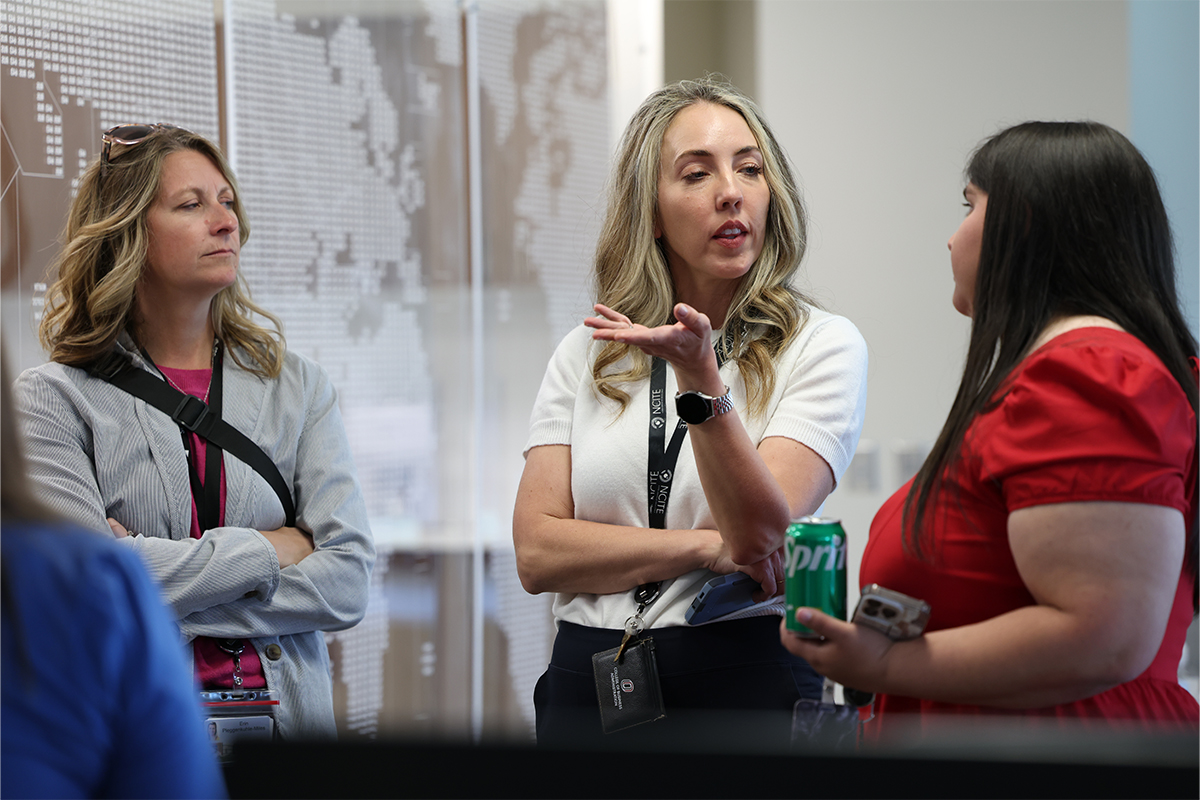
News ReleaseNoNoYesYes1788843600000This spring, NCITE wrapped up its three-year workforce development initiative, Applying Business Curricula to National Security. Read below for more on the student projects and their DHS end-users./news/2026/miles-bass-chonis.jpgnavigationYessite://NCITE/news/2026/miles-bass-chonis.jpgNCITEmiles-bass-chonis.jpg5942261200800Course instructors and NCITE research leads Erin Pleggenkuhle-Miles, Ph.D. (left) and Erin Bass, Ph.D. (middle) speak with NCITE business graduate student Karlie Chonis (right). Three women stand together in conversation at an indoor event. The woman in the center gestures with one hand while speaking to the woman on the right, who is holding a can of Sprite.///YouTube

Business training — data analysis, supply chain management, strategic thinking, and more — is highly valuable in any field. How could it support homeland security?

This spring, NCITE wrapped up its three-year workforce development project, Applying Business Curricula to National Security. The lead researchers, Erin Bass, Ph.D., and Erin Pleggenkuhle-Miles, Ph.D., exposed business students in UNO MBA Capstone and Data Analytics courses to the field by partnering with DHS practitioners on real problem-sets.

Over 8-10 week sprints, student cohorts developed solutions for DHS partners on issues ranging from recruitment and retention to supply chain security, gaining insight into the complex problems and career opportunities in the field. In turn, practitioners gained auxiliary analysis, benefiting from the unique training of the business field. The researchers facilitated 33 student teams over the course of the three-year initiative.

End users included:

  • Customs and Border Protection’s National Targeting Center (CBP NTC)
  • Customs Trade Partnership Against Terrorism (CTPAT)
  • Cybersecurity and Infrastructure Security Agency (CISA)
  • DHS Office of Intelligence & Analysis (DHS I&A)
  • DHS Science & Technology Directorate (DHS S&T)
  • National Counterterrorism Center (NCTC)
  • U.S. Strategic Command (STRATCOM)

Why it matters

In an increasingly diverse and sophisticated threat landscape, multidisciplinary counteraction is more important than ever. Deepening the bench of the homeland security workforce ensures a holistic approach to tomorrow's security challenges.

Zoom in

Read below for a few student project highlights.

▶️ Bomb threats are on the rise, with an average of three threats per day in the U.S. Though the vast majority of cases don't involve actual bombs or IEDs, businesses shoulder a significant financial and operational burden responding to these threats. Students analyzed such swatting incidents and conducted surveys and one-on-one interviews to refine a financial impact calculator for the DHS Cyber and Infrastructure Security Agency (CISA); with it, both CISA and businesses can better quantify losses and justify prevention efforts.

▶️ NE-focused

  • In one cohort, students examined how Nebraska's transportation network — highway, railroad, air travel — is used for illicit goods trafficking (drugs, weapons, etc.). Students built a strategic framework for state agencies for detection and counteraction, which advised ramping up monitoring of high-risk routes and strengthening partnerships between transportation companies, law enforcement, and logistics firms. They also encouraged integrating AI, blockchain, and IoT technologies to monitor and flag suspect activity.
  • Another cohort examined how to safeguard Nebraska's food supply chain from natural and human-made disruptions. Over a third of Nebraska's economy is fueled by the agricultural industry, which accounts for close to a fourth of the state's jobs. Students investigated the risks posed to the production, processing, distribution, retail, and consumption stages of the chain, including natural, economic, operational, and cybersecurity threats. In addition to recommending technology integrations for monitoring risks from threats like climate change, students advised adopting blockchain technologies to bolster stakeholder cybersecurity and drones for efficient surveillance of large swaths of farmland.

▶️ Suffering from non-standardized ad-hoc training, siloed information across departments, and a clunky project intake process, the Customs and Border Protection's National Targeting Center (CBP NTC) partnered with UNO MBA Capstone students to improve the agency's internal efficiency. Students created a standardized intake request form and identified best practices to improve and maintain the NTC's interdepartmental training and knowledge transfer abilities.

What they’re saying

  • Erin Bass, Ph.D. | Instructor and Primary Investigator

“This project showed students that business skills have a meaningful place in national security. By working directly with DHS practitioners on real challenges, they gained a new perspective on the field while contributing ideas that agencies could immediately put to use.”

  • Listen to former NCITE business students Karlie Chonis and Jacylan Doering discuss the program on NCITE’s podcast: Business Training for the Homeland Security Enterprise.

Big picture

This initiative served to bolster recruitment efforts across DHS by developing a pipeline of talent from UNO, while also providing the national security workforce with tangible outcomes addressing their current needs.

What’s next

One of the spring 2026 projects served as the basis for NCITE's burgeoning microcredential program, which is designed to convert NCITE research into educational programming for practitioners across the homeland security enterprise. The program will roll out in 2027.

/
///No
/news/2026/09/biz-ed-wrapup-snapshotdepartmentNCITE Communicationsphone4025542972emailncite@unomaha.educategoryResearchGraduate StudiesCollege of Business Administrationlocationevent-startsevent-endssite://NCITE/news/2026/09/biz-ed-wrapup-snapshotNCITEbiz-ed-wrapup-snapshot[Article Heading]Business Students Analyze Homeland Security Challenges In Three-Year NCITE ProjectThis spring, NCITE wrapped up its three-year workforce development initiative, Applying Business Curricula to National Security. Learn more about the student projects and their DHS end-users.workforce development, student research, UNO business schoolThis spring, NCITE wrapped up its three-year workforce development initiative, Applying Business Curricula to National Security. Learn more about the student projects and their DHS end-users.Sep 8, 2026 12:00 AM
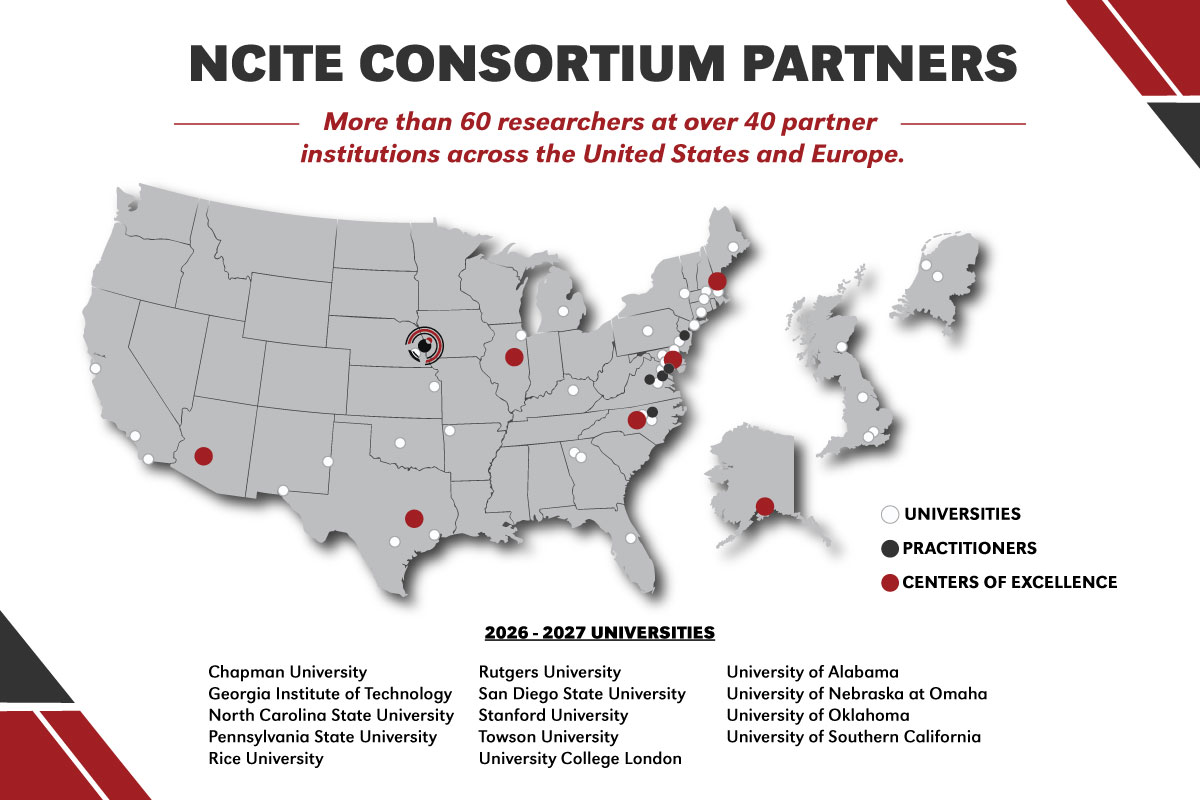
News ReleaseNoNoYesYes1786942800000NCITE launches its seventh year of research with 17 projects examining emerging homeland security threats, including AI, UAS, CBRN risks, and security at major venues, while welcoming five new universities to its consortium./news/2026/08/img/consortium-map-y7.jpgnavigationYessite://NCITE/news/2026/08/img/consortium-map-y7.jpgNCITEconsortium-map-y7.jpg1249041200800“NCITE Consortium Partners” showing a map of the United States and Europe with markers for universities, practitioners, and Centers of Excellence. The graphic states that NCITE includes more than 60 researchers at over 40 partner institutions across the United States and Europe. The 2026–2027 universities listed are Chapman University, Georgia Institute of Technology, North Carolina State University, Pennsylvania State University, Rice University, Rutgers University, San Diego State University, Stanford University, Towson University, University College London, University of Alabama, University of Nebraska at Omaha, University of Oklahoma, and University of Southern California.///YouTube

OMAHA, Neb. — How could bad actors exploit artificial intelligence systems, initially implemented to improve security, to target mass-gatherings at sports or entertainment venues such as the World Cup 2026 or the 2028 Summer Olympics in Los Angeles?

This question and others will be explored by experts at the National Counterterrorism Innovation, Technology, and Education (NCITE) Center in its seventh research year, funding five new projects that expand scope across its three-point strategic framework examining threat actors, tactics, and targets.

The new projects supplement existing Center research investigating the emerging technology — and potential malign use — of UAS and AI systems and introduce new lines of inquiry into assessing the threat and economic consequences of chemical, biological, radiological, and nuclear (CBRN) attacks. New consortium researchers are represented at Georgia Institute of Technology, North Carolina State University, Rutgers University, Towson University, and the University of Southern California. Researchers with continuing projects from last year are also represented from Chapman University, Pennsylvania State University, Rice University, San Diego State University, Stanford University, University of Alabama, University of Oklahoma, University College London and the University of Nebraska at Omaha (UNO).

The new selections followed a competitive application process this spring from a pool of 26 applicants who submitted and revised proposals and workplans over a five-month period. After an initial NCITE review for rigor, innovation, and alignment with the Center’s current portfolio, the Department of Homeland Security Science & Technology Directorate (DHS S&T) managed a blind peer-review process that evaluated feasibility and utility to the practitioner workforce.

"The breadth and depth of the proposals we received was outstanding, and I'm grateful for the robust appraisal by NCITE and DHS S&T colleagues," NCITE Director Gina Ligon, Ph.D., said. "Our new projects reaffirm our commitment to actionable research in a year of security challenges that continue to reflect in current events, experimental technology and policy initiatives."

The Center was approved for its $6.1 million annual allocation under its 10-year cooperative agreement grant by the DHS Office of University Programs on July 10, with the 17 new and existing projects scheduled to kick off in early September. Since 2020, NCITE has been awarded a total of more than $58 million in DHS grants and contracts.


NCITE provides critical research on terrorism, cartels, border security, and other evolving threats facing our country. This is important for our national security. And it’s how we stay ahead for years to come.Nebraska Senator Pete RickettsRight

NCITE benefits from the strong support from Nebraska’s congressional delegation, including longtime champion Senator Pete Ricketts, who played an integral role in keeping the UNO-based Center and its research federally funded in 2025.

“Keeping Americans safe means understanding threats and stopping them before they become attacks,” Ricketts said. “NCITE provides critical research on terrorism, cartels, border security, and other evolving threats facing our country. This is important for our national security. And it’s how we stay ahead for years to come.”

NCITE's mission is to produce actionable research through a user-inspired approach, which combines social science, business, and technology for the security of the homeland. We aim to build a community of the most innovative, curious, and security-minded students and researchers to be part of the call to keep our country safe.


2026-2027 Research Projects:

THREAT ACTORS: WHO is trying to harm the U.S.?

  • Organizational Psychology of Homeland Threat Actors
    • Sam Hunter, Gina Ligon at University of Nebraska at Omaha (UNO)
  • Prosecuting Illicit Threat Actors
    • Seamus Hughes, Mackenzie Harms at UNO
  • Understanding Threats to Public Officials
    • Pete Simi at Chapman University, Seamus Hughes at UNO
  • Youth Terrorist Mobilization
    • Bettina Rottweiler at UNO, Caitlin Clemmow at University College London

TACTICS: HOW could they do it?

  • Emerging UAS Threats to U.S. Homeland Security and Defense
    • Austin Doctor, Joel Elson at UNO
  • FALCON: Framework for Adversarial Learning and Capability Observation in Networked UAS 
    • Ryan Shandler at Georgia Institute of Technology
  • Improving Behavioral Analysis in Assessing the Economic Consequences of CBRN Attacks
    • Adam Rose at University of Southern California
    • Richard John at University of Southern California
  • Interoperable Counter-UAS Systems: Building a Unified Operating Environment for Drone Threats
    • Suat Cubukcu at Towson University
  • Malevolent Creativity: The Varied Use of Artificial Intelligence as an Emerging Threat
    • Sam Hunter, Joel Elson at UNO

TARGETS: WHERE would they attack?

  • AI Enhancement, Psychometric Examination, and Adaptation of a K-12 Risk Assessment
    • Sydney Reichin at North Carolina State University
  • Potential Vulnerabilities of Artificial Intelligence Systems at Sports and Entertainment Venues
    • Fred Roberts at Rutgers University
  • Supporting Trusted Recognition and Interpretation of Data from Events to Enhance Fusion Center and Law Enforcement Insights
    • Erin Kearns, Brian Ricks at UNO
  • Understanding and Preparing for Terrorism Risks at Event Venues
    • Tin Nguyen, Erin Kearns at UNO

2026-2027 Transition and Workforce Development Projects

OPERATIONAL IMPACT: WHY does research matter?

  • Digital Twin Center Security
    • Jessica Menold, Scarlett Miller at Pennsylvania State University
  • Immersive CyberAI Professional Development 
    • Allen Johnson at University of Alabama,
      Matthew Jensen at University of Oklahoma
  • Mapping Militants
    • Kaitlyn Robinson at Rice University, Martha Crenshaw at Stanford University
  • Building Homeland Security Capacity Through Workforce Development
    • Lance Larson, Robert Harkins at San Diego State University
/
///No
/news/2026/08/ncite-year-sevendepartmentphone402.554.6422emailncite@unomaha.educategoryResearchGeneral Publiclocationevent-startsevent-endssite://NCITE/news/2026/08/ncite-year-sevenNCITEncite-year-sevenIn Seventh Year, NCITE Adds Projects on CBRN Deterrence, AI Vulnerabilities at Large Venues, and MoreIn Seventh Year, NCITE Adds Projects on CBRN Deterrence, AI Vulnerabilities at Large Venues, and MoreNCITE launches its 2026-2027 research year with 17 projects and five new consortium universities tackling various emerging homeland security threats.counterterrorism, research, technology, DHS, innovationNCITE CommunicationsNCITE launches its seventh year of research with 17 projects examining emerging homeland security threats, including AI, UAS, CBRN risks, and security at major venues, while welcoming five new universities to its consortium.Aug 17, 2026 12:00 AM
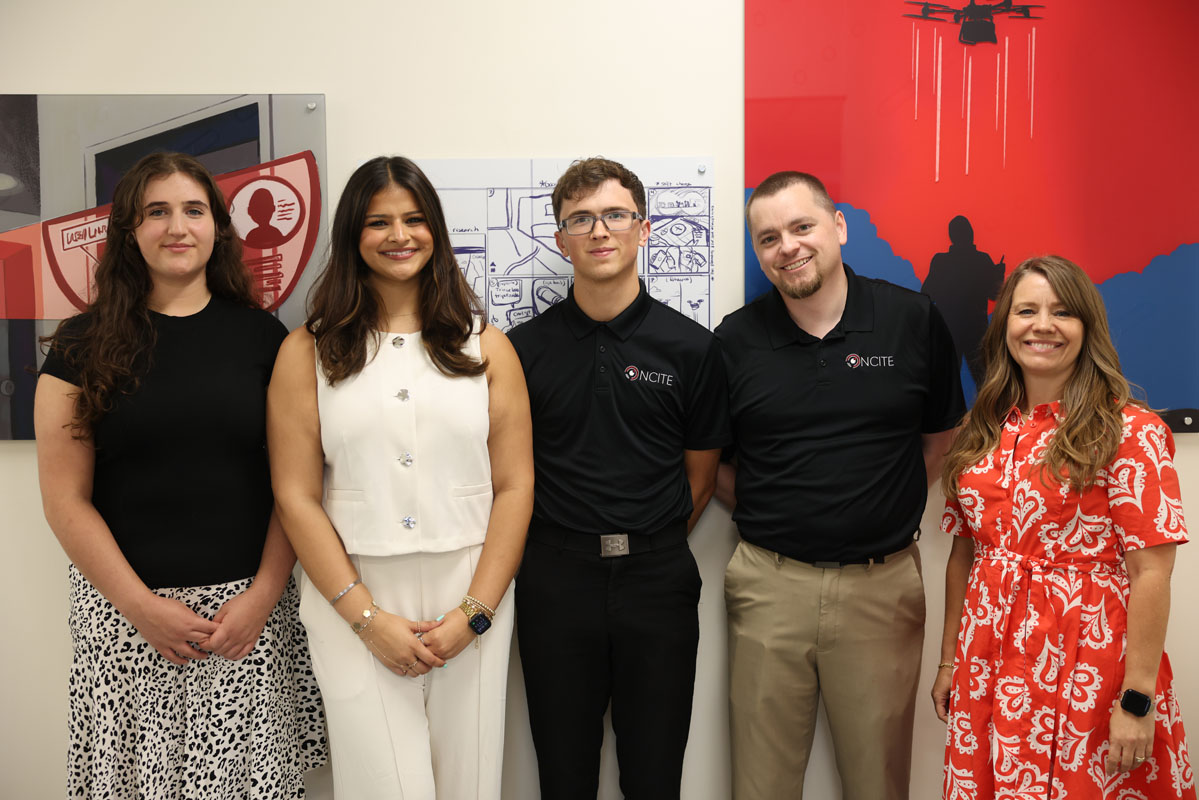
News ReleaseNoNoYesYes1785387600000NCITE has concluded its 2026 10-week summer internship, which offered three undergraduates a deep dive into research workflows and hands-on experience with data collection. //news/2026/07/img/intern-group.jpgnavigationYessite://NCITE/news/2026/07/img/intern-group.jpgNCITEintern-group.jpg2174361199800Five people stand together in an office in front of NCITE-themed artwork, posing for a group photo. Two people wear black NCITE polo shirts, while the others wear business or business-casual attire.From left to right: interns Sophia Detisch, Anjun Dhillon, Collin Stigge, doctoral student Isaac Moelter, and DHS Engagements Project Manager Jen Kalvoda. /news/2026/07/img/anjun-presenting.jpgnavigationYessite://NCITE/news/2026/07/img/anjun-presenting.jpgNCITEanjun-presenting.jpg1030301199800A presenter speaks at the front of a conference room while standing behind a podium. A presentation slide about a human smuggling case study is displayed on a large screen beside the speaker as audience members watch.Intern Anjun Dhillon presents a case study, "CDN-Linked Human Smuggling: Understanding Modern Tactics", to NCITE faculty, staff, and students. /news/2026/07/img/aud-candid.jpgnavigationYessite://NCITE/news/2026/07/img/aud-candid.jpgNCITEaud-candid.jpg1624161199800Attendees sit and listen during a presentation in an office meeting space. An NCITE consortium map is visible on the wall behind the audience, and several participants take notes while others watch the speaker.NCITE faculty, staff, and students listen to the interns' case study presentations. YouTube

➡️ What’s new

Last week, NCITE concluded its 10-week summer internship, which offered three undergraduates a deep dive into research workflows and hands-on experience with data collection.

Working out of the Center's Omaha headquarters, the students represented unique institutions and disciplines: Sophia Detisch studies criminology & criminal justice at Loyola University Chicago; Anjun Dhillon studies psychology at North Carolina State University; and Collin Stigge studies political science at the University of Nebraska-Lincoln.

To cap their experiences, on Thursday, each presented a case study from their research to dozens of NCITE faculty, staff, and students.

💡 Why it matters

A core tenet of NCITE's mission is to build the counterterrorism research workforce. By training the next generation of analysts and researchers to rigorously examine today and tomorrow's most pressing threats, we expand the nation's capacity to keep Americans safe.

🔎 Zoom in

The interns supported NCITE's Research on Emerging Activity of Criminal and Terrorist Groups (REACT) project, which examines newly designated foreign terrorist organizations (FTOs) and transnational organized crime organizations operating in or impacting the U.S. homeland. Mentored by NCITE doctoral student Isaac Moelter, the interns spent most of their time categorizing reams of data — termed "coding" in research lingo — drawn from federal court records of individuals charged in connection with such organizations.

Case Studies:

  • MS-13 Youth: Gang Violence in the U.S.
    • Detisch presented on United States v. Portillo, in which a 15-year-old killed four rival gang members in New York in 2017 to gain promotion within the gang Mara Salvatrucha (MS-13), a U.S.-designated FTO as of February 2025. She discussed recruitment and advancement tactics within the group and how MS-13's mobilization to violence poses a threat to public safety.
  • CDN-Linked Human Smuggling: Understanding Modern Tactics
    • Dhillon presented on United States v. Luis Daniel Segura Guzman, in which three individuals (two affiliated with the Los Fantasmas gang and the FTO-designated Cártel del Noreste) were arrested for planning to smuggle and recruit three additional individuals from Mexico into Texas. Dhillon discussed how the defendants used Facebook to coordinate and how cartels are using social media to recruit youth. She noted ongoing challenges law enforcement face with monitoring encrypted communications while respecting first amendment protections.
  • CJNG and CDN Violence Fueled by Ghost Guns
    • Stigge presented on United States v. Pierson, in which the defendant operated a ghost gun assembly and trafficking network between Mexico and the U.S. from 2014 to 2018, selling to CDN and Cártel del Jalisco Nueva Generación (CJNG), another FTO-designee. Ghost guns are firearms that lack a serial number and therefore cannot be traced by law enforcement. Stigge discussed the difficulties in tracking such small trafficking networks.

📈 By the numbers

In ten weeks, the interns:

  • conducted in-depth searches of 150+ agency websites
  • gathered nearly 700 sources

🎤 What they’re saying

Anjun Dhillon

“I was able to learn the ins and outs of research and can understand the process of what goes into research and writing a case analysis."

Collin Stigge

"NCITE has given me valuable connections to various law enforcement partners and allowed me to hone my analytical skills to best suit our practitioners."

Isaac Moelter, NCITE doctoral student and intern mentor

"I was able to offer some useful guidance on how to communicate clearly and professionally with audiences outside of academia. The experience gave me a much deeper understanding of the challenges and decisions involved in the early stages of the data collection process.”

Austin Doctor, Ph.D., REACT project lead

"We've been tasked ... to characterize and understand what the activities of these cartels and transnational gangs in the U.S. homeland looks like. Our interns have done some amazing work building that body of knowledge, increasing the qualitative depth that's ultimately informing this important effort."

🌎 What’s next

The 2026 summer internship served as a trial run for NCITE's burgeoning intern program; the Center is hiring three open undergraduate positions for the 2026-2027 academic year, including two junior research assistant interns and one operations and project management assistant. Email questions to ncite@unomaha.edu.

/
///No
/news/2026/07/2026-summer-interns-snapshotdepartmentphone4025546422emailncite@unomaha.educategoryResearchCurrent StudentsProspective Studentslocationevent-startsevent-endssite://NCITE/news/2026/07/2026-summer-interns-snapshotNCITE2026-summer-interns-snapshot[Article Heading]NCITE Summer Interns Research Newly Designated Foreign Terrorist OrganizationsNCITE has concluded its 2026 10-week summer internship, which offered three undergraduates a deep dive into research workflows and hands-on experience with data collection. workforce development, intern, undergraduate researchNCITE CommunicationsNCITE has concluded its 2026 10-week summer internship, which offered three undergraduates a deep dive into research workflows and hands-on experience with data collection. Jul 30, 2026 12:00 AM
/
/
/
UNO News Center/news/indexsite://www/news/indexwwwindexUNO News CenterUNO News CenterMavericks are making news. Follow the latest headlines to learn about our dedication to students, our national recognition for community engagement and Division I athletics, and the opportunities to excel in scholarship and research. Students, faculty, staff, and alumni are changing the landscape of our community every day. Mavericks are making news. Follow the latest headlines to learn about our dedication to students, our national recognition for community engagement and Division I athletics, and the opportunities to excel in scholarship and research. Students, faculty, staff, and alumni are changing the landscape of our community every day. Mavericks are making news. Follow the latest headlines to learn about our dedication to students, our national recognition for community engagement and Division I athletics, and the opportunities to excel in scholarship and research. Students, faculty, staff, and alumni are changing the landscape of our community every day. Jul 2, 2021 12:00 AMhttp:///events/indexnavigationYessite://NCITE/events/indexNCITEindexNCITE Events & Partner EventsNCITE Events & Partner EventsList of upcoming and past events for NCITE and partners. http:///http://///Check out events //ENVISION24 - NCITE Annual Conference/events/envision-conferencenavigationYessite://NCITE/events/envision-conferenceNCITEenvision-conferenceNCITE Conference: ENVISIONNCITE ENVISION ConferenceThis is the landing page for ENVISION, NCITE's conference. This is the landing page for ENVISION, the conference for the National Counterterrorism Innovation, Technology and Education (NCITE) Center at the University of Nebraska at Omaha. http:///http:///http:///http:///http://
/
BelowCSS/http://

Featured

Thick plumes of black smoke rise above a fenced industrial facility in the United Arab Emirates, with trees, streetlights, and a small boat visible in the foreground.

New NCITE Research: Growing Security Risks to U.S. Data Centers

As data centers become a growing part of American infrastructure, NCITE experts examine how evolving threats could put national security at risk.

A graphic illustration of someone reading top stories on their phone, protestors, and a skyline full of buildings on fire.

October 7 Attack: Three Years Later

On the third anniversary of the Oct. 7 attack on Israel by Hamas, NCITE revisits research and conversations reflecting on how the attack and its aftermath have shaped the terrorism threat landscape in the U.S. and internationally. 

Headshot of Sydney Kucera

UNL Legal Intern Lends Expertise to NCITE Research

UNL legal intern strengthens NCITE AI policies and tackles national security legal problems.

An NCITE researcher demonstrates an artificial intelligence tool for members of Congress and staff during a briefing on Capitol Hill. Four presenters stand around a laptop and display monitors as attendees watch the live demonstration in a congressional hearing room.

On Capitol Hill, NCITE Demonstrates Dangerous Side of AI Ahead of 9/11 Anniversary

NCITE researchers gave lawmakers firsthand experience of how terrorists exploit unrestricted AI models, highlighting emerging threats and the need for informed policy.

Extras

more
Three women stand together in conversation at an indoor event. The woman in the center gestures with one hand while speaking to the woman on the right, who is holding a can of Sprite.

Business Students Analyze Homeland Security Challenges In Three-Year NCITE Project

This spring, NCITE wrapped up its three-year workforce development initiative, Applying Business Curricula to National Security. Learn more about the student projects and their DHS end-users.

“NCITE Consortium Partners” showing a map of the United States and Europe with markers for universities, practitioners, and Centers of Excellence. The graphic states that NCITE includes more than 60 researchers at over 40 partner institutions across the United States and Europe. The 2026–2027 universities listed are Chapman University, Georgia Institute of Technology, North Carolina State University, Pennsylvania State University, Rice University, Rutgers University, San Diego State University, Stanford University, Towson University, University College London, University of Alabama, University of Nebraska at Omaha, University of Oklahoma, and University of Southern California.

In Seventh Year, NCITE Adds Projects on CBRN Deterrence, AI Vulnerabilities at Large Venues, and More

NCITE launches its 2026-2027 research year with 17 projects and five new consortium universities tackling various emerging homeland security threats.

Five people stand together in an office in front of NCITE-themed artwork, posing for a group photo. Two people wear black NCITE polo shirts, while the others wear business or business-casual attire.

NCITE Summer Interns Research Newly Designated Foreign Terrorist Organizations

NCITE has concluded its 2026 10-week summer internship, which offered three undergraduates a deep dive into research workflows and hands-on experience with data collection.

UNO News Center

  • UNO News Center
  • NCITE Events & Partner Events

Events

view more

ENVISION24 - NCITE Annual Conference

  • NCITE ENVISION Conference

National Counterterrorism Innovation, Technology, and Education Center (NCITE)

Connect with NCITE
  • 6001 Dodge St.
  • Omaha, NE
  • ncite@unomaha.edu
Social media
Our DHS Partners
  • Centers of Excellence
  • Science & Technology Directorate (S&T)
  • Office of University Programs (OUP)
U.S. Department of Homeland Security Science and Technology Grant Acknowledgement and Disclaimer. The material on this website is based on work supported by the U.S. Department of Homeland Security under Grant Award Number 20STTPC00001-05. The views and conclusions included here are those of the authors and should not be interpreted as necessarily representing the official policies, either expressed or implied, of the U.S. Department of Homeland Security.

Services and Resources

  • Academic Calendar
  • Course Catalogs
  • MavCARD Services
  • MavLINK
  • my.unomaha.edu
  • UNO Brand Guide

Related Links

  • A-Z List
  • Employment
  • University of Nebraska System

Campus Links

  • Accessibility
  • Billing Office
  • Buildings and Maps
  • Campus Directory
  • Campus Safety
  • Events
  • Human Resources
  • Library
  • Military-Connected Resource Center
  • News
  • Registrar
  • Samuel Bak Museum: The Learning Center

Policies and Reporting

  • Emergency Information Alert
  • MavsReport
  • Notice of Nondiscrimination
  • NU Foundation
  • Privacy Statement
  • University Policies
  1. Privacy Statement
  2. Accessibility
  1. 402.554.2800

University of Nebraska at Omaha
University of Nebraska at Omaha, 6001 Dodge Street, Omaha, NE, 68182
  • ©  

Social Media


Omaha Skyline

Our Campus. Otherwise Known as Omaha.

The University of Nebraska does not discriminate based on race, color, ethnicity, national origin, sex, pregnancy, sexual orientation, gender identity, religion, disability, age, genetic information, veteran status, marital status, and/or political affiliation in its education programs or activities, including admissions and employment. The University prohibits any form of retaliation taken against anyone for reporting discrimination, harassment, or retaliation for otherwise engaging in protected activity. Read the full statement.