

Experiencing Hypoxia: FAA PROTE Chamber Brings Critical Training to Campus
- published: 2026/04/06
- contact: Aviation Institute
- phone: 402.554.3424
- email: unoaviation@unomaha.edu
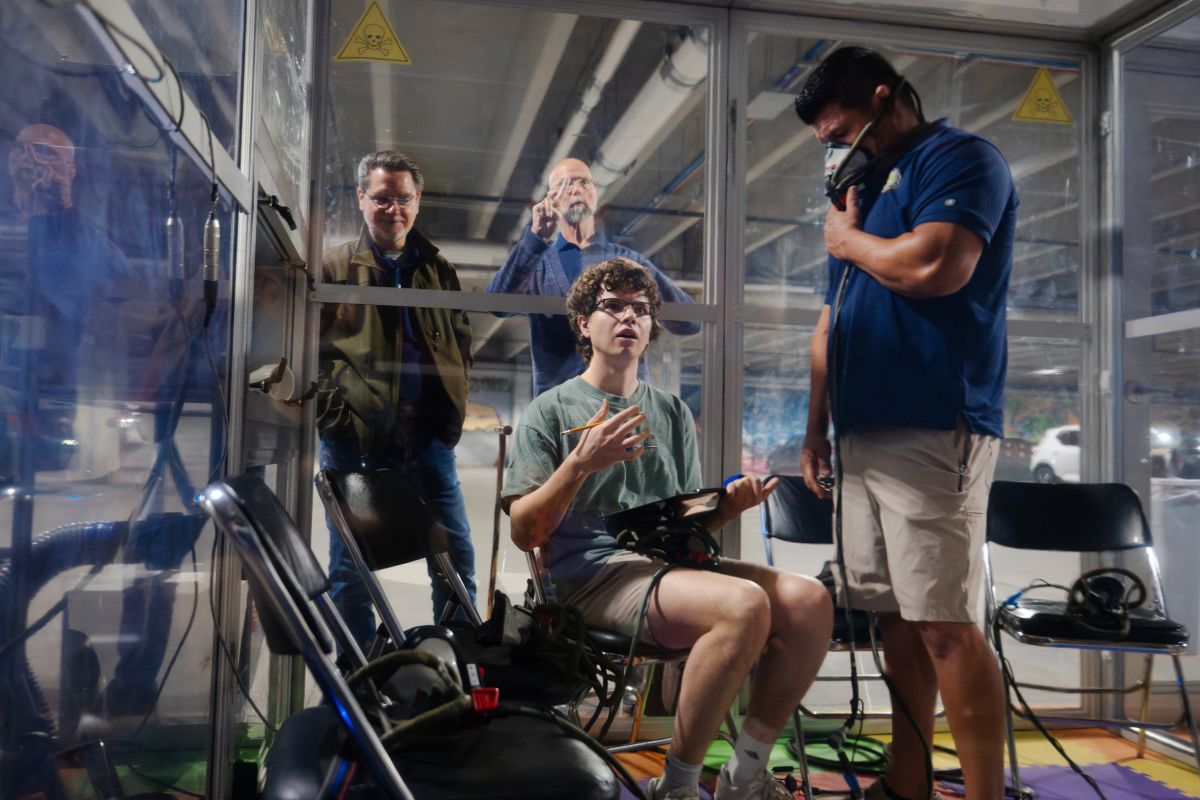
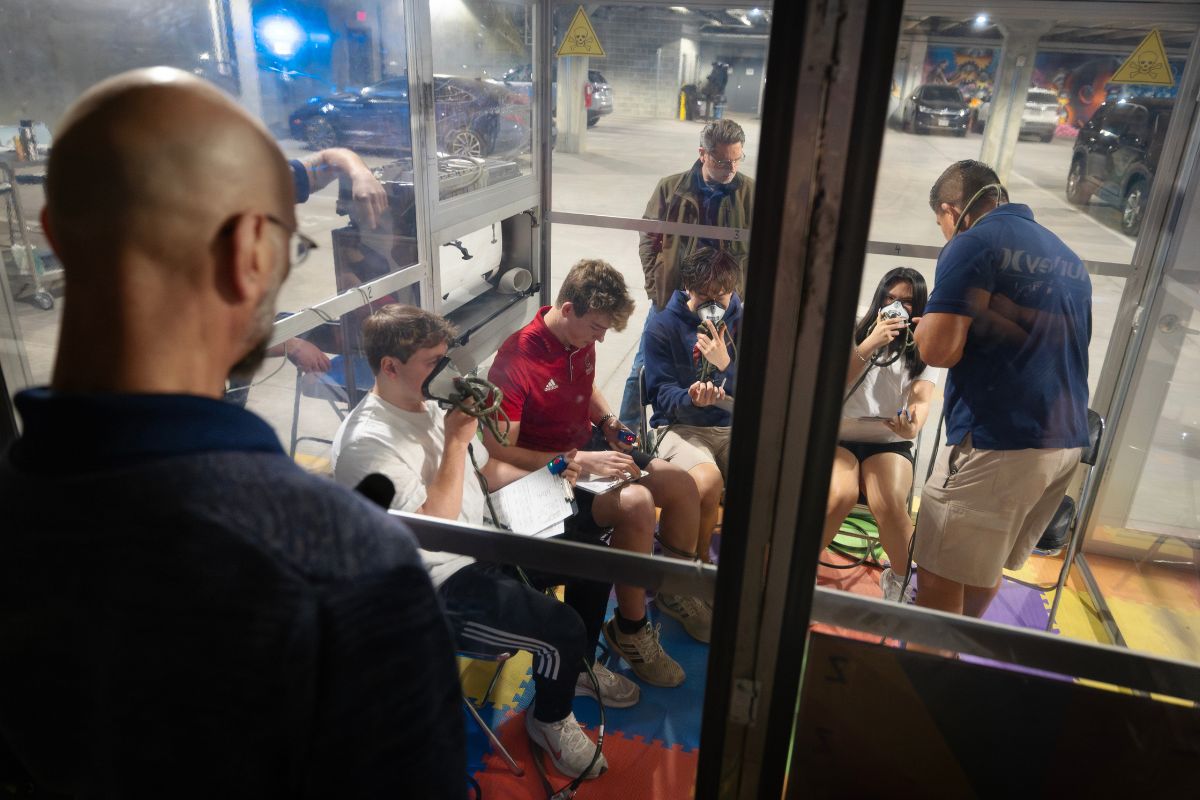
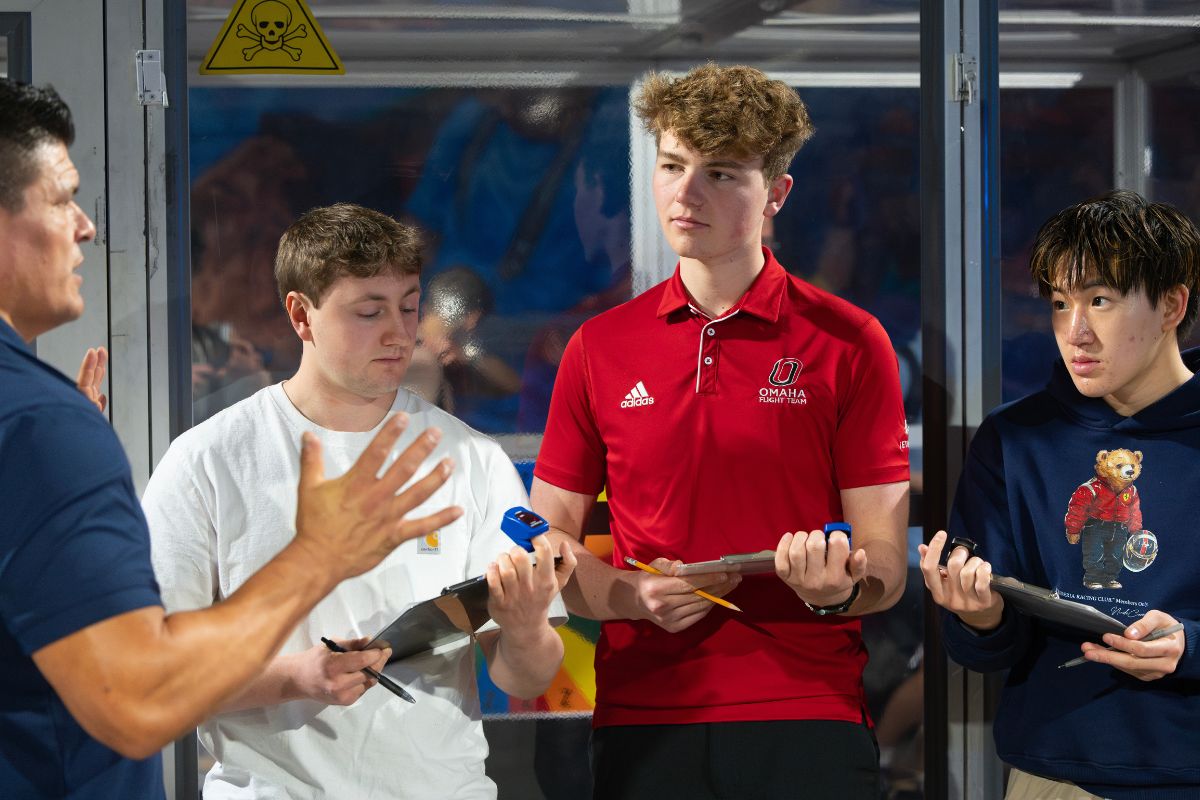
Understanding hypoxia is a fundamental part of aviation training, yet for many students, that understanding is often limited to classroom discussions and textbook definitions. While students may be able to define hypoxia, identify its four types, and list common symptoms, recognizing those symptoms in real time presents a much greater challenge.
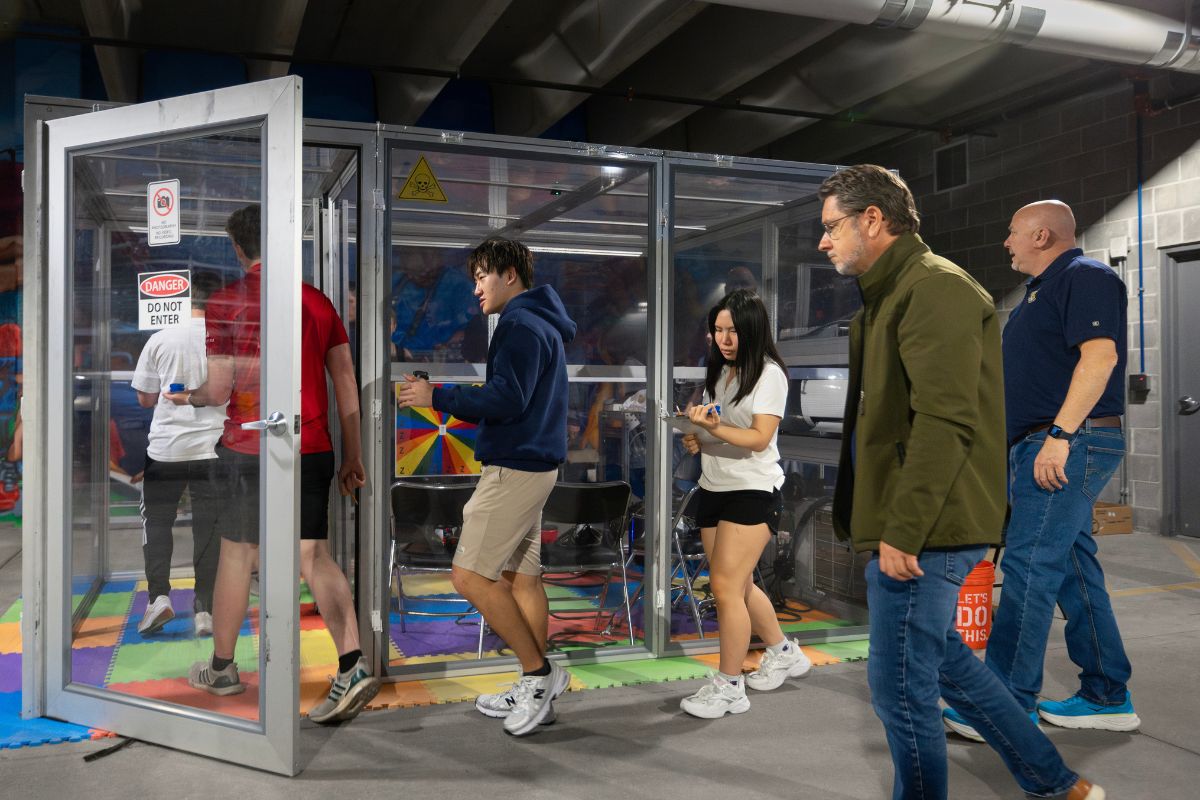
To address this gap, the Federal Aviation Administration (FAA) recently brought its Portable Reduced Oxygen Training Enclosure (PROTE) to campus. The PROTE provides a controlled environment where students can safely experience hypoxia firsthand—an opportunity designed to help future pilots recognize and respond to the condition before it becomes dangerous in flight.
Before entering the chamber, participants attended a detailed pre-brief outlining what to expect. Oxygen levels inside the enclosure were reduced to approximately 7%, simulating conditions at 26,000 feet above mean sea level. Students also reviewed common symptoms such as lightheadedness, impaired cognition, slowed reaction time, and euphoria, while discussing the primary goal of the exercise: identifying their personal physiological response to hypoxia.
Student Tyler Theiman described the preparation process, explaining, “The four other participants in my group and I, led by one of the FAA representatives, discussed common symptoms—lightheadedness, impaired cognition, slowed reaction time, euphoria—and, more importantly, the goals of the exercise: to determine what our individual symptoms look like.”
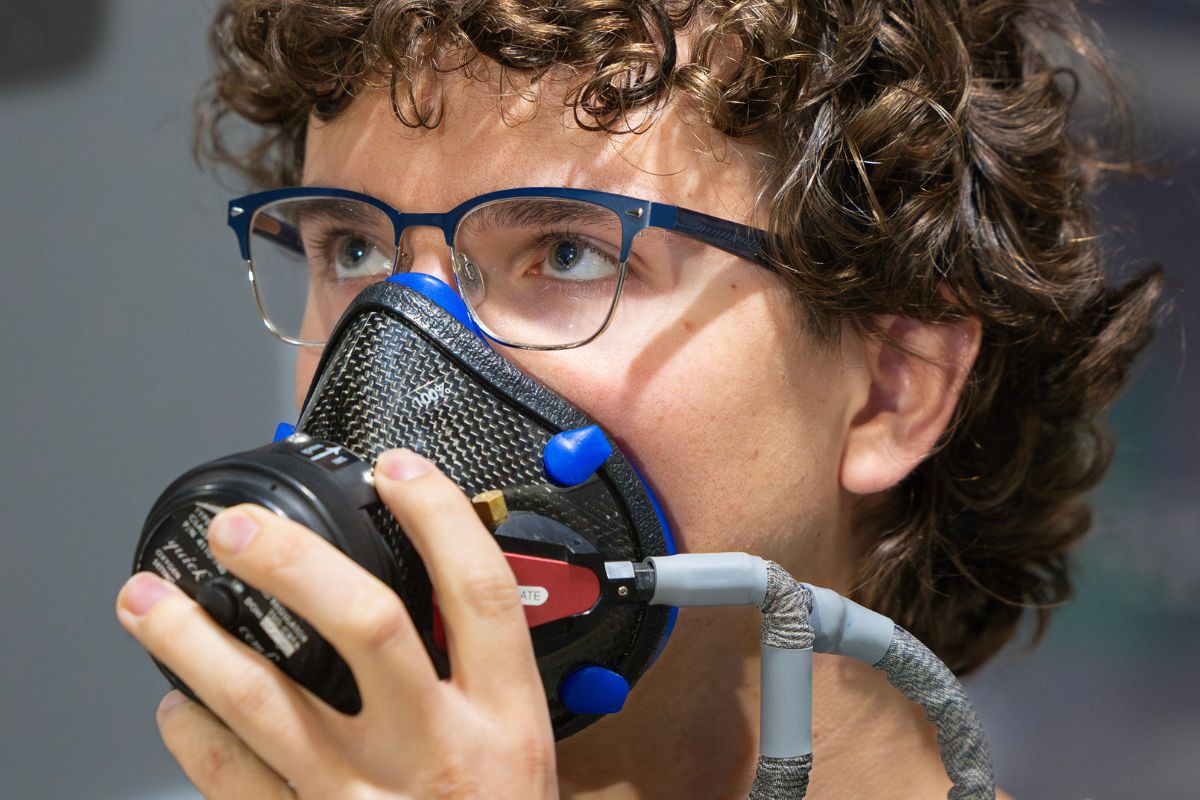
Participants were equipped with pulse oximeters to monitor their blood oxygen saturation throughout the exercise. This allowed both students and FAA staff to track physiological changes in real time and determine when intervention—such as using supplemental oxygen—was necessary.
Reflecting on his baseline condition, Theiman noted, “Prior to entering the chamber, I was resting at 80 BPM heart rate and 99% oxygen saturation.”
Once inside the chamber, the effects of hypoxia set in quickly. According to Theiman, the environment initially felt normal, but the shift was almost immediate.
“Almost immediately, I began to feel lightheaded. My oxygen saturation dropped into the high 80s within moments,” he said.
As the exercise progressed, students were instructed to complete simple cognitive tasks, including a word search, to demonstrate how hypoxia affects mental performance.
“At about the one-minute mark, we were instructed to begin a simple word search. I found one word very quickly before checking my pulse oximeter, which had dropped to 80% saturation. Feeling very dizzy, I looked for more words for another 20 seconds.”
Soon after, FAA staff directed him to use supplemental oxygen.
“At that point, I was instructed to don my oxygen mask. As I started to pull my mask to my face, I checked my readings—my oxygen saturation had fallen to 68%, and my heart rate had climbed to around 130 BPM.”
Recovery was rapid once oxygen was reintroduced.
“With the mask on, I began breathing heavily. It took about 15 seconds, but my lightheadedness started to disappear.”
Observers later confirmed that his oxygen saturation dropped as low as 62%, while his heart rate peaked at 149 BPM during the exercise.
Following the chamber session, students participated in a post-brief discussion focused on identifying symptoms and evaluating whether they would have recognized them in a real flight scenario.
For Theiman, the conclusion was clear.
“My symptoms were very noticeable—lightheadedness and dizziness that were difficult to ignore. Based on that experience, I came to the conclusion that I would be able to recognize my own symptoms of hypoxia without relying heavily on a pulse oximeter during flight.”
However, not all participants shared the same experience. Some individuals exhibited significantly lower oxygen saturation levels with minimal noticeable symptoms, highlighting the variability in how hypoxia affects different people.
Theiman emphasized the importance of this realization, stating, “Seeing this stark difference in experiences reinforced the importance of personal awareness and training.”
The training ultimately underscored a critical lesson for aspiring pilots: hypoxia can develop quickly, and its warning signs are not always universal.
Reflecting on the overall experience, Theiman said, “The FAA PROTE chamber made it clear how quickly hypoxia can take effect.” He added that the experience reinforced the importance of early recognition and immediate corrective action.
Programs like the FAA’s PROTE chamber provide a rare opportunity for students to move beyond theory and gain practical, life-saving awareness. By experiencing hypoxia in a controlled setting, future pilots are better equipped to recognize their own symptoms, respond effectively, and maintain safety in the cockpit.
Seeing this stark difference in experiences reinforced the importance of personal awareness and training.