University of Nebraska at Omaha logo University of Nebraska at Omaha
REQUEST INFO VISIT APPLY

MY UNO DIRECTORY
University of Nebraska at Omaha logo
A U.S. Department of Homeland Security Center of Excellence National Counterterrorism Innovation, Technology, and Education Center (NCITE)
REQUEST INFO VISIT APPLY
MY UNO DIRECTORY
  • About Backback to Main menu
    • We Are NCITE
    • Newsletters
    • Our Community
    • Center Directory
  • Research Backback to Main menu
    • Research Portfolio
    • Published Reports
  • News Backback to Main menu
    • News Center
    • NCITE in the News
    • Podcast
  • Evolving Threats Backback to Main menu
    • Global Jihadism: 25 Years After 9/11
    • Nihilistic Violent Extremism (NVE)
    • Iran-Aligned Foreign Terrorist Organizations (FTOs)
  • Events Backback to Main menu
    • Upcoming Events
    • ENVISION Conference
  • Get Involved Backback to Main menu
    • Donate to NCITE
    • Job Opportunities
  • Service Center
  1. UNO
  2. National Counterterrorism Innovation, Technology, and Education Center (NCITE)
  3. News
  4. 2026
  5. 10
  6. New NCITE Research: Growing Security Risks to U.S. Data Centers

New NCITE Research: Growing Security Risks to U.S. Data Centers

As data centers become a growing part of American infrastructure, NCITE experts examine how evolving threats could put national security at risk.

  • published: 2026/10/08
  • contact: Ben Battafarano - NCITE Communications
  • phone: 4025542972
  • email: ncite@unomaha.edu
  • search keywords:
  • data centers
  • cyberattacks
  • critical infrastructure
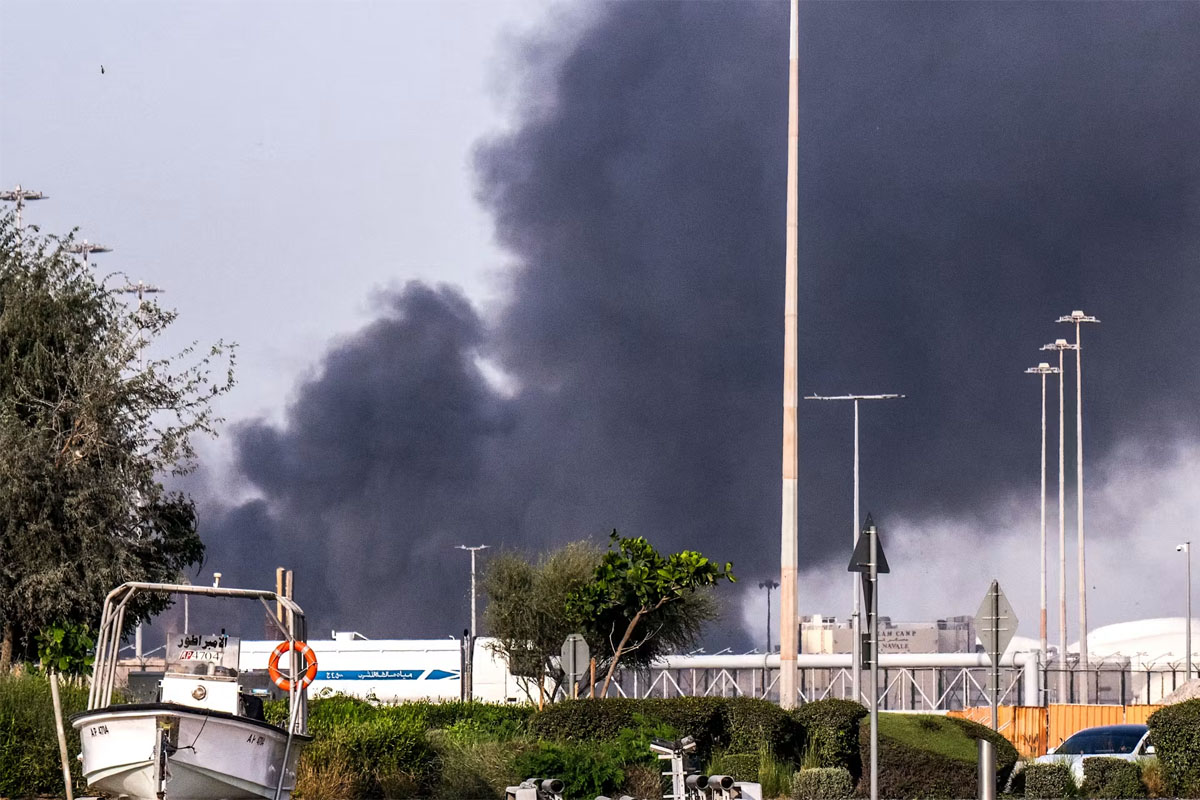
Thick plumes of black smoke rise above a fenced industrial facility in the United Arab Emirates, with trees, streetlights, and a small boat visible in the foreground.

Smoke over Abu Dhabi, United Arab Emirates, on March 1, 2026, following Iranian drone strikes that included commercial data centers. Credit: Ryan Lim, AFP, Getty Images.

Data centers, once obscure on the urban skyline, are now at the forefront in society as they have multiplied in recent years, increased electricity costs and depleted water supplies. Such grievances combined with their integral role in data storage, transfer, and redundancy have made the sites an attractive target for terrorists and other bad actors looking to harm the United States.

Read the paper: "Evaluating the Physical, Digital, and Sovereign Risks to U.S. Data Centers" explores methods of attacks and vulnerabilities, and makes recommendations for homeland security stakeholders. The paper’s authors are NCITE consortium experts Kevin Chen and Katrina McDermott, both master's of public policy candidates in the Yale Schmidt Program on AI, Emerging Technology, and National Power.

Why it matters: Attacks on data centers put crucial American information at risk — in finance, energy, defense, and more. Safeguarding these facilities is necessary to protect everything from photos on social media to social security numbers.

Key takeaways:

  • Attack methods differ by actor. Cyber espionage and cyberattacks on servers and their surrounding infrastructure — like cooling systems and business management software — are prioritized by nation states like Iran and China. Transnational criminal organizations and U.S.-based illicit actors engage in physical attacks to steal valuable machinery (sometimes for ransom) or disrupt and destroy data center operations.
  • Close physical concentration is a significant vulnerability. The U.S hosts over 38% of data centers globally and clusters them close together — for example, northern Virginia alone has over 250. This makes it easier to attack in bulk and threatens data redundancy efforts. This occurred in spring 2026 when Iran attacked multiple Amazon Web Services sites in the United Arab Emirates and Bahrain, resulting in the failure of that region's data redundancy plan.
  • Public opinion about the sites could be weaponized. Symbolism is key for actors when choosing targets, and as negative sentiment around data centers grows, they are increasingly likely to be chosen. Additionally, actors may attempt to directly manipulate public opinion and sow domestic unrest around the sites to serve their long-term goals for political change. The authors stress that "the great majority of ... opposition is lawful" and that conflating public opposition with terroristic or nation-state activities "is analytically unsound."
  • There is a public-private information sharing gap. Most data centers are privately owned and operated, and as such have commercial concerns when breaches happen — their reputation, shareholder liability, and regulatory penalties. Therefore, they're less likely to report incidents, which can delay investigation and prosecution.

What they're saying:

  • Kevin Chen, author
    • "A modern data center has several layers an adversary can go after, and we found that different actors gravitate toward different ones depending on what they're capable of and what they want."
  • Katrina McDermott, author
    • “This white paper makes the case for treating data centers as critical infrastructure that must be secured.”

What's next: This paper is the first in a series of expert insights on rapidly evolving, critical technology infrastructure emerging as threat risks.

News Sections

  • National Counterterrorism Innovation, Technology, and Education Center (NCITE) News Center
  • UNO News Center
  • The Maverick
  • The Bullseye
  • Campus Events

Featured

  • New NCITE Research: Growing Security Risks to U.S. Data Centers
  • October 7 Attack: Three Years Later
  • UNL Legal Intern Lends Expertise to NCITE Research
  • On Capitol Hill, NCITE Demonstrates Dangerous Side of AI Ahead of 9/11 Anniversary

National Counterterrorism Innovation, Technology, and Education Center (NCITE)

Connect with NCITE
  • 6001 Dodge St.
  • Omaha, NE
  • ncite@unomaha.edu
Social media
Our DHS Partners
  • Centers of Excellence
  • Science & Technology Directorate (S&T)
  • Office of University Programs (OUP)
U.S. Department of Homeland Security Science and Technology Grant Acknowledgement and Disclaimer. The material on this website is based on work supported by the U.S. Department of Homeland Security under Grant Award Number 20STTPC00001-05. The views and conclusions included here are those of the authors and should not be interpreted as necessarily representing the official policies, either expressed or implied, of the U.S. Department of Homeland Security.

Services and Resources

  • Academic Calendar
  • Course Catalogs
  • MavCARD Services
  • MavLINK
  • my.unomaha.edu
  • UNO Brand Guide

Related Links

  • A-Z List
  • Employment
  • University of Nebraska System

Campus Links

  • Accessibility
  • Billing Office
  • Buildings and Maps
  • Campus Directory
  • Campus Safety
  • Events
  • Human Resources
  • Library
  • Military-Connected Resource Center
  • News
  • Registrar
  • Samuel Bak Museum: The Learning Center

Policies and Reporting

  • Emergency Information Alert
  • MavsReport
  • Notice of Nondiscrimination
  • NU Foundation
  • Privacy Statement
  • University Policies
  1. Privacy Statement
  2. Accessibility
  1. 402.554.2800

University of Nebraska at Omaha
University of Nebraska at Omaha, 6001 Dodge Street, Omaha, NE, 68182
  • ©  

Social Media


Omaha Skyline

Our Campus. Otherwise Known as Omaha.

The University of Nebraska does not discriminate based on race, color, ethnicity, national origin, sex, pregnancy, sexual orientation, gender identity, religion, disability, age, genetic information, veteran status, marital status, and/or political affiliation in its education programs or activities, including admissions and employment. The University prohibits any form of retaliation taken against anyone for reporting discrimination, harassment, or retaliation for otherwise engaging in protected activity. Read the full statement.