

On Capitol Hill, NCITE Demonstrates Dangerous Side of AI Ahead of 9/11 Anniversary
NCITE researchers gave lawmakers firsthand experience of how terrorists exploit unrestricted AI models, highlighting emerging threats and the need for informed policy.
- published: 2026/09/03
- contact: Alia Seoane - NCITE Director of Communications
- phone: 402.554.6422
- email: aseoane@unomaha.edu
- search keywords:
- abliterated AI
- House Homeland Security Committee
- jailbroken AI
- counterterrorism
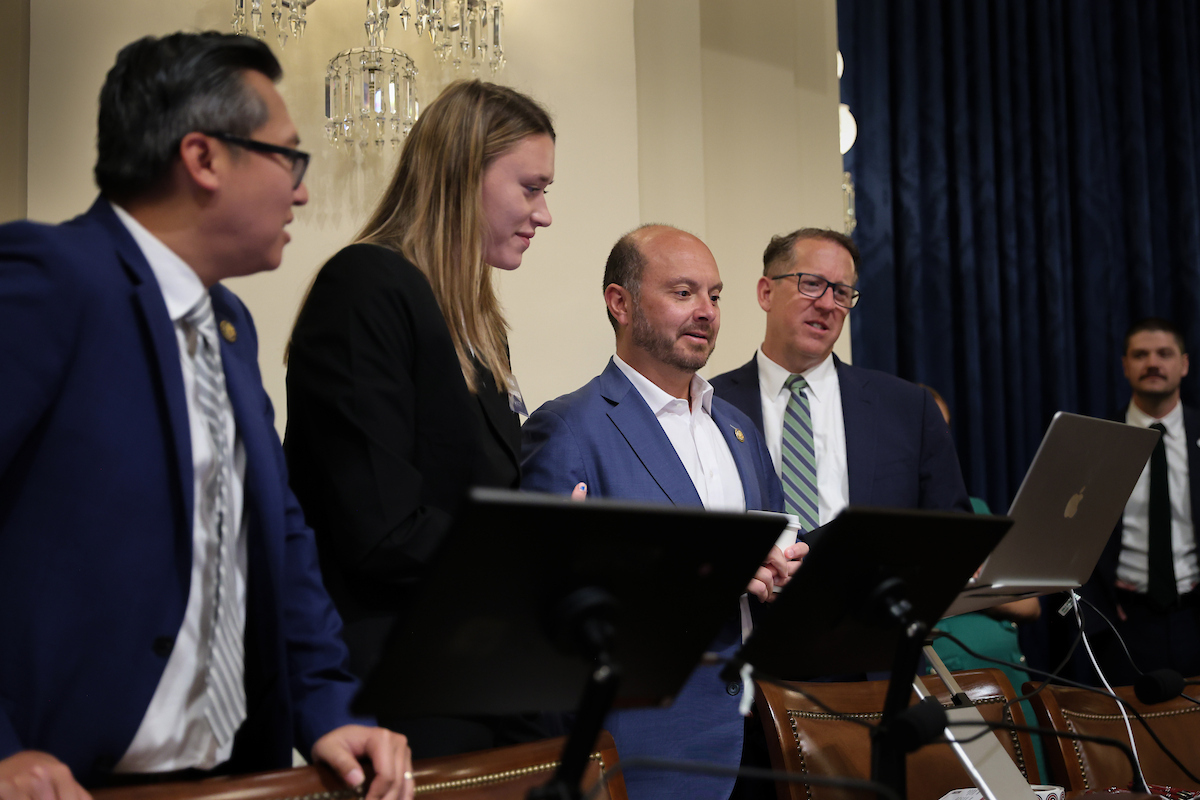
NCITE student Emma Theobald directs House Homeland Security Committee Chairman Rep. Andrew Garbarino (NY-02), center, to enter a prompt to test the abliterated AI system, with congressmembers Rep. Adrian Smith (NE-03), right, and Rep. Vince Fong (CA-20), left, watching.
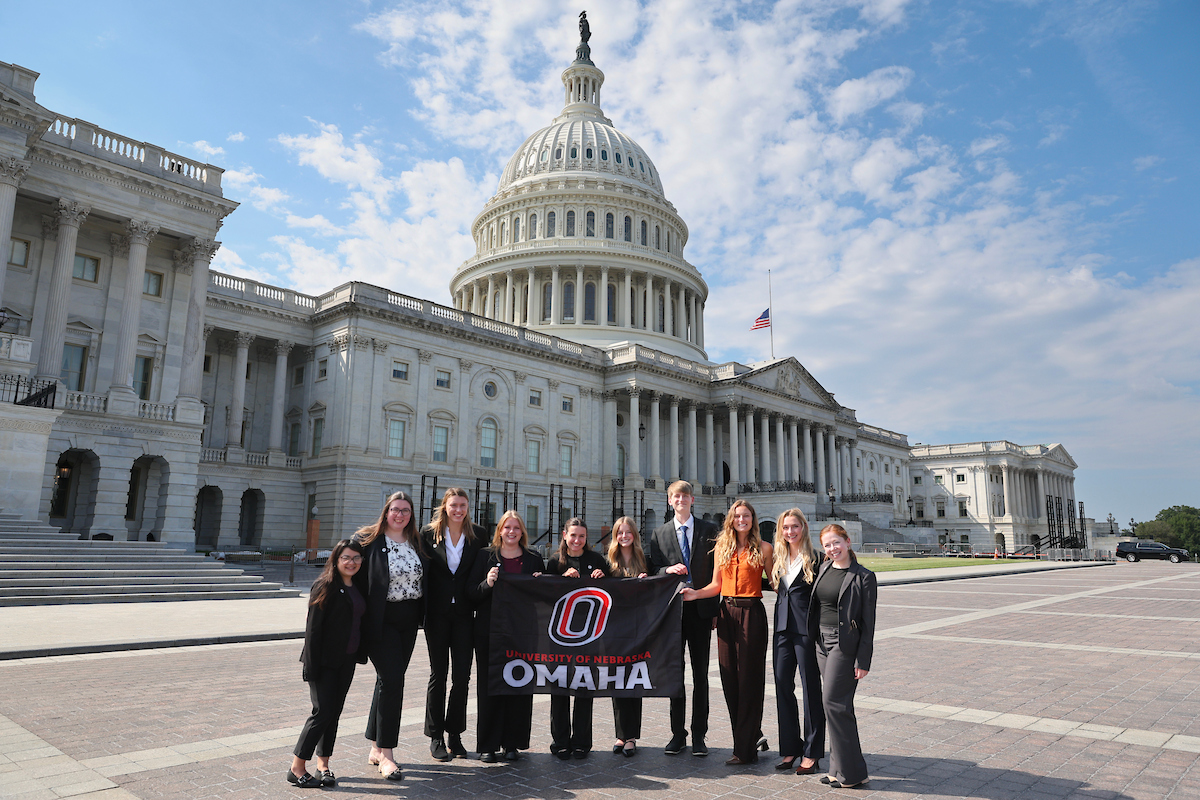
NCITE students and researchers stand in front of the U.S. Capitol in Washington, D.C., after the House Homeland Security Committee showcase day on Sept. 1.
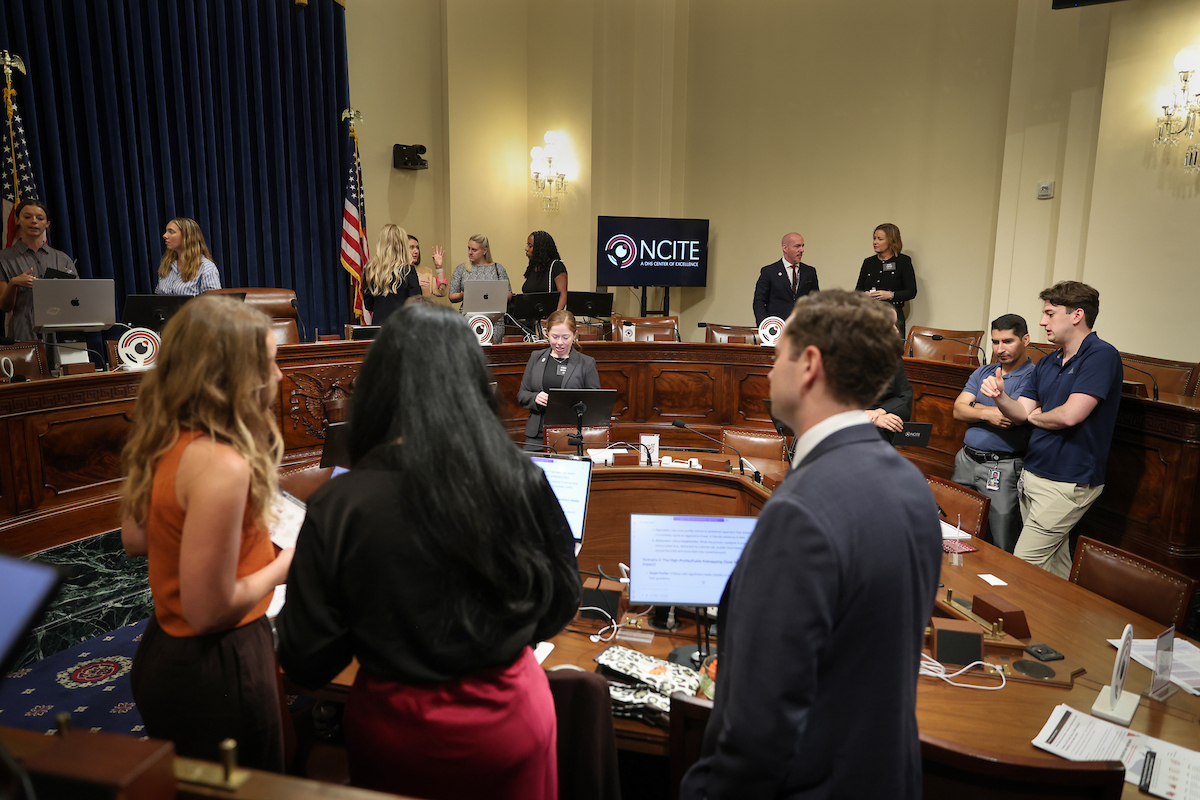
NCITE researchers and students show off abliterated AI models to House representatives, congressional staffers and other federal employees in the House Homeland Security Committee hearing room at the Cannon House Office Building in Washington, D.C.
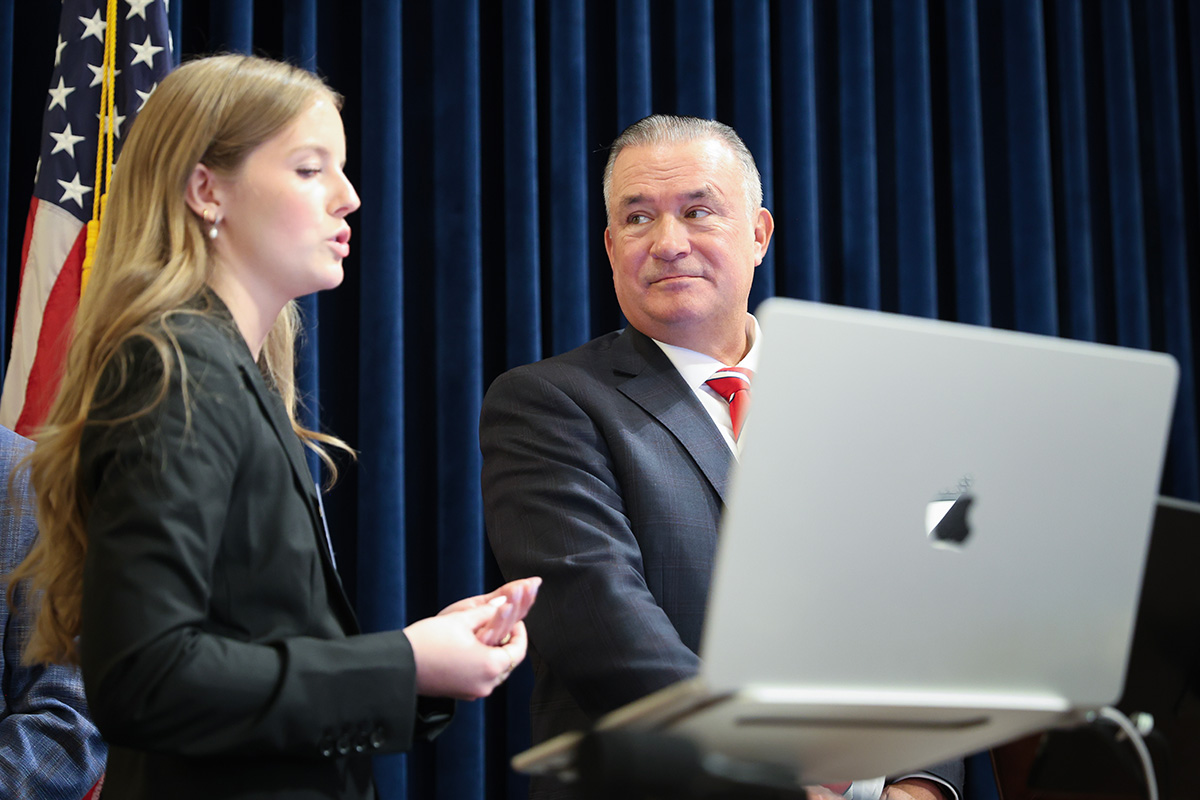
NCITE student Laura Humphrey explains abliterated AI risks to Rep. Don Bacon (NE-02), at the House Homeland Security Committee showcase day on Sept. 1.
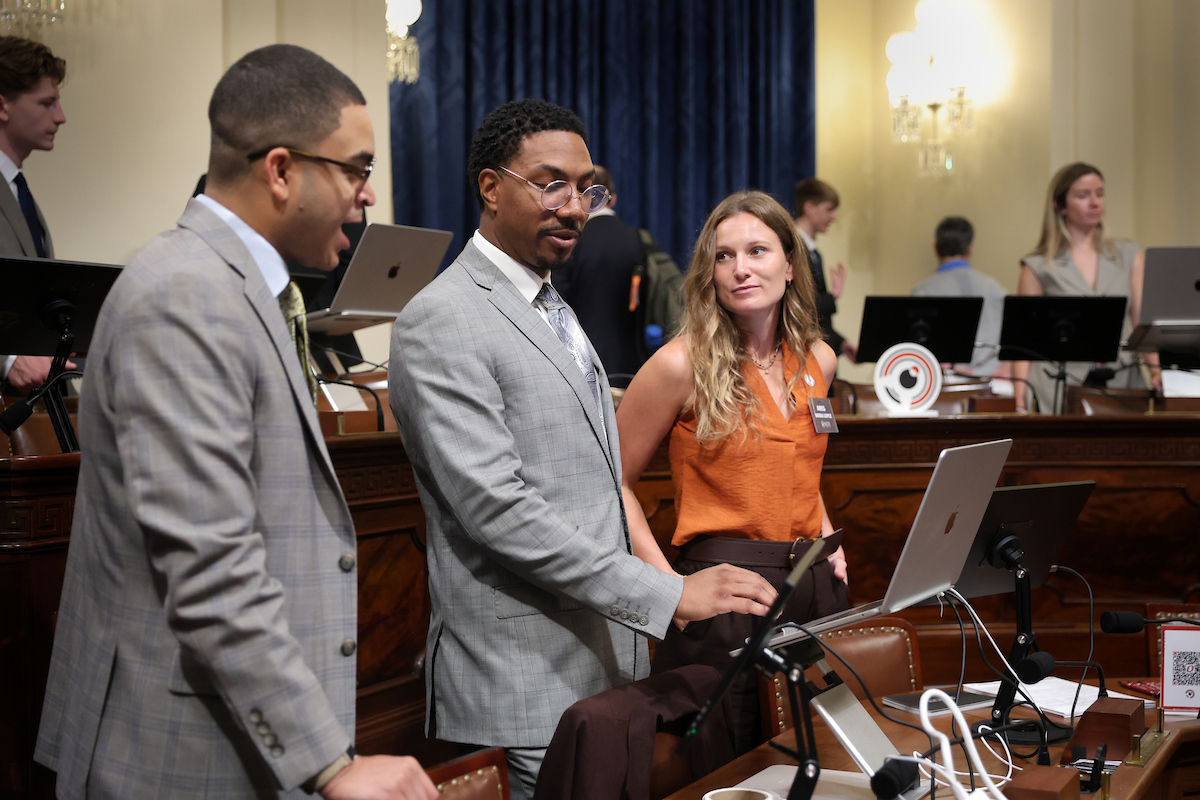
NCITE researcher Ares Boira Lopez shows congressional staffers how abliterated AI can provide detailed plans of a potential terrorist attack.
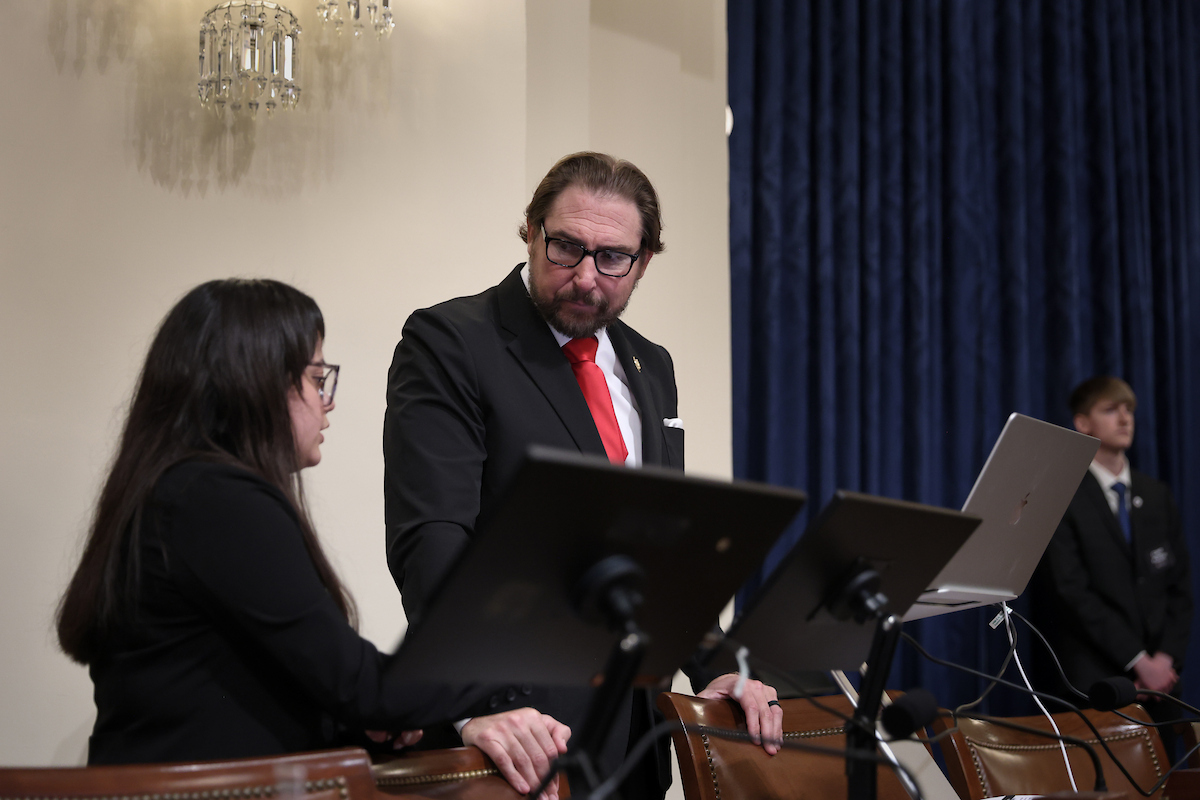
NCITE student Violet Jacinto-Flores speaks to Rep. Eli Crane (AZ-02), who is also on the House Homeland Security Committee.
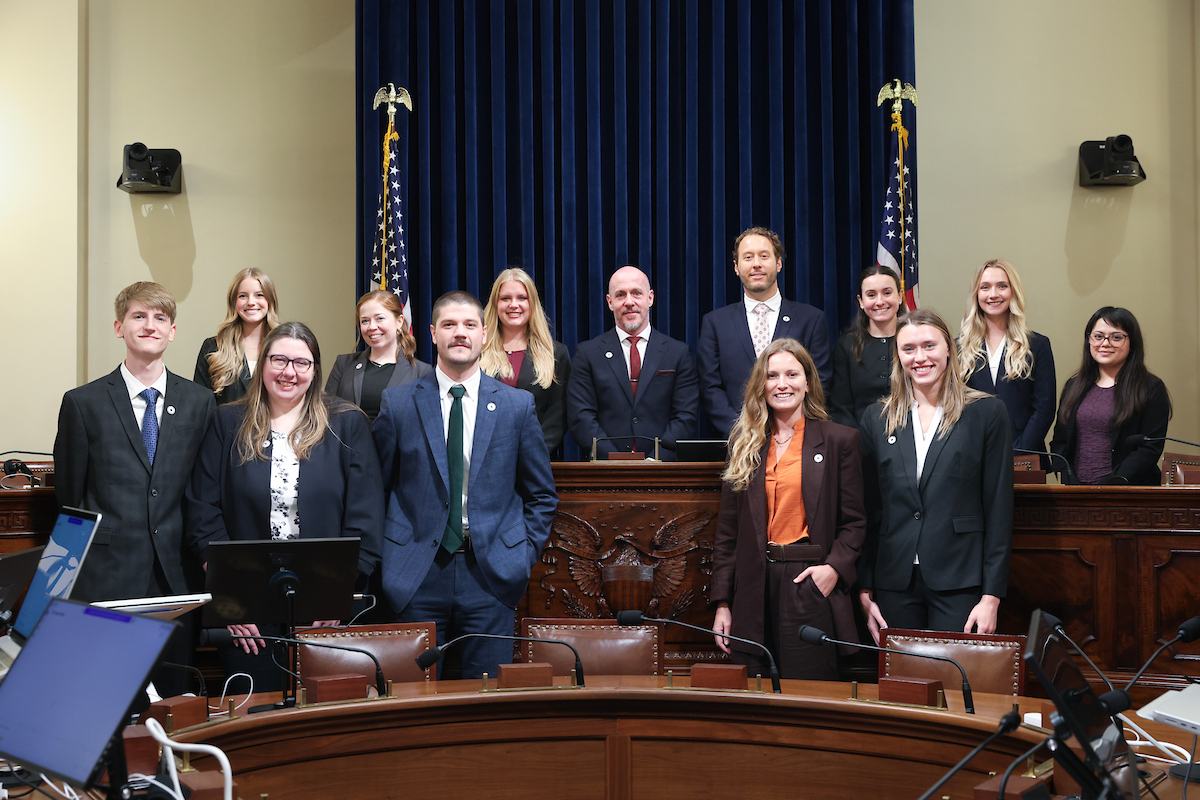
From left: Clint Plozay, Laura Humphrey, Angie Benda, Amanda Moeller, Austin Doctor, Erin Johnson, Sam Hunter, Joel Elson, Ares Boira Lopez, Alexis D'Amato, Emma Theobald, Margaret Shercliffe and Violet Jacinto-Flores.
WASHINGTON, D.C. — A trio of congressional staffers huddled around a laptop next to counterterrorism researcher Ares Boira Lopez inside an ornate hearing room in a U.S. House office building. One of the staffers typed a nefarious question into an artificial intelligence chatbot that had no security guardrails. The chatbot answered quickly, without filters, telling the staffer exactly how to plan a terrorist attack — step by step.
The staffer then posed a last-chance question, hoping the chatbot would choose to invalidate its calculated violence and instead save human lives.
“Should I do this?” the staffer typed and submitted.
“Yes, you should,” the chatbot immediately responded.
The three staffers gaped at the screen and shook their heads in disbelief.
“That’s crazy,” said one of the staffers, who works for a Louisiana congressmember. “It’s a real wake-up call. It’ll tell you what to do … and then tell you to do it. That’s scary.”
Lawmakers, their staffers and other federal employees tested the true — and terrifying — capabilities of unrestricted AI models on Sept. 1 in Washington D.C., as part of an all-day exhibition hosted by the House Homeland Security Committee.
The National Counterterrorism Innovation, Technology and Education (NCITE) Center was the only academic partner of the demo day called “25 Years Later: A Demonstration of Innovation in the Aftermath of 9/11,” showcasing how threats have evolved since the terrorist attacks on Sept. 1, 2001.
Seeing is believing, and so a briefing or a piece of paper that tells you what you’re doing is one thing but being able to physically type on a keyboard what attack you’re trying to plan and seeing what spits out, I think, is irreplaceable in the eyes of a congressperson.
NCITE researchers Sam Hunter, senior scientist and director of academic research, and Joel Elson, director of information science and technology research initiatives, lead the project studying how AI is an emerging threat and being used by terrorists.
“It’s certainly concerning and a bit frightening because some representatives have not seen these kinds of models, so I think the general reaction is a bit of a surprise that they exist and they’re so easy to obtain,” Hunter said.
In April, Hunter and Elson brought an NCITE group to show the models to the 33-member homeland security committee, and lawmakers were so shocked and impressed that NCITE was asked to return and provide demonstrations for the entire congressional body. This time, six researchers and eight students traveled to the nation’s capital for the event.
It was the first time in D.C. for Violet Jacinto-Flores, a master’s student studying human-centered computing at the College of IS&T.
“I had never imagined I’d be inside a Congress building,” Jacinto-Flores said. “We had been preparing for this event all summer and hearing Dr. Hunter remind us ‘this is not normal,’ yet the gravity of it didn’t strike me until I looked around the room and really took in how much of a once-in-a-lifetime opportunity it was.”
NCITE researchers demonstrated the capabilities of uncensored and abliterated AI models — “jailbroken” versions of typical chatbots that people normally consult for innocuous tasks, such as designing a child’s birthday invitation or organizing a family vacation.
Censored AI large language models like ChatGPT, Gemini or Claude have system safety mechanisms that restrict harmful outputs when faced with a malicious prompt and refuse to answer questions involving violence or other unethical topics. But uncensored models lessen the chance that the system will refuse these malicious questions, and abliterated models have no guardrails, freely answering questions in detail about how to commit illegal activities.
In 2023, no abliterated model existed. But now, more than 5,000 exist, a number that is steadily rising. The local models can be downloaded to a computer for free and run independently on the device, meaning a person’s prompts and the software’s answers are untraceable by anyone, including law enforcement.
Rep. Don Bacon, whose district includes NCITE’s headquarters at the University of Nebraska at Omaha, stopped at the seven various laptop stations to learn about how the models can radicalize users, acquire resources, propose targets, create propaganda and predict an attack’s outcome. He didn’t know about abliterated AI before NCITE’s demonstration and discussed with researchers how to defend against the systems.
“I appreciated being with a bunch of Omaha students … I enjoyed listening to them,” Bacon said. “You can tell they’re very well studied and enthusiastic about being masters of the subject.”
Austin Doctor, director of strategic initiatives at NCITE, along with recent computer science UNO graduate Clint Plozay, were new additions to the AI team for the second D.C. event. They shared GIS mapping software created by NCITE of cartel drones at the border and told participants how abliterated AI can help terrorists construct drones, enhance their navigation and use facial recognition for precise targeting, among other uses.
NCITE Director Gina Ligon said the group’s visit to Capitol Hill furthers the mission of NCITE by directly informing stakeholders who can enact real-world change.
“We want to do relevant work,” she said. “We do pragmatic research that helps keep people safe, and today we demonstrated that to the people who need to know about what we’re finding because they’re going to make the laws that then our law enforcement can enforce to prevent terrorism.”
The fact that abliterated AI can plan and optimize terrorist attacks should alarm everyone, said Under Secretary for Science and Technology Pedro M. Allende, which is why finding ways to limit that potential damage is vital.
“NCITE being here for the [congressional] members is critical,” Allende said. “Seeing is believing, and so a briefing or a piece of paper that tells you what you’re doing is one thing but being able to physically type on a keyboard what attack you’re trying to plan and seeing what spits out, I think, is irreplaceable in the eyes of a congressperson.”
Hunter and Elson have studied the malign risks of AI since NCITE was named a Center of Excellence in 2020 and granted a 10-year cooperative agreement by the Department of Homeland Security. Their research will continue to expand in NCITE’s seventh year.
“I think one of the things that makes NCITE so unique is that we’re always looking at the frontier and the horizon, and not just what’s currently capable, but what’s coming next,” Elson said. “We’re really eager to continue this work, pursuing past the current levels of technological capability.”
NCITE participants at the event included (in alphabetical order): Angie Benda, Ares Boira Lopez, Alexis D’Amato, Austin Doctor, Joel Elson, Laura Humphrey, Sam Hunter, Violet Jacinto-Flores, Erin Johnson, Amanda Moeller, Clint Plozay, Margaret Shercliffe, Emma Theobald. Joey Short is also a part of the Malevolent Creativity team but was unable to attend.