

Researchers Train Security Practitioners on Emerging AI
This spring, NCITE consortium members based at the University of Alabama, the University of Oklahoma, and Penn State University conducted immersive workshops with critical infrastructure, national security, and public safety practitioners to help them understand the risks, prevention tools, and procedures to handle emerging AI.
- published: 2026/06/12
- contact: NCITE Communications
- phone: 4025542972
- email: ncite@unomaha.edu
- search keywords:
- deepfake
- virtual reality
- generative AI
- C2PA
From deepfake scams to virtual reality digital twins, NCITE researchers are helping practitioners understand how emerging AI technologies can be used – and misused.
Artificial intelligence is no longer confined to chatbots and text generators. Today, it can clone voices, create convincing fake videos, and build immersive virtual replicas of real-world environments – capabilities that are creating new opportunities and new security challenges.
➡️ What's new:
This spring, NCITE consortium members based at the University of Alabama, the University of Oklahoma, and Penn State University conducted immersive workshops with national security and public safety practitioners to help them understand the risks these technologies pose, how they can be prevented, and the opportunity these technologies provide to support mitigation.
Consortium members also conducted a demonstration at NCITE's Law Enforcement Summit on June 25, exposing Nebraska and Iowa-based practitioners to their findings and training methods.
- Matthew Jensen, Ph.D. (OU)
- Jessica Menold, Ph.D. (PSU)
- Scarlett Miller, Ph.D. (PSU)
- Allen Johnston, Ph.D. (UA)
💡 Why it matters:
Security practitioners need to be at the cutting edge of emerging technologies that bad actors can exploit, and arm themselves with the knowledge, technological tools, and best practices to prevent such activity.
📈 By the numbers:
- 78 practitioners trained across the workshops.
- Three universities (with funding from UNO-NCITE) collaborated on the training effort.
- Nearly seven hours per workshop of hands-on deepfake training and exercises.
🔎 Zoom in:
▶️ A virtual steam plant
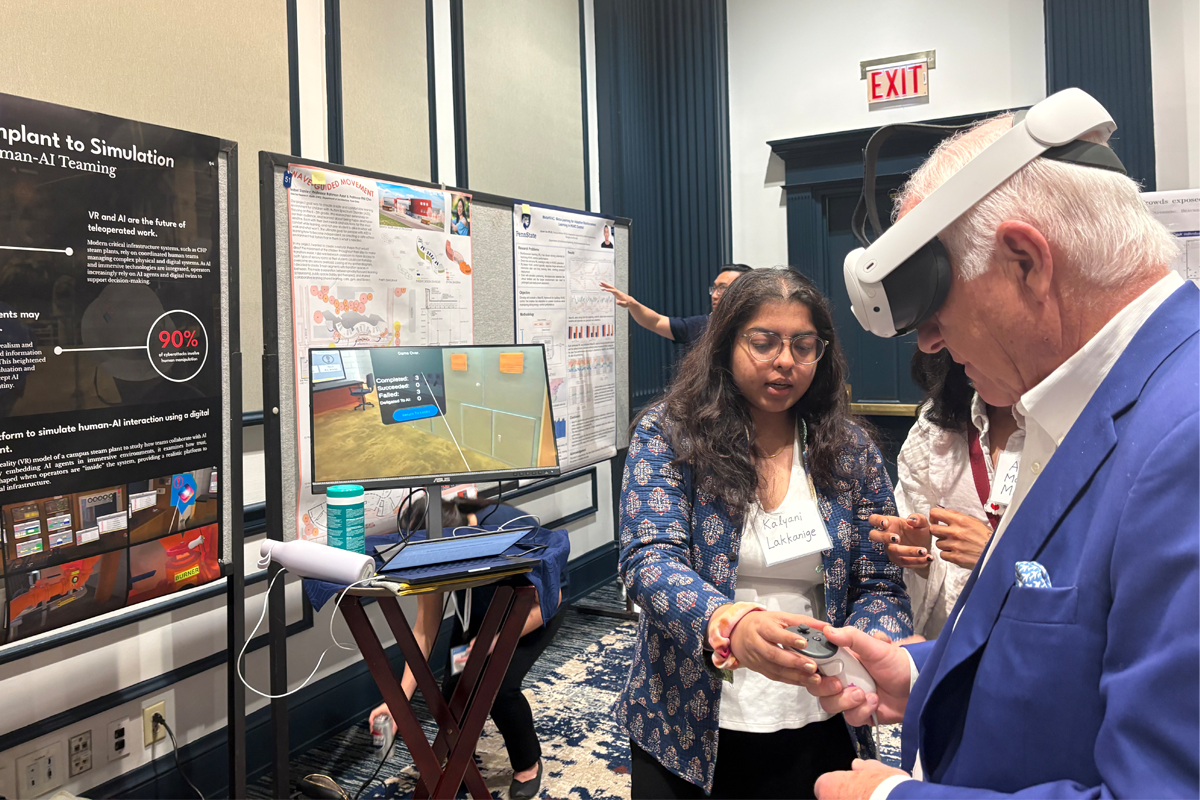
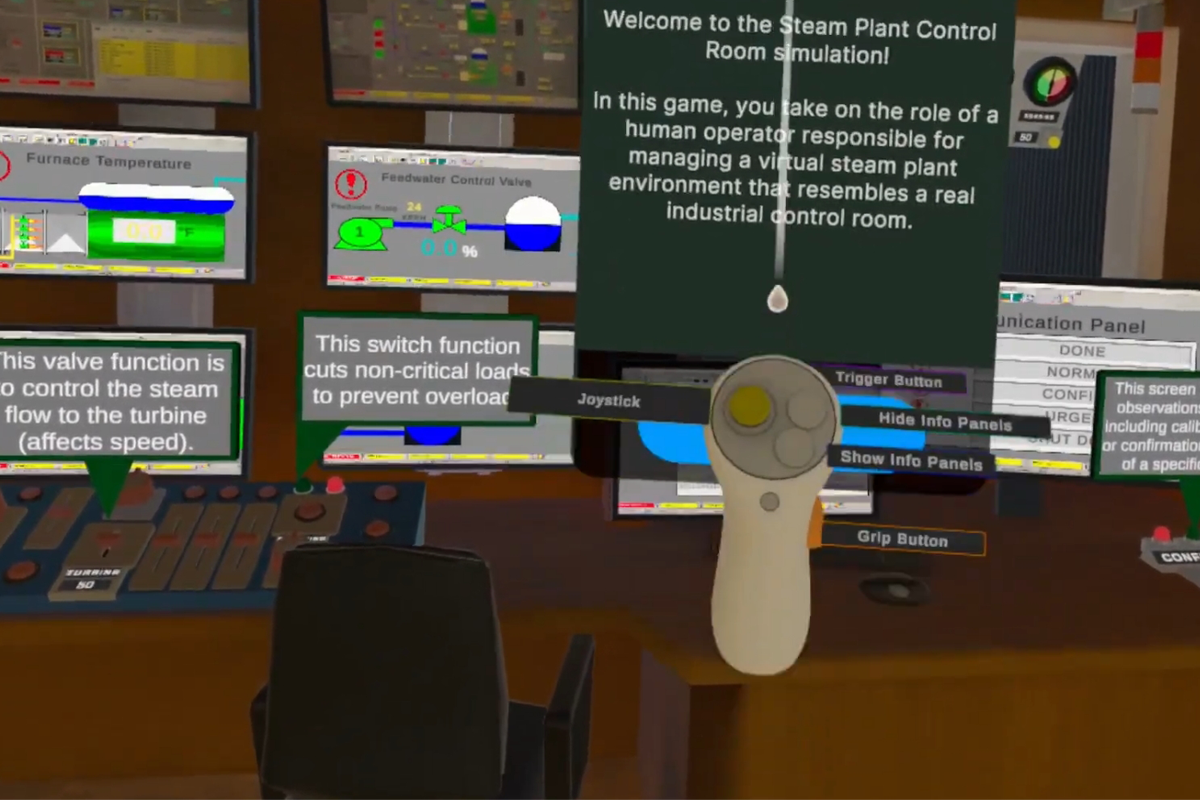
Penn State researchers invited steam plant operators to explore a virtual reality digital twin of a steam plant. The experience exposed participants to both the possibilities and potential dangers of immersive technologies while helping researchers evaluate the platform's accuracy, utility, and AI-assisted features.
Researchers gathered feedback on the digital twin's design and on an AI assistant embedded within the virtual environment. The team has also explored partnerships with local law enforcement agencies to increase practitioners' familiarity with these systems.
Further reading on experimental case studies:
- Digital twin cybersecurity in manufacturing
-
This Researchers demonstrated a digital twin-based cyberattack detection framework using an off-the-shelf 3D printer as a cyber-physical manufacturing system. The study tested the framework against simulated equipment anomalies and cyberattacks, showing how it could distinguish normal operational issues from malicious interference. Read: Digital Twin-Based Cyber-Attack Detection Framework for Cyber-Physical Manufacturing Systems.
-
- Simulating cyber attacks in manufacturing
-
Researchers developed a digital simulation of a fused filament fabrication (FFF) 3D printer to examine it's cyber vulnerabilities. Using the simulation, they modeled a cyberattack and demonstrated that common quality control methods failed to detect the compromised component, highlighting the need for more robust cybersecurity-aware inspection techniques. Read: Simulating cyber-physical systems: Identifying vulnerabilities for design and manufacturing through simulated additive manufacturing environments.
-
▶️ Deepfakes in homeland security
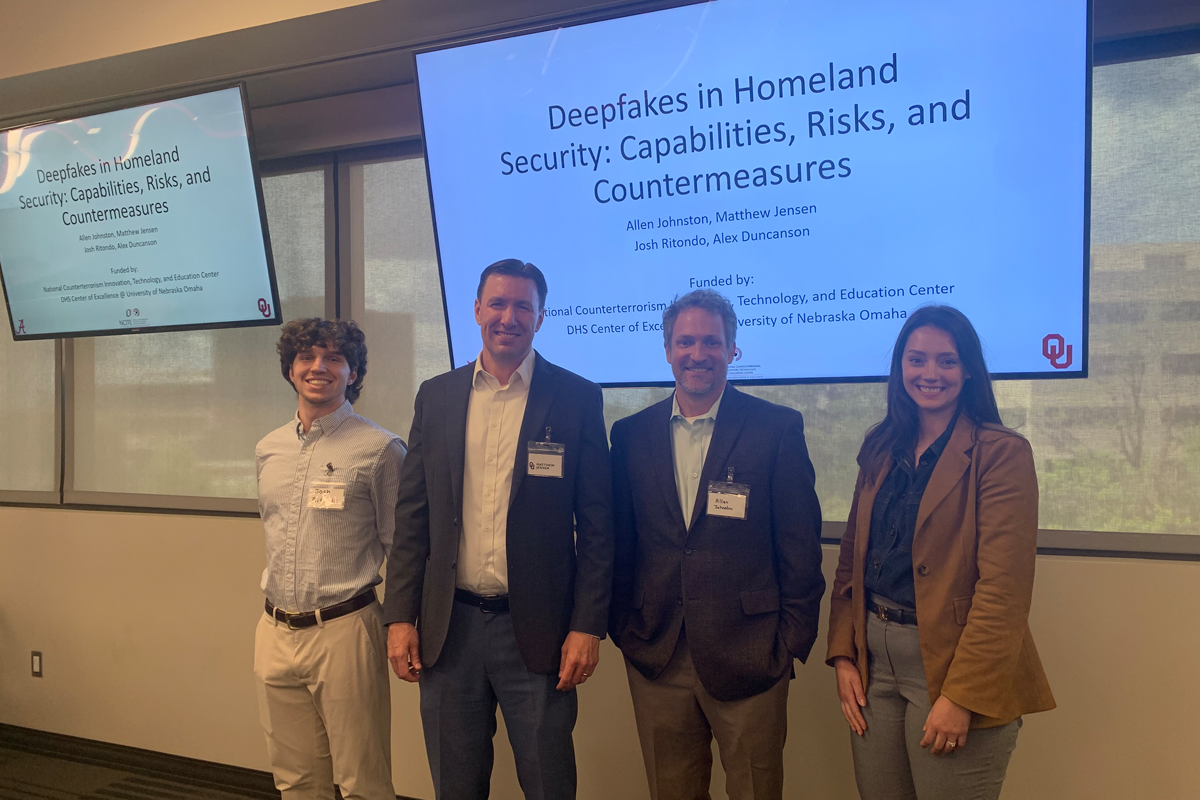
Researchers from the University of Alabama and the University of Oklahoma led a nearly seven-hour workshop on deepfake technologies with security practitioners that combined teaching, demonstrations, hands-on exercises, and guided discussions. Participants learned how deepfake audio and video are created, how detection technologies work, and how organizations can incorporate mitigation practices into investigative and intelligence workflows.
The workshop also included red-teaming exercises where participants created simple deepfakes of their colleagues before attempting to identify manipulated media using human judgment and detection tools.
Real-world case studies include:
- Individual targets
-
A teenager died by suicide after being targeted in an AI-enabled sextortion scheme
-
Fraudsters used a deepfake video advertisement to persuade victims to invest in a fake scheme, resulting in losses totaling roughly €75,000.
-
Criminals cloned a loved one's voice in a kidnapping scam, convincing parents that a family member was in immediate danger and demanding payment.
-
- Organizational targets
-
Engineering firm Arup lost approximately $25 million after an employee was deceived by a deepfake video conference that appeared to include senior company executives authorizing a money transfer.
-
A Maryland school principal became the target of a fake audio recording that falsely portrayed him making racist remarks, leading to reputational damage and a public controversy.
-
- Government targets
-
Early in Russia's invasion of Ukraine, a manipulated video falsely showed Ukrainian President Volodymyr Zelensky urging troops to surrender.
-
During the 2024 New Hampshire primary, voters received robocalls that discouraged voting using an AI-generated voice resembling President Joe Biden.
-
🎤 What they're saying:
Tim Patterson, Power Plant Operations & Maintenance Supervisor, Penn State University Steam Plant:
“This is so realistic I keep forgetting I’m in a simulation.”
Anonymous, Federal Digital Evidence Forensic Lab Manager:
"Our team was really impressed with the Deepfake training. Our investigative work focuses on prevention and mitigation of financial crimes. The training provided awareness of the capabilities available to bad actors to perpetrate financial and cyber-crimes against citizens as well as to disrupt public safety. One of the key take-aways for me was that this training should be provided to all those who work as investigators and analysts in law-enforcement."
Mike Shaw, CISSP, State Representative - District 47, Alabama House of Representatives:
"We should all be keeping up with the latest AI news. However, there is no substitute for focused, in-depth, hands-on training with the tools themselves. The “Deepfakes in Homeland Security: Capabilities, Risks, and Countermeasures” course at the University of Alabama (coordinated and sponsored by NCITE) delivered exactly that. I strongly believe protecting our citizens is a fundamental role of government, and training like this is essential to ensuring we are prepared to confront these emerging threats effectively."
🌎 The big picture:
As artificial intelligence capabilities continue to evolve, practitioners across law enforcement, critical infrastructure, intelligence, and public safety sectors need more than awareness – they need practical experience. These workshops reflect NCITE's mission to equip homeland security professionals with research-driven insights and hands-on training that help them anticipate emerging threats, strengthen public trust, and protect communities.
⚡ What's next:
Practitioners participating in the deepfake workshops were challenged to distinguish authentic media from AI-generated content. Test your own deepfake detection abilities with this New York Times quiz.