

Systematic Reviews, Simplified
Learn how Criss Library's Research and Instruction Services librarians help scholars across campus.
- published: 2026/02/11
- contact: Monica Maher, Omer Farooq - Research and Instruction Services
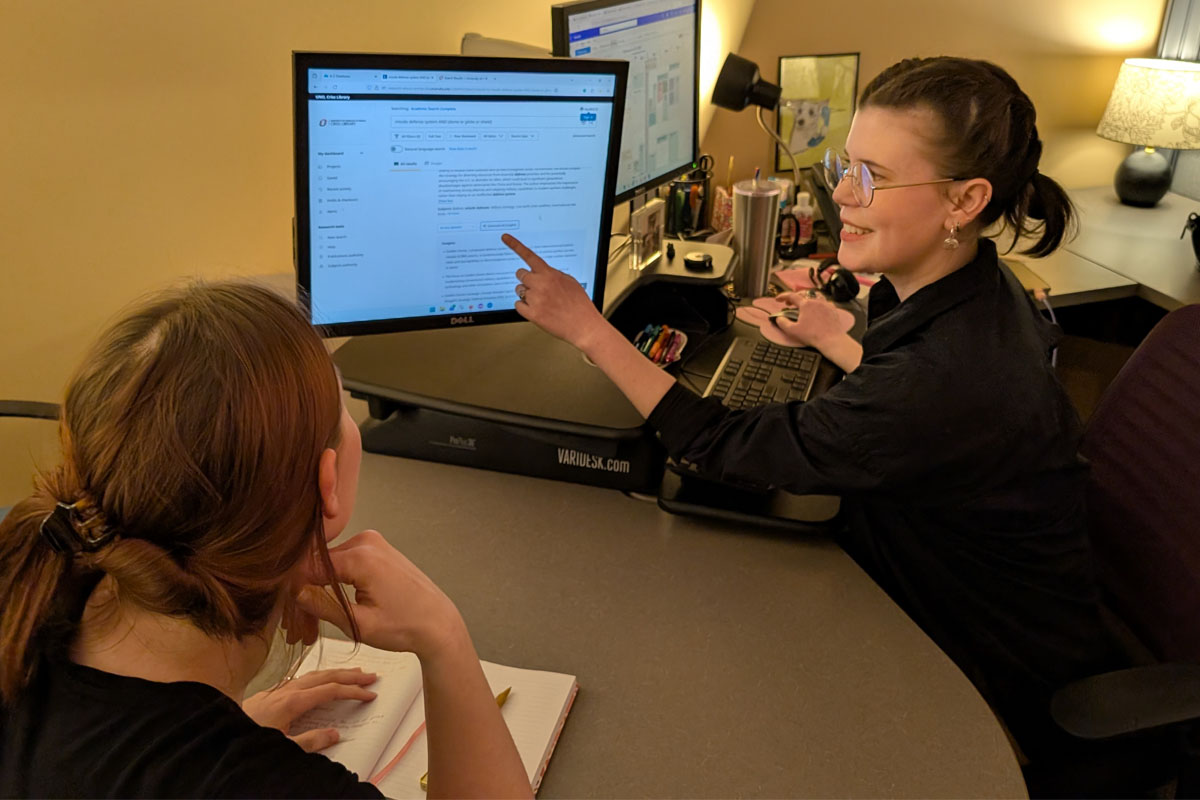
Criss Library's Research and Instruction Services (RIS) department plays a central role in supporting faculty, graduate students, and undergraduates who engage in systematic reviews across a wide range of disciplines. Recognizing the growing emphasis on evidence-based research and the expanding use of review methodologies beyond the health sciences, Associate Professor and Online Learning and Education Librarian, Monica Maher, and Associate Professor and Social Sciences Librarian, Omer Farooq, Ph.D., developed a comprehensive Systematic Reviews Research Guide. This guide clarifies the systematic review process and provides practical tools to support rigorous and transparent research.
Developing the Systematic Reviews Research Guide
The guide emerged organically through RIS’s ongoing collaboration with faculty and students. Many of our colleagues sought guidance on the process, tools, and expectations for systematic reviews—a methodology increasingly adopted in fields such as Biomechanics, Communication Disorders, Counseling, Criminology, Gerontology, Psychology, Social Work, and Teacher Education. Drawing from these interactions, we curated and contextualized resources that address the most common questions and challenges researchers encounter.
Importantly, the guide was developed over the summer in collaboration with the Summer Honors Project. This partnership provided the time, focus, and student engagement needed to build a dynamic, user-centered guide that reflects real research challenges. The resulting resource is a living document that continues to evolve in response to disciplinary needs and new developments in research synthesis practices.
Providing Rationale and Context
A key feature of the guide is its explanation of the rationale and justification for conducting systematic reviews. Many researchers outside of traditional health fields are unfamiliar with how systematic reviews differ from narrative or integrative reviews. The guide helps users understand why systematic methods—defined by their transparency, reproducibility, and comprehensiveness—are valuable for synthesizing research evidence and informing practice and policy decisions. By situating systematic reviews within a broader context of scholarly inquiry, the guide helps researchers understand how this methodology strengthens research design and contributes to disciplinary knowledge.
Introducing Types of Reviews
To demystify terminology and expectations, the guide outlines the different types of review methodologies, including scoping reviews, rapid reviews, integrative reviews, and meta-analyses. Clear definitions and examples help users determine which approach aligns best with their research questions, timelines, and available resources. For instance, a graduate student exploring interventions in social work may begin with a scoping review to map existing literature, while a faculty researcher in biomechanics might pursue a full systematic review with quantitative synthesis.
Research Consultations
RIS faculty librarians provide individualized consultations to support researchers at every stage of the review process. Through in-house research consultations, librarians assist with defining research questions, identifying appropriate databases and search strategies, and locating relevant literature. During these consultations, librarians help researchers refine their inclusion and exclusion criteria, determine levels of measurement, and identify subject terms, keywords, and variables that ensure comprehensive and precise searches. This collaborative approach helps researchers navigate the complexity of systematic searching while maintaining methodological rigor.
In addition, RIS supports researchers in identifying existing systematic reviews to avoid duplication and build upon existing evidence. The guide directs users to established repositories such as the Cochrane Library, SAGE Research Methods, as well as discipline-specific databases that index systematic and scoping reviews. By introducing these tools early in the research process, RIS helps scholars streamline their efforts and align their work with best practices in evidence synthesis.
Building Research Skills Across Disciplines
Because systematic reviews demand both methodological and information literacy, this work extends beyond providing resources—it also builds capacity. Through workshops, class sessions, and one-on-one support, librarians introduce strategies for database searching, citation management, and evidence evaluation. These skills extend beyond a single project and empower researchers to engage critically with literature throughout their academic and professional careers. For undergraduates, this guidance fosters foundational research skills and awareness of scholarly communication. For graduate students and faculty, it enhances their ability to design and conduct high-quality reviews that can contribute meaningfully to their fields.
A Collaborative and Evolving Resource
The Systematic Reviews Research Guide reflects RIS’s commitment to responsive, cross-disciplinary support. By integrating feedback from faculty and students, we ensure that the guide remains relevant to emerging needs and evolving research practices. As more disciplines embrace systematic and evidence-based approaches, RIS continues to serve as a bridge between information literacy and disciplinary research, helping our academic community navigate the complexities of systematic inquiry with absolute confidence.
About Criss Library
The Dr. C.C. and Mabel L. Criss Library fulfills the UNO mission through dynamic services, highly qualified and adaptive personnel, unique and extensive collections, and accessible learning spaces and environments. With its location on UNO’s Dodge Campus, Criss Library provides UNO students, faculty and staff, and the Omaha community with the resources and materials needed to excel academically and professionally.