

Hosted by the UNO Department of Mathematical and Statistical Sciences
When: April 17-18, 2026
Where: University of Nebraska at Omaha
Lodging Information:
Hilton Garden Inn Omaha Aksarben Village
6737 Frances St.,Omaha, NE 68106 USA
Open to All
Section NeXT Workshop - Actively Learn to Teach Math with Active Learning - Dr. Amy Nebesniak
Friday April 17th 2:00- 3:30 pm in DSC 254
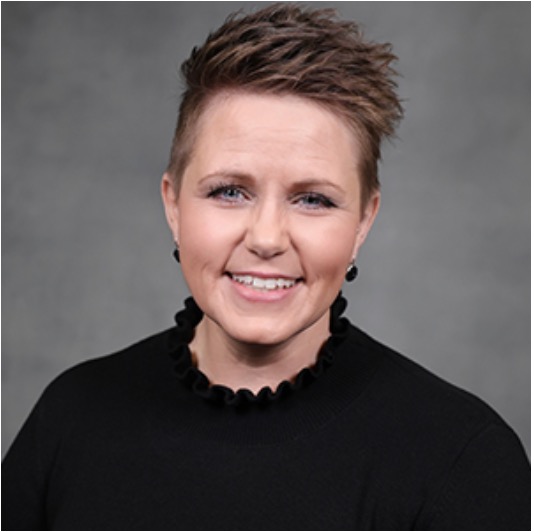
Abstract
Experience active learning from the student perspective—and discover strategies that can transform your college math classroom. In this hands-on workshop, you’ll engage in cooperative problem-solving, group tasks, and other interactive structures adapted from proven K–12 practices.
Through participation and guided reflection, you’ll explore how to foster a classroom culture focused on mastery, collaboration, and deep engagement. This practitioner-focused session emphasizes practical, immediately applicable techniques—no long lectures or research overload.
You’ll leave with a toolkit of strategies you can integrate into your own courses, along with a clearer sense of how active learning can enhance understanding, participation, and student success. Whether you’re new to active learning or looking to expand your approach, this workshop provides a structured, hands-on opportunity to rethink how math can be taught and experienced.
A Case for Quantitative Justice - Dr. Ranthony A. Clark
Friday April 17th 4:00 pm to 5:30 pm in DSC 115
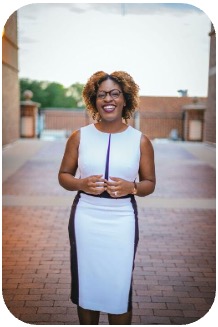
Abstract
Quantitative Justice is an emerging interdisciplinary research field that asks a simple but powerful question: How do the mathematical sciences interact with society? Bringing together ideas from mathematics, statistics, computer science, and data science, Quantitative Justice develops rigorous tools to investigate real-world systems that shape people’s lives.
In this talk, I introduce the central ideas of Quantitative Justice and highlight examples from several research communities that show how mathematical approaches can illuminate questions of fairness and representation. I will also focus on my own work, which centers on voting rights and electoral redistricting, as an example of how quantitative methods can deepen our understanding of democratic processes.
Along the way, we’ll explore what it takes to view a social concern from a quantitative lens, and how doing so can generate both meaningful societal insights and rich mathematical problems. I will also reflect briefly on my path into this field and why Quantitative Justice offers exciting