University of Nebraska at Omaha logo University of Nebraska at Omaha
REQUEST INFO VISIT APPLY

MY UNO DIRECTORY
University of Nebraska at Omaha logo
A U.S. Department of Homeland Security Center of Excellence National Counterterrorism Innovation, Technology, and Education Center (NCITE)
REQUEST INFO VISIT APPLY
MY UNO DIRECTORY
  • About Backback to Main menu
    • We Are NCITE
    • Newsletters
    • Our Community
    • Center Directory
  • Research Backback to Main menu
    • Research Portfolio
    • Published Reports
  • News Backback to Main menu
    • News Center
    • NCITE in the News
    • Podcast
  • Evolving Threats Backback to Main menu
    • Global Jihadism: 25 Years After 9/11
    • Nihilistic Violent Extremism (NVE)
    • Iran-Aligned Foreign Terrorist Organizations (FTOs)
  • Events Backback to Main menu
    • Upcoming Events
    • ENVISION Conference
  • Get Involved Backback to Main menu
    • Donate to NCITE
    • Job Opportunities
  • Service Center
  1. UNO
  2. National Counterterrorism Innovation, Technology, and Education Center (NCITE)
  3. News
  4. 2026
  5. 11
  6. FTO Series: Haitian Gangs Raise Regional Security Concerns

FTO Series: Haitian Gangs Raise Regional Security Concerns

Understanding Haitian terrorist organizations and their fueling of the nation’s security crisis is essential for homeland security professionals looking to prevent spillover effects to the region and the U.S.

  • published: 2026/11/04
  • search keywords:
  • Haiti
  • Port-au-Prince
  • foreign terrorist organizations
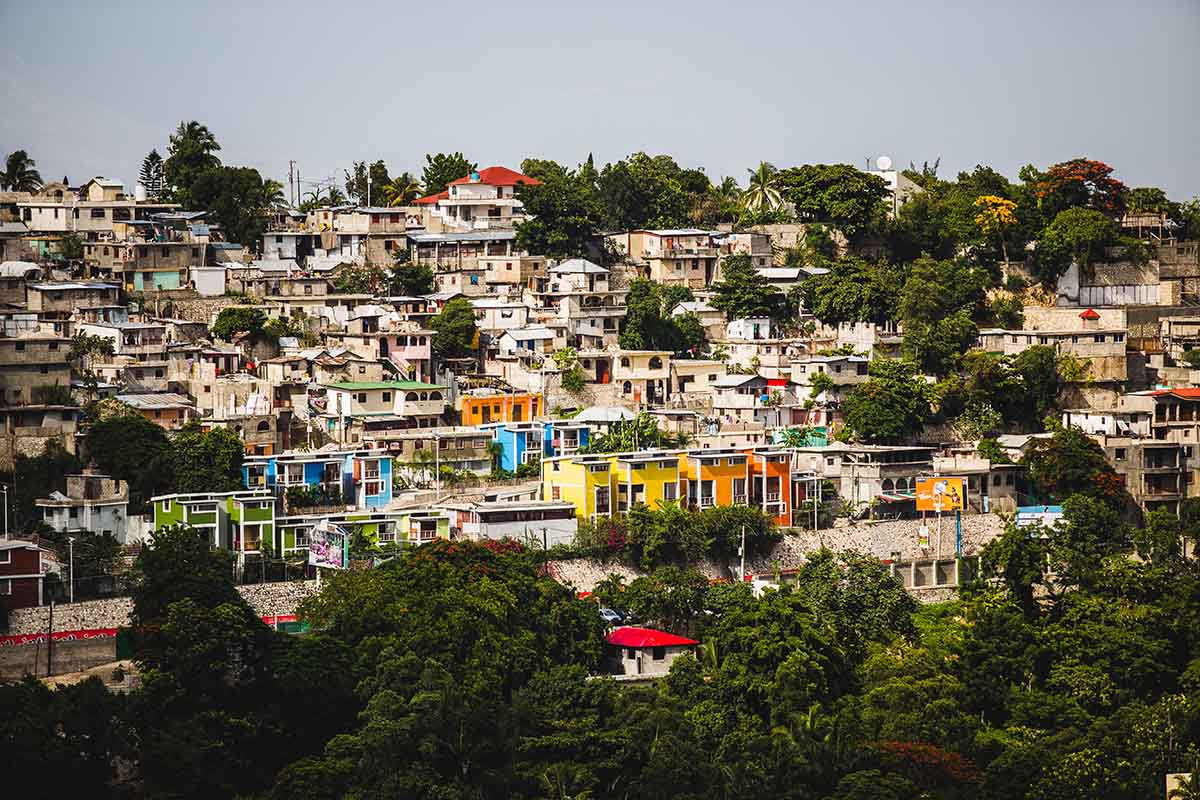
A densely populated hillside neighborhood in Port-au-Prince, Haiti, features tightly packed concrete buildings, colorful houses, and lush green trees beneath an overcast sky.

Haitian capital of Port-au-Prince (Adobe stock).

Haiti has faced extensive political (as well as natural and humanitarian) crises in recent decades, often accompanied by rampant violence. Since the 2021 assassination of President Jovenel Moïse, the Haitian government has been locked in an escalating power struggle with the nation’s numerous armed gangs. In 2025, the two most prominent groups, Viv Ansanm and Gran Grif, were designated as foreign terrorist organizations (FTOs) by the U.S. government.

Read the paper: “Beyond the Barricades: The Designation of Two Haitian Gangs, Viv Ansanm and Gran Grif, as Foreign Terrorist Organizations” profiles the groups and discusses the regional implications of their activities and the significance of the FTO designation. The paper’s author is Edward R. Maguire, Ph.D., professor in the School of Criminology and Criminal Justice at Arizona State University.

Why it matters: According to the U.S. Government Accountability Office, 73% of guns used in criminal activity in the Caribbean come from the U.S. Limiting American arms entering Haiti and monitoring the situation’s potential for growth into a regional security threat is crucial to ensure homeland security.

Key takeaways:

  • Both groups are becoming alternative centers of power to the Haitian government, exercising significant control over security, dispute resolution, taxation, and transportation routes. Viv Ansanm’s center of activity is in the capital, Port-au-Prince, while Gran Grif operates in the rural Artibonite (agricultural) region.
  • Both groups deploy sophisticated operations against the government and UN mission installations. In 2024, Viv Ansanm organized a wave of attacks on prisons and other state institutions, and the UN estimated they controlled roughly 85% of Port-au-Prince. In Oct. 2024, Gran Grif conducted an offensive against the town of Pont-Sondé, killing at least 115 civilians and displacing 6,000 residents. The U.S. State Department estimates that they are responsible for 80% of civilian deaths in the Artibonite region.
  • The chief security concern for the U.S. is regional instability rather than direct threats to the homeland. The weakening state could serve as a hub of transnational criminal activity, and the large-scale humanitarian displacement is affecting migration flows across the Caribbean. And while Viv Ansanm and Gran Grif’s activities are currently contained within the country, their increasing power could expand their interests beyond Haiti’s borders.

What they're saying:

  • Mackenzie Harms Wickersham, Ph.D., FTO series editor
    • “The Haitian designations test whether counterterrorism tools built for ideologically driven, state-sponsored networks can work against criminal groups whose power comes from territorial control and political protection. The FTO designations may enhance efforts to disrupt finances, weapons supply chains, and the U.S.-based facilitators who connect the two.”

What’s next: This white paper is part of an NCITE research series examining the more than 30 groups designated as foreign terrorist organizations by the U.S. Department of State in 2025 and 2026. Look for more reports to be published this month, and a separate page featuring all of the groups.

News Sections

  • National Counterterrorism Innovation, Technology, and Education Center (NCITE) News Center
  • UNO News Center
  • The Maverick
  • The Bullseye
  • Campus Events

Featured

  • FTO Series: Iran-Aligned Groups Pose Multi-Faceted Threats to U.S. in Wake of War
  • DHS Science & Technology Leaders Visit NCITE to Strengthen Government, Academic, Industry Partnerships
  • Criminology Graduate Students Investigate Drug Cartel Money Laundering
  • New NCITE Research: Growing Security Risks to U.S. Data Centers

Most Viewed

  • In Seventh Year, NCITE Adds Projects on CBRN Deterrence, AI Vulnerabilities at Large Venues, and More

National Counterterrorism Innovation, Technology, and Education Center (NCITE)

Connect with NCITE
  • 6001 Dodge St.
  • Omaha, NE
  • ncite@unomaha.edu
Social media
Our DHS Partners
  • Centers of Excellence
  • Science & Technology Directorate (S&T)
  • Office of University Programs (OUP)
U.S. Department of Homeland Security Science and Technology Grant Acknowledgement and Disclaimer. The material on this website is based on work supported by the U.S. Department of Homeland Security under Grant Award Number 20STTPC00001-05. The views and conclusions included here are those of the authors and should not be interpreted as necessarily representing the official policies, either expressed or implied, of the U.S. Department of Homeland Security.

Services and Resources

  • Academic Calendar
  • Course Catalogs
  • MavCARD Services
  • MavLINK
  • my.unomaha.edu
  • UNO Brand Guide

Related Links

  • A-Z List
  • Employment
  • University of Nebraska System

Campus Links

  • Accessibility
  • Billing Office
  • Buildings and Maps
  • Campus Directory
  • Campus Safety
  • Events
  • Human Resources
  • Library
  • Military-Connected Resource Center
  • News
  • Registrar
  • Samuel Bak Museum: The Learning Center

Policies and Reporting

  • Emergency Information Alert
  • MavsReport
  • Notice of Nondiscrimination
  • NU Foundation
  • Privacy Statement
  • University Policies
  1. Privacy Statement
  2. Accessibility
  1. 402.554.2800

University of Nebraska at Omaha
University of Nebraska at Omaha, 6001 Dodge Street, Omaha, NE, 68182
  • ©  

Social Media


Omaha Skyline

Our Campus. Otherwise Known as Omaha.

The University of Nebraska does not discriminate based on race, color, ethnicity, national origin, sex, pregnancy, sexual orientation, gender identity, religion, disability, age, genetic information, veteran status, marital status, and/or political affiliation in its education programs or activities, including admissions and employment. The University prohibits any form of retaliation taken against anyone for reporting discrimination, harassment, or retaliation for otherwise engaging in protected activity. Read the full statement.