University of Nebraska at Omaha logo University of Nebraska at Omaha
REQUEST INFO VISIT APPLY

MY UNO DIRECTORY
University of Nebraska at Omaha logo
College of Communication, Fine Arts and Media Writer's Workshop
REQUEST INFO VISIT APPLY
MY UNO DIRECTORY
  • About Us Backback to Main menu
    • Faculty Directory
    • Staff Directory
    • Faculty Mentors
    • CFAM News & Events
  • Undergraduate Programs Backback to Main menu
    • Apply
    • BFA in Creative Writing
    • Scholarships
  • MFA in Creative Writing Program Backback to Main menu
    • Master of Fine Arts in Writing
    • Admission Information
    • Faculty Mentors
    • Residency & Semester Work
    • Enrichment Study
    • Tuition & Fees
    • Fellowship Opportunities
  • Community Engagement Backback to Main menu
    • Writer's Workshop Reading Series
    • Community Engagement
  • Support CFAM

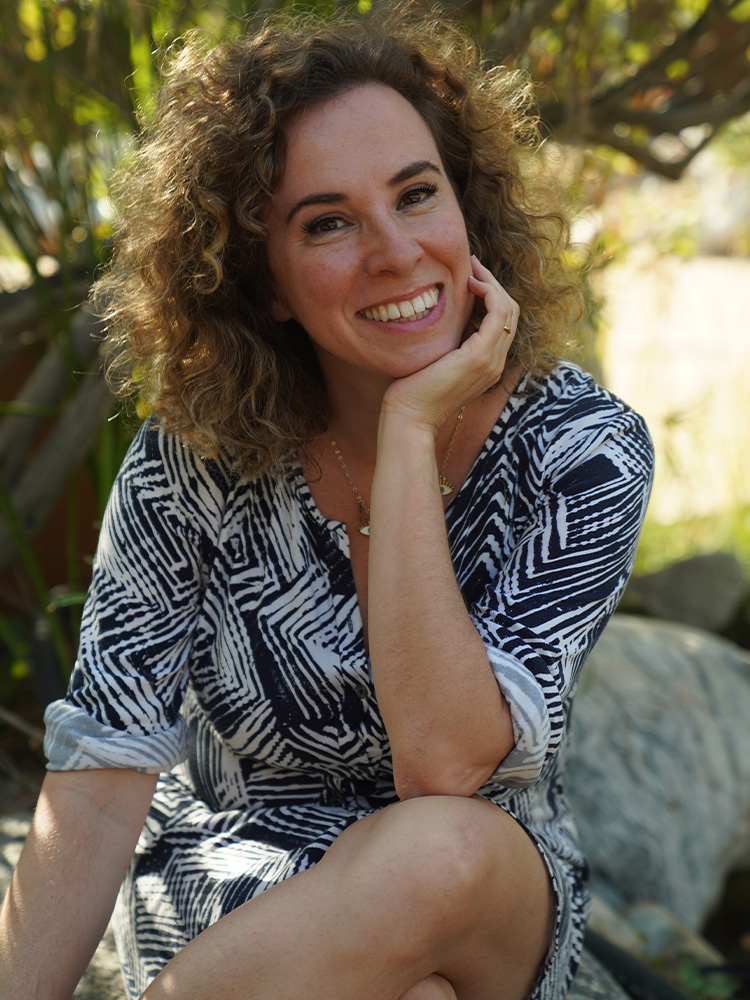
Katya Apekina

  1. UNO
  2. College of Communication, Fine Arts and Media
  3. Writer's Workshop
  4. MFA in Creative Writing Program
  5. Katya Apekina
Katya Apekina

Katya Apekina

  • Fiction Mentor
  • MFA in Writing

email:
kapekina@unomaha.edu
personal website:
https://www.apekina.com/

Additional Information

Biography

Katya Apekina is a novelist, screenwriter and translator. Her debut novel, The Deeper the Water the Uglier the Fish, was named a Best Book of 2018 by Kirkus, Buzzfeed, LitHub and others, was a finalist for the LA Times Book Prize and has been translated into Spanish, Catalan, French, German and Italian. Her second novel, Mother Doll, was named a Best Book of 2024 by Vogue. She has published stories in various literary magazines and translated poetry and prose for Night Wraps the Sky: Writings by and about Mayakovsky (FSG, 2008), short-listed for the Best Translated Book Award. She co-wrote the screenplay for the feature film New Orleans, Mon Amour, which premiered at SXSW in 2008. She is a recipient of an Elizabeth George grant, an Olin Fellowship, the Alena Wilson prize and a 3rd Year Fiction Fellowship from Washington University in St. Louis where she did her MFA. She’s done residencies at VCCA, Playa, Ucross, Art Omi: Writing and Fondation Jan Michalski in Switzerland. Along with teaching, she works as an editor, book coach, and ghostwriter. Born in Moscow, she grew up in Boston, and currently lives in Los Angeles with her husband, daughter and dog.

Teaching Philosophy

"When I was a student, I remember wanting the teacher to tell me exactly what to do to revise a story. Some teachers did offer prescriptive advice, but when I took it, I often found that the results were not great. I was eager to please, to be a good student, and it was easy for me to lose track of my own vision. As a teacher, I’ve found it’s more helpful to describe my experience of reading a draft and to ask students lots of questions to help them better understand what they want the piece to be doing. As the teacher, I see it as my job to help my students clarify their own vision, rather than imposing my vision onto them.

I think of writing as requiring two different sets of muscles: one is about the ability to be intuitive and free flowing, the other is about being cerebral and analytical. The first set is useful in drafting, and the second in revision. Using targeted exercises with my students, I help them develop both these skills separately. I encourage them to find a creative process that works for them, to let this process evolve, to understand that what works for them for writing a short story might not apply for drafting a novel.
 
I came to writing novels from a background in the visual arts, poetry, screenwriting, translation, and audio storytelling. I often bring in interdisciplinary exercises to broaden the experience of fiction for my students, and I encourage them to bring in aspects from their other interests to expand their ideas of what fiction can do in terms of both form and content. I find that this not only broadens my students’ sense of the medium, but also invites them to recognize the expansiveness of their own creative possibilities."


Additional Information

Biography

Katya Apekina is a novelist, screenwriter and translator. Her debut novel, The Deeper the Water the Uglier the Fish, was named a Best Book of 2018 by Kirkus, Buzzfeed, LitHub and others, was a finalist for the LA Times Book Prize and has been translated into Spanish, Catalan, French, German and Italian. Her second novel, Mother Doll, was named a Best Book of 2024 by Vogue. She has published stories in various literary magazines and translated poetry and prose for Night Wraps the Sky: Writings by and about Mayakovsky (FSG, 2008), short-listed for the Best Translated Book Award. She co-wrote the screenplay for the feature film New Orleans, Mon Amour, which premiered at SXSW in 2008. She is a recipient of an Elizabeth George grant, an Olin Fellowship, the Alena Wilson prize and a 3rd Year Fiction Fellowship from Washington University in St. Louis where she did her MFA. She’s done residencies at VCCA, Playa, Ucross, Art Omi: Writing and Fondation Jan Michalski in Switzerland. Along with teaching, she works as an editor, book coach, and ghostwriter. Born in Moscow, she grew up in Boston, and currently lives in Los Angeles with her husband, daughter and dog.

Teaching Philosophy

"When I was a student, I remember wanting the teacher to tell me exactly what to do to revise a story. Some teachers did offer prescriptive advice, but when I took it, I often found that the results were not great. I was eager to please, to be a good student, and it was easy for me to lose track of my own vision. As a teacher, I’ve found it’s more helpful to describe my experience of reading a draft and to ask students lots of questions to help them better understand what they want the piece to be doing. As the teacher, I see it as my job to help my students clarify their own vision, rather than imposing my vision onto them.

I think of writing as requiring two different sets of muscles: one is about the ability to be intuitive and free flowing, the other is about being cerebral and analytical. The first set is useful in drafting, and the second in revision. Using targeted exercises with my students, I help them develop both these skills separately. I encourage them to find a creative process that works for them, to let this process evolve, to understand that what works for them for writing a short story might not apply for drafting a novel.
 
I came to writing novels from a background in the visual arts, poetry, screenwriting, translation, and audio storytelling. I often bring in interdisciplinary exercises to broaden the experience of fiction for my students, and I encourage them to bring in aspects from their other interests to expand their ideas of what fiction can do in terms of both form and content. I find that this not only broadens my students’ sense of the medium, but also invites them to recognize the expansiveness of their own creative possibilities."


Additional Information

Biography Teaching Philosophy

College of Communication, Fine Arts and Media

Contact Us
  • College of Communication, Fine Arts and Media
  • 314 Weber Fine Arts Building
  • 6505 University Drive South
  • Omaha, NE 68182   map
  • 402.554.3857
  • cfam@unomaha.edu
Social media
College Resources
  • School of the Arts
  • School of Communication
  • School of Music
  • Writer's Workshop
  • Art Gallery
  • Speech Center
  • UNO Theatre
  • KVNO
Weber Fine Arts Building

Services and Resources

  • Academic Calendar
  • Course Catalogs
  • MavCARD Services
  • MavLINK
  • my.unomaha.edu
  • UNO Brand Guide

Related Links

  • A-Z List
  • Employment
  • University of Nebraska System

Campus Links

  • Accessibility
  • Billing Office
  • Buildings and Maps
  • Campus Directory
  • Campus Safety
  • Events
  • Human Resources
  • Library
  • Military-Connected Resource Center
  • News
  • Registrar
  • Samuel Bak Museum: The Learning Center

Policies and Reporting

  • Emergency Information Alert
  • MavsReport
  • Notice of Nondiscrimination
  • NU Foundation
  • Privacy Statement
  • University Policies
  1. Privacy Statement
  2. Accessibility
  1. 402.554.2800

University of Nebraska at Omaha
University of Nebraska at Omaha, 6001 Dodge Street, Omaha, NE, 68182
  • ©  

Social Media


Omaha Skyline

Our Campus. Otherwise Known as Omaha.

The University of Nebraska does not discriminate based on race, color, ethnicity, national origin, sex, pregnancy, sexual orientation, gender identity, religion, disability, age, genetic information, veteran status, marital status, and/or political affiliation in its education programs or activities, including admissions and employment. The University prohibits any form of retaliation taken against anyone for reporting discrimination, harassment, or retaliation for otherwise engaging in protected activity. Read the full statement.