University of Nebraska at Omaha logo University of Nebraska at Omaha
REQUEST INFO VISIT APPLY

MY UNO DIRECTORY
University of Nebraska at Omaha logo
College of Communication, Fine Arts and Media Writer's Workshop
REQUEST INFO VISIT APPLY
MY UNO DIRECTORY
  • About Us Backback to Main menu
    • Faculty Directory
    • Staff Directory
    • Faculty Mentors
    • CFAM News & Events
  • Undergraduate Programs Backback to Main menu
    • Apply
    • BFA in Creative Writing
    • Scholarships
  • MFA in Creative Writing Program Backback to Main menu
    • Master of Fine Arts in Writing
    • Admission Information
    • Faculty Mentors
    • Residency & Semester Work
    • Enrichment Study
    • Tuition & Fees
    • Fellowship Opportunities
  • Community Engagement Backback to Main menu
    • Writer's Workshop Reading Series
    • Community Engagement
  • Support CFAM

Graham Foust

  1. UNO
  2. College of Communication, Fine Arts and Media
  3. Writer's Workshop
  4. MFA in Creative Writing Program
  5. Graham Foust
Graham Foust

Graham Foust

  • Poetry Mentor
  • MFA in Writing

Additional Information

Biography

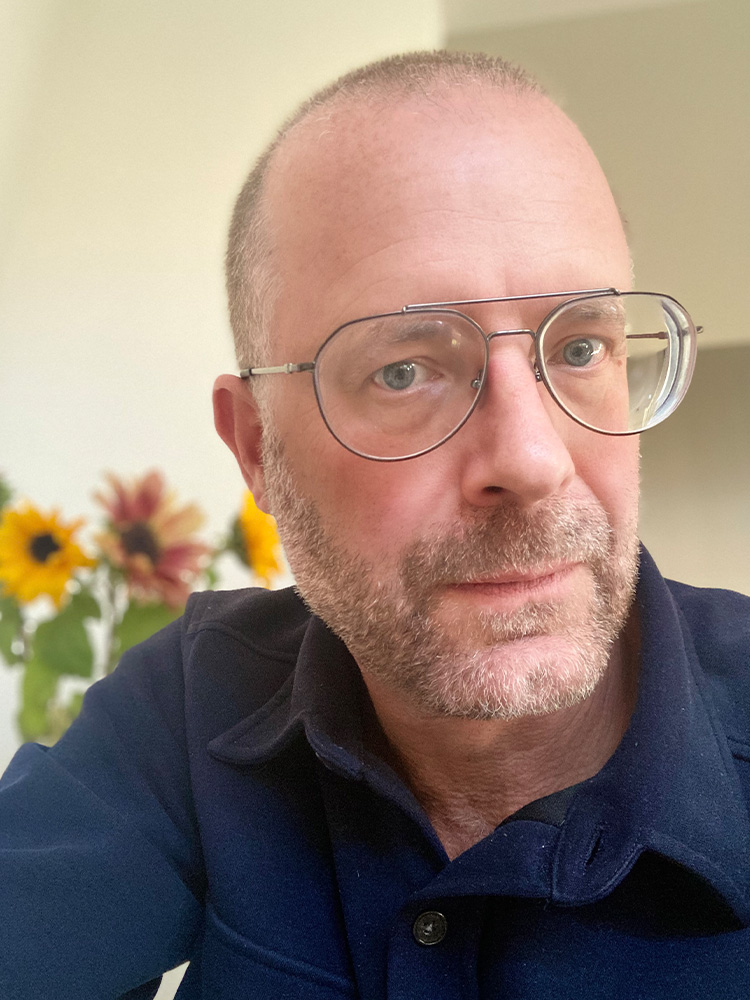
GRAHAM FOUST teaches poetry, poetics, and literary theory in the undergraduate and graduate programs in the Department of English and Literary Arts at the University of Denver. He is the author of several books of poems, the most recent of which are Embarrassments (Flood Editions 2021) and Nightingalelessness (2018). With Samuel Frederick, he translated the final three books by the late German poet Ernst Meister, including Wallless Space (Wave Books 2014), a finalist for a National Translation Award. His poems and essays can be found in The Nation, Conjunctions, Fence, The New Republic, Oversound, American Letters and Commentary, Verse, A Public Space, Gulf Coast, Colorado Review, Seneca Review, and the Norton Anthology of Postmodern Poetry.

Teaching Philosophy

"‘Criticism should tell you what is there,’ wrote the painter Fairfield Porter, and I agree. When we critique a poem in a workshop, we are trying to do exactly that, knowing that neither the writer nor the individual reader is ever able to see all of ‘what is there.’ Once we’ve engaged in our collective looking and telling, we can then help the writer to make choices with regard to what should go, what should stay, and what else might be added to her poem. It’s also important, I think, to remember that poems are, as Allen Grossman says, intended to ‘give rise to thoughts about something else’ and that reflection is, as Immanuel Kant says, ‘that state of mind in which we set ourselves to discover the subjective conditions under which we obtain conceptions.’ I am not embarrassed to say that if art is for any ‘sake,’ it’s ours.”
 

graham-foust-uno-mfa-in-writing

Additional Information

Biography

GRAHAM FOUST teaches poetry, poetics, and literary theory in the undergraduate and graduate programs in the Department of English and Literary Arts at the University of Denver. He is the author of several books of poems, the most recent of which are Embarrassments (Flood Editions 2021) and Nightingalelessness (2018). With Samuel Frederick, he translated the final three books by the late German poet Ernst Meister, including Wallless Space (Wave Books 2014), a finalist for a National Translation Award. His poems and essays can be found in The Nation, Conjunctions, Fence, The New Republic, Oversound, American Letters and Commentary, Verse, A Public Space, Gulf Coast, Colorado Review, Seneca Review, and the Norton Anthology of Postmodern Poetry.

Teaching Philosophy

"‘Criticism should tell you what is there,’ wrote the painter Fairfield Porter, and I agree. When we critique a poem in a workshop, we are trying to do exactly that, knowing that neither the writer nor the individual reader is ever able to see all of ‘what is there.’ Once we’ve engaged in our collective looking and telling, we can then help the writer to make choices with regard to what should go, what should stay, and what else might be added to her poem. It’s also important, I think, to remember that poems are, as Allen Grossman says, intended to ‘give rise to thoughts about something else’ and that reflection is, as Immanuel Kant says, ‘that state of mind in which we set ourselves to discover the subjective conditions under which we obtain conceptions.’ I am not embarrassed to say that if art is for any ‘sake,’ it’s ours.”


graham-foust-uno-mfa-in-writing

Additional Information

Biography Teaching Philosophy

College of Communication, Fine Arts and Media

Contact Us
  • College of Communication, Fine Arts and Media
  • 314 Weber Fine Arts Building
  • 6505 University Drive South
  • Omaha, NE 68182   map
  • 402.554.3857
  • cfam@unomaha.edu
Social media
College Resources
  • School of the Arts
  • School of Communication
  • School of Music
  • Writer's Workshop
  • Art Gallery
  • Speech Center
  • UNO Theatre
  • KVNO
Weber Fine Arts Building

Services and Resources

  • Academic Calendar
  • Course Catalogs
  • MavCARD Services
  • MavLINK
  • my.unomaha.edu
  • UNO Brand Guide

Related Links

  • A-Z List
  • Employment
  • University of Nebraska System

Campus Links

  • Accessibility
  • Billing Office
  • Buildings and Maps
  • Campus Directory
  • Campus Safety
  • Events
  • Human Resources
  • Library
  • Military-Connected Resource Center
  • News
  • Registrar

Policies and Reporting

  • Emergency Information Alert
  • MavsReport
  • Notice of Nondiscrimination
  • NU Foundation
  • Privacy Statement
  • University Policies
  1. Privacy Statement
  2. Accessibility
  1. 402.554.2800

University of Nebraska at Omaha
University of Nebraska at Omaha, 6001 Dodge Street, Omaha, NE, 68182
  • ©  

Social Media


Omaha Skyline

Our Campus. Otherwise Known as Omaha.

The University of Nebraska does not discriminate based on race, color, ethnicity, national origin, sex, pregnancy, sexual orientation, gender identity, religion, disability, age, genetic information, veteran status, marital status, and/or political affiliation in its education programs or activities, including admissions and employment. The University prohibits any form of retaliation taken against anyone for reporting discrimination, harassment, or retaliation for otherwise engaging in protected activity. Read the full statement.