For over a century, student leaders at the University of Nebraska at Omaha (UNO) have shaped campus life and amplified student voices through dedicated governance and advocacy.
The origins of Student Government at UNO can be traced back to September of 1912, when the President announced the formation of a Student Cabinet. Initially, a 10-member cabinet was proposed to collaborate with the faculty as an advisory body. Despite some initial resistance, the cabinet was organized, setting the foundation for student representation on campus.
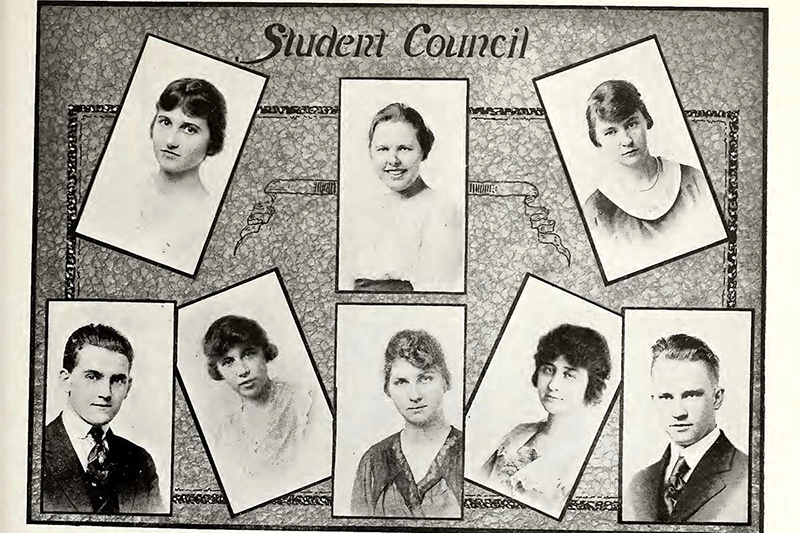
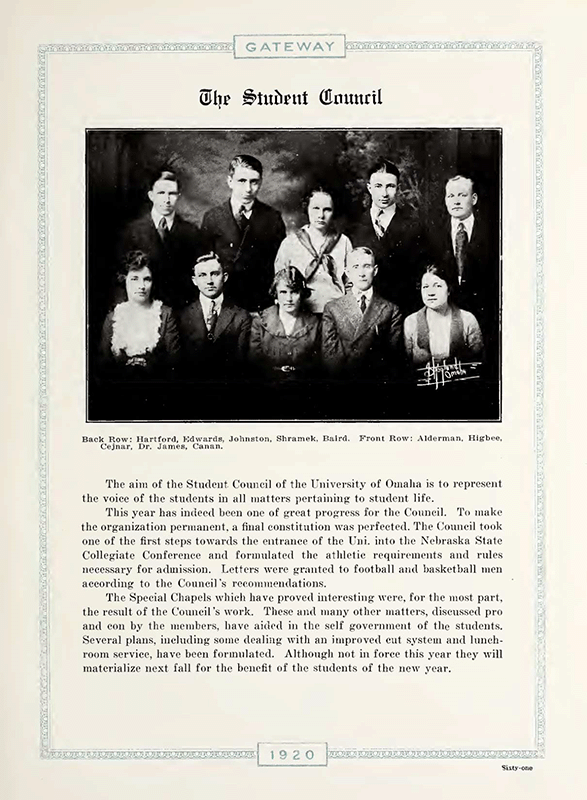
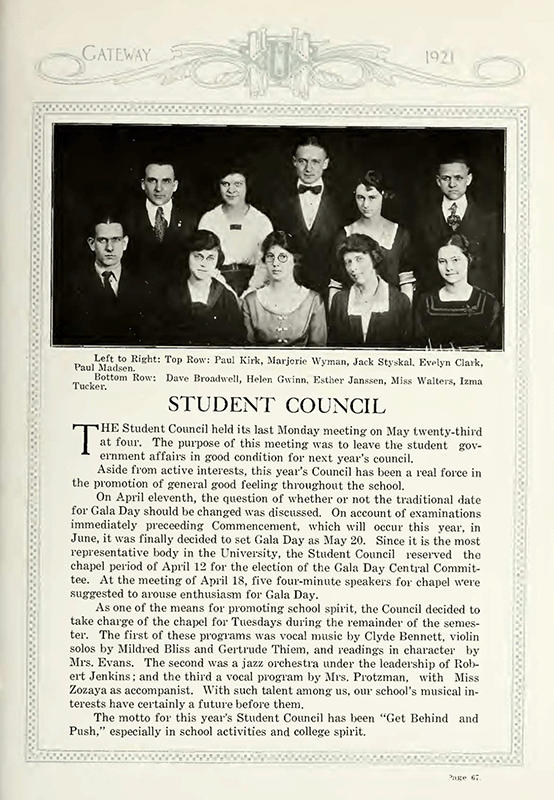
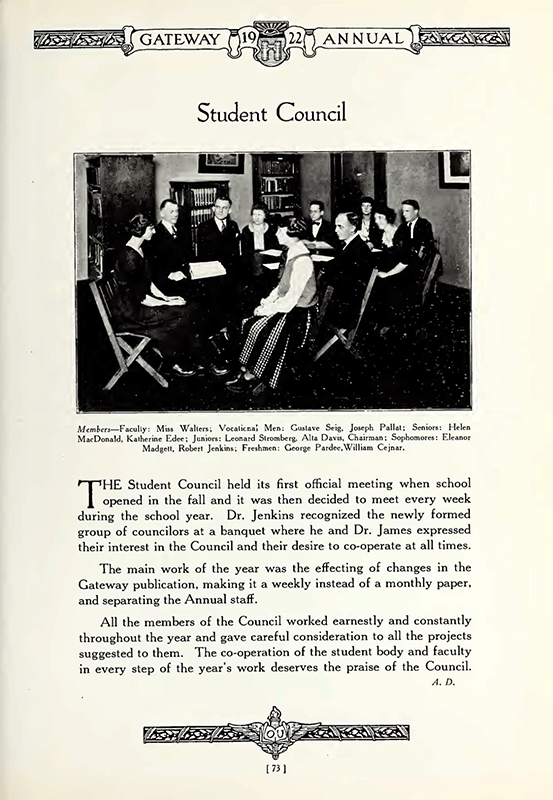
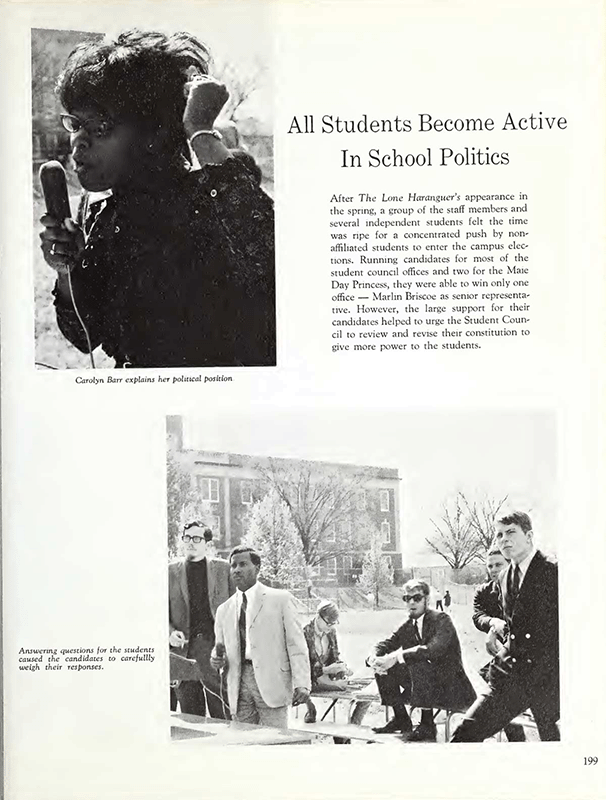
Over the years, the structure and presence of student governance evolved, with multiple Student Councils established in the late 1910s. In 1916, a Student Council was established and lasted through the 1917 – 1918 school year. In 1919, another Student Council was created, and it was this council that helped introduce initiatives such as the student lunchroom. In 1920, a constitution was enacted to help make the organization more permanent.
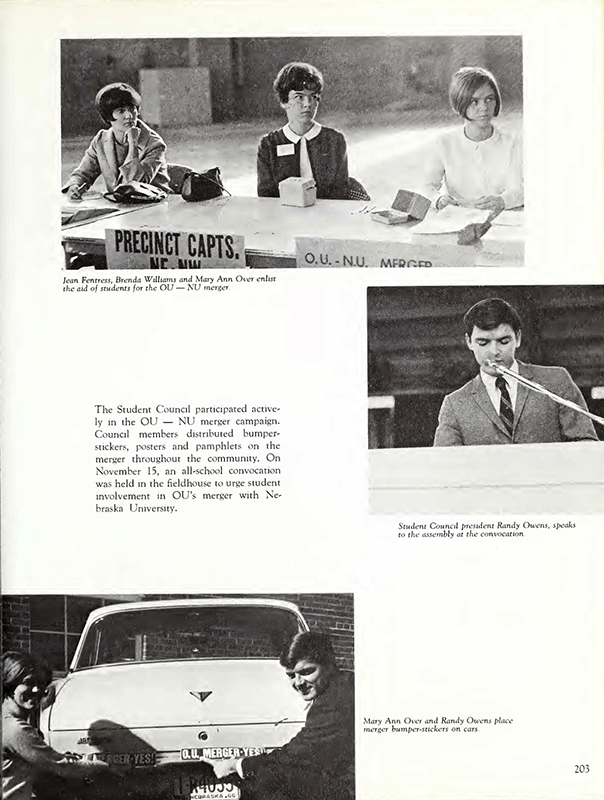
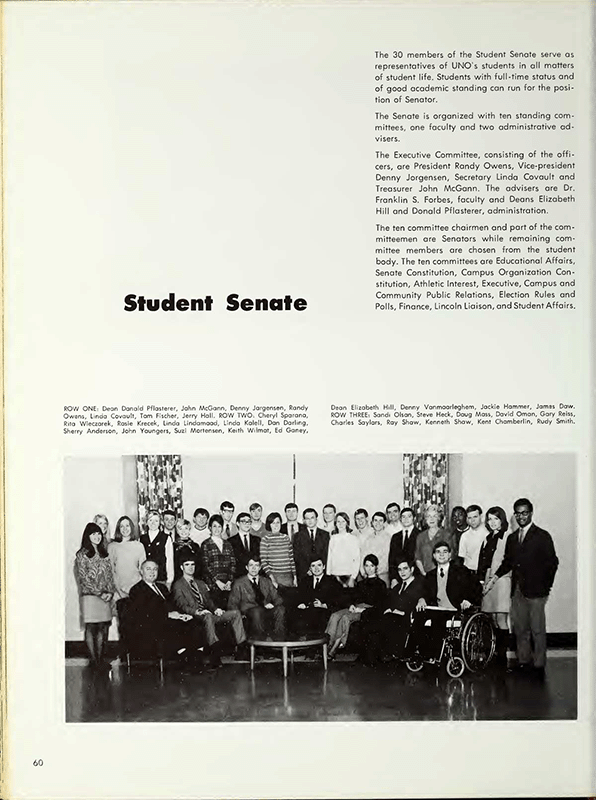
The Student Council continued through the 1960s. However, new Student Government efforts took shape in 1968 with the establishment of the Student Senate at Omaha University, which followed its merger with the University of Nebraska.
The First Election
The first election for the student body President and Vice President of the newly formed Student Senate took place on April 19, 1968, and the updated rules on representation and campaign procedures were published soon after. Over the years, the body transformed and expanded its role, adapting to meet the changing needs of the student population.
Today, the Student Government Association serves as the official voice for all Mavericks, driving impactful initiatives and championing the student experience to create lasting change on campus.
Historical Highlights
For more detailed information on the history and evolution of Student Government at UNO, you can visit UNO Archives and Special Collections, located in the Criss Library, where significant records and milestones of Student Government are documented. Here's a sneak peek at what can be found in the archives.