


Have Questions? We're Here For You.
Connect with an advisor and explore ways to advance your career.
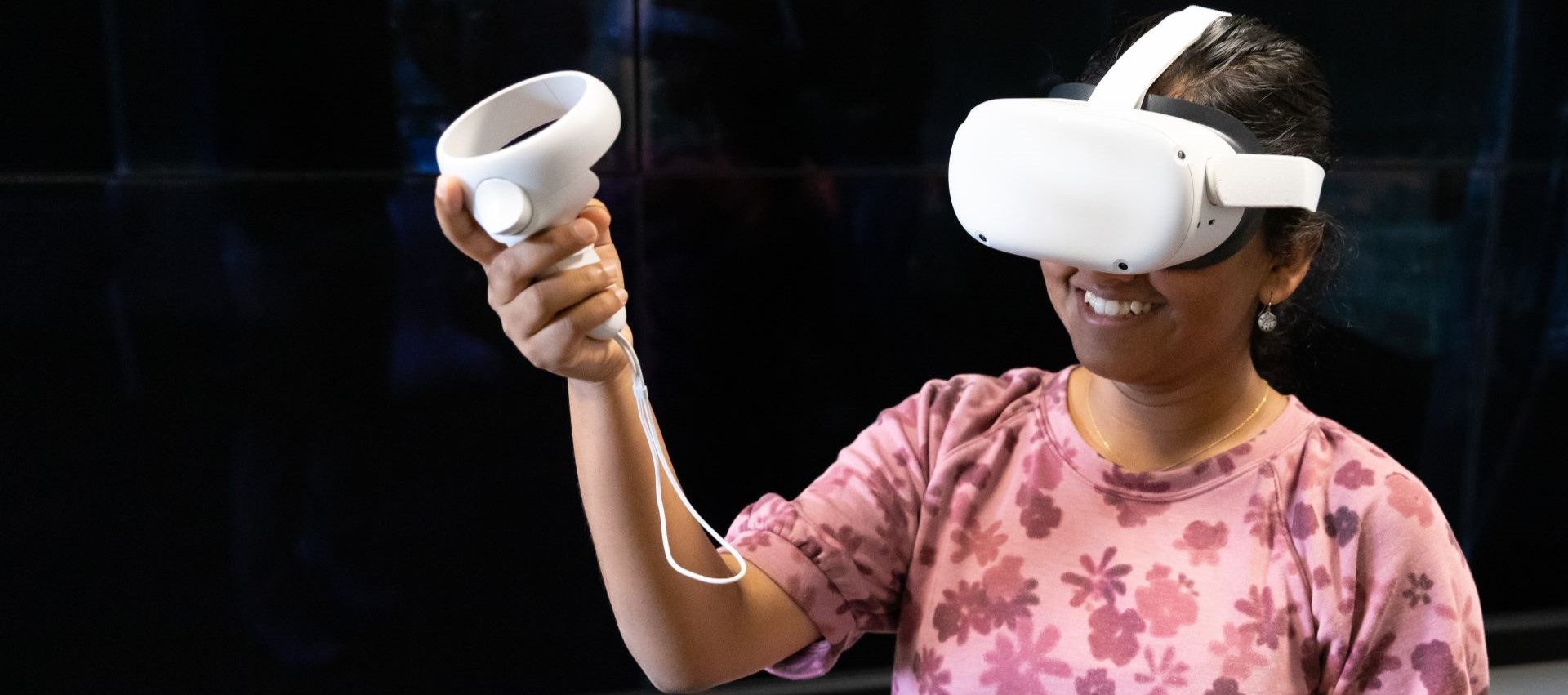
In the Masters of Science in Human Centered Computing (HCC) program, you will gain practical skills to solve real human-centered problems. You'll dive into areas such as data analytics, software development, and user experience design, ensuring your creations are not only effective but also engaging.
You will combine technology and design to engineer experiences that are meaningful, effective, and ethical.
average salary for this degree1
increased demand for careers in applied computing in the past 5 years2
Student to Faculty Ratio
In the HCC program you will solve real-world problems through the design, development, and evaluation of software and systems. Drawing on a solid foundation in computer science and human-computer interaction (HCI), the program emphasizes practical skills essential for computing professionals and software developers, including understanding user needs, developing innovative applications, and implementing technology solutions across various industries.
| Career area of focus | Job titles in this area | ||
|---|---|---|---|
| Software Creation | Front-end Developer | Software Engineer | Principal/Lead Software Engineer |
| User-centered Design | User Interface (UI) Designer | User Experience (UX) Designer | Design Manager |
| Invention | Product Designer | Principal Designer | Founder / CEO |
| Analysis | Data Analyst | Data Scientist | Data Analytics Manager |
The MS in Human-Centered Computing (HCC) is an interdisciplinary program focused on designing and implementing technology with human needs, behaviors, and experiences at the center.
It blends computer science, design, psychology, data science, and related disciplines with fields such as education, entrepreneurship, and the arts. The program emphasizes both technical feasibility and social relevance, preparing students to create usable, accessible, and impactful technology. It also responds to the strong demand for HCC professionals and entrepreneurs across local, regional, and national contexts.
The degree requires 30 credit hours, built around a 9-credit Technology & Innovation Studio sequence, 15–18 credits of electives (drawn from across the NU system and tailored to individual interests), and an exit requirement that can take the form of a thesis, thesis-equivalent project, or capstone. A Fast Track option is available for undergraduates in related fields, allowing them to double-count up to 9 graduate credits. The program is designed to cultivate both the intellectual curiosity of creatives and the applied skills of technology professionals.
View the HCC Catalog for more specific details.
Connect with an advisor and explore ways to advance your career.
1according to glassdoor
2according to datausa career tracking statistics for HCI-related degrees