University of Nebraska at Omaha logo University of Nebraska at Omaha
REQUEST INFO VISIT APPLY

MY UNO DIRECTORY
University of Nebraska at Omaha logo
College of Information Science & Technology School of Interdisciplinary Informatics
REQUEST INFO VISIT APPLY
MY UNO DIRECTORY
  • About Backback to Main menu
    • Director's Welcome
    • Faculty & Staff Directory
    • Policies, Forms & Resources
    • Faculty Grievance Resources
  • Applied Computing and Informatics Backback to Main menu
    • Bachelors of Science in Applied Computing and Informatics
    • Minor in Applied Computing and Informatics
    • Forms and Resources
  • Biomedical Informatics Backback to Main menu
    • Masters of Science in Biomedical Informatics
    • Minor in BIOI
    • Forms & Resources
  • Cybersecurity Backback to Main menu
    • Bachelor of Science in Cybersecurity
    • Master of Science in Cybersecurity
    • Minor in CYBR
    • Graduate Certificate in CYBR
    • Forms & Resources
    • CYBR Student Learning Outcomes
  • Human Centered Computing Backback to Main menu
    • Masters of Science in HCC
    • Forms & Resources

Biomedical Informatics, MS

  1. UNO
  2. College of IS&T
  3. School of Interdisciplinary Informatics
  4. Biomedical Informatics, MS
Four students and an instructor are gathered around an interactive Anatomage table, examining a digital anatomical model displayed on the screen. The group is engaged in a hands-on learning activity, likely within a health informatics or medical training setting. The room is dimly lit, focusing attention on the detailed visual representation of the human anatomy on the table.

Biomedical Informatics (MS)

  • Request Information
  • Apply now

Lead the Future of Data-Driven Healthcare

Program Overview

As the biomedical field increasingly relies on data-driven decision-making and advanced information technology solutions, there is a great need for professionals with expertise in managing, analyzing, and interpreting complex biomedical data. The Biomedical Informatics (BMI) M.S. program will teach you how to apply state-of-the art data science and machine learning approaches in healthcare and biomedicine, equipping you with skills that are essential for basic and translational research and for improving patient outcomes.

Explore Program Curriculum

 Community Aligned

 STEM-OPT Visa Eligible


 $89.2k  

average salary for this degree*

 16%  

increased demand for related careers in the next 10 years

source: U.S. Bureau of Labor Statistics 

 75+  

open jobs in Omaha right now that help improve patient lives***


Concentration Areas

Bioinformatics

You will blend biology, computer science, and information technology to analyze and interpret biological data. Bioinformaticians develop and apply computational tools to analyze, visualize, and interpret large biological datasets, such as genome sequences, protein structures, and molecular pathways. Bioinformatics plays a crucial role in advancing our understanding of complex biological systems, helping in the discovery of new drugs, and is a key component of precision medicine.

Health Informatics

You will gain knowledge and skills regarding collection, storage, retrieval, and analysis of health data to support clinical decision-making, enhance patient care, and streamline healthcare operations. Exploiting the power of information technology and data, health informatics is key to create more efficient and effective healthcare systems, ultimately improving patient health and reducing costs.

Program Details

Our program is geared towards students with a background in biological or computing disciplines, who are ready to expand their knowledge of biomedical informatics and become informaticians in academic, clinical, or organizational settings. The program is also ideal for professionals who are already working in a healthcare domain and want to deepen their understanding of information technology, data analysis, and machine learning in a biomedical context.

You don't have to worry about coming into the program with both a biological background and computing skills, as we have foundation courses that can get you up to speed in the areas that you need to strengthen.

Students in the BMI M.S. program take a range of courses that cover IT infrastructure and cloud computing, data analysis and visualization techniques, machine learning, advanced bioinformatics and healthcare informatics. Students have two options to graduate from the program: (1) a thesis, which involves two semesters of supervised research with a faculty of their choice, or (2) a semester long team project with the capstone option.

By choosing specific elective courses and tailoring their thesis or capstone project, students can elect to focus on Bioinformatics or Health informatics.

View the Biomedical Informatics Catalog for more specific details.

Careers in Biomedical Informatics

Career area of focus Job titles in this area
Software Creation Front-end Developer Software Engineer Principal/Lead Software Engineer
Analysis Data Analyst Data Scientist Data Analytics Manager
Biomedicine Biomedical Data Technician Biostatistician Bioinformatics Researcher
Health Informatics Clinical Research Coordinator Electronic Health Record (EHR) Data Manager Chief Information Officer (CIO) in Healthcare
Three people working together at desktop computers in a modern workspace, pointing at a screen and discussing content with notebooks and devices on the desk.

Affording Your Graduate Education at UNO

UNO offers some of the most affordable graduate tuition rates in the region, plus a wide range of funding resources to support graduate students along the way.
Program Cost Estimate Funding Opportunities

The Maverick Difference

  • Explore More Stories
A close-up of a scientist wearing a blue glove using a multichannel pipette to transfer bright pink liquid into a 96-well plate in a laboratory setting.

UNO Researchers Join Global Effort to Catch Cancer’s Deadliest Secret in Motion

A collaborative team including scientists from UNO, UT Southwestern, and European partners has identified a new factor in cancer mortality — one that could change how the disease is diagnosed and treated.
Explore the Discovery
A wheelchair user tests a VR headset and controllers while a researcher observes at a workstation.

Advancing Stroke Rehabilitation

The University of Nebraska at Omaha (UNO) is at the forefront of revolutionizing stroke rehabilitation through innovative Virtual Reality (VR) technology.
Explore the VR Research
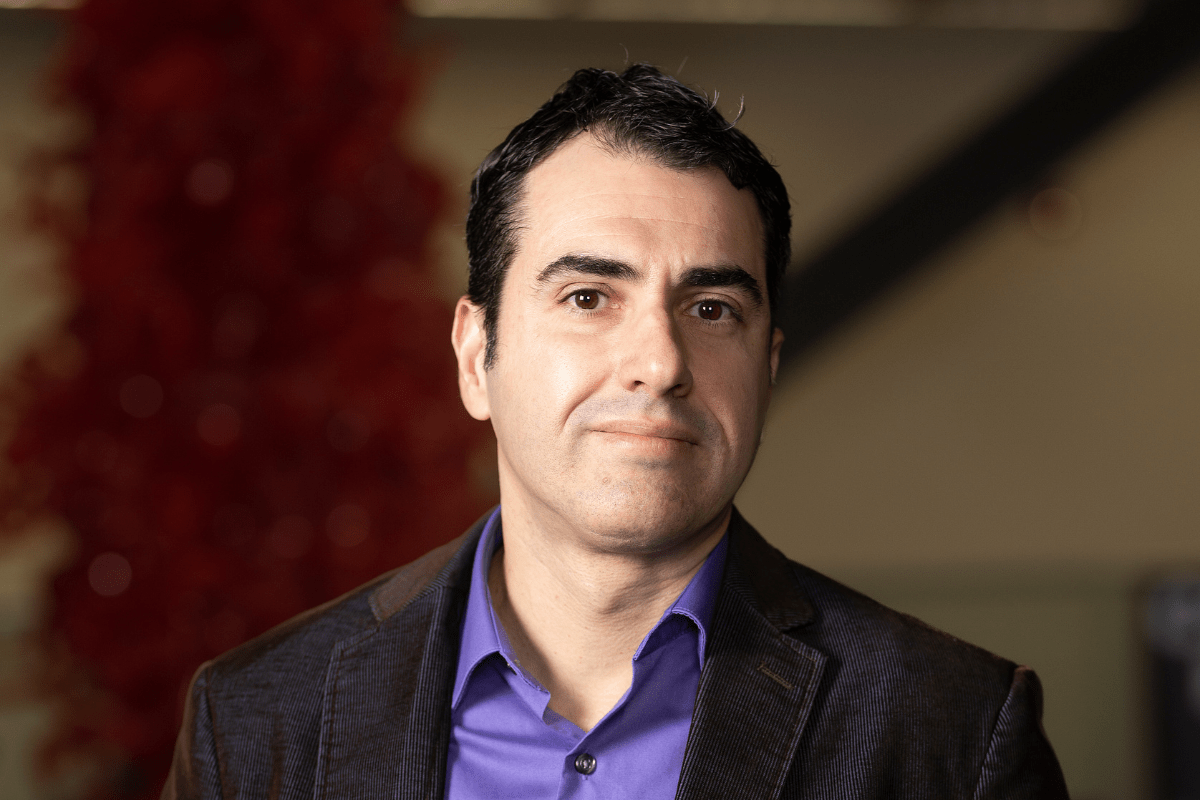
Dario Ghersi, Ph.D., associate professor of biomedical informatics in the UNO College of Information Science & Technology (IS&T). Photo: Ryan Soderlin, UNO Office of Strategic Marketing and Communications.

UNO's Dr. Ghersi Selected for National Cancer Institute Program

SSACB brought together researchers applying rigorous computational methods to solve various problems in cancer biology, with goals to collaborate, prevent academic silos, and train the next generation of researchers.
Read Dr. Ghersi's Story
Three people working together at desktop computers in a modern workspace, pointing at a screen and discussing content with notebooks and devices on the desk.

Have Questions? We're Here for You.

Connect with an advisor and explore ways to advance your career.

Request Information Apply now

College of Information Science & Technology

Contact Us
  • College of Information Science & Technology
  • 172 Peter Kiewit Institute
  • 1110 South 67th Street
  • Omaha, NE 68182   map
  • 402.554.2380
  • Contact Us
Social media
College Resources
  • Advising
  • Jobs and Internships
  • Research
  • News and Events
  • IS&T Technology Systems and Facilities
Peter Kiewit Institute

Services and Resources

  • Academic Calendar
  • Course Catalogs
  • MavCARD Services
  • MavLINK
  • my.unomaha.edu
  • UNO Brand Guide

Related Links

  • A-Z List
  • Employment
  • University of Nebraska System

Campus Links

  • Accessibility
  • Billing Office
  • Buildings and Maps
  • Campus Directory
  • Campus Safety
  • Events
  • Human Resources
  • Library
  • Military-Connected Resource Center
  • News
  • Registrar
  • Samuel Bak Museum: The Learning Center

Policies and Reporting

  • Emergency Information Alert
  • MavsReport
  • Notice of Nondiscrimination
  • NU Foundation
  • Privacy Statement
  • University Policies
  1. Privacy Statement
  2. Accessibility
  1. 402.554.2800

University of Nebraska at Omaha
University of Nebraska at Omaha, 6001 Dodge Street, Omaha, NE, 68182
  • ©  

Social Media


Omaha Skyline

Our Campus. Otherwise Known as Omaha.

The University of Nebraska does not discriminate based on race, color, ethnicity, national origin, sex, pregnancy, sexual orientation, gender identity, religion, disability, age, genetic information, veteran status, marital status, and/or political affiliation in its education programs or activities, including admissions and employment. The University prohibits any form of retaliation taken against anyone for reporting discrimination, harassment, or retaliation for otherwise engaging in protected activity. Read the full statement.