

WEBINAR RECAP: Cartel Drone Operations & Related Supply Chains
On Feb. 3, NCITE hosted a webinar on the widespread adoption of drones by Mexican cartel forces and the robust supply chains that support these operations. See below for a recording and key takeaways.
- published: 2026/02/11
- contact: NCITE Communications
- phone: 402.554.2972
- email: ncite@unomaha.edu
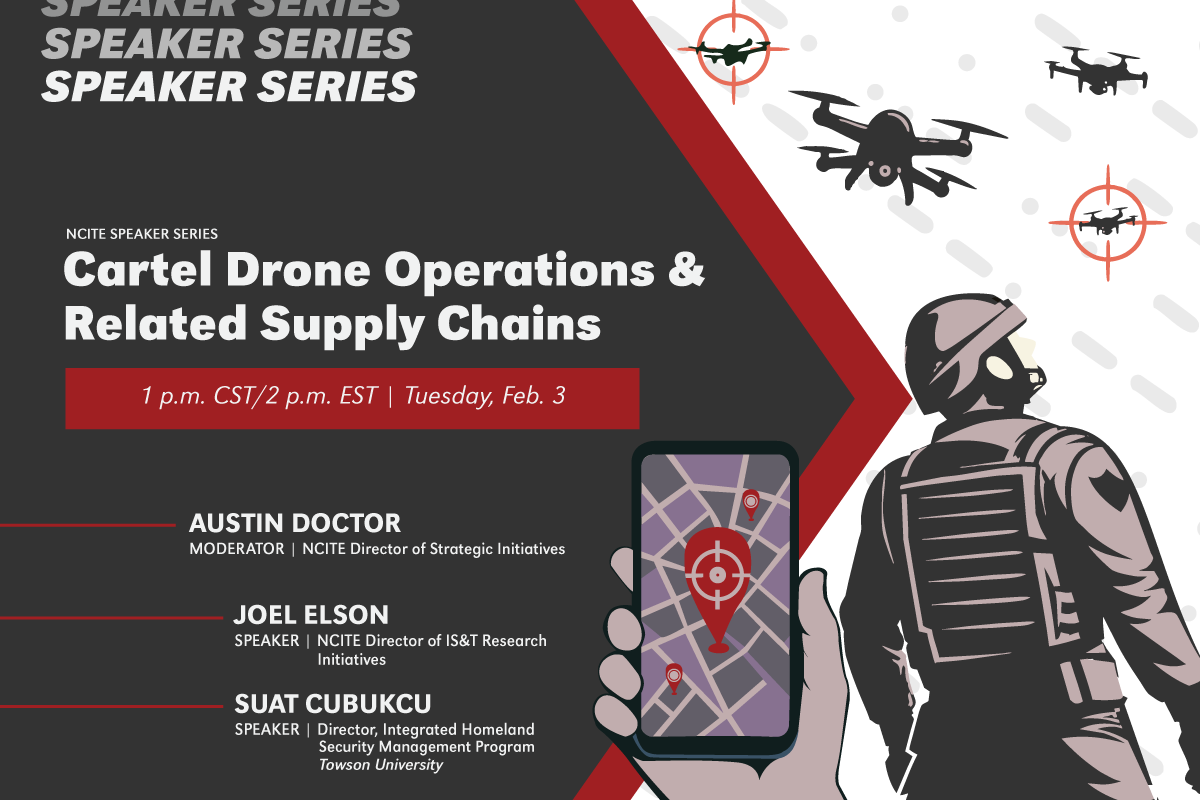
On Feb. 3, NCITE hosted a webinar on the widespread adoption of drones by Mexican cartel forces and the robust supply chains that support these operations. Read below for key takeaways.
Because cartels treat drones as commodities, the traditional counter UAS focus – detection and tactical defeat – is insufficient to tackle the problem. That’s where NCITE is stepping in to provide value: to identify the points at which cartels depend on commercial markets, logistical networks, and technical expertise.
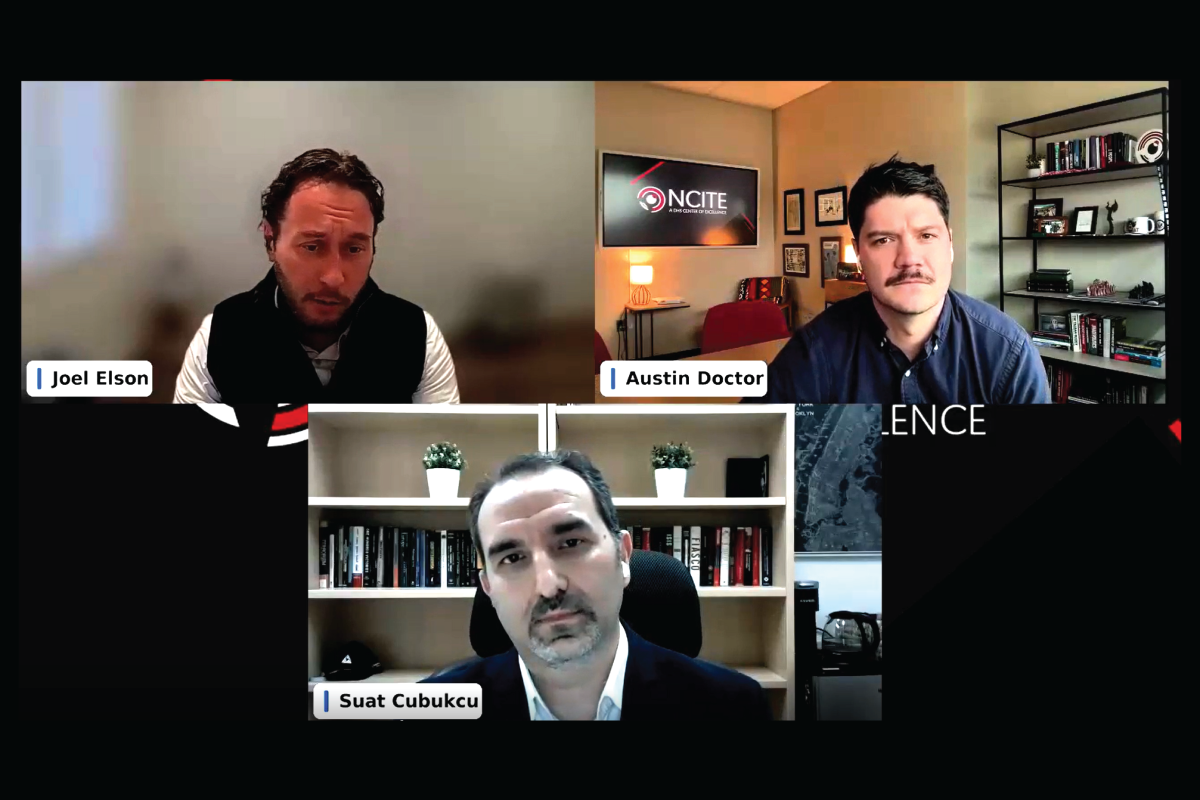
The three panelists are members of the NCITE research team working to characterize emerging patterns in malign UAS supply chains and identify related implications for homeland security and homeland defense. The panelists included:
- Austin Doctor, Ph.D., NCITE director of strategic initiatives
- Joel Elson, Ph.D., NCITE director of IS&T research initiatives
- Suat Cubukcu, Ph.D., Towson University, director of the Integrated Homeland Security Management Program
Key Takeaways
Cartels are leaders in malign drone usage. While cartels began ramping up drone usage in the early 2020s, they have quickly established themselves as highly sophisticated and prolific users. The team identified 221 drone-involved cartel attacks from 2020–2025, accounting for roughly 13% of drone attacks globally conducted by FTO-designated organizations.
- Cubukcu noted that drone usage by other FTOs and in the war in Ukraine has served as useful case studies for cartels.
- “Air power is no longer monopolized by states,” Cubukcu said. “The state hegemony in the air domain is pretty much evaporated, especially [with] small drones.”
Commercial availability and innovation are key to the supply chain. The same drone models and tactics are showing up across unrelated conflicts and groups, which underscores that drone markets shape malign use capabilities. Elson noted three commercial technology buckets that cartels are sourcing:
- Devices – immediately operational, off-the-shelf products
- Components – hardware customizations like motors, sensors, batteries, flight controllers
- Parasites – software, firmware, and payloads that piggy-back on systems
- New technologies, like low earth orbit (LEO) satellites (enabling remote global access) and AI-enabled autonomy, will greatly enhance cartel operations. “If we want to disrupt military drone use, we need to disrupt the systems that make it repeatable, not just the drone itself in the air,” Elson said.
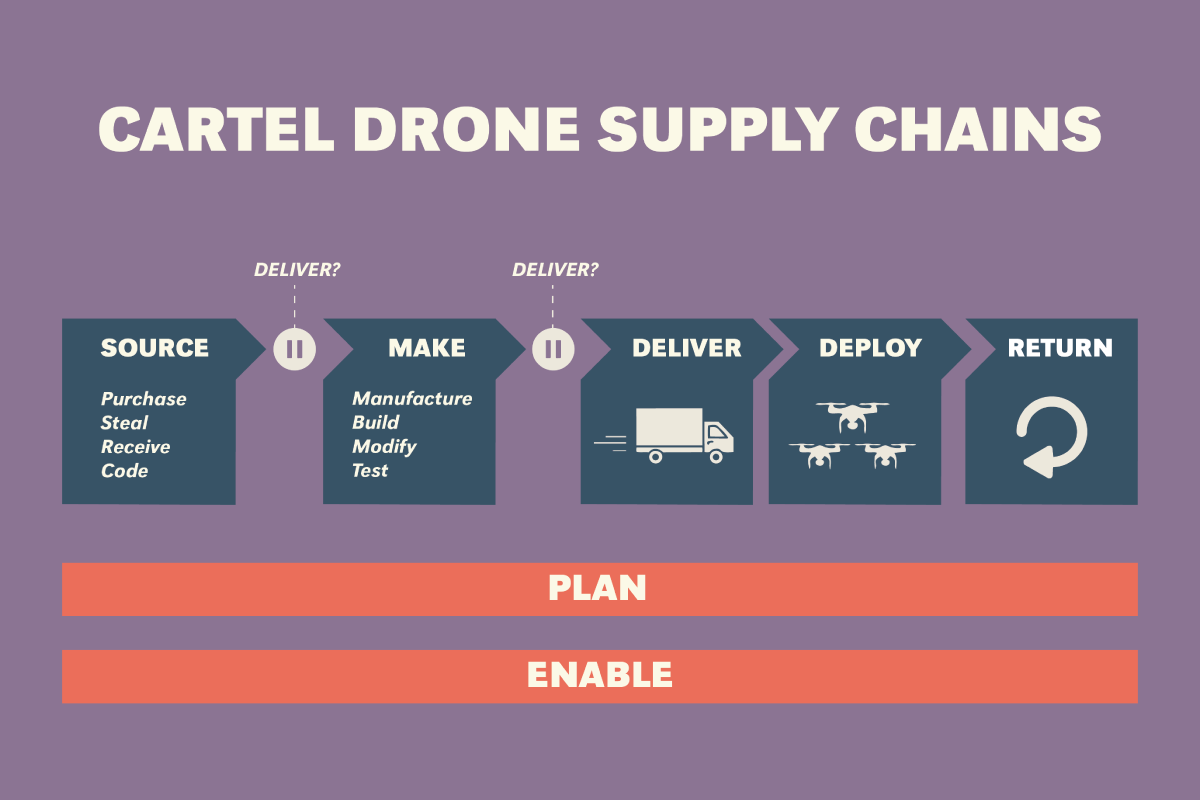
NCITE's new adapted framework: M-SCOR UAS. NCITE’s team has adapted the Supply Chain Operations Reference (SCOR) model into the Malign Supply Chain Operations Reference for UAS model (M-SCOR UAS). It defines four core processes (as pictured above): Source, Make, Deliver, and Return, and two metaprocesses, Plan and Enable, allowing analysts to identify the flow of resources, where decision points happen, and where disruption opportunities exist.
- “At every stage in our M-SCOR model here, it presents a different opportunity for intervention,” Elson said.
Drones are being institutionalized into operations. Mexican law enforcement raids on Cartel Jalisco Nueva Generación (CJNG) have uncovered workshops focused on drone modification, and the group is also deploying dedicated drone operators. In March 2024, another FTO, La Nueva Familia Michoacana, conducted a 72-hour drone campaign in multiple cities, dropping 40+ explosives to intimidate and force displacement of civilians.
- Doctor said that, based on publicly available numbers from DHS, there were tens of thousands of drone flights tracked near the border in 2025. “Each of those operations are supported by thousands of unique, individual drone units," Doctor said, “and I think that really reflects the fact that there are relatively few limitations.”
- Doctor reiterated the ease with which cartels can source drone components. “If we're comparing drones to the acquisition of firearms, for example, there are relatively fewer limitations to what these operators can actually source through relatively normal retail means,” Doctor said.
About the Panelists
Austin Doctor, Ph.D.
Austin Doctor, Ph.D., is the NCITE director of strategic initiatives and an associate professor at the University of Nebraska at Omaha. His research focuses on emerging threats, domestic and international terrorism, irregular warfare, and violent non-state actors.
He earned his Ph.D. from the School of Public and International Affairs at the University of Georgia.
Joel Elson, Ph.D.
Joel Elson, Ph.D., is the NCITE director of information science and technology research initiatives and is an assistant professor in the College of Information Science and Technology at the University of Nebraska at Omaha. Dr. Elson's research integrates human-centered computing with terrorism studies, focusing on innovation, collaboration, and decision-making within computer-mediated and mixed-initiative teams.
His research aims to produce both foundational and applied knowledge to enhance societal security and promote socially responsible technology use. His scholarly contributions address two key areas: preventing malicious uses of information technology and advancing beneficial technological applications to enhance human well-being and protect communities and national security.
Suat Cubukcu, Ph.D.
Suat Cubukcu, Ph.D., is the director of the Integrated Homeland Security Management Program and assistant professor of criminal justice at Towson University. He has extensively studied terrorism, extremism, policing, and methodological issues in data collection. His recent work examines the malign use of unmanned systems as well as their applications for homeland security purposes.
Prior to joining Towson in 2022, he was a professorial lecturer at American University. He has professional field experience in law enforcement and peacekeeping operations of the United Nations. He has engaged with government leaders and officers from many different countries during his career and gained insight into their challenges, which he has since integrated into his research. In 2019, he received a grant from NATO to organize an Advanced Research Workshop on ISIS. He served as a consultant senior researcher responsible for analyzing terrorist incidents for the U.S. State Department’s Country Reports on Terrorism.