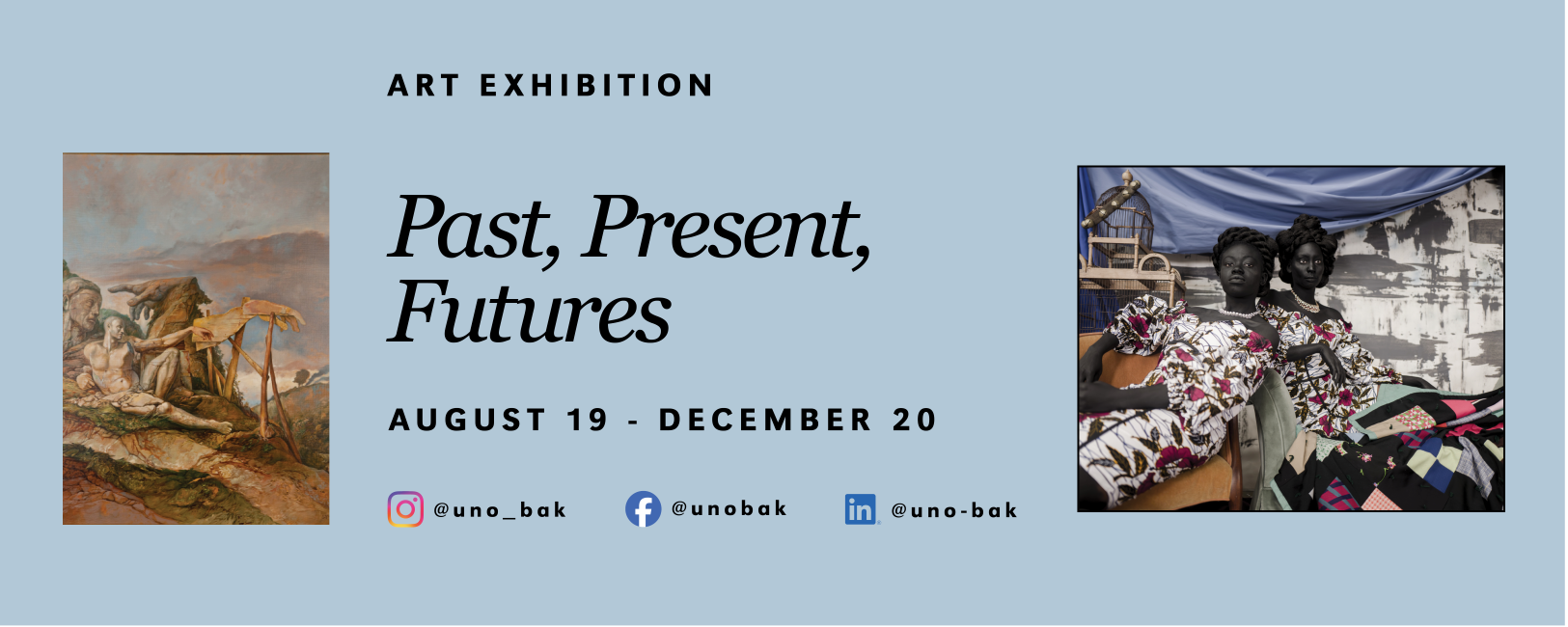
Micki Bethea | Reflection
I chose this piece because of how she takes western culture and turns it into something to represent black culture. Focusing on using the black woman as the main character in her artwork. She flips the narrative of Adam and Eve. We know Eve, eating the apple and knowing it was forbidden by God. We see Eve being disobedient and going against what God wanted. The artist uses the representation of watermelon as the forbidden fruit.
Knowing the stereotype behind black people and watermelon, makes it very ironic to see how using this specific fruit to bring awareness about racism and how it affects the black culture. This also shows how powerful the black woman can be. How she can make her own decisions, regardless of what she has been told not to do. Me being a black woman, I know that we are not often viewed as important, to have value, or even capable of being educated.
We often think that for a piece of artwork to be meaningful can only be portrayed by white characters. This was pure genius for Ms. Rosales to take something so biblical, so powerful, and to turn it into something so BLACK and so BEAUTIFUL for the culture was amazing to see.
Harmonia Rosales's "Forbidden Fruit."
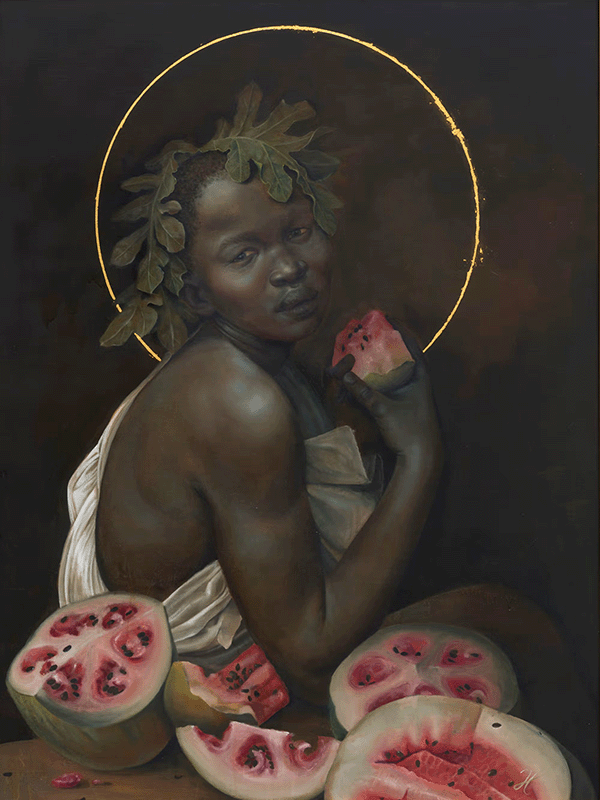
Jay Warren-Teamer | Reflection
It’s often said that there is beauty in sacrifice. I don’t know if I wholly believe that. Especially as a Black woman. At home, at work and in our communities, we constantly give and pour into others – often at a disadvantage to ourselves. This stunning portrait of Obá stopped me dead in my tracks. She is regal and confident, yet forcing us to acknowledge her pain. Too often, Black women put ourselves last, make concessions to our wants and dreams to support the demands placed upon us. Obá in an act of deep love made a sacrifice that did not pay off, her tears transforming into a river. This river ultimately gave life and vitality to the village….but at what cost?
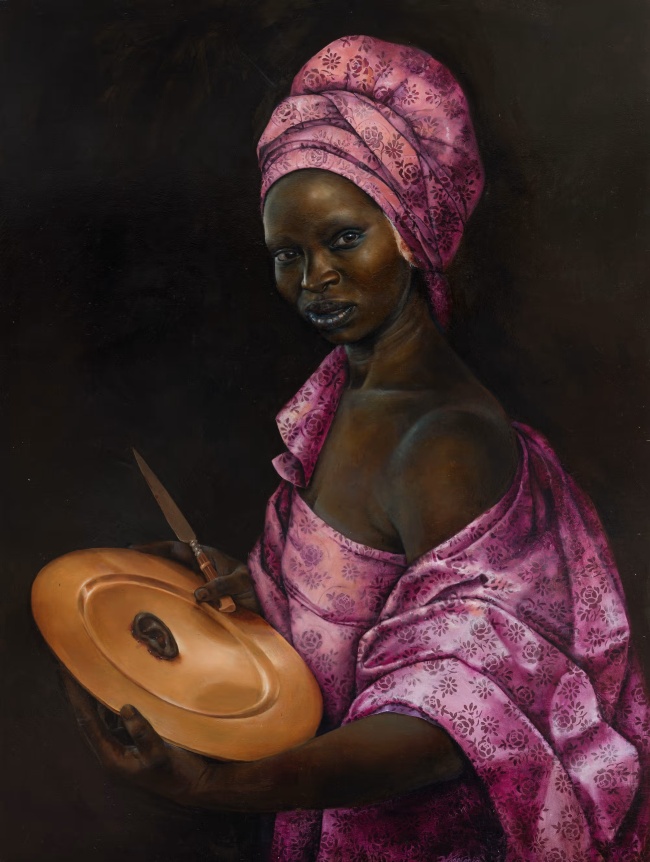
Tulani Meadows| Reflection
Identity is at the heart of my work. As an instructor, I challenge students to explore the complexity and intersectionality of identity. Retracing one’s personal lineage can, for African Americans, be a much more nuanced story complicated by a history of generational enslavement, racial terrorism and subjugation. For myself and others of African descent these explorations invariably hit a brick wall and reveal an existential dilemma that often hovers just below the surface of our sense of who we are. In many ways, slavery was determined to erase or prevent the creation of family histories. We are often reduced to referencing our ancestors as simply "slaves" in the cloud of anonymity that is the residue of unknown history. A Living Requiem is a powerful exploration of genealogy, family history and the legacy of slavery. It demonstrates that what is created anew can anchor our scattered stories of the past. Creating space to honor, celebrate and mourn what was, what is and what will be offers materiality to the work of preserving Black memories.
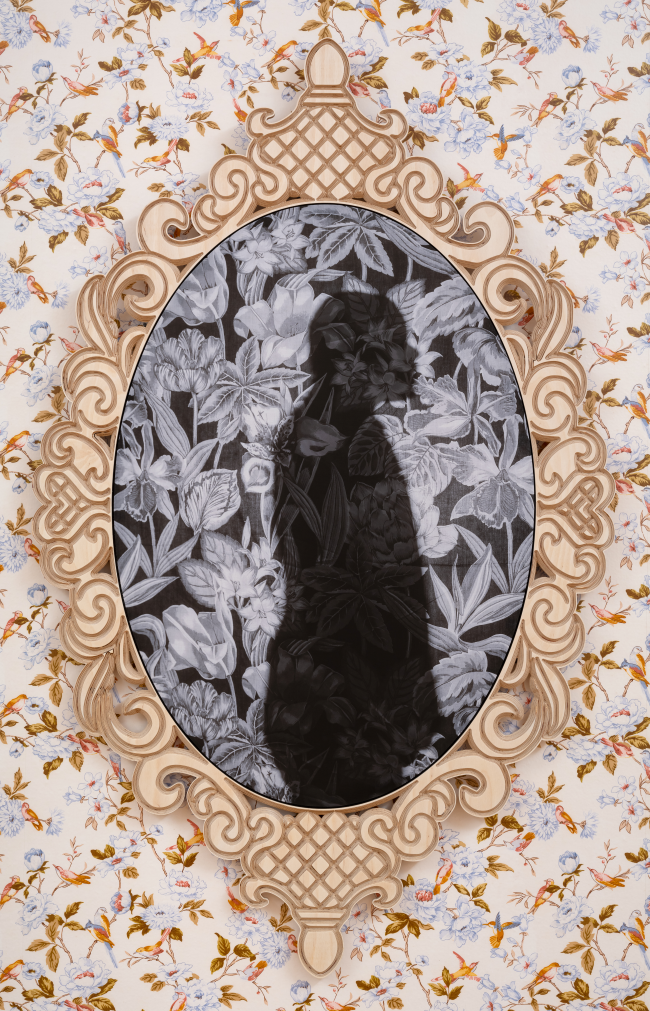
Amanda Kephart | Reflection
How Do You Talk About 300 Years in 4 Minutes, by Jeannette Ehlers is a beautiful case study of how art is storytelling.
This piece is demonstrative of the ways in which technology becomes art through the return to traditional avenues of narrative conveyance. Asking us complex questions in relation to a single sided conversation - a griot centered experience rooted in the importance of our collective histories.
How does centuries of enslavement, resistance, and inherited trauma fit within the brief attention we occasionally give to the history of humanity? The title makes me consider how easy it is to minimize the entirety of a human being's experience into a paragraph, a date, a by-line, or a passing acknowledgement.
Framing the title within Ehlers’s broader inquisition of Denmark’s colonial past, this question becomes a challenge. One that asks us as a collective to stop forgetting. History does not disappear because a nation stops discussing it. History does not disappear because a nation demands it. The consequences of painful histories remain present in institutions, laws, relationships, and ideas rooted in attempting to decide whose lives deserve recognition.
In reflection, what unsettles me most is the imbalance between the time people endured oppression and the time others are willing to spend confronting it. Four minutes can and should feel insignificant beside four hundred and eight years, yet even that small commitment can begin to interrupt indifference. The piece also makes me reflect on my own responsibility as a viewer. Learning about injustice cannot end with feeling moved. It requires curiosity about what has been omitted and whose voices have been excluded. It requires determination to ensure that all voices are expected to contribute to the conversation.
For me, Ehlers’s question remains deliberately open. It asks us to keep listening after the allotted time has ended, and to deeply remember.
Cecil Hicks | Reflection
The Past, Presents, Futures exhibit at UNO’s Samuel Bak Museu: The Learning Center creates an amazing space for awareness and thoughtful reflection. I felt the variety of art on display was a beautiful intersection of humanity and culture. The work that really spoke to me was Jeannette Ehlers’, How to Speak of 300 years in 4 minutes, using a combination of spoken word, song and strong imaginary it told of story to ME of resilience, power, trauma, resistance, self-worth and the ongoing struggle to be seen, heard and understood. On personal reflection this piece reminded me of conversations with my father---Truly powerful messages for yesterday, today, and tomorrow.
Zedeka Poindexter | Reflection
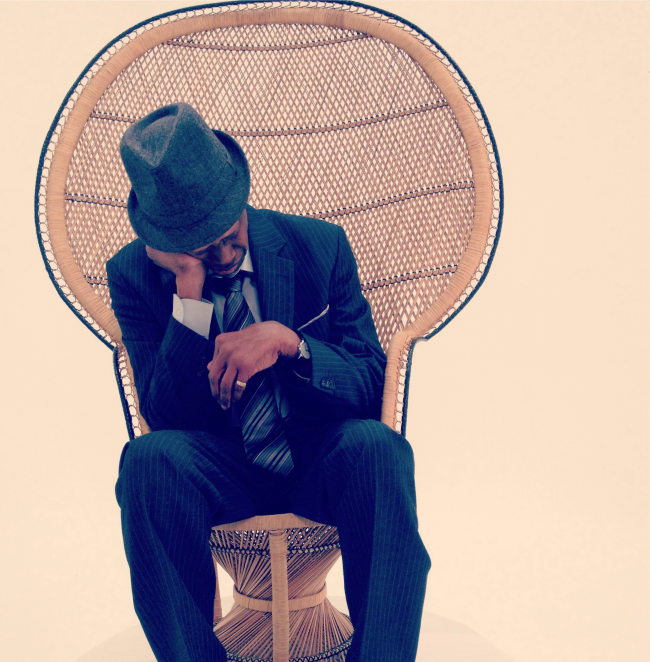
This piece is a dream. A memory captured
that shows what is possible. Old men
with no promise of perfection. Just existing
and taking a moment to show affection
in a way that matters.
When I say I love Black men, this is what I pray for.
Advanced age. Weathered skin. Earned weariness.
Tenderness. Connection. Song.
People who love them actively and remember them warmly.
I don’t have this. The old men in my family
are distant from me for reasons too varied to explain.
It is enough to say it makes me sad in a way I didn’t
attempt to name until I was crying in front of this screen.
Thinking how beautiful it is to see a Black man
singing into the silence. Projecting his voice and love
to into the world and having faith it will be received.
JoAnna LeFlore-Ejike | Reflection
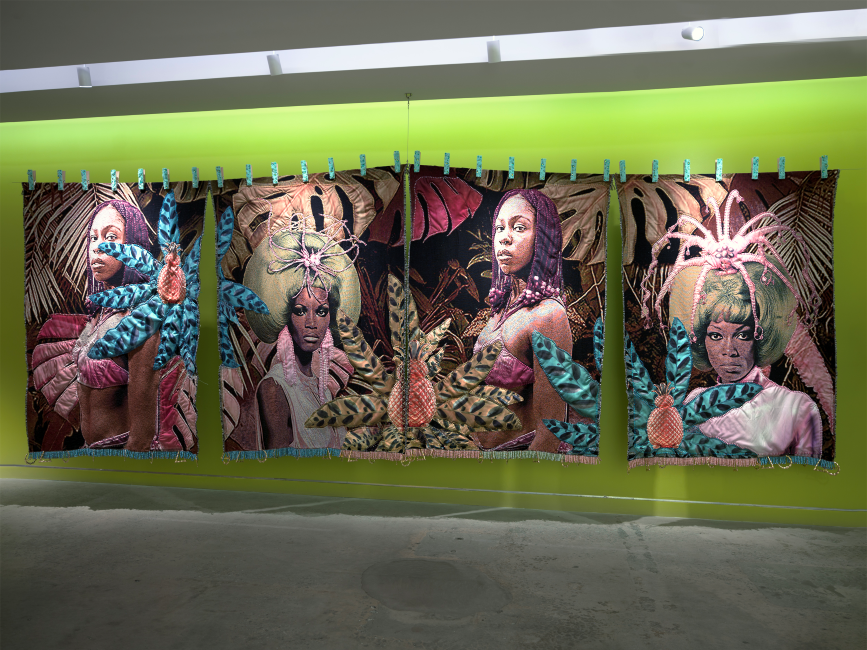
This piece resonates with me for a multitude of reasons. Upon first glance, my initial reaction revealed excitement for the collaboration between themes to include: Afrofuturism, 20th century storytelling through tapestry or quilting, followed by admiration for the nod to contemporary Black American experiences with the tasseled Beads and 90s hip-hop inspired gold hoop earrings!
Immediately, I am intrigued by the supposed judgmental gaze of these euphoric queens. I am also reminded of the hanging of laundry by clothes pins before laundromat or washer and dryers became easy to access; however, these pins are bedazzled with gemstones reminding me that even with a budget of $1.15 Black folks tend to glamorize any experience we encounter. The stare of these women seems to remind us to reflect on our actions and push the envelope for what living abundantly looks like. Walking away from this installation, it leaves me craving a second iteration that offers a response from the viewer to the question that these women are posing to the audience.
Sherrye Hutcherson | Reflection
Seeing April Bey’s vision of Judgementorializing: You Look like you Snuck on to Earth Fam feels less like looking at art and more like stepping into a sanctuary where history is actively being rewritten. In her vibrant and deeply futuristic universe, the constraints of our current world dissolve. For me, engaging with this work is a profound reminder of my own creative and personal mission: to reframe the historical narrative and loudly declare that Black people are equal, strong, and representative of the American Dream.
Historically, the Black experience has often been viewed through a narrow lens of trauma, struggle, and marginalization. While those hardships are an undeniable part of the past, they do not define our identity or our future. What April Bey does so brilliantly with her work of art—using glitter, Afrofuturism, and bold imagery—is strip away the colonial gaze. She replaces it with a world of opulence, joy, and confidence. In my own reflection, I see this as a powerful blueprint for how we must look back at history and look forward to the future. We need to shift the focus from what was done to us to the sheer strength, resilience, and brilliance of who we have always been.
Reframing history means asserting that equality isn't a status to be granted; it is an inherent truth. The strength of Black culture isn’t just found in our ability to survive oppression, but in our capacity to innovate, create, and thrive despite it. Judgementorializing: You Look like you Snuck on to Earth Fam presents Black figures who are regal, independent, and completely at home in their own skin and power. That is the energy I bring to the concept of the American Dream.
For too long, the "American Dream" has felt exclusive, built on a foundation that historically locked Black people out. But by reframing our history and standing firmly in our strength, we redefine what that dream means. It means prosperity, systemic equity, and the freedom to imagine expansive futures—much like Bey's visionary world. Ultimately, looking at this piece reinforces my commitment to keeping that truth at the center of everything I do.
Vincent John “VJ” Orduña | Reflection
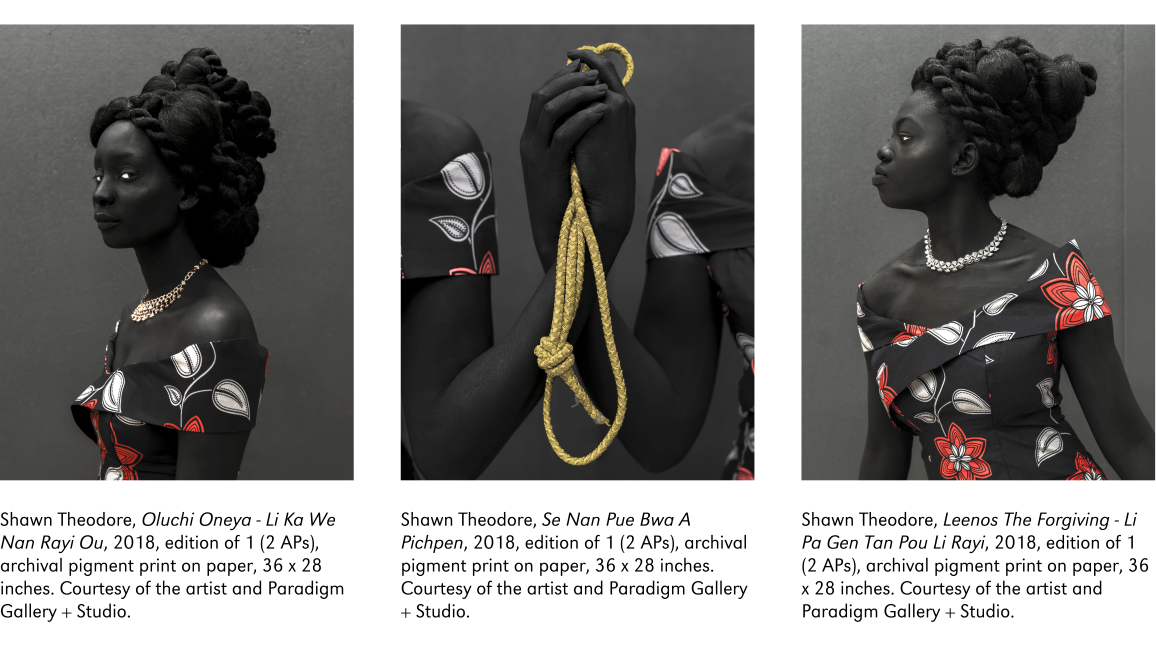
When I first encountered Shawn Theodore’s Oluchi Oneya – Li Ka We Nan Rayi Ou, Se Nan Pue Bwa A Pichpen, and Leenos The Forgiving, I found myself thinking about beauty—not simply about what we find beautiful, but about who has historically been allowed to define it. Past Present Futures- Images
For generations, Western art has given us a particular vocabulary for beauty, elegance, nobility, and refinement. Those images became so familiar that they were often treated not as one culture’s interpretation of beauty, but as beauty itself. Theodore’s work invites me to reconsider that vocabulary through a Blackened lens.
I am captivated by the dignity and intentionality of these images. The darkness of the skin against the darkness of the background does not diminish the subjects; it demands that I look more closely. Their profiles, the sculptural quality of their hair, the jewelry, the pattern and movement of the fabric—all become declarations. Blackness is not something being accommodated within an existing definition of beauty. Blackness is defining beauty.
That distinction feels important to me.
There is also something deeply theatrical about these photographs. As a theatre artist, I am constantly thinking about framing: where we ask an audience to look, what we illuminate, what we leave in shadow, and whose story we place at the center. Theodore is doing something similar here. He controls our gaze while allowing his subjects to retain theirs. They are not performing for us. They exist fully and confidently whether we are looking or not.
For me, these works are simultaneously about the past, present, and future. They acknowledge an artistic tradition that has too often excluded Black faces while refusing to remain constrained by it. Rather than simply inserting Black bodies into an inherited European aesthetic, Theodore seems to reclaim the very idea of portraiture and ask us to imagine it differently.
Perhaps that is what I find most beautiful: these images do not ask us to expand an old definition of beauty enough to make room for Blackness. They invite us to question who created that definition in the first place—and then offer us the possibility of creating something larger, richer, and more truthful.
Beauty, seen through a Blackened lens, is not an alternative to the canon. It is part of the reimagining of what the canon can become.
Shawn Theodore's "Oluchi Oneya – Li Ka We Nan Rayi Ou, Se Nan Pue Bwa A Pichpen, and Leenos The Forgiving"
Racquel Henderson | Reflection
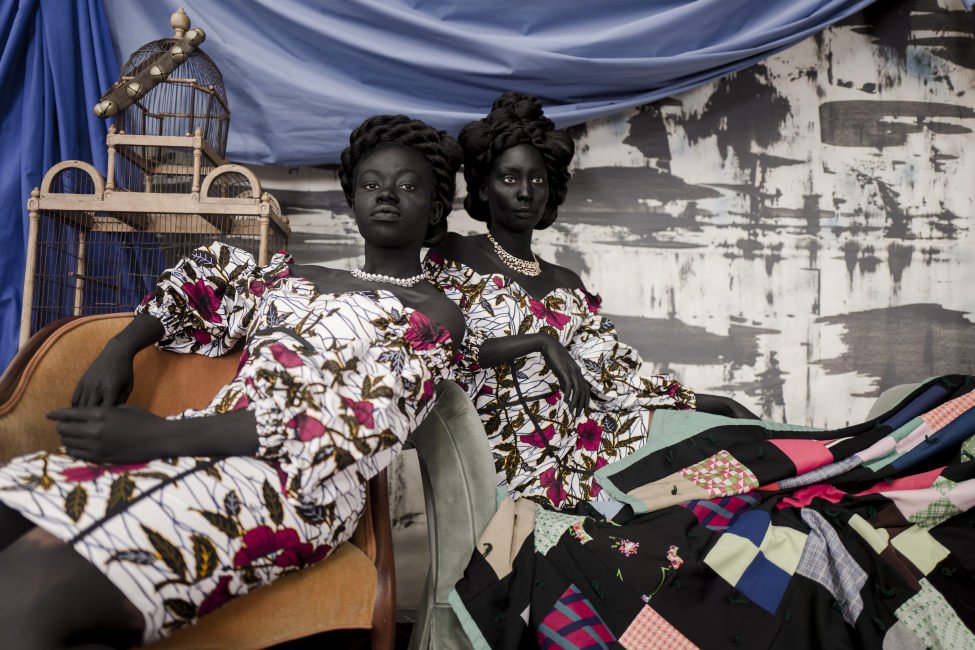
What I feel when I look at this piece is a deep sense of Black womanhood; beauty, history, strength, and survival all sitting in the same space. I see myself in these women. I think about how much Black women are expected to carry: our families, our communities, our pain, our dreams, and sometimes everybody else's too. I've lived through things that could have made me hard, and that did at times, but I've learned that strength isn't always about being unbreakable. Sometimes it's about remaining soft, creative, loving, and connected to who you are. The quilted fabric reminds me of how our lives are pieced together from experiences; some beautiful, some painful, some we didn't choose, but somehow we make something whole from them. As a Black woman, a mother, and a woman who has had to rebuild parts of my own life, I see this a reflection of resilience without romanticizing the struggle. We deserve to be seen beyond what we survive.
Shawn Theodore's "The Salon of Oluchi Oneya and Leenos The Forgiving"
Mayor John W. Ewing Jr. | Reflection
Art is a powerful reminder of our shared experience in its beauty and glory and in its pain and suffering. When I walked through the Bak Museum and Learning Center, I saw art that told stories of resilience. Whether it was Samuel Bak’s own depictions of dealing with the Holocaust or how we think about race in the works by April Bey, Jeannette Ehlers, Ken Gonzalez-Day, Letitia Huckaby, Harmonia Rosales and Shawn Theodore, the pieces affirm our shared spirit and humanity. They say, loudly, that we are here, we see, we hear, we feel and we remain true to our experience and story. They say we bear witness and more - we are showing how to thrive, how to pay attention and how to move forward. What I love about this space is that it is a learning center where people can learn from this art.