University of Nebraska at Omaha logo University of Nebraska at Omaha
REQUEST INFO VISIT APPLY

MY UNO DIRECTORY
University of Nebraska at Omaha logo
College of Arts and Sciences The Sam & Frances Fried Holocaust & Genocide Academy
REQUEST INFO VISIT APPLY
MY UNO DIRECTORY
  • About Us Backback to Main menu
    • Our Mission
    • Faculty & Staff Directory
    • Who was Sam Fried?
    • Who was Louis Blumkin?
    • Public History & Memorialization
  • Holocaust & Genocide Studies Minor Backback to Main menu
    • Minor Advising
    • Minor Requirements
    • Course Schedule
  • Events, News & Photos
  • Awards and Funding Backback to Main menu
    • Fried Academy Scholarship
    • Fried Graduate Research Fellowship
    • Fried Awards
  • Support Us

Knowledge and Skills Gained

  1. UNO
  2. College of Arts and Sciences
  3. The Sam & Frances Fried Holocaust & Genocide Academy
  4. Academics

  • Related Resources

  • New Minor in Holocaust and Genocide Studies Available

Why Minor in Holocaust and Genocide Studies?

The mission of the Holocaust and Genocide Studies Minor is to promote and facilitate the scholarly study of the Holocaust and other historical genocides throughout history.
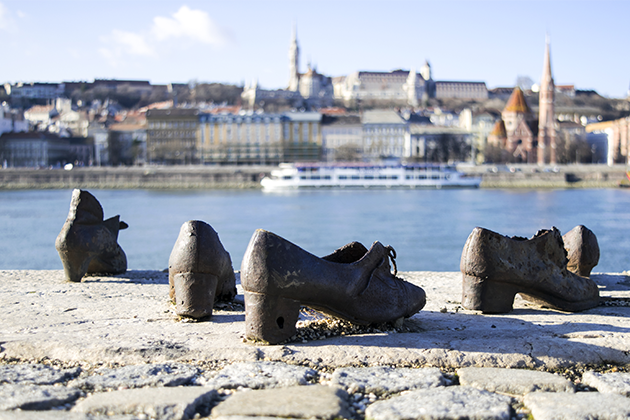
The Shoes on the Danube Bank memorial showing cement shoes next to the riverfront.

One of our chief mandates is to provide an interdisciplinary approach in which the topic of Holocaust and Genocide Studies (HGS) is covered in a variety of departments and programs and from a variety of perspectives. The HGS minor is intended to both create a student who is more aware of the importance of genocide in both past and present and to prepare them for potential careers in fields related to the HGS.

The following are key objectives of the minor:

  • Learn the history of genocide from a global and comparative perspective
  • Learn the history of genocide in an interdisciplinary context
  • Master core competencies in other disciplines and majors with the Holocaust and other genocides as the subject matter
  • Recognize the current relevance of the study of the Holocaust and genocide
  • Gain a working knowledge of methods of prevention, intervention, and justice for instances of genocide throughout history
  • Develop “moral muscles” that enable students to recognize and react to injustices occurring at home and abroad
  • Prepare students for a variety of careers in both public and private sector that focus on the recognition, prevention, intervention, amelioration, and prosecution of genocide and mass atrocity.

Announcements

  • Sam Fried Digital Archives
  • UNO Library's Holocaust Research Guide
  • Fried Academy Flier
  • Join our Mailing List
Interdisciplinary Minor with paint splotches behind it.

Why interdisciplinary studies?

  1. Creativity often requires interdisciplinary knowledge.

  2. Immigrants to disciplines often make important contributions to their new field.

  3. Disciplinarians often commit errors which can be best detected by people familiar with two or more disciplines.

  4. Some worthwhile topics of research fall in the interstices among the traditional disciplines.

  5. Many intellectual, social, and practical problems require interdisciplinary approaches.

  6. Interdisciplinary knowledge and research serve to remind us of the unity-of-knowledge ideal.

  7. Interdisciplinarians enjoy greater flexibility in their research.

  8. More so than narrow disciplinarians, interdisciplinarians often treat themselves to the intellectual equivalent of traveling in new lands.

  9. Interdisciplinarians may help breach communication gaps in the modern academy, thereby helping to mobilize its enormous intellectual resources in the cause of greater social rationality and justice.

  10. By bridging fragmented disciplines, interdisciplinarians might play a role in the defense of academic freedom

Contact Us

  • Lana Obradovic: lobradovic@unomaha.edu

Related Resources

  • New Minor in Holocaust and Genocide Studies Available

College of Arts and Sciences

Contact Us
  • 220 Arts & Sciences Hall
  • College Advising Office
Social media
College Resources
  • For Faculty and Staff
  • Math-Science Learning Center
  • The Writing Center
Arts and Sciences Hall building with large white columns in front of a pink and orange sunset.

Services and Resources

  • Academic Calendar
  • Course Catalogs
  • MavCARD Services
  • MavLINK
  • my.unomaha.edu
  • UNO Brand Guide

Related Links

  • A-Z List
  • Employment
  • University of Nebraska System

Campus Links

  • Accessibility
  • Billing Office
  • Buildings and Maps
  • Campus Directory
  • Campus Safety
  • Events
  • Human Resources
  • Library
  • Military-Connected Resource Center
  • News
  • Registrar

Policies and Reporting

  • Emergency Information Alert
  • MavsReport
  • Notice of Non-Discrimination
  • NU Foundation
  • Privacy Statement
  • University Policies
  1. Privacy Statement
  2. Accessibility
  1. 402.554.2800

University of Nebraska at Omaha
University of Nebraska at Omaha, 6001 Dodge Street, Omaha, NE, 68182
  • ©  

Social Media


Omaha Skyline

Our Campus. Otherwise Known as Omaha.

The University of Nebraska does not discriminate based on race, color, ethnicity, national origin, sex, pregnancy, sexual orientation, gender identity, religion, disability, age, genetic information, veteran status, marital status, and/or political affiliation in its education programs or activities, including admissions and employment. The University prohibits any form of retaliation taken against anyone for reporting discrimination, harassment, or retaliation for otherwise engaging in protected activity. Read the full statement.