University of Nebraska at Omaha logo University of Nebraska at Omaha
REQUEST INFO VISIT APPLY

MY UNO DIRECTORY
University of Nebraska at Omaha logo
College of Arts and Sciences Native American Studies
REQUEST INFO VISIT APPLY
MY UNO DIRECTORY
  • About Us Backback to Main menu
    • About Native American Studies
    • Teaching Faculty & Staff Directory
    • Contact Us
  • Academics Backback to Main menu
    • Undergraduate Minor
    • Graduate Minor
    • Course Offerings
    • Knowledge & Skills Gained
    • Transfer Information
  • Community Engagement Backback to Main menu
    • Native American Studies Honoring
    • Events
    • Photo Gallery
  • Student Opportunities Backback to Main menu
    • Intertribal Student Council
  • Research
  • Support Us

Knowledge & Skills Gained

  1. UNO
  2. Native American Studies
  3. Academics
  4. Knowledge & Skills Gained

Why minor in Native American Studies?

Interdisciplinary programs are those programs that don't fit neatly into a predefined box. They cross the traditional lines of academic categorization to draw upon and add knowledge to multiple disciplines. They invoke art, science, music, culture and society to better understand complex ideas.
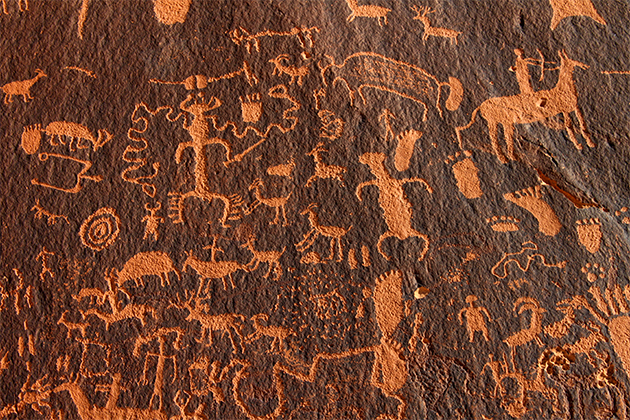
Petroglyphs on a rock.

Why minor in NAMS? | Knowledge & Skills Gained | Career Opportunities

Why Minor in Native American Studies?

When looking into a college or university, especially when thinking about majors and minors, you will commonly be asked what you want to do with your degree. This is an important question we all have to ask ourselves.

As you think about potential careers and commitments to family and community, Native American Studies believes that you should simultaneously look inward (yourself) and outward (your community). Picking a major and minor is a difficult decision that many students make in consultation with family and community members.

In Native American Studies (NAMS), we are concerned with who you’d like to be, what knowledge and skills you’d like to have, and with whom you’d like to collaborate. NAMS offers a space for students to think about Native American issues and the importance of indigenous knowledge in the twenty-first century.

It is also a space to work with Native American individuals, communities, organizations, and nations. Because NAMS is an undergraduate minor, we encourage all undergraduate students to consider minoring in Native American Studies.


Knowledge & Skills gained in Native American Studies

Our minor can also be used to supplement the Western knowledge gained in traditional academic disciplines.


Career Opportunities

Our minor can help prepare students to work in a variety of capacities. Our students can attain positions with:

  • Tribes
  • Indigenous organizations
  • Federal, state, and local governments
  • Social service agencies
  • Non-profit organizations
  • Community organizations
  • Museums
  • Youth-serving organizations
  • Schools
  • Research centers
Interdisciplinary Minor.

Why interdisciplinary studies?

  1. Creativity often requires interdisciplinary knowledge.

  2. Immigrants to disciplines often make important contributions to their new field.

  3. Disciplinarians often commit errors which can be best detected by people familiar with two or more disciplines.

  4. Some worthwhile topics of research fall in the interstices among the traditional disciplines.

  5. Many intellectual, social, and practical problems require interdisciplinary approaches.

  6. Interdisciplinary knowledge and research serve to remind us of the unity-of-knowledge ideal.

  7. Interdisciplinarians enjoy greater flexibility in their research.

  8. More so than narrow disciplinarians, interdisciplinarians often treat themselves to the intellectual equivalent of traveling in new lands.

  9. Interdisciplinarians may help breach communication gaps in the modern academy, thereby helping to mobilize its enormous intellectual resources in the cause of greater social rationality and justice.

  10. By bridging fragmented disciplines, interdisciplinarians might play a role in the defense of academic freedom

Contact Us

  • Native American Studies
  • 106 ASH
  • Phone: 402.554.2829

  • Director: Dr. Brady DeSanti

College of Arts and Sciences

Contact Us
  • 220 Arts & Sciences Hall
  • College Advising Office
Social media
College Resources
  • For Faculty and Staff
  • Math-Science Learning Center
  • The Writing Center
Arts and Sciences Hall building with large white columns in front of a pink and orange sunset.

Services and Resources

  • Academic Calendar
  • Course Catalogs
  • MavCARD Services
  • MavLINK
  • my.unomaha.edu
  • UNO Brand Guide

Related Links

  • A-Z List
  • Employment
  • University of Nebraska System

Campus Links

  • Accessibility
  • Billing Office
  • Buildings and Maps
  • Campus Directory
  • Campus Safety
  • Events
  • Human Resources
  • Library
  • Military-Connected Resource Center
  • News
  • Registrar

Policies and Reporting

  • Emergency Information Alert
  • MavsReport
  • Notice of Non-Discrimination
  • NU Foundation
  • Privacy Statement
  • University Policies
  1. Privacy Statement
  2. Accessibility
  1. 402.554.2800

University of Nebraska at Omaha
University of Nebraska at Omaha, 6001 Dodge Street, Omaha, NE, 68182
  • ©  

Social Media


Omaha Skyline

Our Campus. Otherwise Known as Omaha.

The University of Nebraska does not discriminate based on race, color, ethnicity, national origin, sex, pregnancy, sexual orientation, gender identity, religion, disability, age, genetic information, veteran status, marital status, and/or political affiliation in its education programs or activities, including admissions and employment. The University prohibits any form of retaliation taken against anyone for reporting discrimination, harassment, or retaliation for otherwise engaging in protected activity. Read the full statement.