A Center for Competencies, Skills, and Workforce Development (CCSW) Initiative
The UNO Skills Lab supports the development of UNO’s skills ecosystem. This ecosystem connects labor market data, academic learning, and credential innovation into an institutional approach to skills development and validation.
To strengthen UNO’s capacity to ensure, the Skills Lab contributes to regional labor market analysis, supports research-informed assessment practices, and partners with faculty and staff to embed skill development and assessment into academic and co-curricular experiences.
Together, these efforts strengthen UNO’s capacity to ensure that skills developed at UNO are evidence based, workforce relevant, and meaningfully validated. This work reinforces the university’s mission to serve Omaha and the region while building long-term institutional capability in workforce-aligned credential innovation.
How the UNO Skills Ecosystem Works
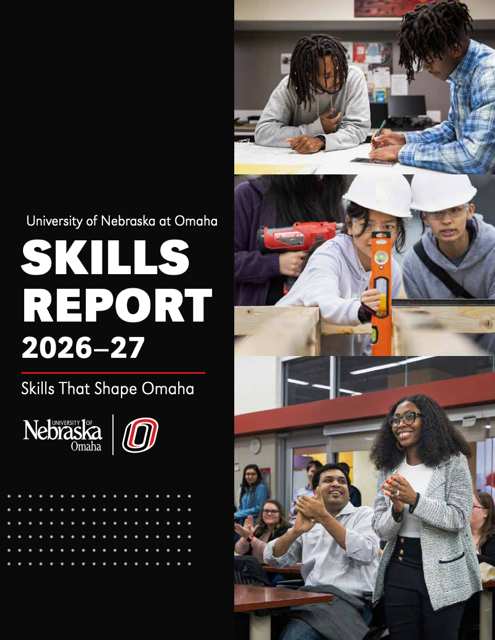
UNO Skills Report: Data-Driven Insight on Regional Skill Demand
The UNO Skills Report is one component of UNO’s broader institutional strategy to align credential innovation with regional workforce demand.
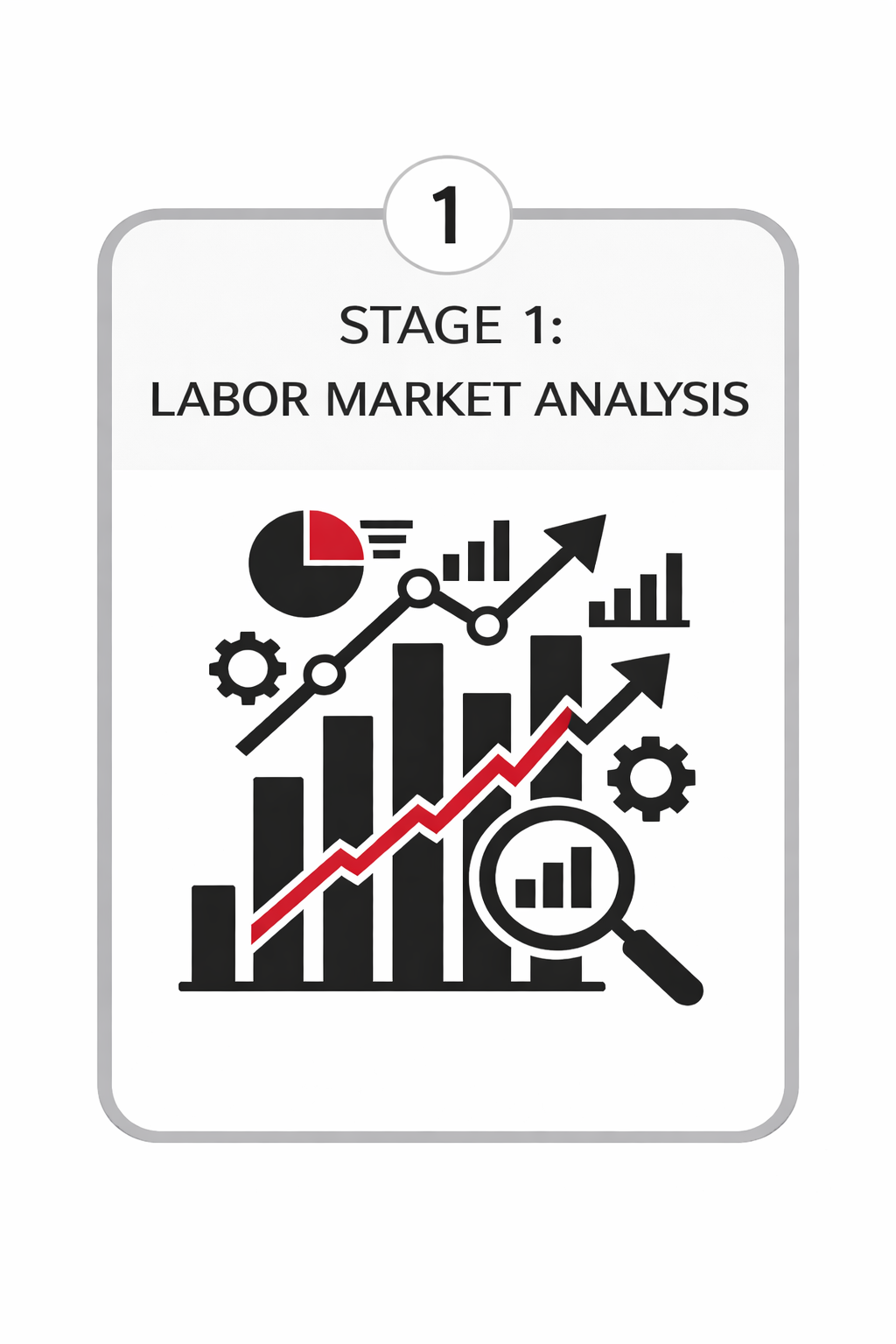
It reflects ongoing labor market data collection and analysis to identify the top 10 in-demand and emerging skills in the Omaha region, drawing on regional job postings, workforce data, and employer needs.
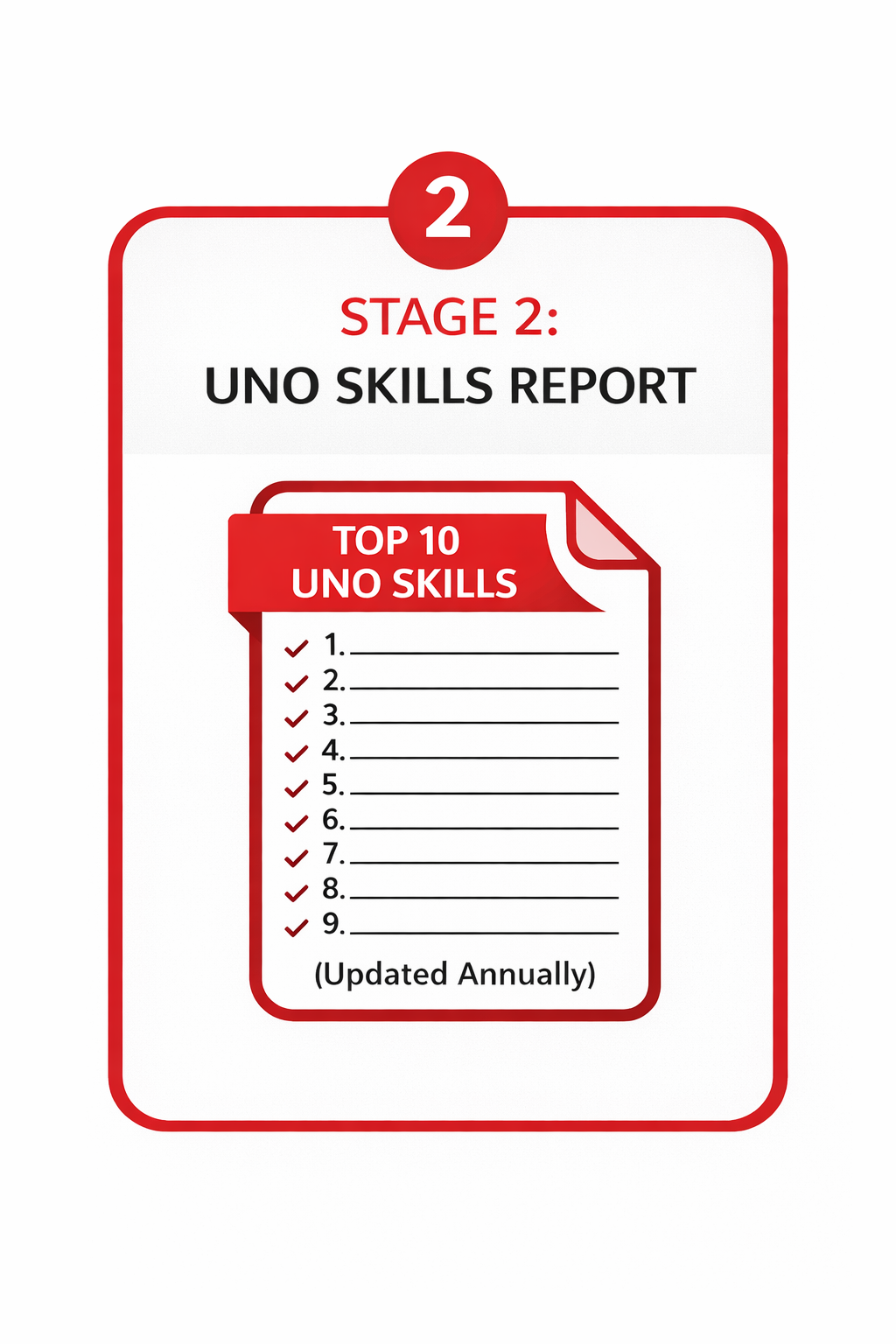
These priority skills are updated annually to reflect changing labor market conditions and are synthesized in the Skills Report to provide a shared, evidence-based view of the skills shaping the regional economy. In doing so, the Skills Report serves as the starting point for UNO’s skills ecosystem by connecting regional workforce demand to academic design and assessment.
The top skills identified in the Skills Report directly inform the UNO Skills Framework and the portfolio of UNO Skill Badges available to students, ensuring that skills validated at UNO reflect current and emerging workforce needs.
Explore the 2025–26 UNO Skills Report to see how skills data and analysis are guiding skill identification, validation, and credential innovation at UNO. 2025-26 Skills Report.
The UNO Skills Framework: From Workforce Demand to Validated Skills
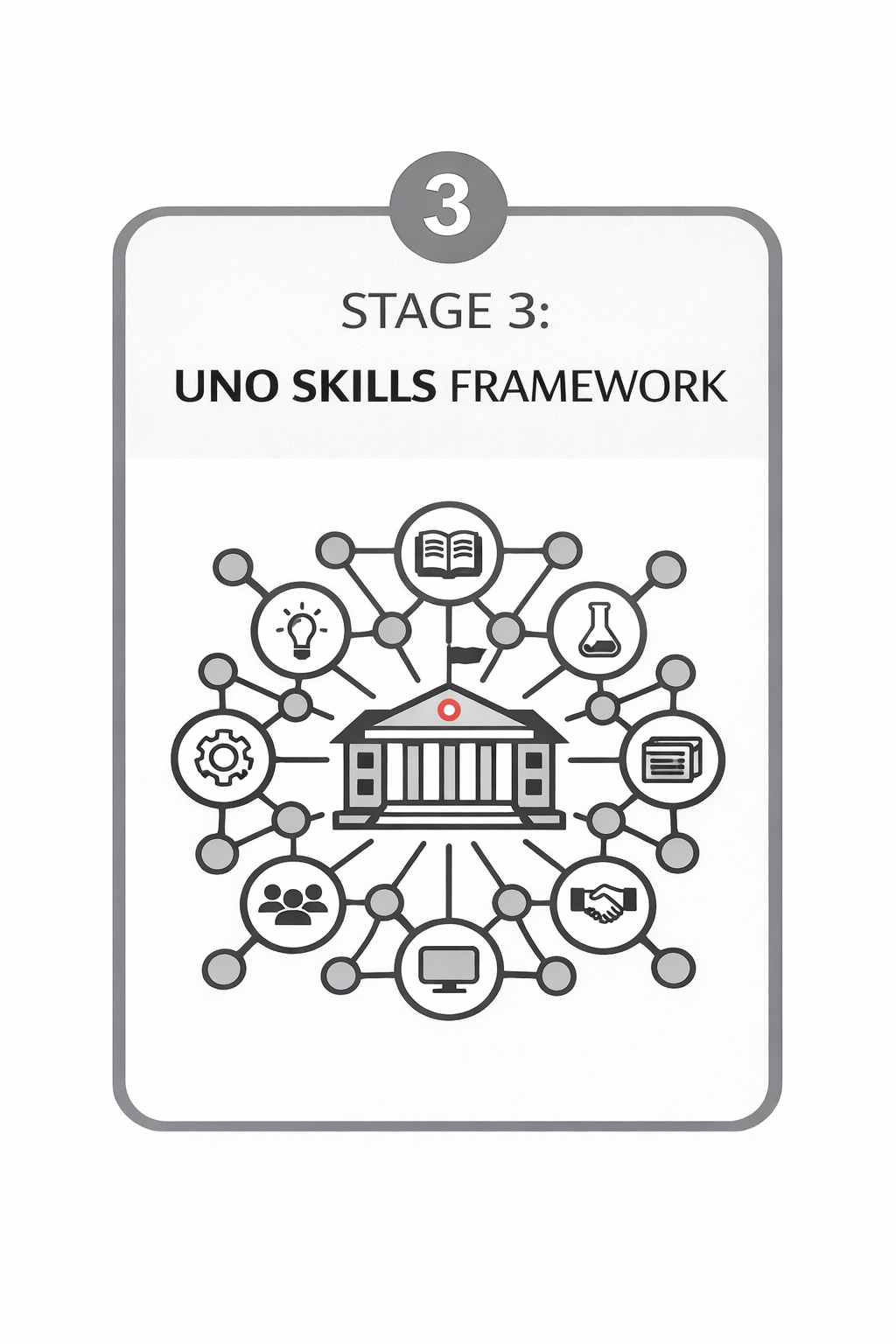
The UNO Skills Framework provides a shared, institutional structure for how skills are identified, demonstrated, assessed, and validated. It reflects national best practices in skills-based learning and validation while advancing a consistent and adaptable approach that aligns learner needs, faculty innovation, and workforce relevance at scale.
Aligned with National Best Practices in Skills Validation
The UNO Skills Framework is aligned with nationally recognized best practices in skills validation, including guidance from the Center for Skills by C-BEN. These frameworks emphasize that skills should be validated through demonstrated performance and evidence rather than inferred solely through course completion or credentials.
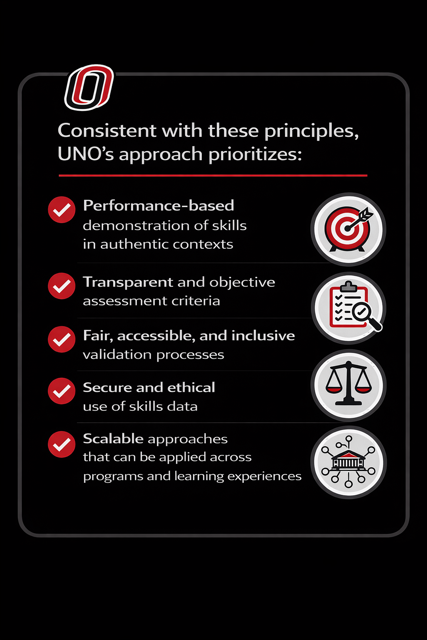
Consistent with these principles, UNO’s approach prioritizes:
- Performance-based demonstration of skills in authentic contexts
- Transparent and objective assessment criteria
- Fair, accessible, and inclusive validation processes
- Secure and ethical use of skills data
- Scalable approaches that can be applied across programs and learning experiences
Grounding the UNO Skills Framework in these standards ensures that validated skills are credible, meaningful, and trusted while allowing flexibility to reflect UNO’s mission, learners, and community.
From Skill Demonstration to Validated UNO Skill Badges
Building on this foundation, UNO follows a clear and intentional model for skills validation. Skills must be demonstrated, assessed, and then formally validated.
At UNO, skills are developed and demonstrated through academic experiences where skill development is intentionally embedded into learning activities. Faculty-designed assessments evaluate skill demonstration using defined criteria and research-informed practices. When students meet established standards, their skills are formally validated through UNO Skill Badges.
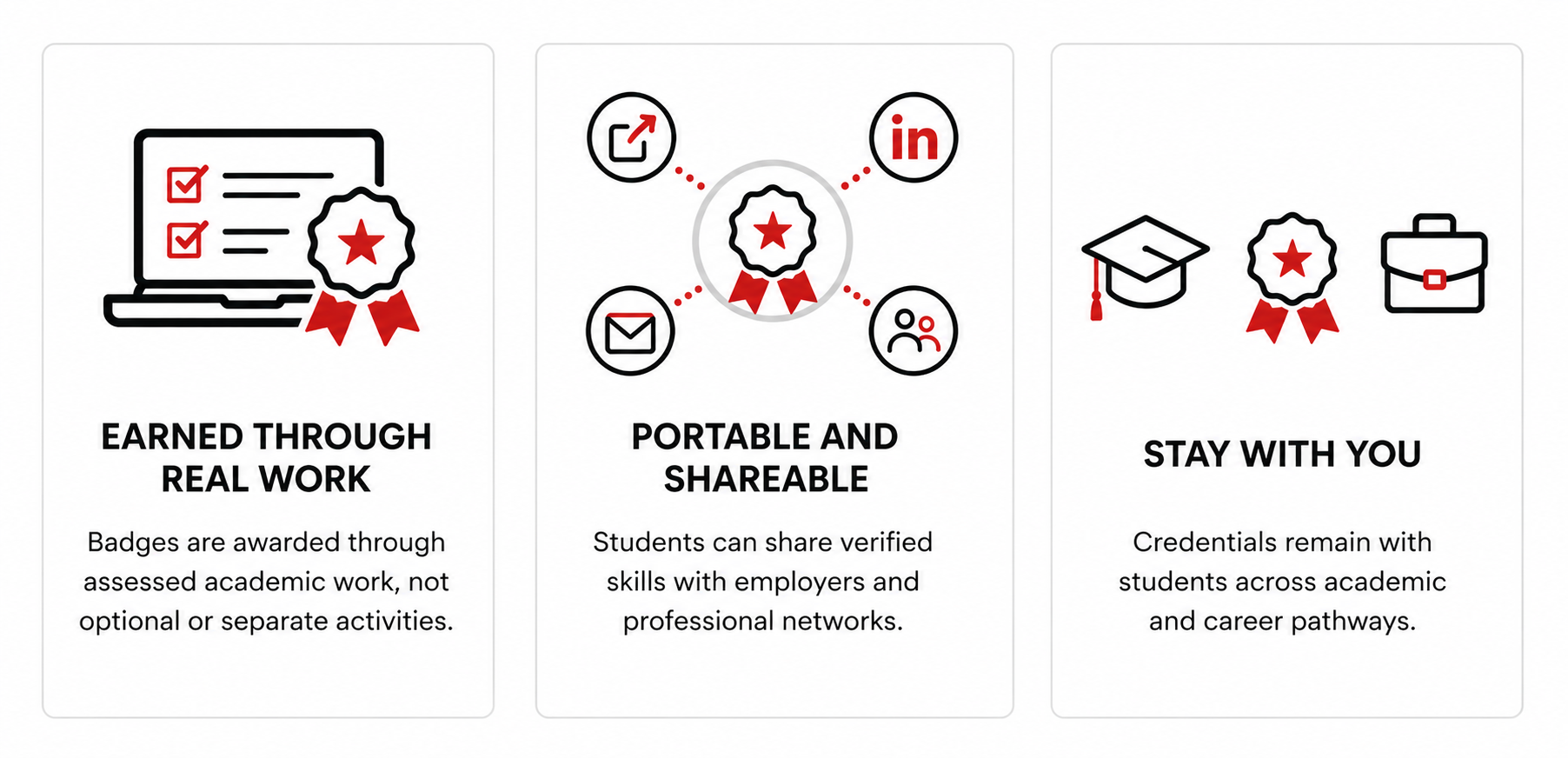
UNO Skill Badges are digital, verifiable credentials that:
- Are earned through assessed academic work, not stand-alone or optional activities
- Are portable and shareable, allowing students to communicate validated skills beyond the university
- Remain with students as they move through academic and professional pathways
Through CCSW’s institutional infrastructure, the Skills Lab supports the systems, processes, and governance structures required to develop, issue, and sustain UNO Skill Badges.
By embedding skills validation directly into the academic experience, UNO reinforces that students develop both knowledge and skills throughout their time at the university.
This work reflects UNO’s long-term commitment to building scalable, workforce-aligned credential innovation that complements traditional academic credentials while strengthening institutional capability.